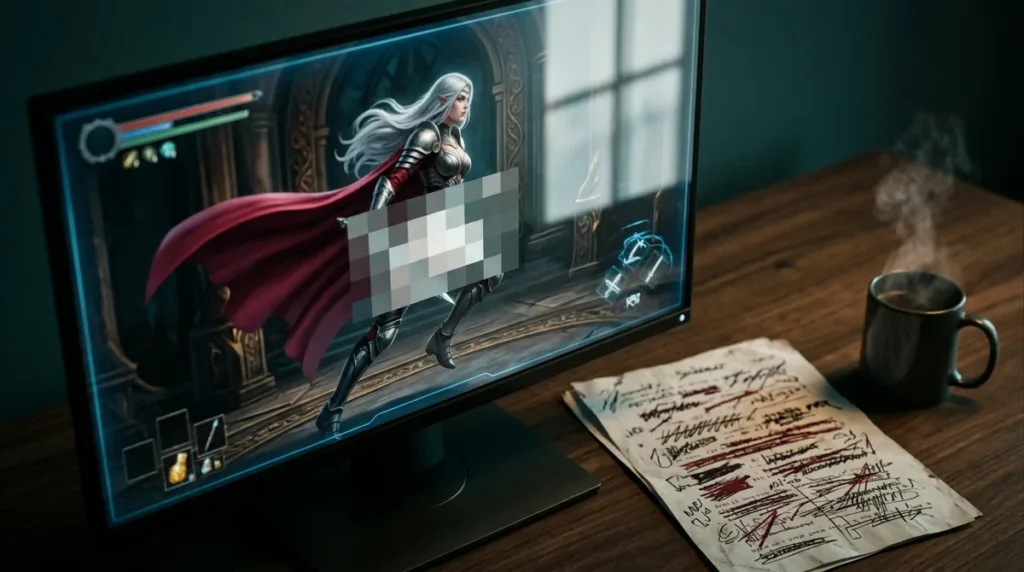
Video game localization censorship usually comes from rules, not taste. Japan’s CERO Code of Ethics sorts console games into age bands from A to Z, with Z reserved for adults only. Games containing expressions banned under its rules get no rating at all. China works differently: games seeking publishing approval must include Simplified Chinese localization. Those are hard requirements. Cutting content because a publisher got nervous about a regional audience is a separate choice, and it deserves a separate argument.
Then comes the messy middle. Ubisoft confirmed in January 2025 that the Japanese version of Assassin’s Creed Shadows permanently disables enemy dismemberment to meet CERO review standards. In 2026, Dispatch shipped a single, heavily censored Switch build. A later update, per Shacknews’ reporting, brought back some visuals while keeping restrictions in place. Some of these edits are fair. Some are excuses wearing a nice suit.
Key Takeaways
- Most video game localization censorship comes from hard rules like Japan’s CERO ratings and China’s Simplified Chinese requirement, not from a publisher’s personal taste.
- Japan’s CERO system rates games from A to Z, and any game with expressions banned under its rules gets no rating at all.
- Assassin’s Creed Shadows shows how a rating rule can rewrite combat: as Ubisoft confirmed in January 2025, its Japanese version permanently disables enemy dismemberment to meet CERO review standards.
- Players should check the rating label, the exact store build, and the patch notes before buying a localized version, because Dispatch shipped a single heavily censored Switch build in 2026.
- Publishers owe players an honest list that separates cuts forced by a rating body or government from cuts the company chose to make itself.
Censorship Versus Localization: Where the Line Actually Sits
Not every regional change is censorship, and lumping them together is how bad arguments start. Translation moves words from one language to another. Localization goes further and adapts the whole product for a market, including menus, jokes, names, and sometimes what appears on screen.
Censorship is one specific kind of change, and it usually has an outside referee. Three drivers are worth separating. The first is age-rating systems. The ESRB’s ratings guide defines “Blood and Gore” as depictions of blood or mutilation of body parts, so a publisher chasing a lower rating has a clear target. The second is content rules and market access requirements, where a government decides whether a game can be sold at all. The third is production constraints. A studio runs short on time, budget, or assets and cuts something it never meant to lose. Only the second is usually a hard wall. The others are choices, even if they’re uncomfortable ones.
Cultural adaptation is not the villain it sounds like. A 2025 study of Mass Effect dialogue found that the French localization mostly uses formal second-person pronouns, while the Spanish version mostly uses informal ones. That’s language and social convention at work, not a moral decision. Changing it means matching how people actually talk.
So judge each edit by what it changes and why. Swapping a pronoun to sound natural is not the same as removing a scene to dodge a rating. “Did anything change?” tells you nothing. “What changed, who demanded it, and did the game get worse?” tells you everything.
Why Do Games Get Edited for Different Regions?
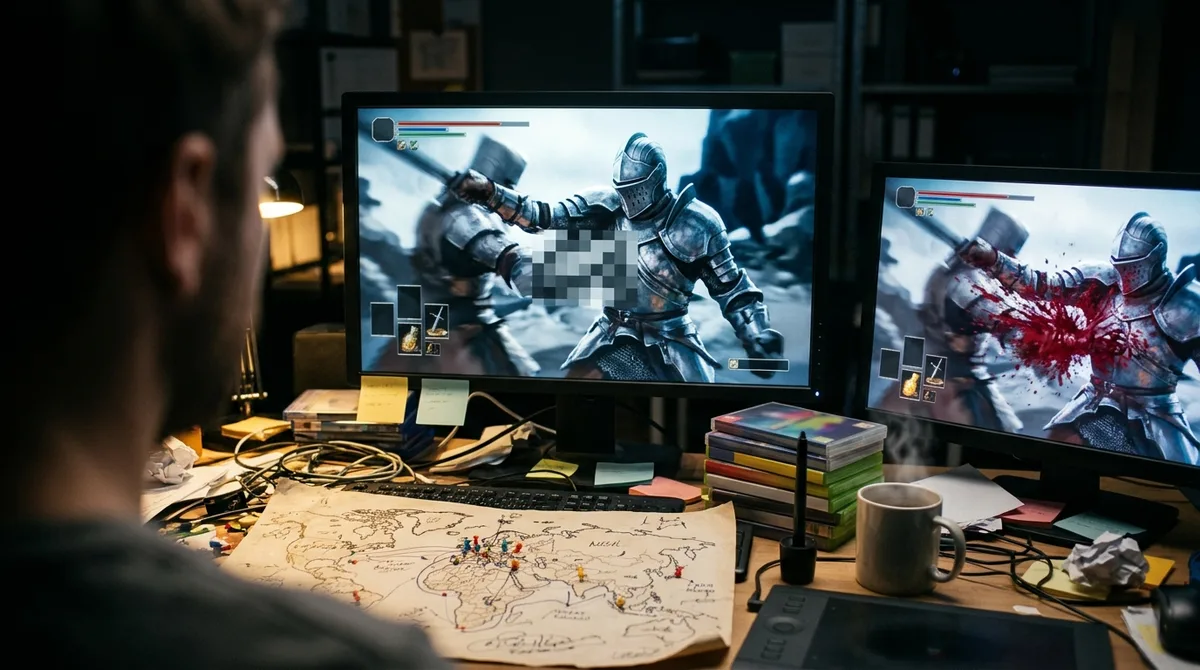
Games get edited for different regions mostly because a rating body, a government, or a storefront sets the rules. Those rules vary a lot from one country to the next, and they explain most of the changes players notice.
Japan’s CERO sorts console games into five bands: A for all ages, B for 12 and up, C for 15 and up, D for 17 and up, and Z for adults only. Z is the top shelf, and plenty of publishers aim for it because it still reaches adult buyers. The harder rule applies to content that breaks CERO’s Article 7. Games containing those banned expressions don’t get a rating at all, which leaves the publisher with a blunt choice: cut the material or go without a rating.
CERO also prohibits specified discriminatory expressions, so the problem isn’t only graphic violence or sex. Some language is off the table no matter how much a studio spent on the writing.
The ESRB works differently. Its ratings guide defines Strong Language as explicit and/or frequent profanity, and the rating tells you what’s inside so you can decide for yourself. A game can swear constantly and still ship with a label instead of a ban. That’s a description system, not a referee with a list of forbidden words, and it’s the main reason an uncut game that’s fine in Texas can have trouble clearing the bar in Tokyo.
Games seeking publishing approval from the National Press and Publication Administration (NPPA) must include Simplified Chinese localization. That’s a hard requirement. No Simplified Chinese means no approval, and without approval a game can’t be published in Mainland China.
Japan’s CERO system also explains one of the biggest recent examples. In January 2025, Ubisoft confirmed that the Japanese version of Assassin’s Creed Shadows disables enemy dismemberment for good. The publisher also changed how severed body parts are depicted to meet CERO review, as Destructoid reported. That’s a clear case of a rating system dictating a combat detail, and it’s a useful one because the rule is public and the edit is traceable.
Can Changing a Few Lines of Dialogue Change the Story?
Yes, a few lines of dialogue can change how players read a story, and sometimes that’s the whole point. Pronouns, names, and personality tweaks decide who characters seem to be and how they treat you.
Take the Mass Effect example. Formal and informal “you” aren’t just grammar. They set distance. A crewmate who addresses you formally reads like a colleague, while one who uses the informal form reads like a friend. When a localization picks the other register, the relationship shifts without anyone announcing it. If the choice matches how people actually talk in that market, it’s adaptation. If nobody checked, it’s meddling.
A 2021 study of its English localization found that some character names and personalities were changed. A name seems minor until you’ve spent long hours with the character. A personality change is bigger, because the character now says and does things the original writers never planned.
The same localization also replaced a face-caressing minigame with characters simply visiting one another. That isn’t a wording tweak. It changes what you do in the game and what the game is trying to say about these relationships. Someone can call it a regional decision, but it rewrote the design, not just the script.
Our test is simple. Does the change serve the audience, or does it make the characters say something the writers did not write? A pronoun that sounds natural in Madrid passes. A personality rewrite made to avoid a bad headline fails. The first fixes a translation problem, and the second changes the story to protect a marketing schedule.
Why Does One Region Sometimes Get a Different Game?
Some regional edits don’t come from a rating board’s checklist at all. They come from what a publisher thinks a market will accept, and Call of Duty: Modern Warfare 2 is the clearest example. Its “No Russian” mission, where you go undercover among a violent group in a Russian airport, could be skipped in most regions, including the United States. Research on the game also found that the German and Japanese versions required pacifism in that level, so you had to get through it without killing anyone. The Russian localization removed the level entirely.
Same game, same mission, three different answers. Nothing about the core shooting changed. Only the local rules did.
In June 2026, AdHoc Studio said it had used one Switch build of Dispatch to meet the strictest regional rating. That’s a studio choosing a single version to satisfy its toughest market, and everyone else on that platform inherits the result. A later update restored some visuals, which is the right direction. It kept restrictions on genitalia and on audio from a dream sequence, though, and those are the parts players will notice.
Ask two questions about any version like this. What did the first build remove, and why did the update stop where it did? A studio that can bring back visuals can also explain the remaining cuts. If it can’t, that silence tells you something too.
Live-service games and post-launch patches make this messier. A game can ship in one form and be changed months later through an update, a new storefront setting, or a revised regional version. The box, the store page, and the launch trailer describe a snapshot, not a guarantee. Before you buy, check the patch notes and confirm which version your region actually gets.
What Do Localization Costs and Timelines Really Look Like?
Localization costs are priced by the word and by the hour, and that math is where the rushing starts. In the general market, English to Japanese typically runs about €0.10 to €0.14 per word, and English to Russian about €0.06 to €0.09 per word. Multiply that by a script with tens of thousands of lines, and you can see why producers stare at the budget spreadsheet.
Quality assurance adds its own bill. Localization QA typically runs about €27 to €53 per hour, and that’s before anyone discovers that a subtitle covers the only enemy health bar on a crowded screen.
The bigger drain is rework. Internationalisation (i18n) is the groundwork that lets text, fonts, and date formats be swapped without touching game code. Built in early, it’s cheap. Bolted on after launch, every hardcoded string becomes a chore.
UI text expansion is the next trap. Translated strings often run longer than the English original, and a short “Load” can become a long menu label in another language. Suddenly the menu spills off the edge, or the HUD collides with the minimap. Designers have to leave room for that from day one, or someone has to shorten the words or shrink the font at the last minute.
Audio work is a separate line item, and each piece brings its own cost:
- Subtitles: translation, timing against the spoken line, and checking that the text fits on screen.
- Dubbing: casting, recording sessions, directing actors, and editing so the new performance matches the pacing.
- Audio localization: sound effects, radio chatter, and in-world signs that also contain text.
AI tools can draft item descriptions and menu text quickly, and that volume is genuinely useful. They still miss tone, slang, and what a line means in context, so a human has to read the output before it ships.
Timelines shrink when localization starts late. The script is locked, the art is finished, and translators get a deadline that development already used up. That squeeze is when cuts and shortcuts appear, and it’s usually a scheduling failure before it’s anything more deliberate.
Is Regional Editing Ever Worth Defending?
Yes, but only when the change makes the game clearer or respects how people in that market actually talk, and that’s a smaller club than publishers like to pretend. Simplified and Traditional Chinese are not interchangeable. Simplified is the requirement for games seeking publishing approval in Mainland China, while Traditional is the standard in markets such as Taiwan and Hong Kong. Treating them as one “Chinese” market is lazy, and it produces text that reads wrong to one audience even when it’s correct for another.
Southeast Asia is a different case. Many of its markets are mobile-first and multilingual, and localization that uses local phrasing and regional naming can be a real service to players there. Good. But not every change is a favor. Some “adaptations” trim a joke that didn’t need trimming and call it respect.
Here’s the line. Changes that improve clarity or respect the language are good. Removing or altering content with no clear reason is meddling, and calling it cultural sensitivity doesn’t make it any less so.
Publishers owe players one simple thing: an honest list. Say which changes were forced by a rating body or government, and which were the company’s own call. A rule-driven cut is annoying but understandable. A self-chosen cut dressed up as a legal requirement is a lie, and players can smell it from the first menu screen.
How to Check a Localized Version Before You Buy
Start with the rating label, because it tells you what the version is allowed to contain. A Japanese release carries a CERO letter from A to Z, and a US release carries an ESRB rating with content descriptors like Blood and Gore or Strong Language. If you’re buying a version from another country, compare its label with the one you’d get at home. A label that’s suspiciously mild is worth a second look.
Next, check the store page for the exact build. Look at the region, the language list, and whether the platform listing differs from the others. Dispatch shows why this matters. One heavily censored Switch build existed, so buyers who grabbed the wrong copy got the cut version without much warning.
Then read the patch notes before you spend money. If a studio restored content later, the notes should say what came back and what stayed locked. “Various improvements and stability fixes” is not an answer, and it’s a red flag.
Finally, search for the specific scene or line you care about, paired with the region name. Forum threads and comparison videos from players who own both versions will show you what’s missing faster than any box blurb. If the cut comes from a rating requirement and the rest of the game is strong, buy it knowingly and move on. If the studio can’t explain its own cuts, wait for a sale and let someone else pay for the lesson.