Valve’s Steam achievement overhaul went live for every Steam user on November 11, 2026, after a beta that began October 15. Its main tool is Achievement Sets, which split a game’s trophies into separate buckets, each with its own progress and completion status. The redesigned achievements page comes along too, and it now lets you compare progress with up to three friends. If you have ever watched a 100% quietly shrink the moment an expansion landed, you already know why this matters.
Developers can create up to 40 sets per game, including the Base game set, and a DLC set counts toward your completion only if you own that DLC. Seventeen games had adopted sets when the beta was announced, which is a start, not a stampede. The catch is that Steam’s achievement documentation makes clear that nothing reorganizes itself. The fix only works where developers do the setup, and that is where this story gets interesting.
TL;DR: Valve’s Steam Achievement Sets rolled out to every user on November 11, 2026, letting developers split trophies into separate buckets so an expansion no longer drops a finished base game below 100%. The fix only works where developers create and assign the sets, and only 17 games had adopted them when the beta was announced. Games that stay untouched keep the single shared list, so the benefit depends on studios doing the Steamworks setup.
Steam Achievement Sets Roll Out to Everyone
On November 11, 2026, Valve made Steam Achievement Sets and a redesigned achievements page available to every Steam user. The feature had been in beta since October 15.
A set is a named group of achievements with its own progress bar and its own completion status. Every game starts with a Base game set, which holds the trophies the game shipped with. Developers can create additional sets, including DLC sets, so an expansion’s trophies can sit in their own bucket instead of getting mixed into the original list.
That separation is the whole point. Right now, achievements share one pile. When an expansion adds new trophies to that pile, a player who finished the base game can suddenly look at a lower percentage, even though they did nothing wrong. With sets, the base game can be judged on base game achievements alone, and the expansion’s achievements are tracked separately.
When the beta was announced on October 15, Valve listed 17 games that had already added Achievement Sets. Those titles gave players a first look at the system before the November 11 rollout opened it to everyone. Seventeen is enough to prove the tool works, but it is a small number next to the huge catalog of games already on Steam, and most of those older titles still use the single pile.
It is also worth knowing what the system does not do on its own. Sets only exist where a developer creates them and assigns achievements to them. A game that never touches the tools keeps the same single list it had before November 11. Players who want their completion tracked cleanly will need developers to do that setup work, and that is where the rollout starts to depend on the people making the games.
Why 100% Stopped Meaning Anything After Expansions
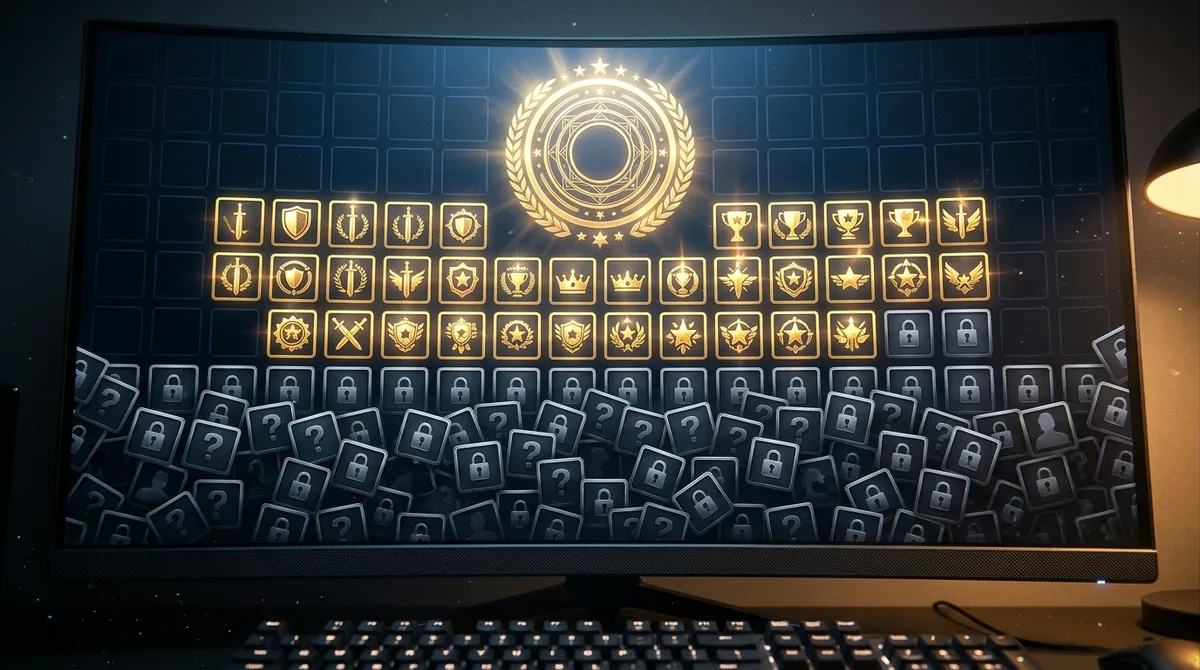
For years, the 100% badge on Steam had a shelf life nobody advertised. You finished a game, earned every trophy on the list, and enjoyed that small glow of a job well done. Then the studio released an expansion, its new achievements landed in the same pile, and your perfect score quietly slipped below 100. You had done nothing wrong. The game had simply moved the goalposts.
Picture a sci-fi shooter whose campaign you cleared last spring. You chased every collectible, finished the final boss, and took a screenshot of the completion screen for bragging rights. Then a paid expansion arrived with a fresh batch of trophies, and your base game was suddenly unfinished in the eyes of the platform. Nothing about your save file changed. The number did.
That is a system problem, not a developer problem. Before sets, Steam gave a game one flat achievement list, and an expansion’s trophies had nowhere else to go. A developer adding new content was using the only tool available. The flaw was in the structure, which treated a finished base game and a brand-new DLC as the same bucket.
Sets are designed to close that gap. A completed achievement set stays completed when developers add achievements to it later, so a new expansion cannot retroactively undo the base game you already finished. Valve also recommends creating a new set for new content, which keeps each set’s progress readable for anyone glancing at the page.
The word to watch is “designed.” Sets only protect players where a developer builds them and moves the right achievements into place. Any game that never touches the tools keeps the single pile it has always had, and a finished save there can still expire the moment an expansion ships. The fix exists. It just waits for someone to press the button.
Developers Still Have to Do the Homework
Steam will not reorganize anyone’s library on its own. The setup happens in Steamworks, the developer back end where each game’s achievements are managed, and studios can make these changes without updating the game or the Steamworks SDK. The game keeps unlocking achievements through the same API names and calls it used before, so the work is in the configuration, not the code. For a studio that wants its expansion separated from the base game, the process looks like this:
- Check that the base game’s achievements sit in the Base game set, since Steam places every achievement there by default.
- Create a DLC set for the expansion, which Steam restricts to players who own that DLC.
- Move the expansion’s existing achievements out of the Base game set and into the new DLC set, because older achievements stay where they are until someone reassigns them.
- Assign any new expansion achievements to the DLC set as they are added, and create a separate set for future content instead of stacking it onto the old one, which Valve recommends for clearer progress.
- Keep the total within the 40-set limit, which includes the Base game set, so a studio planning a long run of expansions has to budget its sets.
Skip any step and the old problem returns in a quieter form. An expansion’s trophies left in the base set will keep dragging down the base game’s percentage, and nothing in the system forces the cleanup.
That puts the burden on studios that may have shipped expansions years ago and have no reason to revisit old achievement lists. Steam did the plumbing. Developers still have to turn on the taps.
DLC Achievements Only Count If You Own the DLC

Here is the part that matters most if you buy expansions. A DLC set is restricted to players who own that DLC, and its achievements do not count toward base-game completion or toward any other set. Skip the expansion and its trophies never show up as unfinished business on your base game’s page.
That is a cleaner deal than the old flat list, where one missing trophy from a paid add-on could drag down your whole game. Players who never bought the expansion get a completion bar that reflects the game they actually played. Players who did buy it see that content tracked in its own bucket, with its own progress.
Then there are the achievements that can no longer be earned. Event trophies are the classic case. A studio runs a seasonal event, hands out a badge for finishing its challenges, and then pulls the event from the game. Under the old setup, anyone who missed that window was stuck with a permanent gap in their list. Steam lets developers archive achievements like these. Archived achievements stay visible to anyone who unlocked them, so the bragging rights survive. For everyone who missed them, they stop counting against completion.
In practice, that makes seasonal content far less punishing. A player who skipped the spring festival can still reach 100% on the game, and a player who earned the festival badge keeps it on their page. Nobody has to pretend the event never happened, and nobody has to feel bad about missing it.
The catch is that archiving is a developer decision. Steam will not figure out on its own which holiday trophies have expired. A studio has to notice that an event has ended, archive the achievements tied to it, and make sure they sit in a set that matches the content they came from. A studio that forgets leaves players chasing a trophy that no longer exists, and the old frustration returns wearing a new coat.
The Achievements Page Gets a Friends Makeover
Valve did not stop at the bookkeeping. The redesigned achievements page now lets you compare progress with up to three friends, so the question shifts from “how am I doing?” to “why is my friend two trophies ahead of me?” Friends lists have always worked as a quiet scoreboard. Now the scoreboard sits on the page where you check your trophies.
The rollout also reshaped the layout. Coverage of the update highlights a completed view and a Completionist Showcase, which give finished games a place of their own instead of leaving them buried in the general list. The showcase is bragging rights with a frame around it, and nobody should pretend otherwise.
PlayStation has organized trophies around each game’s own list for years, and add-on content usually arrives with a separate trophy list rather than dropping into the main one. Steam’s sets take a similar idea and push it further. Each bucket gets its own progress and its own completion status, so the base game and its expansion can show different numbers without one wiping out the other.
Here is the uncomfortable part. Nobody needs a chart to know a friend has more trophies. Steam is putting that chart on the achievements page anyway, which turns a private hobby into a head-to-head contest. It is social pressure dressed up as a feature, and it will work exactly as well as Valve hopes.
The feature carries no price and no new legal requirement for players. The cost here is measured in weekend hours and in how much you care about the person beating you on the leaderboard.
Does It Actually Fix the Expansion Problem?
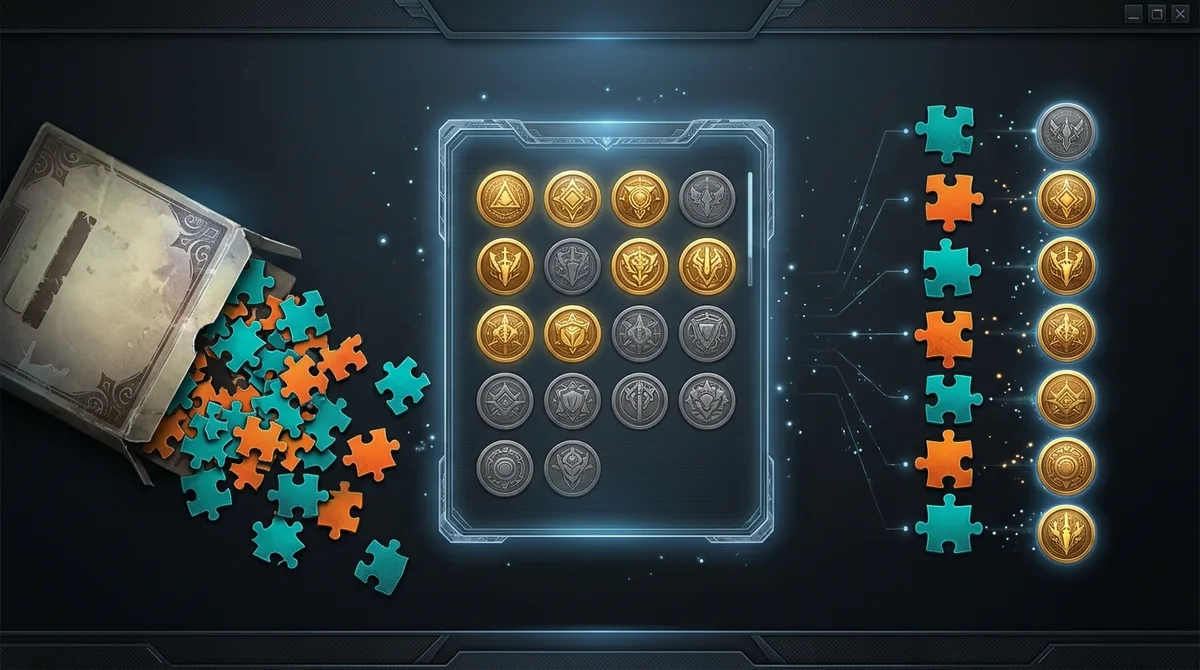
Yes, but only where developers do the setup. When a studio builds its sets correctly, Steam Achievement Sets fix the broken completion math: a finished base game stays finished when new content lands, and DLC trophies only touch your percentage if you own the expansion. That is a real improvement, and it is also a narrow one.
The design earns credit for its restraint. Finished sets stay finished, expired event trophies stop blocking players who missed them, and the studio can make these changes without shipping a game update. Those are sensible rules that solve the exact headache players have complained about for years.
The weak point is that the whole thing is opt-in. A studio that never opens Steamworks gets nothing from it, and a studio that shipped an expansion years ago has little reason to go back and move old trophies into a new bucket. A fix nobody configures is just a menu option. Players who care will have to check whether a game uses sets before trusting its percentage, and nobody should need to become an auditor to read a progress bar.
Sets also leave the bigger argument alone. Many players have long complained that achievements have turned into padding: grindy checklists, filler collectibles, and trophies handed out for doing what you were already doing. Splitting a list into buckets does nothing to make those trophies mean more. A 100% in a game full of pointless trophies is still a 100% in a game full of pointless trophies, just with neater paperwork.
Valve fixed the scoreboard, not the scoring.
Watch Which Games Adopt Sets Before You Trust Them
Start with your own library. Open the achievements page for each game you care about and see whether it shows more than one set. If it only shows a single list, that game has not adopted sets, and its 100% will behave the way it always has. Begin with the early adopters Valve listed on October 15, since those studios had the longest head start on setup.
Once you know which games use sets, watch what developers actually do with them. Three things matter most:
- Whether the DLC set holds the expansion’s trophies, or whether they were left in the base game.
- Whether archived event achievements were really archived, or still block players who missed them.
- Whether new content lands in a fresh set, instead of piling onto an old one.
Developer adoption will decide whether 100% means anything again. Sets only work where studios build them, and most of the catalog has not been touched yet. If the big publishers configure their games properly, the completion bar becomes trustworthy. If they don’t, it stays a number you have to double-check.
Test it yourself. The next time a game you have finished gets an expansion, write down your completion percentage before installing it, then check it again afterward. Look at whether the base game set still reads complete. That one comparison will tell you more than any announcement.
Before You Buy the Next Expansion
Before you buy the next expansion, open the game’s achievements page and count the sets. If there is only one list, the old system is still in charge, and any new trophies will land in the same pile as your finished base game.
If you already own an expansion, check the DLC set. Its trophies should sit in their own bucket, and your base game’s completion should stay put after you install it. If the expansion’s trophies are sitting in the base list, the studio skipped the cleanup, and your 100% is exposed every time something new ships.
Found a finished game with a percentage that dropped anyway? Send the studio a clear report through its support channel or the game’s community forums. Name the expansion, the set that should exist, and the trophies that should have moved. A specific report is much harder to ignore than a rant.
Finally, keep a short list of the games where you chase 100%, and recheck it whenever an expansion or seasonal event arrives. Your own list will tell you more about whether sets work than any announcement from Valve.