Look at your massive digital library and tell me you actually feel like you own any of it. You didn’t buy those games. You bought a glorified rental ticket that expires the second a licensing deal falls through or a publisher decides keeping the lights on costs too much. It is a joke that the industry treats its own history like disposable trash, making independent video game preservation efforts the only line of defense against a total digital blackout.
While big publishers are busy sending cease-and-desist letters to teenagers, the actual work of saving gaming history is left to pirates operating in a messy legal gray zone. If we relied on official channels, everything prior to the HD era would either be rotting on a disc or sold back to us as a broken, overpriced remaster. It is time to admit that the people accused of stealing the games are often the only ones making sure they still exist.
Frequently Asked Questions
1. How can players support video game preservation without copying games?
Players can support preservation by donating games, hardware, manuals, and development materials to reputable museums or archives. Buying official rereleases when they’re available also shows publishers there’s an audience for keeping older games accessible.
2. Is downloading a ROM legal if I own the original game?
Owning a cartridge or disc does not automatically make downloading a ROM legal. Copyright rules vary by country, and making or downloading a copy can raise legal issues even when you own the original.
3. Is emulation itself illegal?
Emulation software is not automatically illegal; it’s software that imitates another system’s hardware. The legal questions often involve how the game files, BIOS, or other copyrighted material were obtained and whether copy-protection rules apply.
4. Which organizations work to preserve video game history?
The Video Game History Foundation, The Strong’s International Center for the History of Electronic Games, and the National Videogame Museum collect and document different parts of gaming history. Their work can include research materials, hardware, packaging, and oral histories, not just playable games.
Key Takeaways
- Purchasing digital games grants only a temporary, revocable license that leaves expensive libraries vulnerable to deletion whenever licensing deals expire or servers go dark.
- Volunteer emulation communities are the only groups effectively preserving gaming history, often fixing and maintaining legacy titles better than the publishers that legally own them.
- The industry’s shift toward always-online live service models ensures that games are permanently erased from existence the moment a publisher decides they are no longer profitable.
- Consumers must rely on physical media and unauthorized archival efforts to truly own their games and prevent cultural milestones from vanishing into the digital void.
The Digital Ownership License Scam
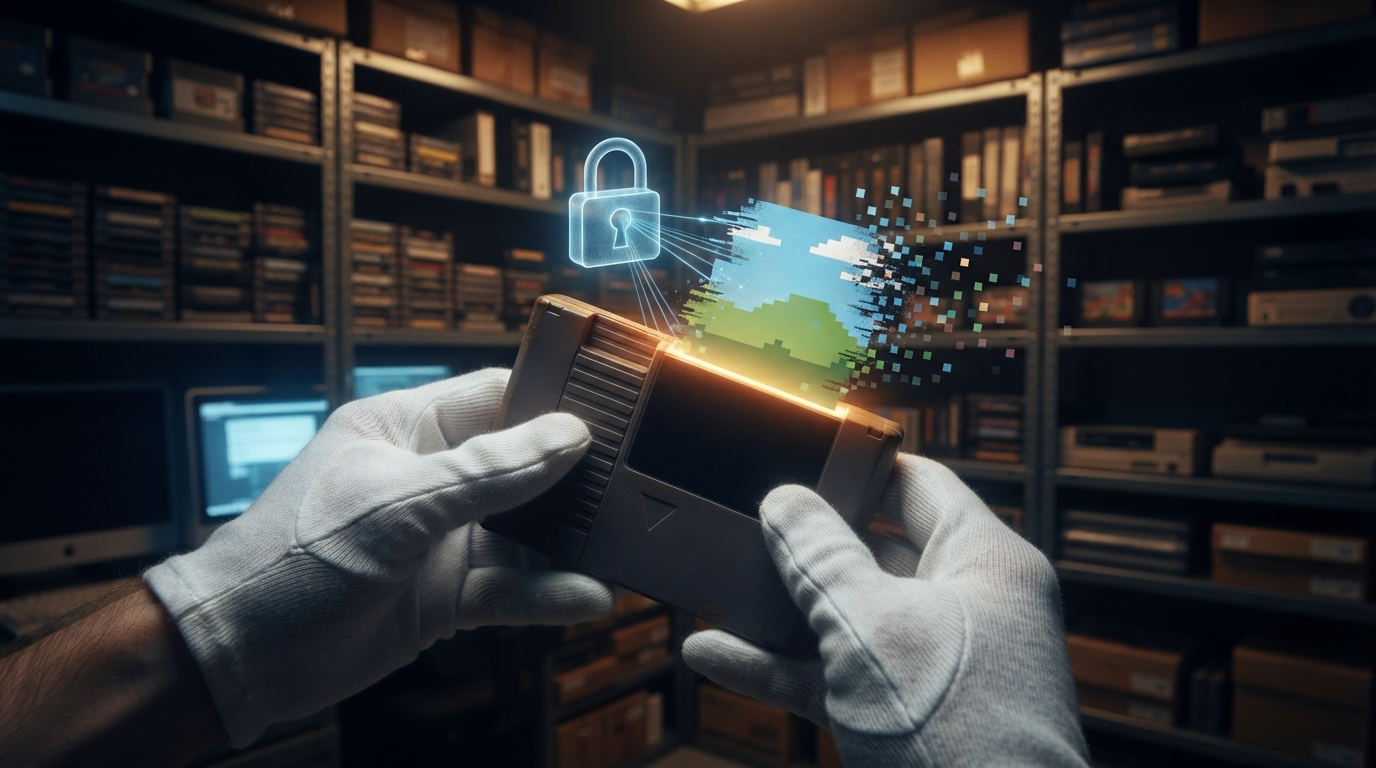
Stop pretending that the Buy button on Steam or the PlayStation Store actually means anything substantial. You aren’t purchasing a digital copy of a game to cherish forever. You are paying full price for a glorified long-term rental agreement that corporations can terminate whenever they feel like it. It is the biggest magic trick in the industry, convincing millions of us that a library of JPEG box art represents actual property rights. If you actually read those terrifying End User License Agreements, you would realize you own absolutely nothing but a revocable license to access files on a server. One day that server will go dark, and your expensive collection will evaporate into the digital ether without so much as a refund.
This house of cards usually collapses the second a music licensing deal expires or a car manufacturer decides they want more money for their logo. We have seen countless titles get delisted and wiped from history simply because a ten-year contract ran out and the publisher was too cheap to renew it. When a company goes under or loses the rights to an IP, they don’t mail you a physical disc as a consolation prize for your loyalty. They just flip a switch, delete the download button, and expect you to move on to their next sixty-dollar product without complaint. It is a system designed entirely for their convenience while leaving your wallet holding the bag.
And the loss is not limited to the game itself. Manuals, packaging, patches, promotional demos, and regional versions all help explain how a title was made and sold. Those video game artifacts can reveal design choices that a polished rerelease quietly sands away. Game archiving means keeping this context alongside the files, rather than treating a game as a lonely executable pulled from a hard drive.
Emulation Communities Doing The Heavy Lifting
It is undeniably hilarious that the industry treats emulation communities like digital terrorists while simultaneously relying on their work to resell you nostalgia. While corporate lawyers are busy issuing cease and desist letters to teenagers for hosting a twenty-year-old game, volunteer archivists are the only ones actually doing the job of preservation. These supposed pirates are meticulously cataloging history that the original creators threw in a dumpster decades ago. If we left it up to the publishers, anything that isn’t currently generating microtransactions would simply cease to exist. It turns out the people saving gaming history aren’t the ones in suits, but the ones running discord servers in their spare time.
The embarrassment deepens when you realize these community projects often run legacy code better than the companies that own the intellectual property. We have all seen official HD remasters that are just lazy, broken ports running on inferior internal emulators, while the fan-made version offers 4K upscaling and bug fixes for free. It says a lot when a billion-dollar company cannot figure out how to make their own software run on a modern PC, yet a hobbyist fixes the issue over a weekend just for the love of the game. They are keeping the lights on for entire generations of hardware that have long since been abandoned by their manufacturers. Without these dedicated communities, your childhood favorites would be nothing more than unplayable plastic waste rotting in a landfill.
Emulation is only one part of digital preservation, though. A dependable digital archive also needs verified copies of game software, documentation about how to run it, and checksums that help spot corrupted files. Preserving source code is even better, since it can make future repairs and ports possible, but publishers rarely release it. When the code is gone, researchers and preservationists may have to study the finished game and the behavior of its original hardware instead. That is a much harder job than simply pressing “save,” which is apparently still beyond the industry’s budget.
Server Shutdowns Erasing Live Service History
The concept of always-online functionality is effectively a ticking time bomb strapped to the chest of your favorite video games. We used to worry about scratching a physical disc, but now we have to worry about Ubisoft deciding that The Crew isn’t profitable enough to keep on life support. When those central servers go dark, the game doesn’t just lose its multiplayer features. It ceases to exist entirely. Your purchase transforms instantly into digital space junk that cannot be played, sold, or even accessed to look at the main menu. It is absolute madness that a single corporate decision can retroactively delete a piece of art from existence, leaving zero legal ways to experience it ever again.
This erasure is happening faster than ever, with absolute disasters like Concord getting scrubbed from the internet just weeks after launch. You cannot even play a pity match against bots to see what went wrong because the executable file is now just a useless key to a lock that has been melted down for scrap. Publishers treat these titles as disposable services rather than cultural products, expecting us to just shrug and move on to the next battle pass grind. They are burning the library of Alexandria down one failed hero shooter at a time, and they have the nerve to ask for seventy dollars for the privilege of holding the match. If the community cannot host their own private servers, the game was never yours to begin with.
Stop pretending that an online-only requirement for a single-player campaign is anything other than planned obsolescence disguised as security. Every time you buy into this ecosystem, you are essentially renting a temporary license to access code that is being held hostage on a remote server farm. Preservationists are fighting a losing battle here because you cannot emulate a backend infrastructure that was never released to the public. Until companies are forced to release server binaries when they sunset a title, we are doomed to watch gaming history disappear into a digital black hole. Live Service is just marketing speak for a product that will eventually die, taking your money and your memories down with it.
Copyright Laws Versus Archival Necessity
You would think that saving a piece of software that hasn’t made a dime since the Clinton administration would be considered a public service, but the legal teams at major publishers vehemently disagree. Current copyright laws are so woefully outdated that they treat a defunct NES cartridge like it is a nuclear launch code, turning legitimate preservationists into criminals for simply making a backup. Museums and archivists are forced to walk on eggshells because holding onto digital history technically counts as trafficking in stolen goods according to suits who haven’t played a game in decades. It is an absurd system where a company can refuse to sell a game, refuse to fix it, and then threaten to sue you for daring to keep it alive.
Until these massive corporations decide that preserving art is more important than hoarding IP rights like dragons sitting on gold, we are stuck relying on the so-called bad guys to do the right thing. The blunt reality is that the only people actually saving our childhoods from the digital void are the unpaid data hoarders and ROM dumpers operating in the legal grey zones of the internet. Big publishers would happily let their back catalogs rot in a landfill if it saved them five bucks on storage fees, leaving the community to do the heavy lifting for free. We should be thanking these digital archivists for their service to culture, even if the law insists on calling them pirates.
More Than Games: Preserving the People and the Hardware
Video game history is not just a stack of ROM files waiting for someone to press “play.” It includes the video game hardware that shaped how classic games were designed, from cartridge limitations to controller layouts and the quirks of old display screens. A preserved title without the machine it was built for can still be studied, but some details of timing, sound, and feel may get lost in translation. Video game museums and collections can keep consoles, development kits, promotional materials, and manuals together, giving future audiences more than a screenshot and a shrug.
The people behind those games matter just as much. Oral histories and industry interviews can record why a team made certain technical or creative decisions, especially when the studio has closed and the paperwork has disappeared. Those accounts help explain the cultural impact of a game beyond sales figures: what players borrowed from it, argued about, and carried into later work. They can also preserve stories from game developers whose contributions rarely make it into the marketing timeline. A box on a shelf tells us what shipped. The people who built it can tell us what almost did.
This work also helps identify lost media before it vanishes completely. A regional release, a canceled prototype, or a short-lived online event may survive only in scattered screenshots, player recordings, and personal archives. No single collection can save everything, but careful cataloging and collaboration make those fragments easier to verify and understand. That is less glamorous than announcing a “definitive edition,” but it is actual preservation, not nostalgia wearing a fresh coat of paint.
Saving History While Publishers Burn It
It is painfully obvious that the video game industry views its own history as nothing more than a disposable commodity to be squeezed for profit and then discarded. We have walked blindly into a digital future where our massive libraries are built on the shaky foundation of revocable licenses and temporary servers. While billion-dollar publishers treat their legacy titles like embarrassing yearbook photos they want to burn, it falls on the shoulders of volunteer archivists to keep these experiences alive. If we continue to accept that buying a game is actually just renting it until the CEO needs a slightly larger yacht, we are going to lose decades of art to the digital void. Preservation is not just about nostalgia for blocky graphics, but about maintaining proof that these cultural milestones existed in the first place.
Until the laws catch up with reality, supporting emulation and holding onto physical media remains the only viable way to actually own the things you pay for. You should not feel a single ounce of guilt for downloading a ROM of a game that the original developer abandoned twenty years ago. The dedicated modders and pirates cracking DRM are doing the heavy lifting by ensuring that server shutdowns do not result in total erasure. It is absurd that we have to rely on legally gray methods to play games we legally purchased, but that is the corner the industry has painted us into. Keep your hard drives backed up and your discs on the shelf because the cloud is just someone else’s computer that can be turned off at any moment.