I’ve watched plenty of devs dream of global domination right up until they realize gamers outside the English-speaking bubble actually want to read dialogue that makes sense. That’s usually the exact moment they get hit with the terrifying reality of video game localization costs. It is never as simple as dumping your script into a free translation tool and praying. You’re paying for voice dubbing, UI re-engineering, and QA testers who take sick pleasure in breaking your text boxes.
Before you throw your budget into a fire, keep in mind that going global is where the real money hides. Over half of all revenue on major gaming platforms comes from non-English markets, meaning bad translation is just an absurdly expensive way to alienate paying players. Understanding where every single dollar actually goes is the difference between a breakout international hit and an empty bank account.
Key Takeaways
- Over half of digital game revenue comes from non-English markets, making localization a low-risk investment that routinely yields high returns.
- Full localization costs represent a small fraction of standard development budgets, especially when compared to bloated AAA marketing campaigns.
- Quality localization extends beyond basic text translation to include full voice dubbing, dynamic UI re-engineering, and thorough Linguistic Quality Assurance (LQA).
- Cutting regional language support is lazy penny-pinching rather than a financial necessity, actively alienating millions of paying international players.
Per-Word Translation Rates Across Global Language Tiers
Every time a massive publisher launches a title with broken regional support or low-effort machine translation, executives immediately trot out the same tired excuse about localization being prohibitively expensive. That excuse is absolute nonsense, and the hard math proves it. Standard game text is billed on a per-source-word basis, meaning developers pay a predictable fixed rate per English word before translation work even starts. When you look at the actual industry averages across major global language tiers, translating a full project into the most lucrative gaming markets costs a tiny fraction of a typical development budget. Stop accepting half-baked regional releases as an unavoidable financial necessity when the actual receipts tell a completely different story.
| Language Tier | Key Target Markets | Avg. Per-Word Rate |
|---|---|---|
| Tier 1 (FIGS) | French, Italian, German, Spanish (EU) | $0.10 – $0.14 |
| CJK Tier | Simplified Chinese, Japanese, Korean | $0.13 – $0.18 |
| Emerging Markets | LATAM Spanish, Brazilian Portuguese, Polish | $0.08 – $0.12 |
Putting those numbers into perspective offers a necessary reality check for any text-heavy release. A massive 100,000-word RPG script costs roughly $12,000 to translate into French or German, which is usually less than a publisher spends on trade show catering. Considering that over half of active sales on digital store fronts originate outside English-speaking territories, skipping solid regional text support isn’t a clever cost-saving measure. It’s lazy corporate penny-pinching that actively alienates millions of paying players in high-growth markets. If small indie teams can routinely manage proper multi-language launches on micro-budgets, multi-million-dollar studios have zero excuses for serving up sloppy localized text.
Voice Acting Dubbing and Linguistic Testing Overhead
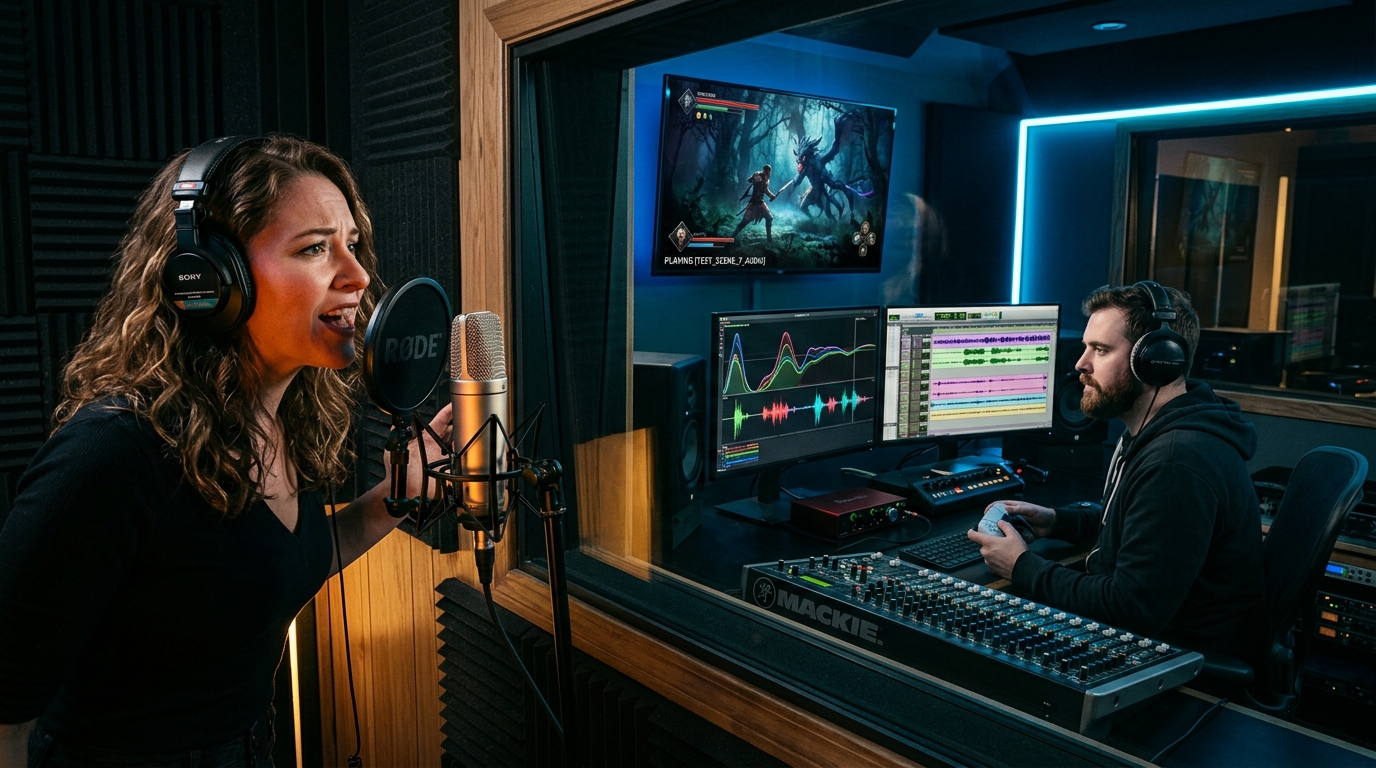
Every time a massive studio drops a global release with half the dialogue left unvoiced in secondary regions, they love to hit us with the sob story that voice acting is just too pricey. Let’s actually talk about why full audio dubbing eats cash so fast that executives start sweating through their tailored suits. You aren’t just paying a voice actor to sit in a booth for two hours. You’re funding union rates, localized directors, audio engineers, studio rentals, and casting directors across every target language. Toss in lip-sync re-targeting so character mouths don’t look like a badly dubbed kung fu movie, and a single language track can easily run into six-figure territory. It’s undeniably pricey, but dropping the ball here is exactly why half these giant RPGs feel cheap the second you flip off the default English audio.
Then you have the silent, unglamorous budget black hole known as Linguistic Quality Assurance alongside User Interface re-engineering. Translators are routinely handed raw spreadsheets without an ounce of context, leading to hilarities like a sword named “Spring” getting translated as the warm season instead of a coiled piece of metal. Fixing those mistakes requires paying hourly LQA testers to manually play through every single quest branch just to check if localized text fits inside the buttons. If a thirty-letter German word suddenly blows up your tight menu design, your devs now have to waste precious programming hours re-engineering the layout so words stop bleeding off the screen.
- Full Audio Dubbing: Union voice talent, studio rentals, audio engineering, and localized lip-sync integration across every target region.
- Hourly LQA Testing: Dedicated testers playing through every story branch to catch clipped text, mistranslations, and broken variables.
- UI and Layout Re-engineering: Dynamic code adjustments to fit longer phrases, right-to-left languages, and unique character fonts.
When publishers skimp on these specific line items, you get global releases that feel completely half-baked and frustrating to play. Skimping on testing means broken menus, clipped lines, and tone-deaf dialogue that ruins crucial story beats. Considering that international markets easily drive more than half of PC and mobile game revenues, treating regional polish like a luxury expense is just lazy business disguised as fiscal discipline. If a giant studio cannot properly budget for text fitting and basic voice direction, they should at least stop pretending it was an impossible technical hurdle.
Localizing Versus Marketing Budgets on AAA Games
Every time I see a massive AAA publisher skip regional language support, they drag out the same tired excuse about ballooning production costs and tight margins. It sounds plausible until you look at an actual budget breakdown and realize translation expenses are barely a rounding error. Fully localizing a massive RPG into major global languages usually costs somewhere in the low six figures, which sounds like real money until you remember the publisher spent double that on a single cinematic trailer. Throwing away entire non-English player bases to save a tiny fraction of a percent of your overall budget isn’t sound financial management. It’s corporate cheapness disguised as fiscal responsibility.
When we stack the math side-by-side, the defense for skipping localization completely collapses under its own weight. Over fifty percent of revenue on major digital platforms originates outside English-speaking markets, and the vast majority of developers see a direct positive return on their localization investment. Meanwhile, publishers happily dump tens of millions into bloated marketing campaigns featuring glossy pre-rendered trailers with zero actual gameplay. You could fully translate, dub, and quality-test a game for multiple major regions using the cash spent on a single live-action ad or a weekend billboard campaign. The publisher priorities are clear, and they have nothing to do with financial necessity.
- AAA Marketing Blitz: Tens of millions thrown at vanity ad campaigns, CGI trailers, and celebrity endorsements.
- Full Localization Suite: A modest six-figure spend covering text translation, UI adjustments, quality testing, and regional voiceovers.
- Global Market Reality: Over half of global digital store revenue comes from non-English players who expect proper regional support.
Cutting regional support is a calculated choice to leave money on the table just to hit an arbitrary short-term savings target. It treats international fans like second-class players while burning mountains of cash on ad hype that vanishes a week after launch day. If a studio can afford lavish press events and influencer sponsorship deals, they can afford to hire translators and regional voice actors. Dropping language support does not protect a development budget, it simply ensures millions of potential buyers around the world will pass on the title entirely.
Localization Isn’t Too Expensive, Publishers Are Just Cheap
Whenever a massive publisher drops a half-baked global release missing key languages, they love to hide behind the classic excuse that localization costs are just too high for the budget. I am calling absolute nonsense on that lazy narrative right now. When over half of all revenues on major storefront platforms come from non-English speaking markets, skipping proper regional support isn’t a smart financial strategy, it’s reckless penny-pinching. You don’t save money by alienating millions of paying players who just want to understand your game’s menu without needing a translation app open on their phone. The actual cost to translate dialogue and adapt user interfaces is a tiny fraction of a modern marketing budget, making poor regional support completely inexcusable.
The financial math completely blows up the industry’s favorite sob story about translation expenses. Nearly every developer who actually invests in proper localization sees a positive return on their money, with two-thirds of them enjoying three times their original investment or higher. Paying a few cents per word for quality text translation and proper voiceover dubbing is literally one of the safest financial bets you can make in modern game development. If a publisher tells you that supporting languages like German, Japanese, or Portuguese is financially risky, they are either terrible at math or simply lazy. High-quality regional support pays for itself almost immediately, turning global players into loyal fans who are eager to buy your next release.
Skipping out on proper regional support is just lazy game design masked as financial prudence. Gamers across the globe deserve polished UI, competent linguistic testing, and natural dialogue instead of raw machine translation that reads like a broken instruction manual. It’s time we stop accepting cheap excuses from multi-million dollar studios that treat global audiences like an afterthought. Investing in proper localization isn’t just a nice gesture for foreign markets, it’s the absolute bare minimum for any game pretending to be a global release. If you want players worldwide to spend their hard-earned cash on your game, you had better start speaking their language.