
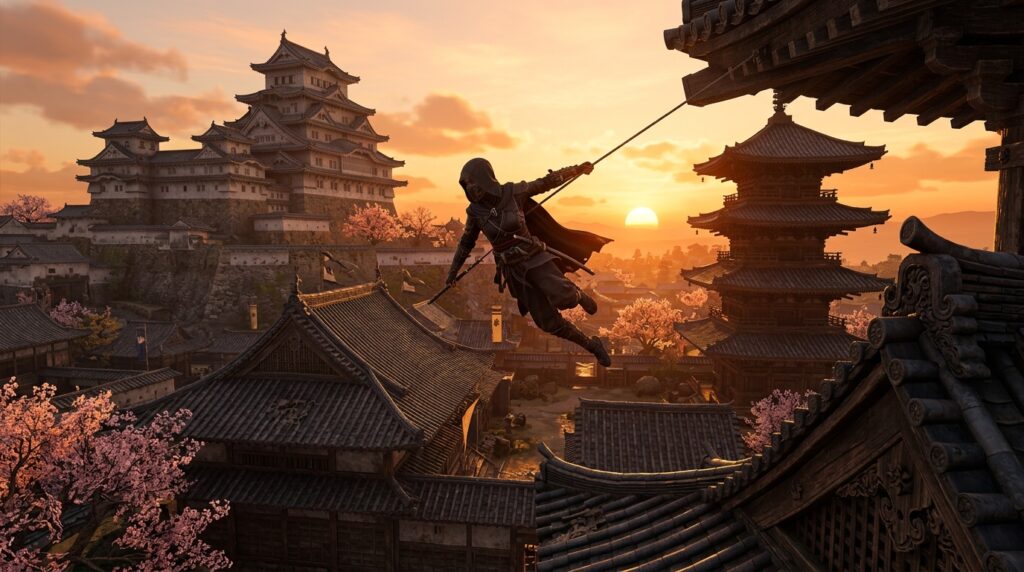
After years of watching the series slowly transform into a generic climbing simulator where you just hold up to win, assassins creed shadows parkour finally brings back the technical depth we’ve been starving for. The developers actually remembered that movement should be a gameplay mechanic, not just a way to get from one cutscene to the next. Between the post-launch refinements and the physics-based grappling hook, navigating 16th-century Japan actually requires a functioning brain again.
The dual-protagonist system isn’t just a gimmick for the story; it’s a complete split in how you interact with the world. Naoe is a literal acrobat who treats rooftops like her personal playground with backflips and air rolls, while Yasuke moves with the grace of a freight train, deliberate, heavy, and decidedly less interested in gymnastics. It’s a refreshing change of pace to finally have a game that respects the difference between a nimble shinobi and a walking tank.
Key Takeaways
- Assassin’s Creed Shadows restores technical depth to traversal by replacing automated, ‘magnetic’ climbing with physics-based movement that requires momentum and player skill.
- The dual-protagonist system creates two distinct gameplay styles, contrasting Naoe’s acrobatic shinobi agility and grappling hook mechanics with Yasuke’s heavy, deliberate power.
- Naoe’s physics-based grappling hook introduces manual rope pivots and mid-air adjustments, forcing players to calculate timing and gravity rather than relying on scripted animations.
- New stealth integrations like prone crawling and a noise-sensitive movement system transform parkour from a mindless traversal tool into a tactical puzzle that punishes reckless speed.
Naoe Versus Yasuke Two Very Different Ways To Move
Naoe is exactly what we have been begging for since the series decided that every protagonist needs to be a mountain-climbing tank. Her movement feels like a genuine return to form, ditching the floaty, magnetic snapping of the RPG era for something that actually requires a bit of finesse. Between the backflips, air rolls, and that physics-based grappling hook, she turns the Japanese skyline into a personal playground rather than just a series of vertical walls to hold forward on. It is refreshing to see a character who actually looks like they are exerting effort to be agile instead of just gliding up a building like a glitchy elevator. If you want that classic shinobi fantasy where you are pivoting off rope swings and vanishing into the rafters, she is clearly the star of the show.
Then there is Yasuke, who moves with all the grace of a refrigerator falling down a flight of stairs. While Naoe is busy performing Olympic-level gymnastics, Yasuke handles traversal like a man who knows his armor weighs more than the person he is chasing. He can still climb, sure, but it is a deliberate and heavy process that makes you feel every ounce of his massive frame. It is a bold choice to make one half of your dual-protagonist system feel intentionally clunky, but it actually works because it forces you to approach the world differently. You are not looking for the fastest path across the rooftops with him; you are looking for the most direct path through the front door.
This massive gap between their styles is what finally makes the two-hero gimmick feel like more than just a menu toggle. The game stops being a mindless climb everything simulator and starts asking you to actually think about the physics of the environment. Naoe provides that high-speed technical depth that parkour purists have been starving for, while Yasuke serves as a grounded reminder that not everyone in 16th-century Japan was a weightless acrobat. It is a smart way to balance the climb-a-thon filler of previous games with actual mechanical identity. Whether you prefer the surgical precision of the shinobi or the blunt force of the samurai, the contrast keeps the movement from becoming a repetitive chore.
The Grappling Hook And Physics Based Verticality
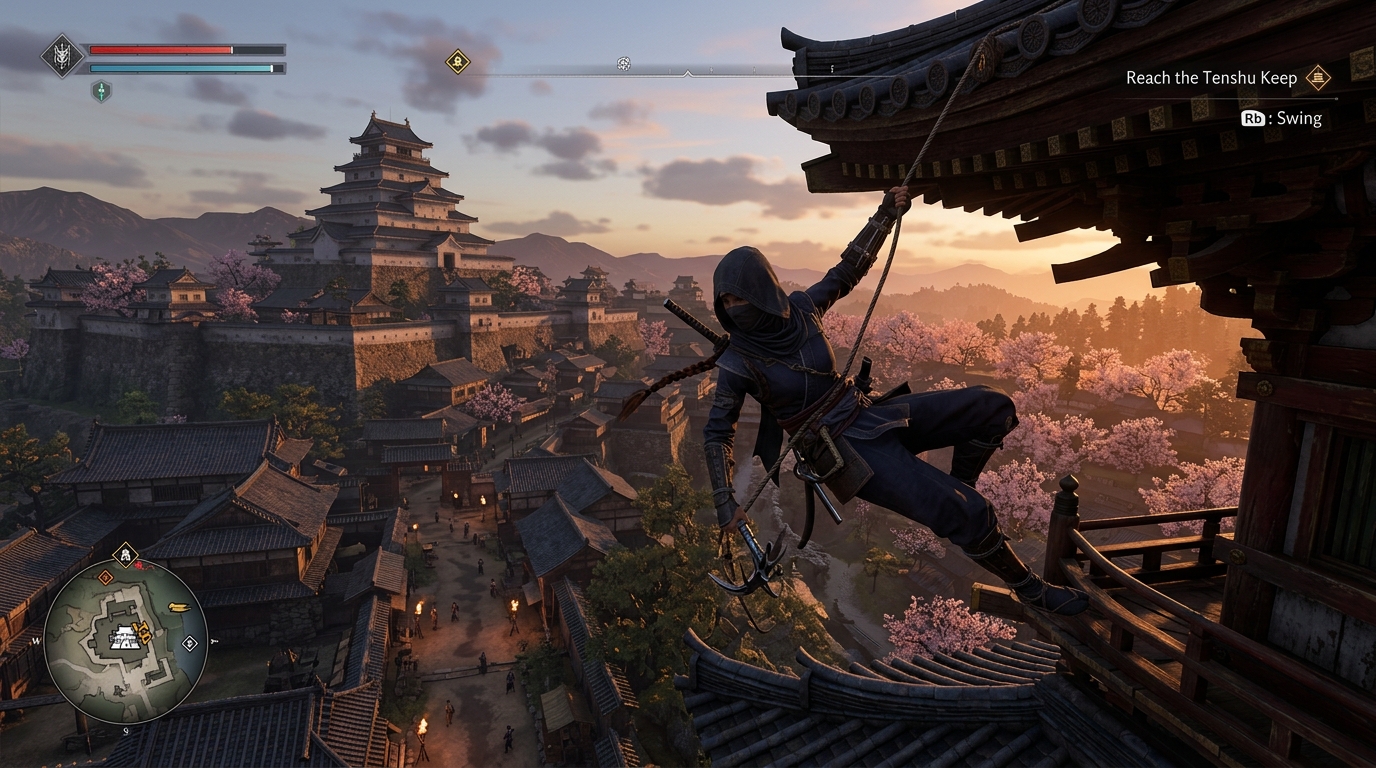
Naoe’s grappling hook is the shot of adrenaline this series desperately needed to stop the parkour from feeling like a glorified stroll through a retirement home. For years, we have been stuck with the hold one button to win climbing loop that turned every building into a magnetic ladder with zero stakes. Now, the physics-based swinging actually requires you to understand momentum and timing instead of just pointing the stick up and checking your phone. It is a refreshing shift toward manual skill that finally rewards players for being precise with their movement rather than just being patient.
The verticality in this version of Japan feels dangerous and dynamic because the hook allows for rope pivots and mid-air adjustments that actually respect gravity. You can no longer just vacuum your way up a wall; you have to find your line and execute the swing with some semblance of a brain cell. This tool is exclusive to Naoe, which makes her sections feel like a different genre entirely compared to the heavy, grounded stomping of a samurai. It is about time the developers realized that climb everything is boring if there is no risk of falling flat on your face.
Watching Naoe transition from a high-speed sprint into a fluid grappling arc shows a level of technical depth we have not seen since the early days of the franchise. The physics engine handles the rope tension in a way that feels weighty and satisfying, making every jump across a massive gap feel earned. If you mess up the angle or lose your speed, you are going to end up in a heap on the ground rather than being saved by invisible hand-holding. This is the kind of mechanical evolution that separates a real stealth game from a generic map-clearing simulator.
Prone Crawling And Stealth Integration Tactics
For years, I have been screaming into the void that sprinting across rooftops like a caffeinated parkour god ruins the tension of being a literal ninja. This game finally listens by introducing a prone crawling mechanic that actually forces you to respect the environment instead of just treating it like a jungle gym. This isn’t just about lying flat to look cool; it is a fundamental shift in how you approach restricted areas where standing up is a one-way ticket to getting spotted. I love that I actually have to consider the height of the grass or the shadow cast by a low wall before making a move. It makes the traversal feel grounded and deliberate, which is a massive relief after years of the series feeling like a floaty climbing simulator.
The new noise system is the real MVP here because it finally punishes you for being a clunky, heavy-footed mess. You can no longer just hold the sprint button and expect the world to ignore the sound of your boots slamming against wooden shingles. I found myself actually slowing down to a stalk, listening to the environment and timing my movements to coincide with ambient noise or guard rotations. It adds a layer of tactical depth that transforms the parkour from a mindless traversal tool into a high-stakes stealth puzzle. If you want to play like a master shinobi, you have to earn it by being quiet, which is exactly how a stealth game should function.
Naoe really shines in this department because her specialized movement makes the transition from roof to crawlspace feel incredibly fluid. While previous entries felt like you were either in parkour mode or stealth mode, this title blurs those lines so you can slide into a prone position mid-run without losing your momentum. It is refreshing to see a mechanic that rewards patience and spatial awareness rather than just raw speed. I am honestly surprised it took this long to get a crawling mechanic that feels this integrated into the core loop. This is the kind of mechanical evolution that proves the developers are finally paying attention to stealth integrations and what makes a stealth experience actually rewarding.
Naoe Finally Makes Parkour Fun Again
Ultimately, the parkour in Assassin’s Creed Shadows feels like a genuine step forward rather than just another coat of paint on a creaky engine. While Yasuke moves with all the grace of a runaway freight train, Naoe’s shinobi kit finally brings back that sense of tactile flow we have been missing for a decade. The physics-based grappling hook is the real star here, allowing for the kind of momentum-based verticality that makes the climb everything filler of previous RPG entries feel ancient. It is not quite a perfect recreation of the complex manual systems from the early days, but it is the closest the studio has come to making traversal a skill rather than a chore.
If you are still holding a candle for the floaty, automated animations of the mid-2010s, this system might not be the exact ghost you are chasing. However, the post-launch updates have tightened the responsiveness to a point where I no longer feel like I am fighting the controller to get through a window. Naoe’s backflips and air rolls add a layer of expression that actually rewards you for paying attention to your environment. It is a refreshing change of pace to actually care about the path I am taking across the rooftops. Shadows manages to bridge the gap between mindless climbing and technical mastery, making the journey across Japan just as satisfying as the destination.
Frequently Asked Questions
1. Is the parkour in Shadows just another hold up to win simulator?
Not this time. We are finally moving away from the era of magnetic climbing and glitchy elevators. You actually have to use your brain to navigate 16th-century Japan because the movement requires genuine technical depth and finesse.
2. How does Naoe’s movement differ from previous protagonists?
Naoe is the agile shinobi we have been starving for. She swaps the floaty, tank-like movement of recent games for backflips, air rolls, and a physics-based grappling hook. She treats the skyline like a playground instead of just a series of vertical walls to glide up.
3. Can Yasuke do the same acrobatic tricks as Naoe?
Absolutely not. Yasuke moves with the grace of a refrigerator falling down a flight of stairs. He is a walking tank who is more interested in being a deliberate, heavy force than performing gymnastics on a rooftop.
4. Is the grappling hook just a scripted animation?
The grappling hook is built on actual physics, which is a massive win for gameplay. It allows you to pivot off rope swings and vanish into rafters with a level of control that feels earned. It is a tool for creativity, not just a shortcut for the lazy.
5. Do the two protagonists feel different enough to justify the system?
The dual-protagonist system is a total split in how you interact with the world. Switching between a nimble acrobat and a freight train changes the entire pace of the game. It respects the difference between a shinobi and a samurai instead of pretending they are the same person.
6. Does the parkour feel more realistic than the RPG-era games?
It feels much more grounded because the characters actually look like they are exerting effort. Naoe’s movement ditches the magnetic snapping that made previous games feel like a generic climbing simulator. You are finally back in control of the momentum, much like the anticipation surrounding swapping Jin for Atsu in the next big samurai epic.