It’s been over a year since we all collectively lost our social lives to the February launch, and the roster of civilization 7 leaders has finally grown into something worth obsessing over. We’ve moved past the “is this actually going to work?” phase and straight into the chaos of pairing Augustus Caesar with the Shogunate just because the math says we can. With 26 leaders now vying for global dominance, the game has evolved from a historical sim into a high-stakes laboratory where your favorite conqueror is only as good as the Attribute Tree you’ve forced them to climb.
The real genius, or the real headache, depending on how many cities you just lost, lies in the new Persona system and the absolute madness of leader-civ decoupling. I’ve spent enough time watching Napoleon pivot from a cultured “Emperor” to a “Revolutionary” warmonger to know that historical accuracy has officially taken a backseat to pure, unadulterated power gaming. Whether you’re min-maxing your economic traits or just trying to see which leader breaks the Modern Age first, the current meta proves that the developers aren’t just playing it safe anymore.
Key Takeaways
- Leader-civ decoupling prioritizes player agency over historical railroading, allowing players to pair any leader with any civilization to create unique strategic synergies.
- The new Persona system transforms leaders from static portraits into versatile toolkits, enabling players to swap between different versions of a ruler to fundamentally shift their playstyle.
- RPG-style Attribute Trees replace rigid passive buffs with customizable Militaristic, Economic, and Cultural branches that allow leaders to evolve alongside their empire.
- Civ 7 shifts the series away from historical simulation toward a high-stakes laboratory environment where experimental combinations across three distinct Ages dictate the competitive meta.
Breaking The Chains Of Leader Civ Decoupling
The days of being shackled to a single, rigid playstyle just because you picked a specific leader are finally dead and buried. In Civilization 7, the developers finally stopped pretending that a leader from thousands of years ago should dictate exactly how you manage a modern stock exchange. This new decoupling mechanic is a massive win for anyone who is tired of being forced into a narrow, optimal path by boring stat bonuses that haven’t changed since the Bush administration. You can now take a militaristic powerhouse like Napoleon and pair him with a peaceful, gold-focused civilization to see what happens when a conqueror actually has to balance a checkbook. It is a bold shift that prioritizes player agency over historical railroading, and frankly, it is about time the franchise took the training wheels off.
The real beauty of this system lies in the sheer chaos of the combinations you can concoct across the three distinct Ages. With 26 leaders and a growing list of Personas, the tactical depth has exploded beyond the simple “pick leader, win one way” formula of previous entries. I love that I can play as the Revolutionary version of Napoleon to crush my neighbors in the early game and then pivot into a more cultured approach as the eras shift. The new attribute trees mean your leader actually grows with your empire instead of being a static portrait with a single passive buff. It turns every match into a personalized experiment rather than a predictable march toward a pre-determined victory screen.
If you are a purist crying about historical accuracy, you are probably missing the point of why we play these games in the first place. Civilization has always been a digital sandbox, and restricting leaders to specific nations was a legacy mechanic that started to feel like a straightjacket. This decoupling forces you to actually think about synergy and long-term strategy rather than just clicking the same three buttons you have used for the last decade. It is refreshing to see a major 4X title stop playing it safe and give us the tools to break the game in interesting ways. Whether you want to build a naval empire with a desert-dwelling leader or turn a pacifist into a warmonger, the choice is finally in your hands.
Personas And The End Of One Note Rulers
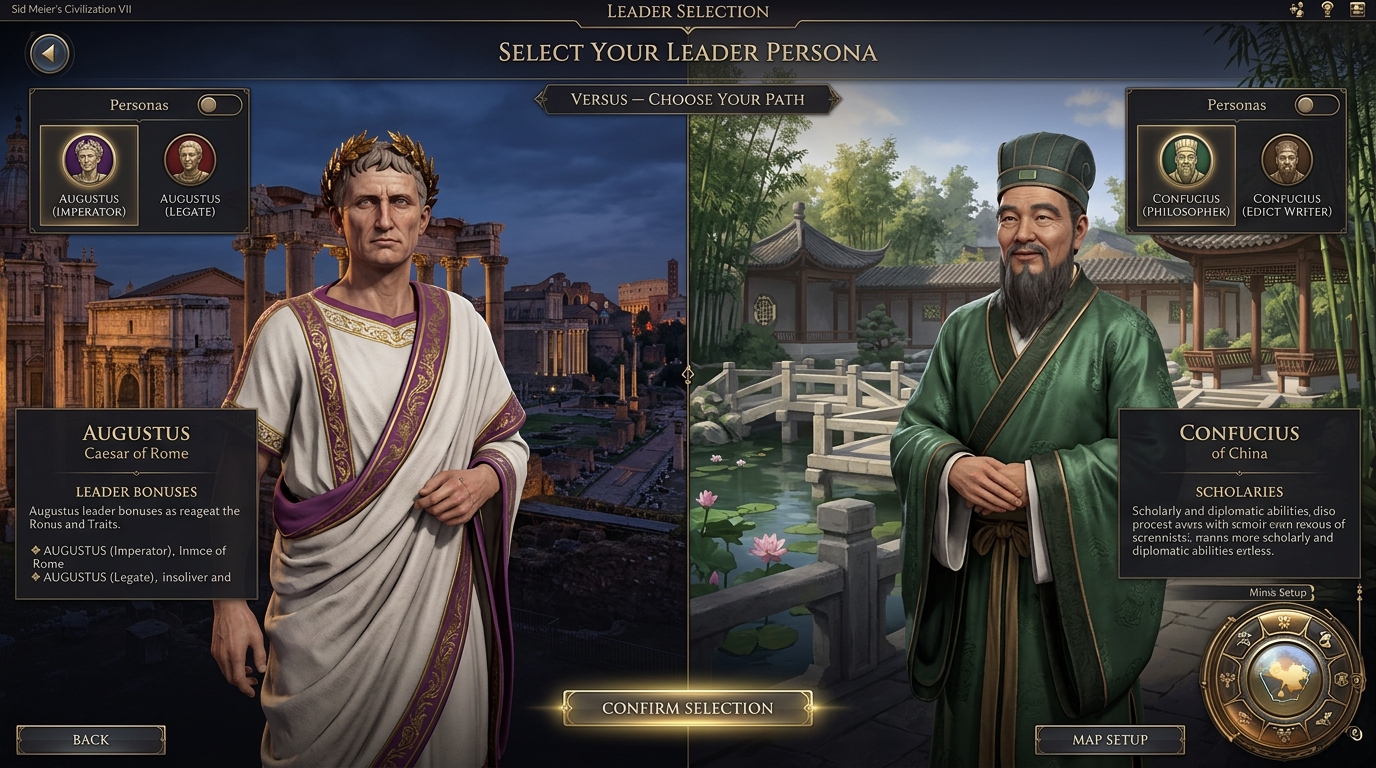
The days of leaders being nothing more than a static portrait with a boring three percent production bonus are finally over. In Civilization 7, the Persona system actually gives us a reason to care about who is sitting on the throne beyond just staring at a fancy hat. Take Napoleon, for example, who used to be the poster child for one note militarism in previous titles. Now, you can swap between his Revolutionary and Emperor Personas to completely flip your strategy on its head. It is a refreshing change that turns these historical figures into specialized toolkits rather than generic stat sticks that collect dust until the late game.
If you are feeling particularly aggressive, the Revolutionary Persona transforms Napoleon into a terrifying force of total world domination. You get the tools to steamroll your neighbors and turn the map into a very specific shade of French blue before the Exploration Age even hits its stride. On the flip side, the Emperor Persona leans into cultural snobbery and expansionism, proving that you can win just as effectively by being the most sophisticated person in the room. It is honestly about time the developers realized that a leader is more than just a list of passive buffs. This system lets you tailor your playstyle to the specific era you are in without feeling locked into a single lane for six hundred turns.
Watching your leader evolve through the new attribute trees adds a layer of customization that we have been begging for since the hex grid was invented. You are no longer just playing as a historical figure, you are actively building their legacy through militaristic or economic specializations. This decoupling of leaders from specific civilizations might sound like heresy to the purists, but it actually forces you to think about synergy in a way the series never has before. Whether you are pairing a warmonger with a peaceful civ for balance or doubling down on gold production, the choice actually feels like it belongs to the player. It is a bold move that rewards creativity instead of just punishing you for not picking the meta leader from the start screen.
Attribute Trees And Customizing Your Global Tyrant
Gone are the days when you were stuck with a leader’s mediocre static bonuses and forced to pray they didn’t become obsolete by the medieval era. Civilization 7 finally respects our time by introducing RPG style attribute trees that turn your chosen ruler into a specialized machine of global dominance. Instead of being locked into a single rigid playstyle from turn one, you now get to funnel points into Militaristic, Economic, or Cultural branches as the game progresses. It feels less like a spreadsheet simulation and more like building a character in an actual game, which is a massive upgrade over the take it or leave it design of the past. If you want to pivot from a peaceful merchant to a warmongering tyrant because your neighbor looked at you funny, the game actually gives you the mechanical tools to do it.
The new system is a direct answer to the boring stat bloat that has plagued the 4X genre for far too long. You are no longer just collecting a passive plus two to science and calling it a day, but rather choosing specific perks that fundamentally change how your empire functions across the three Ages. This customization is especially vital now that leader mechanics are decoupled from specific civilizations, allowing for some truly unhinged combinations that would make a historian weep. Want to turn Napoleon into a gold obsessed trade mogul or an expansionist zealot? The attribute trees allow you to lean into those specific fantasies without feeling like you are playing sub optimally. It is a bold shift that prioritizes player agency over historical railroading, and frankly, it is about time we got to build our own brands of digital tyranny.
Ranking The Heavy Hitters From Augustus To Amina
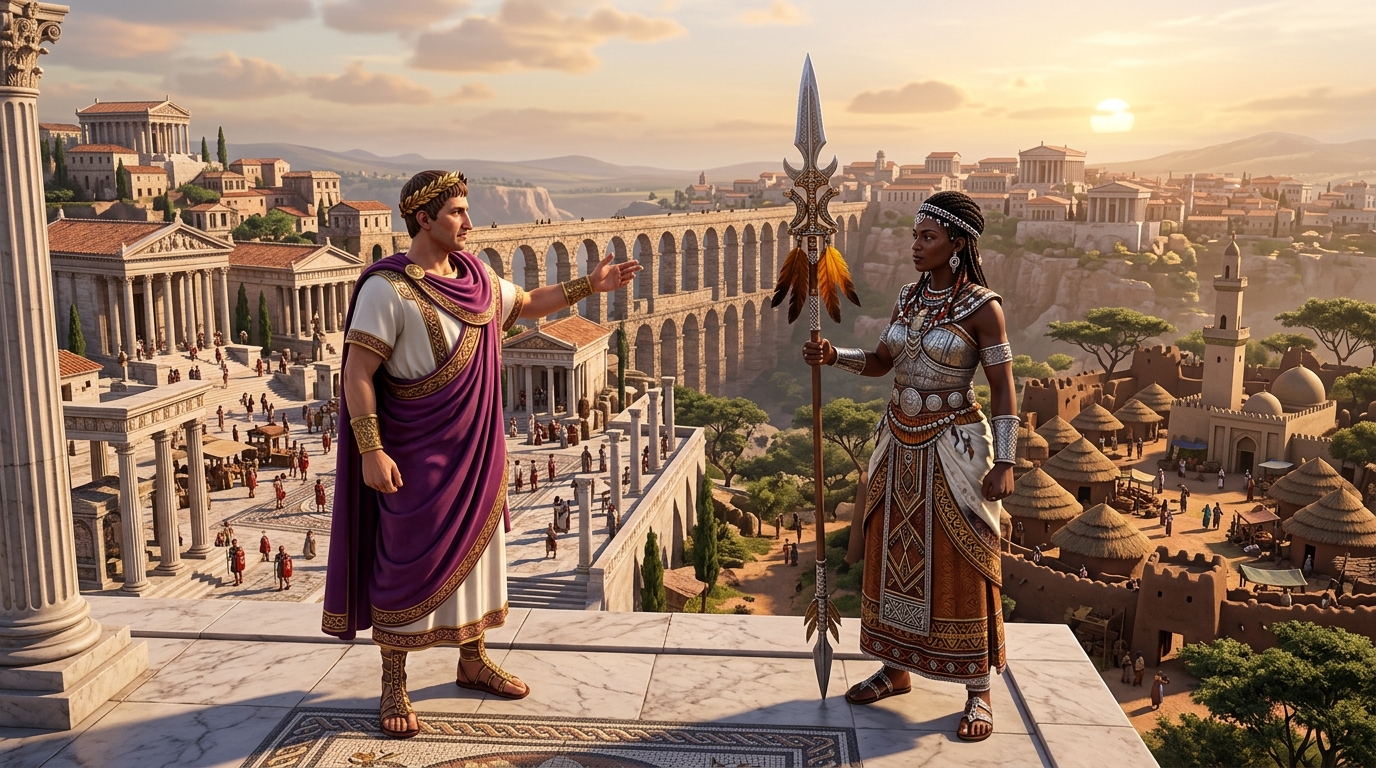
Augustus Caesar is back to remind everyone that building a sprawling empire is only fun if you actually have the infrastructure to support it. His persona in this iteration is a masterclass in expansionist greed, rewarding players who can juggle the new attribute trees without letting their economy collapse into a heap of marble dust. While some leaders feel like they are just along for the ride, Augustus demands you play the game with a specific, iron-fisted intent. He is an absolute powerhouse for anyone who wants to paint the map their favorite color while laughing at the puny production rates of their neighbors. If you are not utilizing his ability to snowball through the Antiquity Age, you are essentially playing on hard mode for no reason.
On the flip side, we have leaders like Amina who prove that not every historical figure needs a digital resurrection if their bonuses are this uninspired. Her kit feels like a collection of leftovers that the developers found behind a radiator during the final months of production. While the leader-civ decoupling mechanic is supposed to offer endless variety, pairing a low-tier leader with a top-tier civilization is like putting premium gas into a lawnmower. She is not exactly broken, but she is certainly boring, offering stat nudges that feel invisible compared to the game-changing shifts of the heavy hitters. Unless you are a completionist with way too much free time, she is mostly just taking up space on the selection screen.
The real stars of the show are the multi-persona leaders like Napoleon, who actually justify the new mechanical depth of the franchise. Being able to pivot from a revolutionary firebrand to a culture-obsessed emperor gives the game a level of strategic flexibility that we have been craving for years. It is refreshing to see a roster where your choice of leader actually dictates your long-term roadmap instead of just providing a passive five percent buff to something you were going to do anyway. Some of these leaders are clearly designed to break the game in the most entertaining ways possible, while others are just there to fill out the numbers. Choose wisely, or prepare to spend several hundred turns regretting your life choices.
Finally, Leaders Who Aren’t Cardboard Cutouts
Ultimately, the new leader system in Civilization 7 is the high-stakes gamble that actually paid off. By decoupling leaders from their specific nations and introducing the Persona system, the developers finally killed the spreadsheet fatigue that has plagued 4X games for a decade. It is a relief to see a roster where a leader like Napoleon feels like a dynamic threat rather than a static portrait with a 5 percent combat bonus. The attribute trees add a layer of personal agency that makes you feel like a ruler instead of a middle manager crunching numbers. While the purists might cry foul over the historical mixing, the sheer mechanical variety keeps the “one more turn” addiction fueled by genuine strategy rather than habit.
That being said, the team definitely flew close to the sun with the complexity of these Age transitions. There were moments during my Modern Age push where the combination of Persona abilities and custom attribute trees felt like they were teetering on the edge of total chaos. It is a loud, messy, and bold evolution that prioritizes fun over the dry, rigid historical accuracy of past entries. If you wanted a boring simulator where nothing ever changes, you are going to be disappointed. For everyone else, these leaders bring a much-needed spark of personality to a genre that was starting to feel a bit too much like a math homework assignment.
Civ 7 is easily the most ambitious the series has ever been, even if it occasionally trips over its own shoelaces. The Civilization 7 gameplay features available now offer enough tactical depth to justify the price of admission, especially when you start finding those broken, unintended synergies between different Ages. It is unapologetically experimental and occasionally ridiculous, which is exactly what the franchise needed to stay relevant. The developers did not just polish the old formula, they blew it up and rebuilt it into something that actually demands your attention. If this is the future of the series, I am happy to leave the boring stat-sticks of the past behind.
Frequently Asked Questions
1. How many leaders are actually in Civilization 7 right now?
The roster currently sits at 26 leaders. It is a solid mix of historical heavyweights and fresh faces that finally gives us enough variety to stop playing the same three strategies every weekend.
2. What is this leader-civ decoupling everyone is screaming about?
It means the developers finally stopped babysitting us. You are no longer forced to play a specific civilization just because you picked a certain leader, allowing you to pair Augustus Caesar with the Shogunate if you feel like breaking the game’s math.
3. Is historical accuracy still a thing in this game?
Civ 7 Leaders And The Death Of Historical Accuracy has officially been shoved into the backseat so that power gaming can take the wheel. The game now prioritizes player agency and insane combinations over making sure your leader lived in the same millennium as your government type.
4. What are Personas and why should I care?
Personas are essentially variants that change how a leader functions on the map. You can take a guy like Napoleon and swap him from a cultured Emperor to a Revolutionary warmonger depending on how much of the world you feel like setting on fire that day.
5. How do Attribute Trees work for leaders?
Attribute Trees are the new laboratory for your inner min-maxer. They allow you to force your leader to climb specific skill paths, meaning your favorite conqueror is only as effective as the economic or militaristic traits you decide to hardwire into them.
6. Is the new system better than the old rigid playstyles?
Yes, because being shackled to a single playstyle based on a leader choice from the Bronze Age was boring. This new setup lets you balance a checkbook with a warlord or fund a global empire with a pacifist, which is much more entertaining than following a historical script.
7. Can I play a peaceful game with a militaristic leader?
You absolutely can, though your neighbors might not believe you at first. The decoupling mechanic means you can take a powerhouse like Napoleon and pair him with a gold-focused civilization to see if a conqueror can actually manage a modern stock exchange.