The Control Resonant launch is scheduled for September 24, 2026, just 18 days away according to the September 6 release update. This is the direct sequel to 2019’s Control, not a side quest wearing a suspiciously expensive coat. I’m expecting a single-player action-adventure RPG starring Dylan Faden in a paranaturally distorted Manhattan, which sounds exactly as sensible as it should.
It arrives on current consoles and PC for $59.99, with a $69.99 Digital Deluxe Edition. A Mac version follows later in 2026, while cloud streaming support is planned for launch. If you’re deciding whether to pre-order, wait for reviews, or simply clear space before the supernatural furniture starts flying, those are the facts that matter.
TL;DR: Control Resonant, the direct sequel to 2019’s Control, launches worldwide on September 24, 2026, for current consoles and PC at $59.99, with a $69.99 Digital Deluxe Edition. A Mac version is planned for later in 2026, cloud streaming is expected at launch, and the PC release will support advanced upscaling and path tracing, making launch reviews especially important for performance and value.
Control Resonant Release Date And Platforms
Control Resonant launches worldwide on September 24, 2026, according to the September 6 release information. The direct sequel to 2019’s Control arrives on current consoles and PC. I’m especially interested in how its paranatural chaos holds up across those versions, because flashy powers are less impressive when the frame rate starts seeing ghosts. The PC release will also support advanced upscaling and path tracing, making it the obvious place to watch for serious visual and performance analysis.
The Mac version is planned for later in 2026, while cloud streaming support is expected at launch. That gives players plenty of ways to enter the distorted Manhattan setting, assuming they can remember which storefront currently owns their copy. Between consoles, multiple PC storefronts, Mac, and cloud streaming, one game now needs more shopping options than a fast-food menu. For launch day, though, the core choices are clear: current consoles and PC.
Control Resonant Pricing And Editions

The September 6, 2026 update confirmed that the U.S. standard edition of Control Resonant will cost $59.99 ahead of its September 24 launch. The $69.99 Digital Deluxe Edition adds a $10 premium, which is not a fortune, but it is still enough money to make checking the contents worthwhile. Before upgrading, I would verify exactly which cosmetic items, story extras, weapon bonuses, or soundtrack perks are included, because “Deluxe” can mean anything from genuinely useful content to digital confetti. I would also confirm that the edition applies to the platform and storefront you plan to use, since transferring entitlements is rarely as painless as the checkout screen suggests.
The PC version is also drawing attention for its newly highlighted technical features, including advanced upscaling and path tracing. Shoppers should check the hardware requirements before treating the Deluxe upgrade as the main decision. A prettier Manhattan is welcome, but not if the game turns your graphics card into a space heater with unresolved performance problems. I would wait for launch-day testing if frame rates, image quality, ray-traced effects, or shader-stutter behavior matter more to you than early access to digital trinkets. The September 24 release gives players a short window to compare real performance against the marketing fog.
At the time of reporting, the PC pre-purchase page had no user reviews, meaning nobody had yet been able to warn us about the opening ten minutes. That makes the standard edition the safer blind purchase, especially for anyone unconvinced that the Deluxe extras justify the higher price. I am interested in the sequel, but interest is not a coupon code, and the game still has to prove that its launch build deserves premium enthusiasm. Until players can report on stability, pacing, and whether Dylan’s first minutes are gripping or merely paranormal paperwork, upgrading should be treated as an informed gamble.
Advanced Upscaling And Path Tracing Performance
The September 6, 2026 technical announcement confirms that the PC version of Control Resonant will support advanced upscaling and path tracing when the game launches on September 24. That is the shiny technical headline, although “shiny” is doing a lot of work when the feature can also make a high-end GPU sweat like it owes the power company money. The paranaturally mangled Manhattan should be a strong showcase for advanced lighting, reflections, and shadows. I’ll be looking past the marketing fog to see whether those effects improve the image in motion or simply add expensive noise to already dramatic corridors.
The real test is performance, not a screenshot captured at the one angle where every puddle looks like a cinematic masterpiece. I’ll compare image quality with advanced upscaling enabled and disabled, paying attention to reconstruction, fine detail, ghosting, and whether fast supernatural combat turns into a smeary watercolor accident. Frame rates, frame-time consistency, resolution targets, and GPU requirements will matter just as much, especially for players who do not consider “buy a new graphics card” a reasonable settings menu option. Path tracing may produce richer lighting, but it only earns its keep if the visual upgrade survives movement and does not demand a small household generator.
By launch, the question should be clear: does Control Resonant look meaningfully better with path tracing, or does advanced upscaling merely make an outrageous performance bill easier to disguise? I’m especially interested in the practical sweet spot, where the game retains its eerie lighting and sharp combat without turning premium hardware into decorative space heaters. If the gains are obvious and the frame rates hold, this could be a convincing technical showcase. If not, the feature may belong in the same category as gold-plated cutlery, impressive in theory and mostly pointless at dinner.
Dylan Faden And The Resonant Sequel
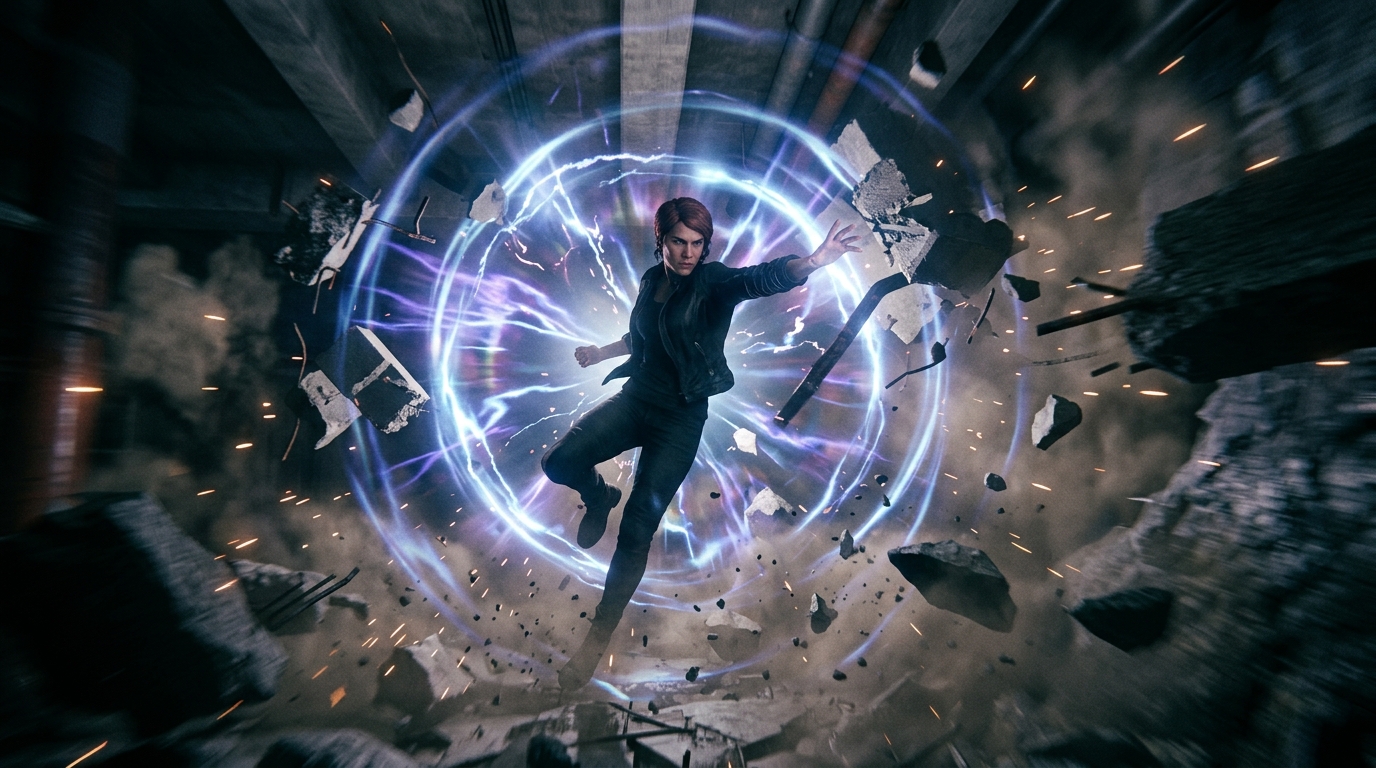
The Control Resonant launch is set for September 24, 2026, and this is the direct sequel returning players have been waiting for, not another paranormal side quest with a suspiciously large filing cabinet. According to the September 6, 2026 summary, it is a single-player action-adventure RPG starring Dylan Faden in a paranaturally distorted Manhattan. The story takes place after Control, so the Federal Bureau of Control’s weirdness is no longer confined to one aggressively hostile building. There is no multiplayer component, which is probably for the best when the central design challenge is surviving reality itself. I am here for the sequel’s consequences, not another tour of every classified memo in the archive.
The game’s engine remains the technical foundation, and its role matters because this launch is also a test of how far the unsettling visual style can be pushed on current hardware. Newly highlighted features, including advanced upscaling and path tracing, make PC performance analysis part of the conversation from day one, rather than an optional post-launch footnote. For returning players, that means watching for sharper lighting, denser environmental detail, and the usual question of whether “cinematic” secretly means “please lower three settings.” The September 24 release gives us a clear point to judge whether Resonant meaningfully advances Control’s formula or simply throws more supernatural furniture at it. Either way, Dylan is finally stepping out of Jesse Faden’s shadow, and Manhattan looks like it has taken that personally.
CONTROL Resonant Needs More Than Pretty Reflections
CONTROL Resonant launches worldwide on September 24, 2026, bringing Dylan Faden’s paranaturally distorted Manhattan to current consoles and PC. The technical pitch is already loud, with ray-traced reflections, path tracing, and modern upscaling promising a city that can make a puddle look more important than some supporting characters. That spectacle is welcome, but shiny surfaces are not a substitute for sharp combat, memorable exploration, or a story that knows where it is going. The asking price starts at $59.99, so the game does not get to hide behind the usual “it is only pretty” excuse.
The real verdict arrives next, when PC performance tests reveal whether those visual features are impressive engineering or an invitation to negotiate with your graphics settings. The first proper reviews will also determine whether CONTROL Resonant is a compelling sequel or merely a very expensive lighting demonstration with supernatural paperwork. I would wishlist it now, wait for benchmarks if you are playing on PC, and keep your expectations attached to something heavier than a reflection probe. Ray-traced reflections can make a world look alive, but they cannot give a game a personality.