
The DLSS 4.5 release is complete in stages as of September 4, 2026, not as one giant download descending from the heavens. The second-generation Transformer model for Super Resolution is available across every RTX generation, with graphics app overrides supporting more than 400 games and applications. I’m already more interested in sharper detail, cleaner motion, and fewer shimmering edges than another marketing chart full of arrows.
DLSS 4.5 also introduces Dynamic Multi Frame Generation, which adjusts its frame multiplier during gameplay instead of blindly flooring the accelerator. That could mean better responsiveness when a scene gets busy and extra frames when the GPU has room to show off. Game-specific support is still rolling out, so the release is real, but the “everything works everywhere” fantasy remains exactly that.
TL;DR: DLSS 4.5 is available through a staged rollout as of September 4, 2026, bringing its second-generation Transformer Super Resolution model to all RTX GPUs and graphics app overrides for more than 400 games and applications. Dynamic Multi Frame Generation can adjust its frame multiplier during gameplay, but game-specific support remains uneven, so results and image-quality gains will vary by title, GPU, and developer integration.
DLSS 4.5 Release Status
DLSS 4.5 is available, but calling it one universal patch would be misleading. The feature set arrived through a staged rollout, with the second-generation Transformer model for Super Resolution becoming available in August 2026 and the broader release status detailed in the September 4, 2026 announcement. The model supports all RTX generations and can be enabled through graphics app overrides in more than 400 games and applications. That is useful coverage, but it is not the same as every game receiving a neat, developer-tested DLSS 4.5 update. The acronym has arrived, but it did not bring a single magic button for the entire PC library.
The release is better understood as several features arriving through different routes. Transformer-based Super Resolution targets cleaner detail, improved lighting, sharper edges, better motion clarity, and stronger temporal stability, while Dynamic Multi Frame Generation adjusts its frame multiplier during gameplay to balance image quality and responsiveness. Those claims sound impressive, and the image-quality improvements can be meaningful in games that already handle reconstruction well. I would still treat performance promises with caution, because a higher frame counter is not automatically a better experience if latency or visual artifacts come along for the ride. More frames are nice, but nobody wants their character animated like a haunted flipbook.
Game-specific support remains uneven despite the broad graphics app availability described in the September 4 announcement. Some titles can use overrides immediately, while others still depend on developers integrating, testing, and updating individual DLSS 4.5 features. That means the practical value varies by game, GPU, preset, and whether the developer has done more than tick a box and walk away. My verdict is cautiously positive: DLSS 4.5 looks like meaningful progress for supported workloads, but readers should check each game rather than assume the label guarantees a visual revolution.
Second Generation Transformer Model

The second-generation Transformer model for DLSS Super Resolution became available in August 2026, with staged support continuing through graphics control software and individual game updates. It improves fine detail, lighting, edge quality, motion clarity, and temporal stability across RTX 20-, 30-, 40-, and 50-series GPUs. That broad compatibility matters, because this is not another shiny feature locked behind the newest card. The model can be enabled through overrides in more than 400 games and applications, although actual support and results still depend on each title. In other words, the acronym has arrived, and now it has to survive contact with real pixels.
I’ll test the updated model against the previous DLSS Super Resolution implementation at matching resolutions and settings, using supported games with plenty of opportunities for reconstruction errors to embarrass themselves. The focus will be on shimmering foliage and railings, ghosting behind moving characters, distant textures that turn into soup, and fine geometry under changing light. Motion clarity gets its own scrutiny, since a still screenshot can make almost any upscaler look like it has a respectable haircut. I’ll also check whether the model introduces new artifacts or performance costs, rather than accepting image-quality claims as sacred scripture. The useful question is not whether a paused frame looks sharper, but whether the improvement survives a normal evening of actually playing the game.
Older RTX cards are the real test of DLSS 4.5, because an upgrade that only makes the newest hardware look better is just premium wallpaper. I’ll compare RTX 20-, 30-, and 40-series results with the 50-series where possible, watching for meaningful gains in temporal stability and detail rather than tiny differences visible only under magnification. Supported games will determine how consistent the experience is, since developer integration can affect presets, overrides, and artifact handling. If the new Transformer model reduces shimmer and ghosting without turning frame rates into a hostage negotiation, it earns the upgrade label. If the changes vanish during motion, we may have another acronym wearing a fancy jacket.
Dynamic And 6X Frame Generation
DLSS 4.5 became available in August 2026, and its Dynamic Multi Frame Generation is the more practical upgrade of the two. It can change the frame-generation multiplier during gameplay, using fewer generated frames in lighter scenes to keep controls responsive and image quality stable. When a scene becomes more demanding, it can increase output instead of forcing the same setting through every explosion, corridor, and suspiciously expensive puddle. I like the idea because a game should adapt to what is happening, rather than blindly chasing a number for the screenshot gallery. Game support and developer integrations are still rolling out, so the results will depend heavily on the title.
6X Multi Frame Generation takes the louder route on RTX 50-series cards, generating up to five AI frames for every traditionally rendered frame. That can produce six displayed frames from one rendered frame, which sounds impressive until latency and image quality arrive to collect their overdue bill. The extra frames are predictions, not fresh game logic, so fast camera moves, UI elements, particles, and enemy silhouettes can still expose artifacts. In a slow, cinematic game, the effect may look excellent, but competitive players should be wary of turning responsiveness into decorative wallpaper.
The important distinction is that Dynamic Multi Frame Generation tries to balance smoothness with playability, while 6X Multi Frame Generation prioritizes maximum output. I would judge either mode by how the game feels and looks at normal settings, not by a benchmark bar inflated with five AI frames and a tiny footnote. That is how performance theater happens: the number gets applause while the mouse feels like it is sending commands by postal service. DLSS 4.5 is meaningful when it improves demanding games without making motion, controls, or visual clarity worse, and no acronym can negotiate that verdict.
DLSS 4.5 Games And Hardware
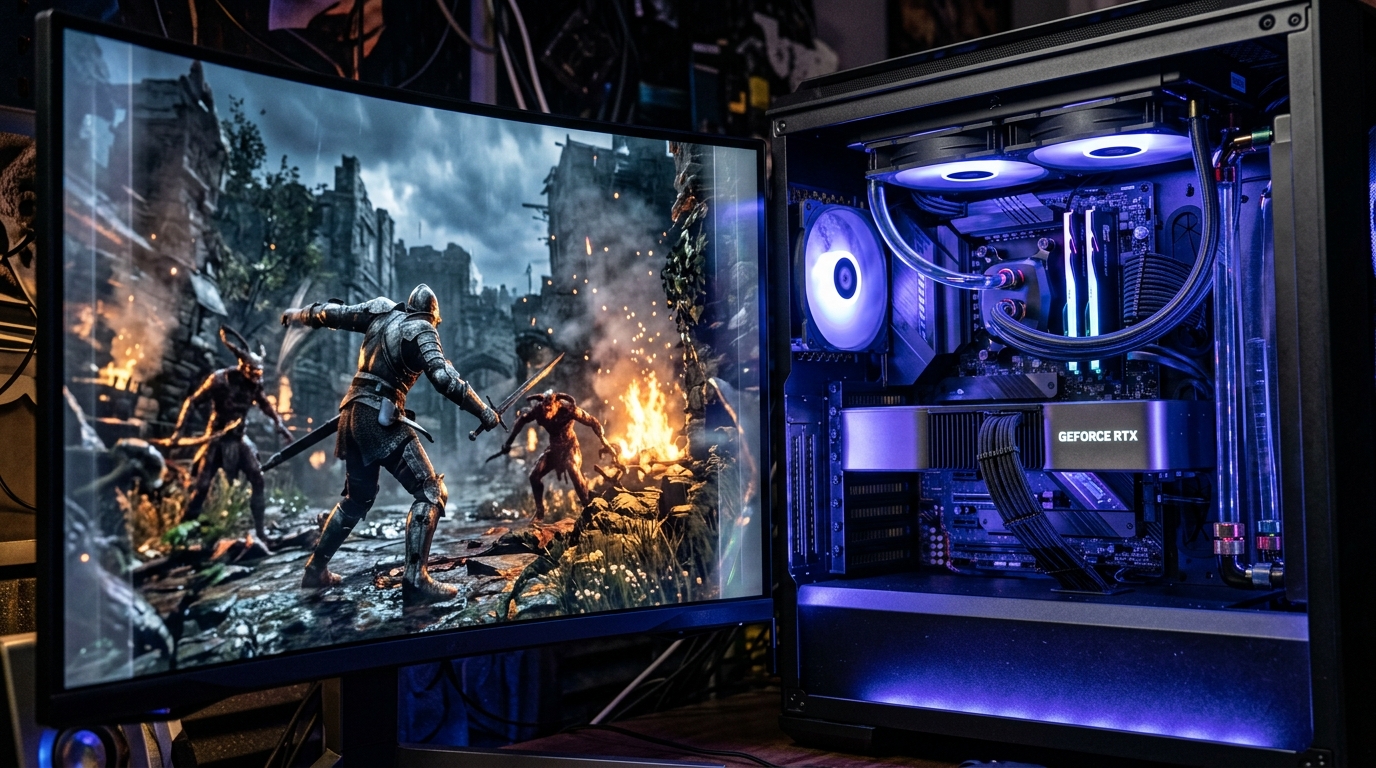
As of September 4, 2026, DLSS 4.5 is available in stages through graphics control software, with game-specific integrations still rolling out. The second-generation Transformer model is the broadest upgrade, bringing improved detail, lighting, edge quality, motion clarity, and temporal stability to more than 400 games and applications through overrides. It supports every RTX generation from the 20-series onward, so this is not just another 50-series perk wearing a designer label. Dynamic Multi Frame Generation is the more dramatic feature, but its benefits are aimed primarily at 50-series hardware and high-refresh-rate displays.
The biggest winners are newly supported, heavily ray-traced games and applications where rendering a clean native image already pushes a graphics card toward the floor. August 2026 Gamescom announcements and the September 4 availability update point to DLSS 4.5 as most useful in demanding titles targeting 144Hz or higher, particularly when the second-generation Transformer model can sharpen fine geometry, stabilize foliage, and reduce shimmering in motion. I would also expect the clearest gains in visually dense games with path tracing or extensive reflections, where extra frames are welcome rather than merely decorative. In less demanding games, the new model can still improve image quality, but the performance uplift may be small enough to qualify as a rounding error with better marketing.
- Worth enabling: demanding ray-traced games, high-refresh-rate targets, and older RTX hardware using the Transformer Super Resolution upgrade.
- Use caution: competitive games and low-latency shooters, where Dynamic Multi Frame Generation can add latency or produce odd-looking objects during fast movement.
- Do not expect miracles: frame generation cannot fix a weak base frame rate, CPU bottlenecks, or a game that already looks like it was assembled during a power cut.
For me, that makes DLSS 4.5 a meaningful image-quality update first and a frame-generation spectacle second. Dynamic Multi Frame Generation can make a demanding game feel wonderfully smooth on a fast monitor, but generated frames do not replace responsive input, and visual glitches remain a bad trade in twitch-heavy play. The sensible approach is to use the Transformer model broadly, reserve aggressive frame generation for cinematic ray-traced games, and judge each new integration by motion clarity and latency rather than a giant number in the corner. That is progress, provided we stop pretending every extra frame is equally real.
DLSS 4.5 Next Steps
DLSS 4.5’s most important upgrade is the second-generation Transformer model, because it reaches every RTX generation from the 20-series through the 50-series. It improves fine detail, lighting, edges, motion clarity, and temporal stability, with graphics app overrides supporting more than 400 games and applications at launch. That gives the Transformer upgrade the broadest practical reach, and it does not require buying a new graphics card just to make a lamp post stop shimmering. I still want to see independent testing before calling it a revolution, but this is the part of DLSS 4.5 with the strongest case for existing users.
Dynamic Multi Frame Generation and the new 6X mode are less universal, since both remain 50-series features and bring more obvious compromises. Dynamic Multi Frame Generation adjusts its multiplier during play, aiming for better image quality and responsiveness in lighter scenes instead of blindly throwing generated frames at the screen like a slot machine with a GPU budget. The 6X setting can push frame counters into cartoon territory, but extra frames do not automatically mean lower latency, cleaner motion, or a better game. In other words, the number may look heroic while the pixels quietly file a complaint.
The next step is broader developer integration, wider game support, and testing outside showcase conditions. New profiles and patches will determine whether DLSS 4.5 improves the games people actually play, rather than just making a carefully selected demo look expensive. I’ll be watching image quality, latency, artifacting, and real performance gains, especially on older RTX cards where the Transformer upgrade matters most. Until those results arrive, DLSS 4.5 looks like meaningful progress in one area, a luxury feature in another, and possibly the same frame counter with a new haircut.
DLSS 4.5 Finally Earns Its Hype
The DLSS 4.5 release arrived in stages in August 2026, and by September 4, its major features were available through graphics control software. The biggest upgrade is a second-generation Transformer model for Super Resolution, which promises cleaner detail, sharper edges, steadier lighting, and better motion clarity across all RTX generations. The model can be enabled through overrides in more than 400 games and applications, which is a useful head start rather than a magic wand for every blurry texture in existence. Image quality looks like the most broadly relevant improvement, especially in difficult scenes where older reconstruction could turn fine detail into digital porridge.
Dynamic Multi Frame Generation is the more ambitious feature, adjusting its frame-generation multiplier depending on what is happening on screen. That could improve responsiveness in lighter scenes while still chasing higher frame rates when the GPU has room to stretch, although the real benefit depends on the game, settings, and hardware involved. Native developer support is still rolling out, so not every title will show the same results just because a graphics app toggle exists. My verdict is simple: the DLSS 4.5 release is meaningful progress, particularly for image stability and older RTX cards, but it is not an automatic upgrade for every favorite game. Check actual comparisons before celebrating, because another acronym in the settings menu is not proof that your favorite game suddenly learned good manners.