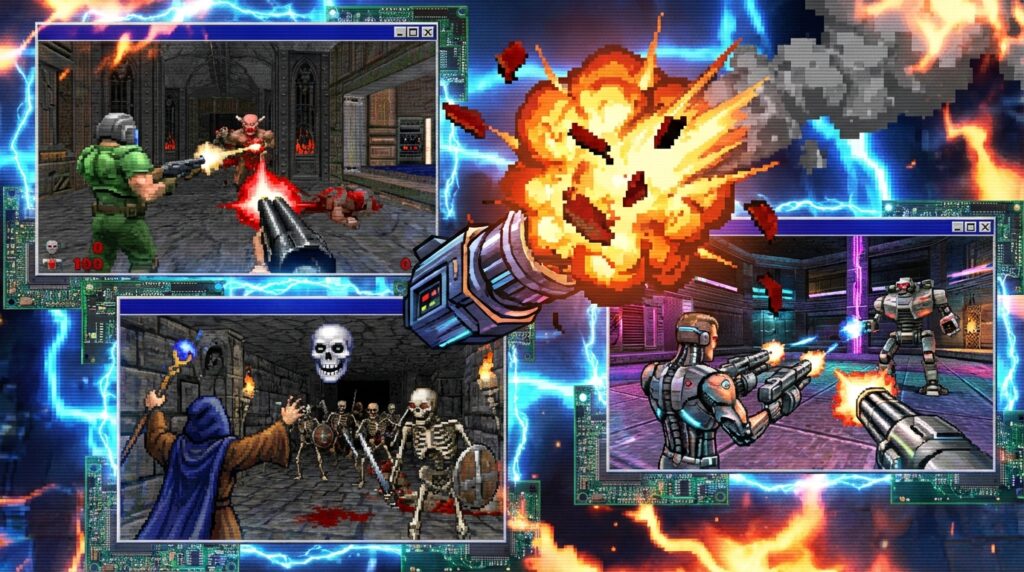
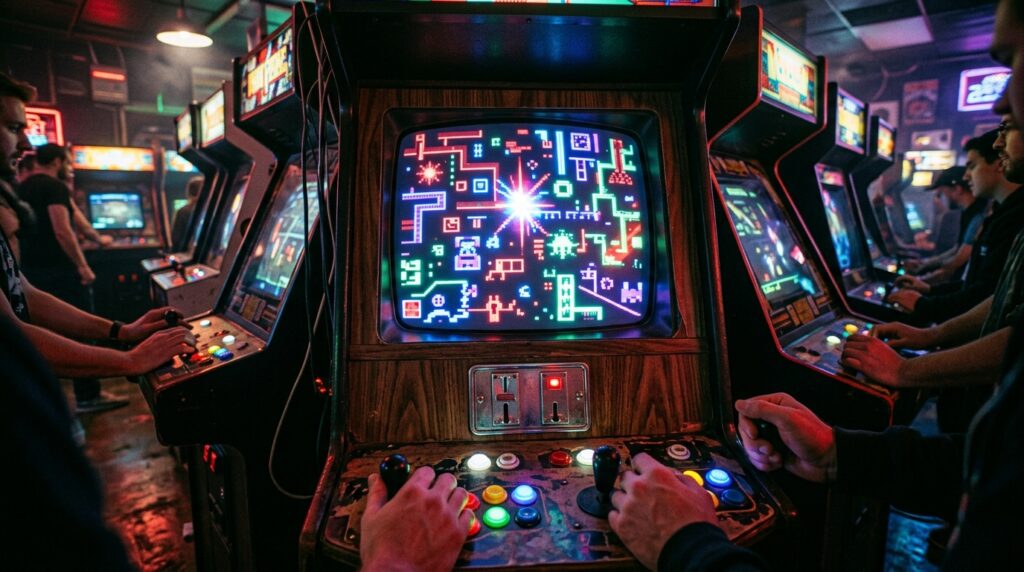
Retro arcade history is the story of chunky cabinets, tinny speakers, and pocketfuls of coins turning simple pixels into a cultural earthquake. I’ve watched these machines evolve from university experiments and mechanical curiosities into the screen-chewing giants of the golden age. Before home consoles colonized living rooms, arcades were where games earned their stripes, and where your allowance mysteriously vanished.
From Computer Space to Pong, Space Invaders, and the maze-chomping legends that followed, every cabinet taught the same basic lesson: make it easy to understand, hard to master, and just addictive enough to demand one more quarter. Some games were brilliant. Others were glorified light bulbs with delusions of grandeur. Together, they built the foundations of modern gaming, one flashing screen and financial mistake at a time.
Key Takeaways
- Arcade gaming evolved from mechanical penny-arcade attractions and university computer experiments into a commercial industry, with Computer Space pioneering coin-operated video games and Pong proving that simple, instantly understandable gameplay could be highly profitable.
- The golden age of arcades, roughly 1978–1985, was defined by games such as Space Invaders, Pac-Man, Donkey Kong, and Galaga, which combined easy-to-learn rules with difficult mastery, public high scores, and strong social competition.
- The 1983 video game crash primarily devastated the North American home-console market rather than ending arcades. Arcades survived by offering superior hardware, multiplayer experiences, specialized controls, ticket redemption, and other experiences that were difficult to reproduce at home.
- Arcade design still influences modern games through readable controls, immediate feedback, meaningful failure, short play sessions, and efficient difficulty curves. Preserving cabinets, emulating hardware, and maintaining arcade venues keeps both the games and their design lessons alive.
From Penny Arcades To Computer Space
Before video games learned to demand quarters, penny arcades offered mechanical shooting galleries, strength testers, fortune machines, and other contraptions designed to turn curiosity into loose change. Pinball added lights, bumpers, flippers, and the timeless promise that one more ball would definitely fix everything. It never did. Meanwhile, university labs were teaching computers to draw crude graphics and respond to human input, producing experiments such as Spacewar! that proved screens could be more than expensive spreadsheets. The hardware was enormous, the visuals were gloriously primitive, and the basic idea was already there: give players a challenge, a score, and a reason to try again.
Computer Space arrived in 1971 as the first commercial coin-operated video game, translating university experimentation into a cabinet that could actually live in an arcade. Its space combat was ambitious, but the controls and rules were less immediately friendly than the flashing, familiar attractions around it. Then Pong appeared in 1972 and turned the whole business into a commercial starting gun by reducing electronic competition to digital table tennis, minus the table and any sensible place to sit. I love it because it understood the arcade’s most important rule: if a player can learn the game in seconds, lose in minutes, and blame the machine immediately, you may have a hit. That simple loop made Pong approachable, repeatable, and profitable, proving that the future of arcades did not need a university lab. It needed two paddles and an aggressively persuasive coin slot.
The Golden Age Of Arcade Games
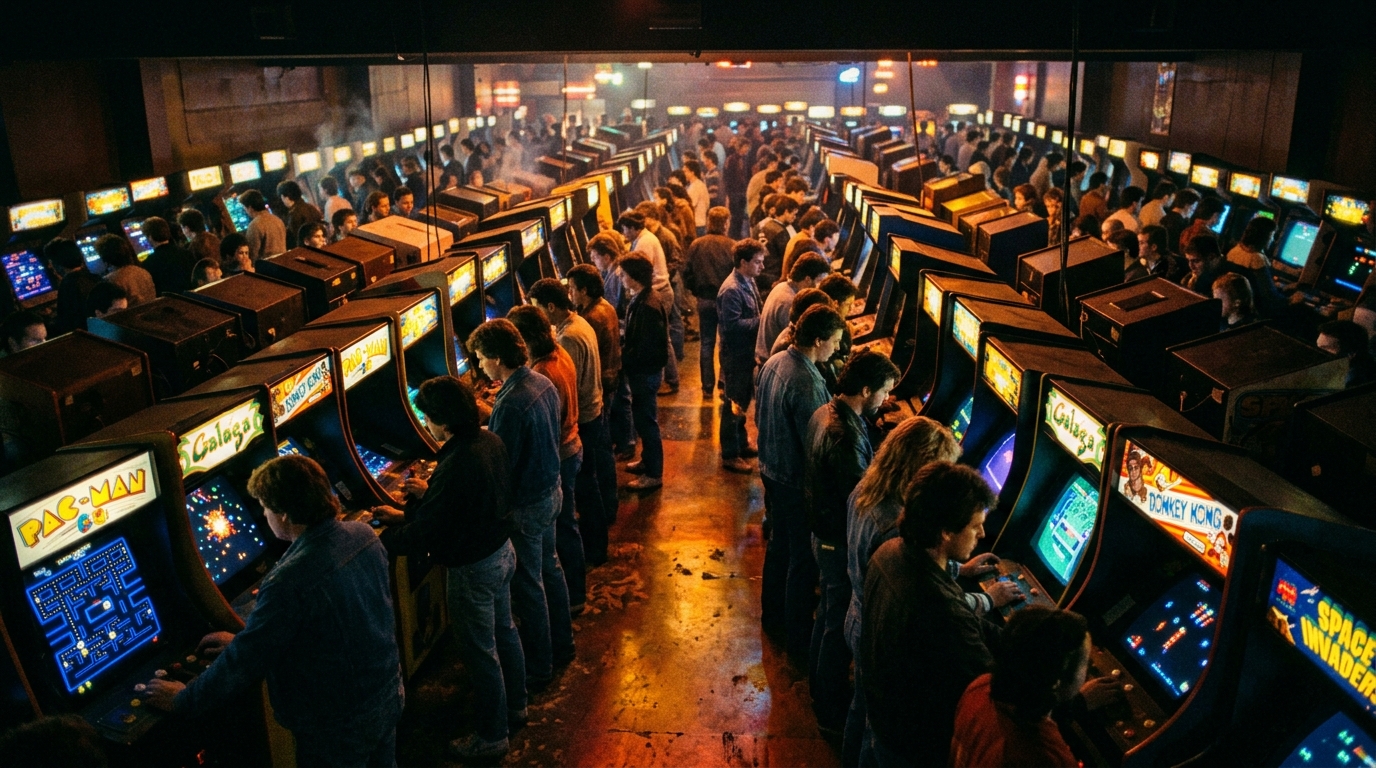
The Golden Age of arcade games began in the late 1970s, when Space Invaders turned a simple alien-shooting loop into a national obsession and Asteroids proved vector graphics could make people fear polygons. Then came Pac-Man, Donkey Kong, Galaga, Defender, and Ms. Pac-Man, each adding a new wrinkle to the rapidly evolving arcade formula. These games were easy to understand in seconds, but mastering them required sharp reflexes, pattern recognition, and the stubborn refusal to admit that the last quarter was wasted. The golden age ran roughly from 1978 into the mid-1980s, transforming arcades from novelty attractions into the center of gaming culture.
What made these machines powerful was not just the gameplay, but the pressure surrounding it. A high score was public evidence that you had skills, patience, or an alarming amount of spare change, while the three-letter initials table turned every cabinet into a tiny monument to bragging rights. Difficulty was carefully calibrated to keep players alive just long enough to believe they had a chance, then demand another quarter with all the subtlety of a toll booth holding a grudge. Games like Defender and Galaga could punish hesitation brutally, yet their rules were clear enough that failure felt like a challenge instead of a software tantrum.
The cabinets themselves helped turn arcades into social battlegrounds rather than noisy rooms full of blinking furniture. Pac-Man looked friendly enough to lure in families, while Donkey Kong sold its story through giant artwork, bright colors, and a hero whose entire plan was apparently to climb ladders until the problem solved itself. Players watched one another, traded strategies, celebrated unlikely victories, and treated the person holding the top score like a minor local celebrity. I still think that shared audience was the real innovation. These games did not merely ask who could play. They asked who could survive public humiliation one quarter at a time.
The Arcade Crash And Industry Shift
The early 1980s arcade boom was real, but it was not an endless money fountain guarded by a wizard with a roll of quarters. Hit games packed arcades, inspired dedicated cabinets, and turned a trip to the local mall into a competitive sport with flashing lights. Then the market filled with lookalikes, rushed conversions, and machines that seemed designed by someone who had only heard games described over the phone. The problem was not simply that players got bored. Operators had too many weak cabinets competing for the same limited floor space. When every new release promised the next big thing, “big thing” started meaning “another game nobody remembers.”
The 1983 video game crash was primarily a collapse in the North American home-console market, not a clean death certificate for arcades. Overproduction, overcrowded store shelves, aggressive discounting, and declining consumer trust created a spectacular mess, while poor-quality releases became the convenient villain in every history lesson. Those bad games mattered, but blaming one famously awful licensed title for everything is lazy storytelling with a controller-shaped hat. Arcades faced their own pressure from home systems and rising costs, yet many venues survived because the experience still offered sharper hardware, social competition, and games that felt impossible to replicate at home. The crash damaged the wider industry, but it did not make every arcade cabinet spontaneously burst into sad little pixels.
Arcades adapted by making the coin-operated experience more immediate, more impressive, and harder to imitate in a living room. Fighting games turned head-to-head matches into spectator events, while improved sprite work, scaling, sound, and specialized controls gave players a reason to keep feeding the machine. Operators also expanded beyond traditional cabinets with linked multiplayer setups, ticket redemption, racing machines, and family-entertainment formats that made revenue less dependent on one blockbuster game. I think that shift is the important lesson: arcades survived by selling an experience, not merely access to software. The industry did not escape its problems through magic. It stopped pretending that bigger piles of mediocre games counted as a business plan.
Why Retro Arcades Still Matter

Retro arcade history matters because those machines taught game designers to respect the player’s time. From Computer Space in 1971 to Pong’s breakout success in 1972, arcade games built their appeal around rules you could understand in seconds and master over weeks, assuming your patience survived the first wave of digital violence. A joystick, a few buttons, and a screen full of immediate consequences were enough to create depth without burying the fun under tutorials, skill trees, or a loading screen apologizing for existing. Modern games still borrow the formula through short play sessions, readable controls, instant feedback, score chasing, and difficulty curves that punish sloppy thinking instead of merely demanding more hours. The best arcade design remains brutally efficient, which is a polite way of saying it wastes nothing and excuses nothing.
That influence is easy to spot whenever a modern game makes failure feel useful instead of insulting. Classic arcade machines turned every attempt into a compact lesson, showing players exactly why they lost and daring them to insert another quarter. I still prefer that blunt conversation to games that hide basic mechanics behind tooltips and then act surprised when nobody reads the digital instruction manual. Preservation keeps these ideas alive through working cabinets, curated collections, emulation, and careful documentation of hardware that was never built to survive several decades of sticky fingers. Emulation is not a replacement for the original machine, but it is far better than allowing important pieces of game history to vanish because an aging circuit board decided retirement sounded nice.
Arcade bars and collector culture have also proved that the old ritual still has teeth. Standing beside a cabinet, watching someone fail spectacularly, then stepping up to beat their score creates a social experience no menu screen can manufacture. The physical controls, loud speakers, glowing marquees, and glorious demand for spare change make playing feel like an event rather than another item on a backlog. Collectors preserve the machines, restorers keep their quirks intact, and modern venues give newcomers a chance to discover why feeding a cabinet quarters still feels better than watching a progress bar apologize for existing. Retro arcade history survives because the design was never only about technology. It was about making every second count.
How Primitive Tech Created Addictive Urgency
Retro arcade history is ultimately a story about turning limited technology into unlimited urgency. From Computer Space in 1971 to Pong in 1972 and the golden age that followed, designers learned how to make simple rules feel like personal challenges issued by a hostile little machine. The hardware was primitive, the screens were chunky, and the cabinets were extremely good at converting pocket change into regret. Yet those constraints created focus, forcing developers to prioritize readable controls, immediate feedback, and mechanics that stayed interesting after the novelty wore off. That is a better design philosophy than adding twelve crafting menus and calling it depth.
The strongest arcade games still work because they understand that difficulty is only satisfying when the player can see how to improve. Pac-Man teaches route planning, Galaga rewards timing and risk, and Street Fighter II turns a handful of buttons into a competitive language with frightening efficiency. These games do not bury their best ideas under tutorials, filler missions, or a map that looks like someone spilled confetti on a spreadsheet. They present the challenge, explain it through play, and let failure provide the lecture. I will take that clarity over a forty-hour campaign padded with chores and a protagonist who refuses to jump when I press the jump button.
That is why I keep returning to retro arcade history instead of treating it as a museum exhibit full of dusty cabinets and suspicious carpet. The era shaped modern game design by proving that spectacle, competition, and elegant mechanics could share the same screen without requiring a billion-dollar budget. Preserving these games matters because their lessons remain brutally useful: make the controls sharp, make the objective clear, and respect the player’s time. The best arcade games are still worth playing because their ideas are sharper than many modern games with budgets large enough to buy a small country. They may still eat your quarters, but at least they have the decency to earn them.