
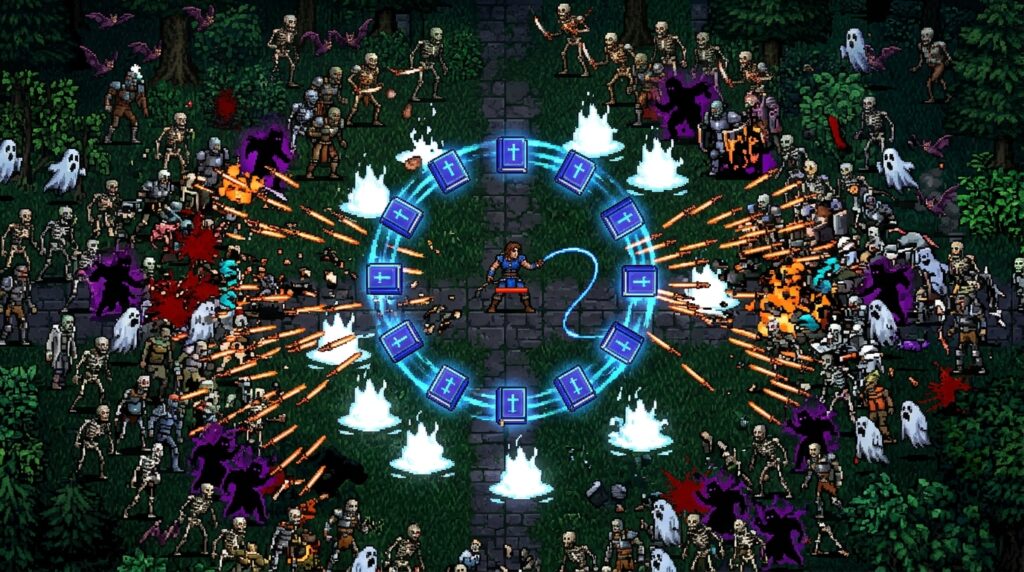
We’ve all been there: you spent three dollars on a game about dodging pixelated bats, and suddenly it’s 4:00 AM and you’ve forgotten what sunlight looks like. While the original masterpiece essentially birthed a digital addiction, the market is now flooded with survivors clones, or “Bullet Heavens,” if you want to use the fancy name Steam gave them to sound more professional. Most of these are lazy, asset-flipped garbage that deserve a quick uninstall, but a handful have actually taken the formula and evolved it into something worth your precious sleep.
I’ve sifted through the endless pile of clones to find the titles that actually respect your time and your GPU. Whether you want to play as a potato wielding six shotguns or you’re craving a dark, gritty throwback to the 90s ARPG era, the genre has finally grown up. These picks aren’t just imitators; they are high-polish time sinks that prove you don’t need a massive budget to create a gameplay loop that hits like a dopamine freight train.
Key Takeaways
- The ‘Bullet Heaven’ genre has evolved beyond simple clones into high-polish experiences that offer deep strategic layers like complex stat-stacking and tactical environmental destruction.
- Top-tier indie titles like Brotato and Soulstone Survivors prove that innovative gameplay loops and meaningful progression systems are more valuable than massive AAA budgets or high-end graphics.
- Successful survivors games differentiate themselves through unique mechanical hooks, such as the destructible terrain in Deep Rock Galactic Survivor or the ARPG-style loot systems in Death Must Die.
- A quality survivor game must respect the player’s time by offering distinct, high-stakes sessions that reward theorycrafting and smart decision-making over mindless repetition.
Brotato And The Art Of Potato Warfare
Brotato is the definitive proof that you do not need a billion-dollar budget or photorealistic facial animations to create an absolute masterpiece of game design. While AAA studios are busy trying to figure out how to squeeze more microtransactions into their bloated open worlds, this game focuses on the simple, primal joy of being a very angry potato with six guns. The six-weapon limit is the secret sauce that makes every run feel like a high-stakes engineering project rather than just a mindless stroll through a field of monsters. You are not just surviving, you are actively constructing a mobile fortress of vegetable-based destruction that rewards every smart decision you make.
The real magic happens when you start leaning into the absurdly deep stat-stacking system to break the game in your favor. There is a specific kind of dopamine hit that only comes from realizing your build has reached critical mass, turning your potato into a whirlwind of life-stealing projectiles or explosive melee strikes. You have to balance armor, dodge chance, and attack speed while the screen fills with chaos, making every shop phase feel like a tactical puzzle. It is a masterclass in risk versus reward where one greedy item pickup can either make you a god or end your run in a glorious, starchy explosion.
I love that Brotato respects your time and your intelligence by offering tight twenty-minute sessions that feel distinct every single time you play. The sheer variety of characters ensures that you are never just repeating the same strategy, forcing you to adapt to weird handicaps or insane buffs. It is cheap, it is polished, and it runs on a toaster, which makes it infinitely more valuable than the overpriced, unfinished messes being pushed by major publishers lately. If you want to see what actual innovation looks like in the bullet heaven genre, stop looking at the graphics and start looking at the synergies.
Soulstone Survivors And High Fidelity Chaos
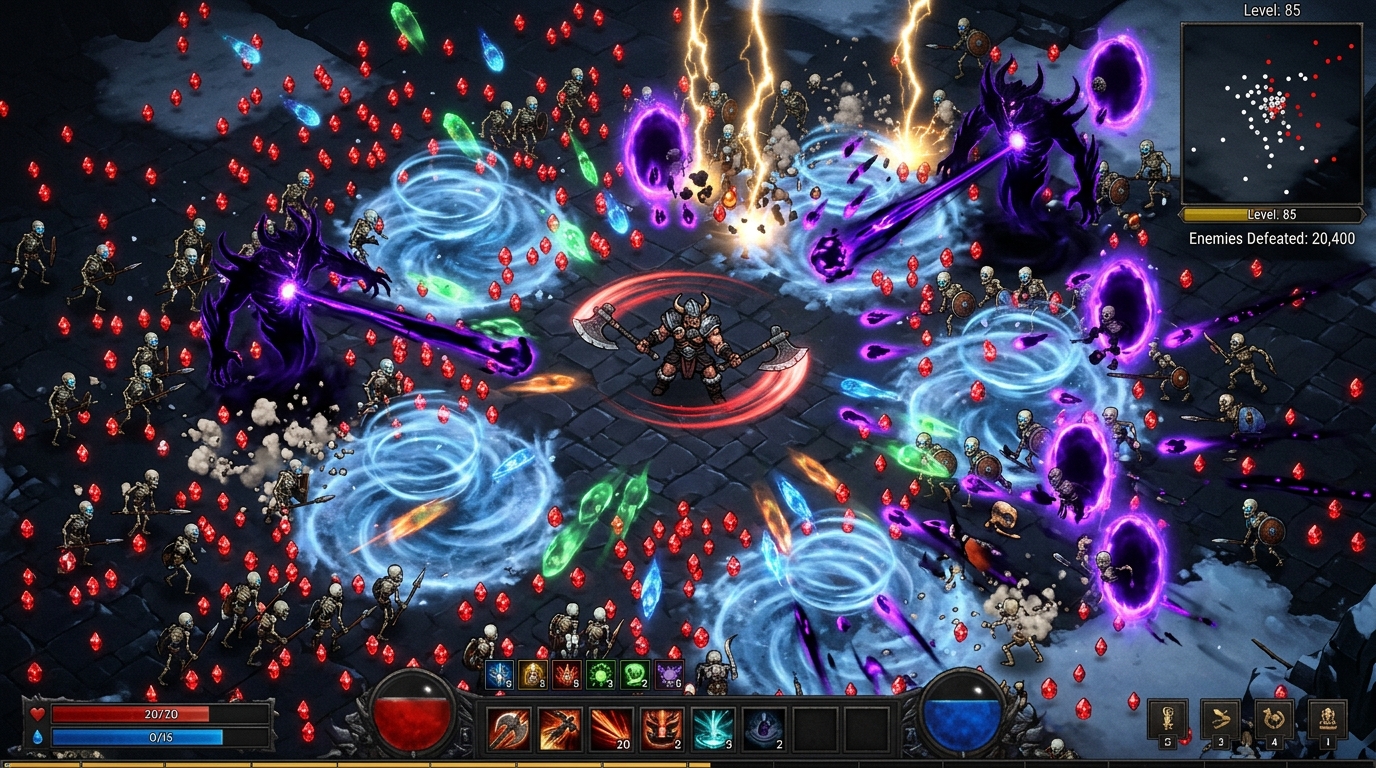
Soulstone Survivors is the equivalent of taking the survivor formula and injecting it with a gallon of high octane glitter and pure chaos. While the pixel art trend is great for nostalgia, this game decides to melt your GPU with flashy spells and particle effects that would make a disco ball jealous. You aren’t just dodging dots on a screen anymore, because you are commanding a literal storm of magical destruction that fills every single pixel with vibrant, high fidelity mayhem. It is the perfect antidote for anyone tired of the lo-fi aesthetic who wants their screen to look like a wizard accidentally set off a fireworks factory.
The real beauty of this title lies in its massive skill tree and overwhelming depth that puts overpriced AAA titles to shame. You get access to over a hundred upgradeable weapons and a complex Rune system that actually rewards you for thinking instead of just mindlessly clicking. It is an incredible value for your money, offering hundreds of hours of theorycrafting and build experimentation for the price of a fancy sandwich. I love how it balances the “one more run” addiction with a sense of progression that feels meaningful rather than just a slow crawl for minor stat bumps.
If your computer starts sweating when you fire this up, that just means you are playing it correctly. The sheer scale of the encounters makes you feel like a god among insects, provided you have the tactical sense to navigate the literal bullet heaven unfolding around you. It is a loud, proud, and unapologetically intense evolution of the genre that proves indie developers are the ones truly pushing the envelope. Stop wasting sixty bucks on cinematic garbage that plays itself and grab something that actually respects your time and your desire for total screen clearance.
Deep Rock Galactic Survivor Adds Tactical Digging
Deep Rock Galactic Survivor is a masterclass in how to take a familiar formula and actually do something productive with it instead of just slapping on a new coat of paint. While most bullet heavens have you circling an open field like a confused lawnmower, this game hands you a pickaxe and tells you to make your own exits. The destructible terrain isn’t just a gimmick, it is your primary defensive tool against the swarms of bugs trying to turn you into a snack. By digging through walls, you can create choke points or shortcut your way to a vital supply drop, adding a layer of tactical depth that most clones completely ignore. It turns every run into a frantic puzzle where your positioning matters just as much as your DPS.
The claustrophobia is real when the walls start closing in and your movement speed feels like you are wading through molasses. You have to weigh the greed of mining extra gold against the very real possibility of getting cornered by a literal wall of chitin and mandibles. It is a brilliant loop because it forces you to interact with the environment rather than just treating it as a flat background for your flashy projectiles. I found myself constantly scanning the rock for a weak point to tunnel through, which is a refreshing change of pace from the brainless kiting found in lesser titles. This is the kind of smart indie innovation that makes those bloated, sixty dollar AAA disasters look even more embarrassing by comparison.
What really sells the experience is how the digging mechanics integrate with the standard upgrade path of a bullet heaven. You aren’t just leveling up your turrets and rifles, you are also improving your ability to reshape the map to your advantage. A well timed tunnel can save a run that would have been a guaranteed game over in any other survivor game. It is punchy, it is incredibly satisfying to watch the rocks crumble, and it proves that you can still innovate in a crowded genre without overcomplicating the fun. If you are tired of walking in circles and want a game that actually respects your intelligence, this is the one to install.
Death Must Die Blends Hades With Loot
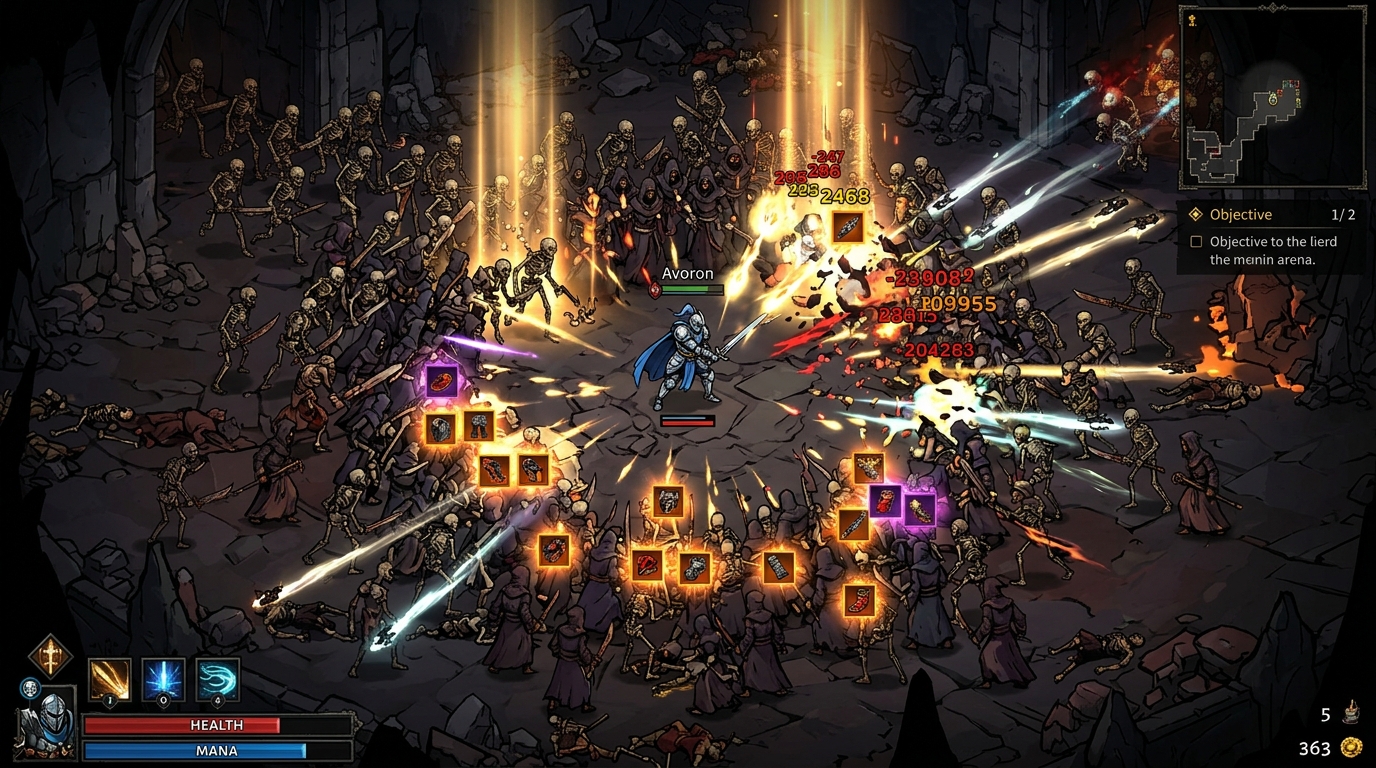
Death Must Die is what happens when you take the addictive loop of a bullet heaven and smash it into the face of a high end action RPG. While other clones are content with giving you a slightly faster walking speed as a reward, this game understands that I want to find a pair of boots that actually do something cool. It successfully marries the frantic survival gameplay we love with a loot system that makes every run feel like a genuine progression toward godhood. You aren’t just picking up static stat boosts here, because you are actively hunting for gear that transforms your character into a walking apocalypse.
The personality in this game is a breath of fresh air compared to the generic fantasy tropes found in most budget titles. Instead of silent upgrades, you get witty banter and blessings from a pantheon of gods who seem to find your struggle for survival mildly entertaining. These interactions give the game a layer of charm that makes the repetitive nature of the genre feel like a narrative journey rather than a mindless grind. It is proof that you can have a low cost indie title that offers more character and style than a hundred million dollar AAA disaster.
The gear grinding is where the game truly hooks its claws into your free time and refuses to let go. You will find yourself obsessing over item rarities and specific equipment prefixes just to shave a few seconds off a boss fight or survive an extra wave of enemies. It creates a satisfying feedback loop where the loot you find in one run directly empowers your next attempt in a way that feels earned. Death Must Die proves that the bullet heaven formula does not have to be shallow to be fun. This is a polished, punchy experience that values your time and your desire for deep customization.
Beyond Clones: Survivor Games Done Right
Calling these games clones feels like an insult when they are actually doing more for the medium than most seven hundred million dollar AAA disasters. While the big studios are busy trying to figure out how to charge you for the color blue, these indie developers have perfected a loop that respects your time and your wallet. We have officially moved past the stage of simple imitation and entered an era of pure, refined mechanical bliss. These titles take the DNA of the survivor formula and mutate it into something faster, deeper, and infinitely more addictive. You are not just dodging sprites, you are engaging with complex systems that make the average blockbuster look like a glorified tech demo.
If you have fifteen minutes before your boss notices you are gone, you need to make a choice based on what flavor of chaos you prefer. For the absolute tacticians who want to turn a potato into a god of war, Brotato is the definitive install that offers the most bang for your buck. If you crave the dark, gritty atmosphere of the nineties without the clunky controls, Halls of Torment is the only logical path forward. For those who just want to see their graphics card scream for mercy under a hail of magical projectiles, Soulstone Survivors is the high fidelity king. Pick one, pay the price of a cheap sandwich, and prepare to find the best Steam gems that will consume your entire afternoon to just one more run.
Frequently Asked Questions
1. What exactly is a ‘Bullet Heaven’ and why is everyone obsessed?
Bullet Heaven is just the fancy name Steam used to make these games sound like a legitimate genre instead of a collection of digital slot machines. You walk around, the game shoots for you, and you get a dopamine hit every time a pixelated bat explodes. It is the ultimate low-effort, high-reward time sink that will devour your sleep schedule.
2. Are these clones just lazy asset flips or are they actually good?
Most of them are absolute garbage that deserve a quick trip to the recycling bin, but a few gems actually evolve the formula. The games I recommend take the core loop and add layers of strategy, better graphics, or actual polish. If it looks like it was made in a weekend by someone who hates fun, I am not going to tell you to play it.
3. Why should I play Brotato when I already own other survivor games?
Brotato is for when you want to feel like a high-stakes engineer instead of a mindless wanderer. The six-weapon limit and deep stat-stacking turn every run into a math-heavy construction project of vegetable-based destruction. It is proof that a potato with six shotguns is more interesting than most AAA protagonists.
4. Is it possible to play these games without losing my entire night?
No, and you are lying to yourself if you think otherwise. These games are designed to make 4:00 AM arrive before you even realize you are thirsty. The “one more run” mentality is built into the DNA of the genre, so go ahead and say goodbye to the sun.
5. What makes a clone worth playing versus one that is worth uninstalling?
A good survivor game respects your time and your GPU by offering meaningful choices and high polish. If a game relies on lazy design or just copies the original without adding a unique hook like deep crafting or better combat, it is an instant uninstall. I only care about the best roguelite games that actually push the genre forward instead of just riding the coattails of the original.
6. Do I need a high-end PC to run these types of games?
Most of these will run on a toaster, which is part of their dangerous charm. You do not need a massive budget or a top-tier GPU to enjoy a gameplay loop that hits like a freight train. Keep an eye out for anticipated indie games that continue to challenge the status quo. Just make sure your mouse hand is ready for a workout and your schedule is completely clear.
7. Why are players moving away from big-budget titles toward these indies?
Many players are experiencing live service game fatigue and are looking for experiences that offer immediate fun without the pressure of daily chores or endless battle passes. These Bullet Heavens provide a refreshing alternative by focusing on pure gameplay rather than monetization strategies.