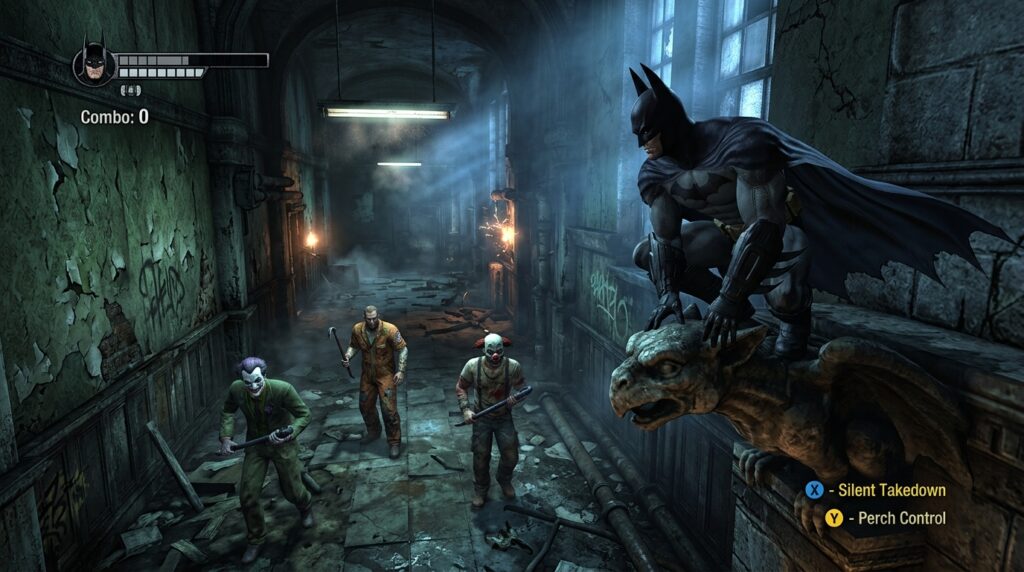
Before every superhero game became a bloated checklist of icons on a map, we had a tight, terrifying night on a rainy island that actually made us feel like the world’s greatest detective. Looking back in this arkham asylum retrospective, it is clear that the developers didn’t just make a good licensed game; they built the blueprint for the next two decades of action-adventure combat. It is the rare 2009 relic that doesn’t feel like a dusty museum piece, mostly because it traded mindless button-mashing for a rhythmic Freeflow system that most modern developers are still desperately trying to copy.
While the sequels went bigger, Asylum stayed focused, trapping us in a claustrophobic Metroidvania nightmare that felt more like a survival horror game than a power fantasy. You weren’t just flying around a city looking for balloons; you were stalking through shadows, unlocking gadgets to survive a madhouse, and listening to Kevin Conroy and Mark Hamill deliver the definitive versions of these characters. It is a masterclass in atmosphere that proves you don’t need a thousand square miles of empty terrain to make a masterpiece.
Key Takeaways
- A focused, claustrophobic Metroidvania design is superior to modern open-world bloat because it ensures every environment serves a narrative purpose and respects the player’s time.
- The rhythmic Freeflow combat system remains the industry gold standard by prioritizing timing and tactical flow over mindless button-mashing.
- Atmospheric storytelling and authentic character performances, like those of Kevin Conroy and Mark Hamill, create a lasting impact that cannot be replaced by live-service gimmicks or monetization schemes.
- Successful licensed games prioritize core gameplay loops and psychological depth over gear scores, battle passes, and procedural filler.
The Perfection Of Freeflow Combat And Metroidvania Design
The Freeflow combat system was a genuine lightning bolt for the industry, proving that superhero games didn’t have to be clunky button mashers. The team ditched the complicated combos of the era for a rhythm based dance that made you feel like a tactical genius rather than a frantic toddler. Every punch had weight, every counter felt earned, and the flow of the fight was dictated by your timing rather than how fast you could destroy your controller. It was a masterclass in making the player feel powerful without sacrificing the actual challenge of the encounter. This mechanic was so influential that it basically became the blueprint for every successful third person action game for the next decade.
While modern developers seem obsessed with giving us massive, empty sandboxes to wander through, this game succeeded by keeping things claustrophobic and focused. The Metroidvania design of the island meant that every corridor served a purpose and every gadget felt like a literal key to a new mystery. You weren’t just checking boxes on a map or chasing icons across a bloated wasteland of procedural filler. Instead, the game respected your time by ensuring that backtracking felt rewarding and every upgrade changed how you interacted with the environment. It is a stinging reminder that a meticulously crafted, smaller world will always beat a hundred miles of boring, live service fluff.
Looking back at this masterpiece in an era of disappointing superhero titles reveals exactly where the industry lost its way. The developers understood that being Batman meant more than just wearing the suit, it meant mastering an environment that felt dangerous and alive. We didn’t need daily login bonuses or gear scores to stay invested because the core gameplay loop was actually fun on its own. The atmosphere was thick with dread, the voice acting was legendary, and the progression felt organic rather than forced. It remains the gold standard for how to handle a licensed property without selling your soul to corporate trends.
Authentic Atmosphere Versus Modern Live Service Rot
Walking through the rain-slicked, gothic halls of the asylum in 2009 felt like stepping into a nightmare that was actually curated with love. There were no battle passes to buy or daily login bonuses to claim, just a claustrophobic masterclass in atmosphere that made you feel every bit of the paranoia. The team didn’t need to bloat the experience with procedurally generated filler because every cracked tile and flickering light served a purpose in its tight Metroidvania design. It was a game that respected your time by focusing on a singular, polished vision rather than trying to be a second job. When you heard the legendary Kevin Conroy trade barbs with Mark Hamill’s definitive versions of these characters, it wasn’t a “limited time event” designed to sell skins, it was world-building at its peak.
Modern superhero games have largely traded this soul for a soul-sucking grind where “numbers go up” is the only measurable form of progress. Instead of the satisfying crunch of the Freeflow combat system, we are now often insulted with bullet-sponge enemies and gear scores that feel more like spreadsheets than superpowers. There is a tragic irony in seeing the industry move away from focused perfection in favor of colorful, live-service messes that prioritize microtransactions over actual personality. We went from unlocking gadgets that opened new paths to unlocking “legendary” knee pads that offer a three percent boost to elemental damage. It is a depressing shift from a developer saying “look at this cool world we built” to a corporate executive asking “how can we monetize this player’s every breath.”
The magic of this title lies in its refusal to hold your hand or empty your wallet, relying instead on pure, unadulterated craft. You didn’t need a roadmap of seasonal content to stay engaged because the mystery of the island and the weight of the performances kept you glued to the screen. Every encounter felt earned, and every secret felt like a reward for your curiosity rather than a carrot on a stick to keep engagement metrics high. It remains a stark reminder that a game with a beginning, middle, and end will always trump a “platform” designed to bleed you dry. If the industry wants to save itself from the current rot, it needs to stop looking at players as walking wallets and start looking at this game as the gold standard for how to treat a legend.
The Scarecrow Sequences And Psychological Horror Elements
The Scarecrow sequences are a masterclass in how to mess with a player’s head without being cheap about it. The developers didn’t just give us a boss fight, they hijacked the entire user interface to make us think our hardware was failing. I still remember the genuine panic of seeing the screen glitch and thinking my console had finally died, only to realize I was being lured into a nightmare. It was a ballsy, creative risk that forced players to question their own reality, blending psychological horror perfectly with the claustrophobic atmosphere of the island. This kind of fourth wall breaking wasn’t just a gimmick, it was a way to make us feel as vulnerable as the man behind the mask.
Compare that level of ingenuity to the sterile, corporate-approved trash we are being served in the mid-2020s. Today, most superhero games are terrified of making the player feel uncomfortable or confused, opting instead for endless UI markers and safe, predictable mission loops. We have traded these haunting, scripted moments for live-service bloat and “engagement” metrics that feel more like a second job than a hobby. Modern developers are so obsessed with keeping you in a frictionless loop that they have forgotten how to actually surprise you. This game succeeded because it wasn’t afraid to be weird, dark, and occasionally frustrating for the sake of the narrative.
Ultimately, this game stands as a reminder that a focused vision will always beat a bloated budget. It isn’t just a trip down memory lane, it is a blueprint for what a quality gaming experience should actually look like. It respects your time by delivering a tight, meaningful campaign rather than demanding hundreds of hours for mediocre loot drops. If a modern game doesn’t show this same level of respect for your intelligence and your schedule, it belongs in the digital trash bin. We need to stop settling for “fine” and start demanding the kind of craftsmanship that made us fall in love with the Caped Crusader in the first place.
The Metroidvania Masterclass We Didn’t Deserve
Looking back at this title feels like visiting a masterclass in how to actually respect a license without turning it into a digital chore list. While modern studios are busy trying to figure out how to sell you a purple-tier cape for twenty bucks, the team was busy perfecting the Freeflow combat system that literally every other action game has tried to copy since. It was a focused, Metroidvania nightmare in the best way possible, proving that a tight Metroidvania structure beats a bloated, empty map every single day of the week. We did not need a thousand icons on a radar, we just needed a dark hallway, a Batarang, and the haunting voice of Mark Hamill to keep us on edge.
The reality is that this game set a standard for superhero excellence that the industry seems to have forgotten in its rush toward live-service garbage. Instead of worrying about daily login bonuses or battle passes, we got a game that understood the weight of a punch and the tension of a predator encounter. It is honestly embarrassing to see current titles struggle to find an identity when the blueprint for success was laid out perfectly back in 2009. This remains the definitive proof that if you focus on core mechanics and atmospheric storytelling, you do not need to trick players into staying, they will stick around because the game is actually fun to play.
If you are tired of the current state of disappointing releases that feel more like spreadsheets than adventures, going back to this island is the perfect palate cleanser. It serves as a grim reminder of what happens when a developer actually cares about the source material instead of just the monetization potential. The game remains a cornerstone of the genre because it prioritized a cohesive experience over endless, mindless content. We might be decades removed from its launch, but the tight design and visceral combat still make most modern superhero titles look like amateur hour by comparison.
Frequently Asked Questions
1. Is the game still worth playing today?
Absolutely. Unlike most 2009 relics that belong in a museum, this game still feels modern because it focused on tight design rather than map-filling bloat. You get a masterclass in atmosphere and a combat system that most current developers are still trying to rip off.
2. How does the Freeflow combat system actually work?
It is a rhythmic dance that rewards timing over mindless button mashing. Instead of memorizing fifty button combos, you focus on the flow of the fight to make the character look like a tactical genius rather than a toddler having a tantrum. Every punch has actual weight and every counter feels earned.
3. Why is the setting considered superior to the sequels?
The island is a claustrophobic Metroidvania nightmare that keeps the stakes high and the pacing fast. While the sequels went for scale, this game focused on a survival horror vibe where every corridor felt dangerous and intentional. You do not need a thousand miles of empty terrain to make a masterpiece.
4. Does the game feel more like an action game or a horror game?
It strikes a perfect balance by making you feel powerful while trapping you in a madhouse. The atmosphere is thick with tension, leaning heavily into the detective and survival aspects of the character. It is less of a power fantasy and more of a fight to stay alive against the worst lunatics.
5. What makes the voice acting in this game so special?
You are hearing Kevin Conroy and Mark Hamill deliver the definitive versions of these iconic characters. Their performances ground the entire experience, making it feel like the ultimate realization of the characters we have loved for decades. It is the gold standard for superhero storytelling in gaming.
6. Is the detective gameplay actually good or just a gimmick?
It genuinely makes you feel like the world’s greatest detective by integrating gadgets into the exploration. You are not just following icons on a map, you are actually stalking through shadows and using your brain to navigate the asylum. It is the blueprint for how to handle a licensed character without being lazy.
7. How does the Metroidvania design impact the experience?
It forces you to learn the layout of the island and rewards you for backtracking with new gadgets. This design choice prevents the game from feeling like a mindless checklist of chores. Every new tool you unlock opens up a piece of the world, making the progression feel earned and satisfying.