
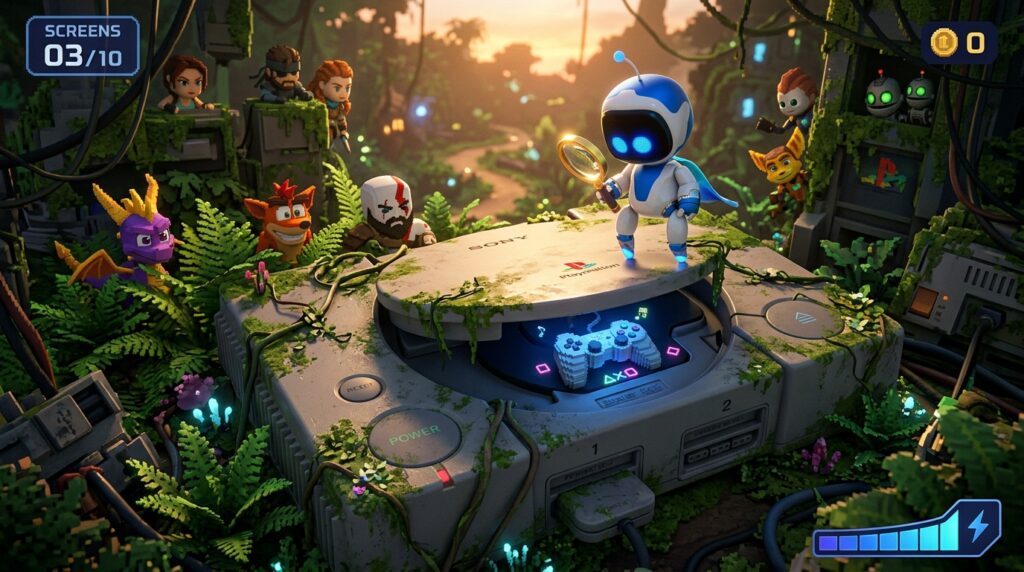
If you think you’ve seen everything this playground has to offer just because you reached the credits, you’re dead wrong. Astro Bot is a dense, nostalgic fever dream that hides more than just spare parts; it’s a masterclass in rewarding players who actually pay attention. Hunting down every Astro Bot hidden secrets means more than just checking boxes, it’s about spotting the raindrops that hit the ground as console symbols or finding the 11 secret “Lost Galaxies” that most casual players will fly right past.
With 300 bots to rescue and over 170 VIP cameos, this game is essentially a 30-year history lesson disguised as a platformer. You aren’t just looking for puzzle pieces to build a shiny statue at the Crash Site; you’re hunting for the soul of a console. From post-launch speedrun levels featuring legendary RPG icons to environmental details that make you feel like you’ve stepped into a 1994 fever dream, the depth here is staggering. Stick around, because I am separating the obvious trophies from the stuff you actually missed.
Key Takeaways
- Astro Bot is a masterclass in rewarding exploration, hiding its best content—including 11 secret ‘Lost Galaxy’ levels—behind clever environmental puzzles rather than simple waypoints.
- The game serves as a living history of PlayStation, featuring 173 VIP cameo bots that utilize unique animations and references to respect their original source material.
- Exceptional attention to detail, such as raindrops forming console symbols and hidden ‘Sacred Cheese,’ elevates the game beyond typical platformers by rewarding observant players.
- The Crash Site hub transforms into an interactive museum where collected puzzle pieces and rescued bots recreate iconic gaming moments through physics-based interactions.
Tracking Down The Most Obscure VIP Cameo Bots
Hunting for the 173 VIP cameo bots in Astro Bot is a masterclass in how to handle nostalgia without making the player feel like they are being sold a cheap plastic toy. While other developers usually just slap a recognizable skin on a generic NPC and call it a day, the team actually put effort into the presentation of these legends. Finding a bot dressed as Pyramid Head or a character from an obscure 90s peripheral feels like a genuine reward for your curiosity rather than a cynical marketing checklist. The game respects your intelligence enough to hide these icons behind clever platforming challenges and environmental puzzles that require more than just walking forward. It is refreshing to see a celebration of gaming history that prioritizes tight mechanics over simple brand recognition.
The real magic happens when you realize how much personality is packed into every single rescue, especially when it comes to the deep cuts. You are not just ticking a box when you find a bot from a forgotten cult classic, because each one reacts to the world with unique animations that actually reference their source material. Whether it is the way the rain forms tiny symbols on the ground or the specific sound effects that trigger during a discovery, the level of polish is frankly embarrassing for the rest of the industry. This is not just a collection of digital dolls, but a cohesive world where every secret exit leads to a legitimate “wow” moment. It is the kind of design that makes you want to check every corner of the Lost Galaxies just to see which obscure bit of history they have lovingly recreated next.
Unlocking The Lost Galaxy Secret Level Exits
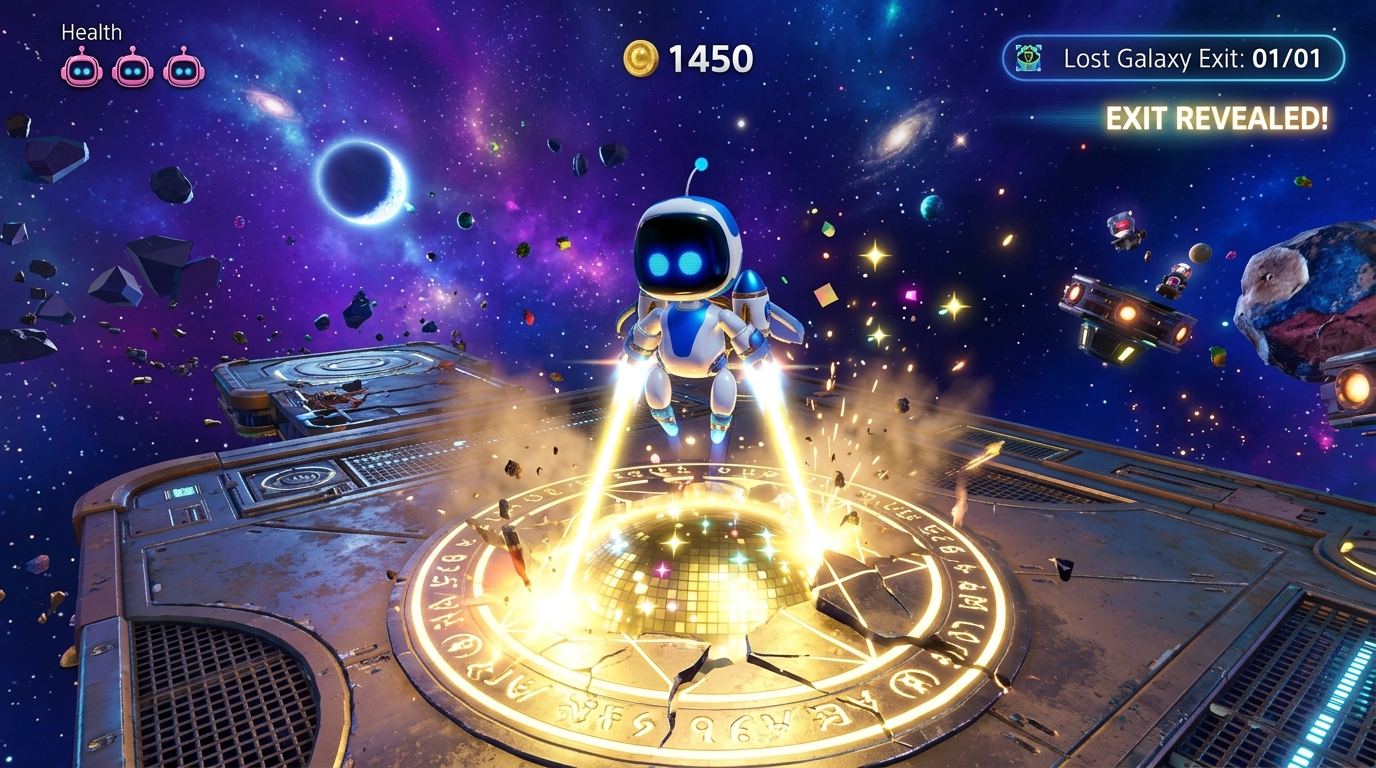
Finding the 11 secret “Lost Galaxies” isn’t just about padding your trophy count, it is a masterclass in why manual exploration beats a waypoint every single day. While other modern titles treat you like a toddler by highlighting every interactable ledge in neon yellow, Astro Bot actually respects your intelligence by hiding its best content behind clever environmental puzzles. You might have to spin-attack a suspicious patch of floor or douse a specific flame to trigger these exits, proving that the developers actually want you to look at the world they built. It is refreshing to play a platformer where the “secret” isn’t just a collectible tucked behind a waterfall, but an entire gameplay loop waiting to be earned. These levels are the ultimate reward for players who bother to stop and smell the digital roses instead of sprinting toward the finish line.
The beauty of these hidden exits lies in how they lean into the pure joy of gaming history without feeling like cheap, soul-less nostalgia bait. In an era where most big-budget games use legacy characters as a cynical marketing tool to distract you from boring mechanics, Astro Bot uses them as the cherry on top of a perfectly baked cake. Discovering a secret portal often leads to some of the most creative platforming challenges in the game, far surpassing the standard stages in both difficulty and imagination. You are not just hunting for these exits to see a familiar face from thirty years ago, you are doing it because the level design is actually tight enough to justify the effort. It is a rare case where the “bonus” content feels just as essential and polished as the main path, making every hidden disco ball or suspicious switch worth the investigation.
If you are the type of player who ignores the corners of the map, you are essentially deleting some of the best content released this year from your own experience. These secret exits are a loud, colorful middle finger to the trend of procedural generation and lazy open-world bloat that plagues the industry today. Every portal is a hand-crafted reminder that when developers actually care about the “fun” part of a video game, you don’t need a thousand map icons to keep people engaged. Finding all 11 portals is a badge of honor that separates the true platforming fans from the casual button-mashers who just want to be told where to go. Put down the guide, stop looking for a waypoint, and actually start playing the game the way it was intended by poking at every suspicious brick you see.
Spotting The Rain And Sacred Cheese
Astro Bot is a masterclass in environmental storytelling that makes most modern AAA titles look like they were assembled in a basement with leftover assets. While other developers are busy chasing photorealism that ends up looking like grey sludge, the team is flexing their creative muscles by hiding the brand DNA in the literal weather patterns. If you stand still during a rainstorm, you will notice that the droplets hitting the ground briefly form the iconic Circle, Square, Cross, and Triangle symbols before vanishing. It is the kind of obsessive, unnecessary detail that serves no purpose other than to prove the developers actually care about the world they built. This is not just nostalgia bait for the sake of it, but a genuine celebration of a legacy that feels earned rather than forced.
Beyond the meteorological marvels, the game is peppered with the recurring presence of the “Sacred Cheese” which has become a bit of an obsession for eagle-eyed hunters. You can find these triangular wedges tucked away in the most ridiculous corners of the map, often sitting in places that ninety percent of players will never even look at. Finding a piece of cheese hidden behind a pile of physics-based debris puts lazy environmental design to shame because it rewards genuine curiosity. It is a refreshing change of pace to play a platformer where the secret hunting feels like a conversation between the player and a designer who actually has a sense of humor. Every hidden bot and puzzle piece feels like a tiny victory in a game that refuses to stop showing off its polish.
Raiding The Crash Site For Interactive History Lessons
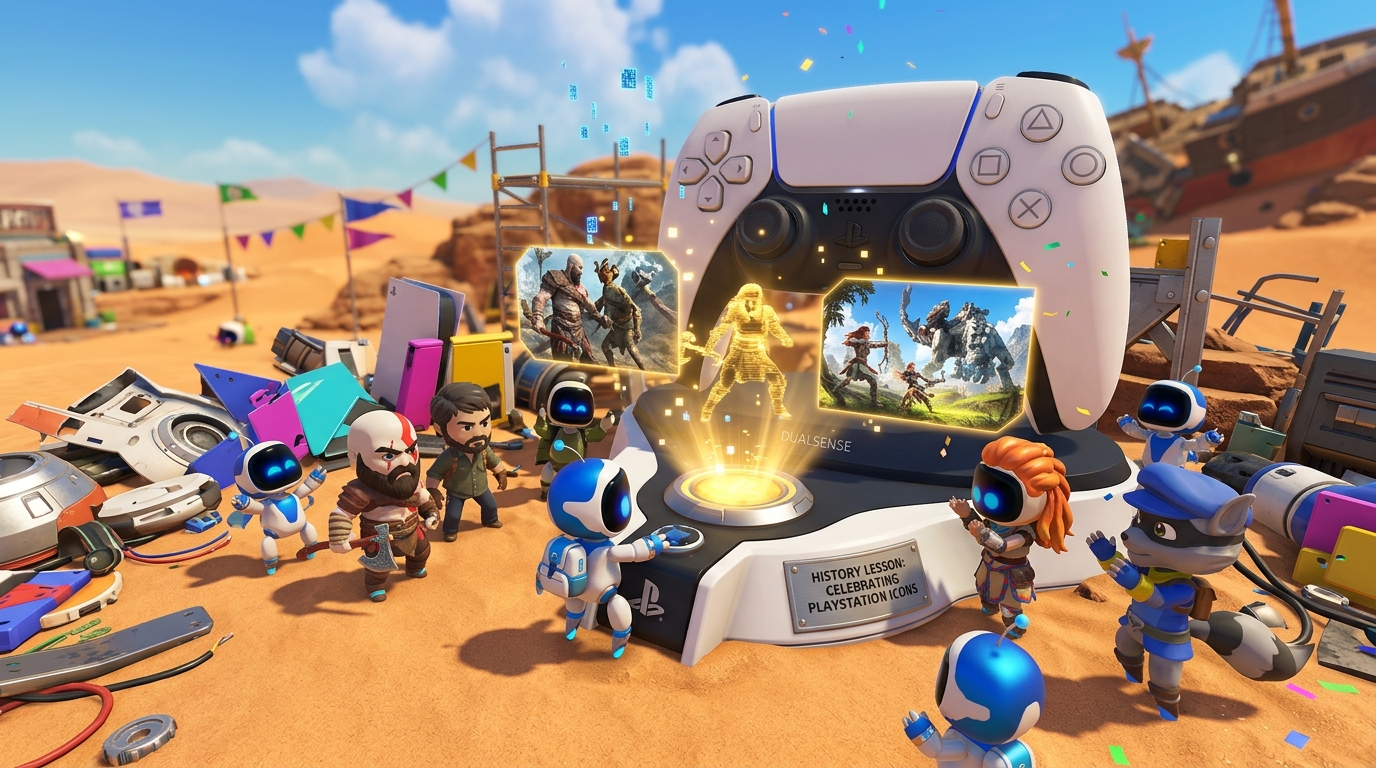
Rescuing 300 bots isn’t just a checklist for completionists, it’s a brutal reminder of how much time has slipped through our fingers since the original gray console landed in our living rooms. While other franchises try to sell you nostalgia in the form of lazy, full-priced remakes that barely change the lighting, Astro Bot actually earns your affection by turning the Crash Site hub into a living museum. As you collect the 120 puzzle pieces, the hub transforms from a desolate desert into a chaotic playground where 173 VIP cameos recreate the most iconic moments from gaming history. It is genuinely hilarious to watch a tiny robot version of a legendary protagonist struggle with the same physics that frustrated us decades ago. This isn’t just corporate branding, it is a masterclass in how to celebrate a legacy without making it feel like a cynical cash grab.
The attention to detail in these hidden interactions puts most modern AAA developers to shame. You can spend hours just wandering the hub, punching your rescued bots to see how they react or watching the environment respond to your every move. I caught myself staring at a puddle for five minutes because the raindrops hit the surface in the shape of the iconic symbols, a secret so subtle most players will walk right over it. Finding the 11 secret Lost Galaxy exits feels like a genuine discovery rather than a guided tour, rewarding your curiosity with levels that are tighter and more inventive than most entire games released this year. Even the post-launch speedrun levels are dropping in with fresh cameos, proving that this PlayStation masterpiece has more heart in its pinky finger than most “live service” disasters have in their entire roadmap.
The brilliance of this interactive history lesson lies in how it respects the player’s intelligence instead of just dangling a shiny object in front of them. You aren’t just looking at a static statue of a character from an obscure 90s RPG, you are watching them interact with the world in a way that feels consistent with their original personality. It makes the act of collecting feel meaningful because every bot rescued and every puzzle piece found adds a new layer of charm to the experience. We often complain about the industry being obsessed with the past, but when the execution is this polished and the platforming is this responsive, I will happily let Astro Bot take me on a trip down memory lane. This is what happens when a studio actually likes its audience and wants to celebrate the medium rather than just exploit a fan base for a quarterly earnings report.
Masterclass in Hiding History
Astro Bot is a masterclass in secret hunting because it understands that a collectible should be a reward, not a chore. While other developers think “nostalgia” means slapping a blurry texture of an old asset in a corner and calling it a day, the studio actually wove history into the mechanics. Whether you are spotting raindrops that form the iconic button symbols or tracking down one of the 173 VIP cameo bots, every discovery feels earned and intentional. It is the rare game that treats its legacy with genuine reverence instead of using it as cheap bait to distract you from a shallow experience.
Every other studio in the industry needs to take notes on how to handle fan service without being lazy. This PlayStation masterpiece does not just show you a character you recognize, it integrates them into a vibrant world filled with 11 secret Lost Galaxy levels that actually test your platforming skills. There is no corporate box-checking here, just a pure celebration of thirty years of gaming that rewards you for being observant. If you are tired of open world maps littered with meaningless icons, this is the wake-up call the genre desperately needed.
The sheer density of detail in the Crash Site and beyond proves that tight, focused design will always beat out bloated procedural generation. Rescuing 300 bots and hunting down 120 puzzle pieces never feels like a grind because the movement mechanics are so responsive and the secrets are so clever. From the hidden secret exits to the post-launch speedrun levels featuring legendary cameos, the game stays fresh by constantly surprising the player. It is a confident, unapologetic reminder that games are supposed to be fun, and finding a secret should make you feel like a genius rather than a janitor.
Frequently Asked Questions
1. Is it actually worth hunting down all 300 bots?
If you enjoy leaving a job half-finished, then sure, stop early. But if you want to see the best 170+ VIP cameos and actually experience the full 30-year history lesson built here, you need to find every single one.
2. How do I find the secret Lost Galaxy levels?
Stop flying past everything like you have a bus to catch. There are 11 hidden portals tucked away in the environment, and they are the only way to access the Lost Galaxies that casual players will never even see.
3. What’s the deal with the symbols in the environment?
The developers actually put effort into the details, like making raindrops hit the ground as tiny button symbols. It is a masterclass in rewarding players who actually pay attention to the world instead of just staring at the objective marker.
4. Are the VIP bots just lazy character skins?
Absolutely not. Unlike most developers who slap a skin on a generic NPC, the team actually gave these legends unique animations and hidden platforming challenges that respect your intelligence.
5. Is the post-launch content worth my time?
Yes, unless you hate fun or legendary RPG icons. The post-launch speedrun levels add serious depth and give you more reasons to keep playing after the credits roll. Much like speedrunning world records, these challenges require precision and mastery of the game’s mechanics.
6. What should I do with the puzzle pieces I find?
Those pieces aren’t just for show. You use them to build statues at the Crash Site, which acts as the central hub for all the nostalgia you are collecting throughout the game. Why Hidden Trophy Requirements are often a point of frustration, but here, the rewards feel earned.