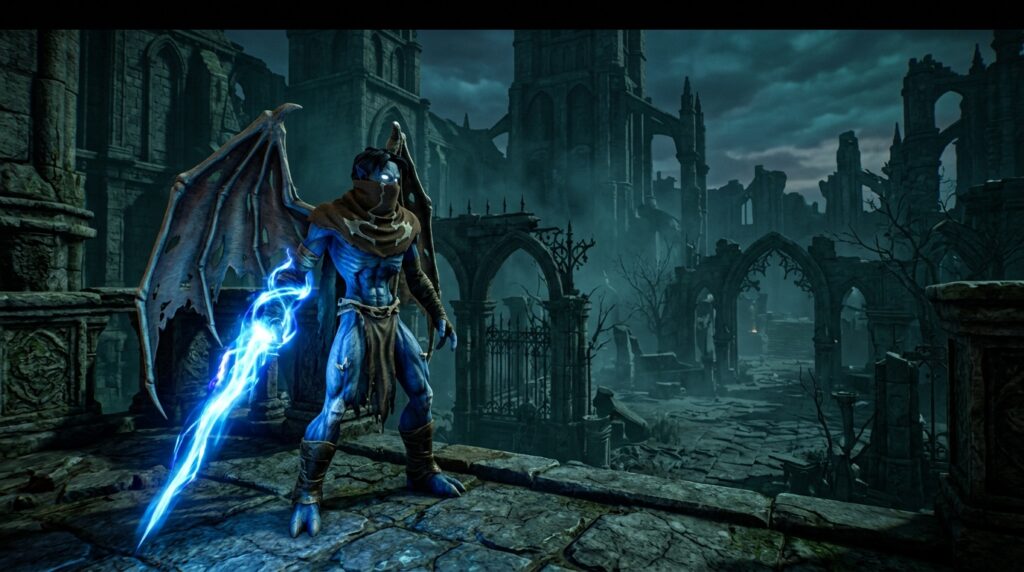
For years, we’ve been begging for Raziel to crawl out of that pit of souls, and the Legacy of Kain Remastered collection finally delivers. This isn’t just some lazy resolution bump to cash in on our collective 90s nostalgia for blue-skinned vampires and Shakespearean melodrama. It’s a 4K, 60 FPS reminder that games used to actually care about writing, even if the original camera angles were designed to give you a migraine.
I’ve spent enough time in Nosgoth to tell you that this 25th-anniversary glow-up is exactly what the franchise needed to prove it isn’t a fossil. While the industry is currently obsessed with “live service” trash, this collection sticks to its guns with tight puzzles and a narrative that still puts modern blockbusters to shame. It’s gritty, it’s gorgeous, and it’s a hell of a lot better than watching another franchise get buried in a shallow grave.
Key Takeaways
- The Legacy of Kain Remastered collection modernizes the franchise with 4K resolution and 60 FPS performance while allowing players to toggle instantly between original 1999 polygons and updated 2024 textures.
- Modernized controls and a manual camera system replace the original’s clunky ‘tank’ mechanics, transforming the platforming and combat into a fluid, 360-degree analog experience.
- This anniversary edition includes previously cut content, such as the original Soul Reaver’s day and night cycle, offering the most complete and definitive version of the game’s narrative to date.
- The remaster prioritizes historical preservation and quality-of-life improvements over a full remake, maintaining the series’ legendary Shakespearean writing and gothic atmosphere for a new generation.
High Definition Vampires Versus Polygon Nostalgia
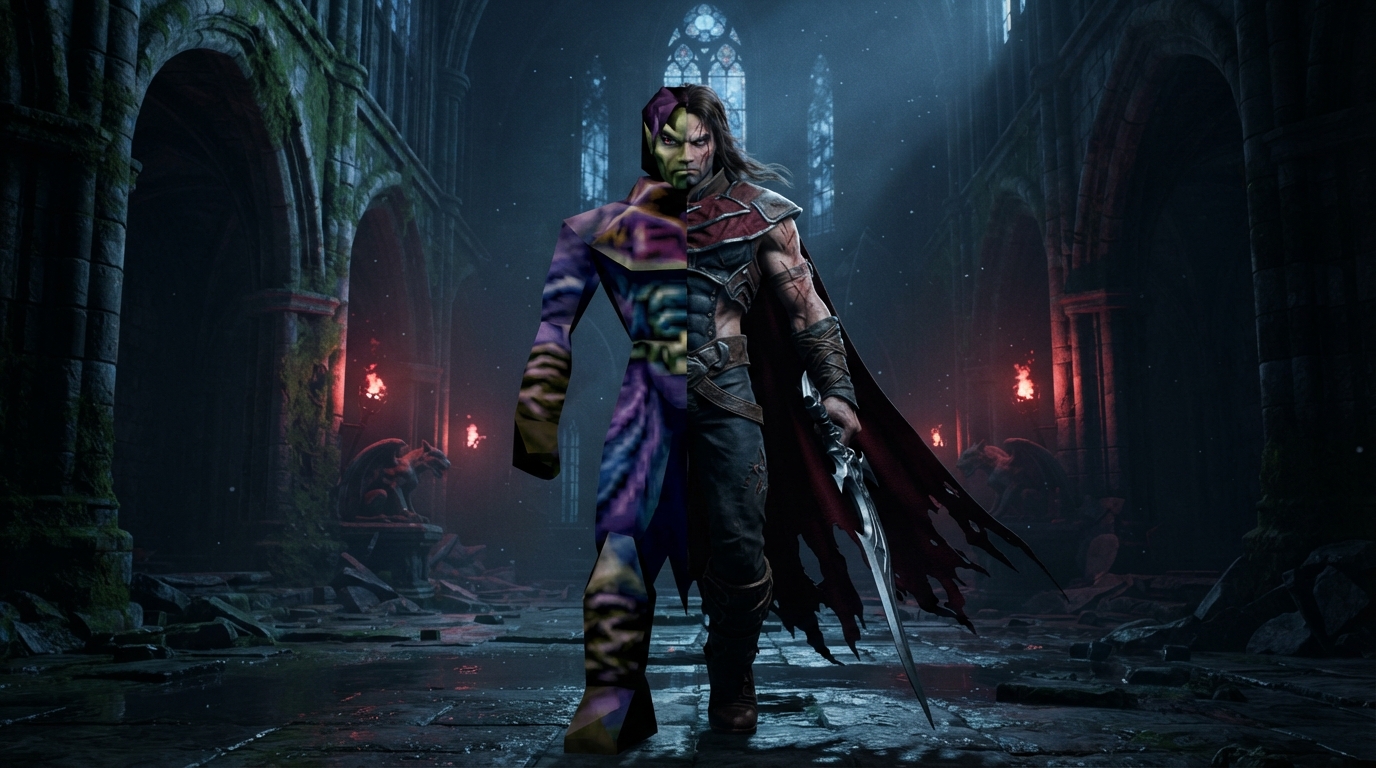
The latest attempt to polish Raziel’s decaying jawbone brings back the classic “instant toggle” feature, allowing you to swap between 1999 polygons and 2024 textures with a single button press. While the original PlayStation era was defined by a thick, muddy atmosphere that hid technical limitations, the remaster tries to sharpen everything into high definition. You quickly realize that seeing every individual stone in the Pillars of Nosgoth is a double edged sword. The new assets are undeniably cleaner, but there is a persistent worry that we are trading soul for clarity. Some of the new character models look fantastic, while others have that distinct, slightly oily sheen common in budget mobile ports.
The real test for any remaster is whether the developers understood the lighting of the source material or just cranked the brightness to “clinical.” In the original Soul Reaver, the oppressive gloom of the Spectral Realm felt like a character of its own, masking the draw distance with literal dread. The remaster occasionally feels a bit too eager to show off its new homework, stripping away some of that gothic mystery in favor of high contrast visibility. It is a classic case of the “George Lucas effect” where just because you can see more detail does not mean the scene actually benefits from it. I found myself toggling back to the original graphics more often than I expected just to feel that specific brand of lo-fi misery again.
Despite the occasional texture that looks like it was smoothed over by an overzealous AI, the collection manages to avoid being a total disaster. The 60 FPS performance makes the platforming feel significantly less like a clunky nightmare, even if the new environmental assets sometimes clash with the original geometry. It is a massive relief that they did not try to “reimagine” the art style into something unrecognizable, keeping the core aesthetic relatively intact. You can tell they respected the source material enough to keep the bones of the game original, even if the new skin feels a little tight in some places. It is not a perfect visual overhaul, but it beats digging a CRT television out of your parents’ basement.
Fixing Raziels Clunky Tank Control Nightmare
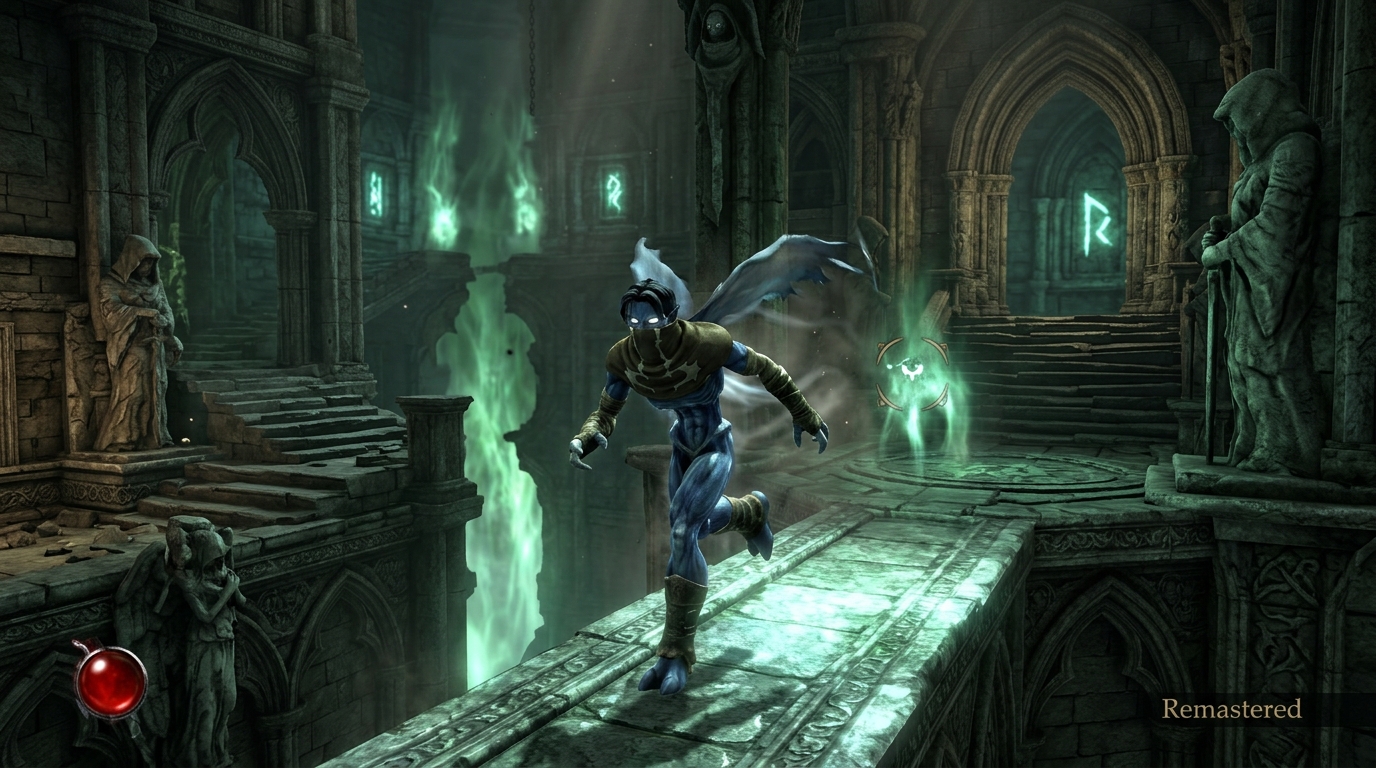
Back in 1999, playing Soul Reaver felt like trying to steer a shopping cart with three broken wheels through a vats of molasses. Raziel might have been a badass wraith, but his “tank controls” made simple platforming feel like a high-stakes geometry exam where the penalty for failure was a long walk back from the spectral realm. We tolerated it because the story was Shakespearean gold, but let’s be honest, the movement was archaic even by turn-of-the-millennium standards. The developers finally stepped in with this remaster to drag the controls into the modern era, mercifully ditching the d-pad dependency for full 360-degree analog fluidity. It is a massive relief to finally move Raziel without feeling like I am operating a heavy-duty forklift.
The real improvement here is the updated camera system, which actually behaves like it belongs in the 21st century. In the original, the camera was your second-greatest enemy right behind Kain, constantly getting stuck behind gothic pillars or refusing to show you the ledge you were supposed to jump toward. Now, the right stick gives you full manual control, allowing you to actually survey the beautiful, decaying ruins of Nosgoth without fighting the engine for a decent angle. This change alone makes the combat feel significantly more responsive and less like a frantic button-mashing session in a dark closet. While the graphics might just be a polished version of the old assets, these mechanical fixes prove that playability matters far more than just slapping on a new coat of paint.
It is refreshing to see a remaster that understands that “retro charm” should not include frustrating technical limitations that were only there because of hardware constraints. Navigating the shifting environments of the Spirit Realm no longer feels like a chore, and the platforming puzzles actually rely on your skill rather than your patience with a clunky interface. While some purists might miss the struggle, most of us are happy to leave those stiff animations and digital inputs in the past where they belong. The modernized controls finally match the quality of the voice acting, making this the definitive way to experience the fall of the Council. It is a rare win for fans who wanted the game to feel as good as they remembered it through their nostalgia-tinted glasses.
A Dark Fantasy Story Built on Betrayal
Legacy of Kain is not just a vampire story with impressive cheekbones and a suspicious amount of fog. Soul Reaver follows Raziel, a former lieutenant of Kain who is cast into the underworld after his master punishes him for evolving before Kain does. Resurrected as a wraith, Raziel begins a revenge quest that quickly grows into something messier: a journey through a dying Nosgoth where every faction has a grudge and every answer seems to create another question. The series treats betrayal, fate, and free will as more than decorative words in a dusty prophecy. Its characters argue about them at length, and, somehow, the dialogue earns the drama instead of making you wish someone would skip the cutscene.
Amy Hennig’s writing helped give the series its distinctive voice, mixing theatrical speeches with characters who are sharp enough to know they are trapped in a cycle of violence. That gives the remaster’s atmospheric ruins real narrative weight. These are not just spooky corridors placed between fights; they are remnants of a civilization that has been ground down by centuries of conflict. The time travel and timeline twists in the wider Legacy of Kain saga also reward paying attention, although newcomers should not expect a tidy recap every time someone mentions an ancient prophecy. Nosgoth has a lot of history, and it is not going to pause the apocalypse to hand you a family tree.
More Than a Hack and Slash
At its core, Soul Reaver is a third-person action-adventure game, but that label does not tell the whole story. Combat is there, with Raziel tearing through enemies and using the Soul Reaver to finish them, yet treating the game as a straight hack and slash misses the point. Progress often depends on exploring, shifting between the material and spectral realms, and spotting how a room’s layout changes between them. The result is part puzzle platformer, part combat adventure, with environmental challenges that ask you to move blocks, find routes, and make sense of spaces built around dimension-switching. Gliding lets Raziel cross gaps and reach distant ledges, but it does not magically turn every jump into a free pass. The game still expects you to read the environment, which is fair. Even wraiths should occasionally have to think.
The remastered collection also fits naturally on modern systems, including Nintendo Switch, where the portable format makes revisiting Nosgoth’s sprawling areas convenient. That does not change the age of the underlying level design, and no platform can make every encounter feel freshly invented. What it does offer is access to a landmark dark fantasy series without the old hardware friction getting between players and the story. This is a preservation-minded update, not a new game wearing Raziel’s face as a disguise. If you want a modern open-world vampire power fantasy, this is not it. If you want a focused, strange, and richly written adventure, it still has plenty of bite.
Restored Content And The Soul Reaver Anniversary Polish
The developers didn’t just slap a 4K coat of paint on these aging vampires and call it a day, which is a relief given how often “remaster” is code for “we ran this through a basic AI upscaler.” The most surprising addition is the inclusion of the long-lost day and night cycle in the first Soul Reaver, a feature that was famously cut from the 1999 original due to hardware limitations. Seeing Raziel navigate a world that actually shifts its atmosphere in real time adds a layer of depth that fans have only ever read about in design documents. It is a genuine treat for lore nerds, even if the transition occasionally highlights just how blocky those Gothic pillars really are. While the 60 FPS performance makes the platforming feel less like a chore, the real draw is seeing these resurrected assets finally match the ambitious vision the original creators had decades ago.
The visual upgrade is a bit of a mixed bag if you are expecting a ground up remake, but the “Anniversary Polish” does enough to keep it from feeling like a total cash grab. You can toggle between the original muddy textures and the new high definition models, which serves as a constant reminder of how much our nostalgia filters usually lie to us. The new character models for Raziel and Kain look sharp, though some environmental textures still have that flat, painted on look that screams turn of the millennium technology. At a thirty dollar price point, you are essentially paying for the convenience of not having to wrestle with emulators or broken PC ports. It is a solid package for anyone who wants to revisit Nosgoth without their eyes bleeding, but don’t expect it to look like a modern triple A blockbuster.
Ultimately, the value of this collection hinges on whether you care about historical preservation or just want a shiny new toy. Including previously cut content is a classy move that sets this apart from the lazier ports we have seen cluttering the digital graveyard of forgotten masterpieces lately. The technical improvements are stable, the controls have been modernized just enough to be playable, and the narrative remains some of the best writing in gaming history. If you are a returning fan, the restored cycle and the crisp resolution are probably worth the admission fee just to see the definitive version of Raziel’s journey. Just keep your expectations in check regarding the geometry, because no amount of 4K polish can hide the fact that these maps were built for a gray box that plugged into a tube television.
A Rare Win for Raziel’s Legacy
Ultimately, the Soul Reaver 1 & 2 Remastered collection is a rare win for fans who are tired of seeing their childhood favorites treated like low-effort cash grabs. The development team managed to preserve the gothic atmosphere and incredible voice acting that made Raziel’s journey a masterpiece without accidentally scrubbing away the soul of the original art. While the upgraded textures might not win any awards for pushing modern hardware to its limits, they successfully bridge the gap between nostalgia and modern high-definition standards. It is a relief to see a remaster that actually respects the source material instead of just slapping a filter over it and calling it a day. You can finally play these classics at a smooth 60 FPS without your console sounding like a jet engine trying to take off.
If you have been waiting for the perfect excuse to return to Nosgoth, this collection is officially your green light. It is not a ground-up remake, so do not expect the clunky platforming or the repetitive combat to magically feel like a modern action game. However, the sheer strength of the narrative and the quality-of-life tweaks make this the definitive way to experience Kain’s betrayal and Raziel’s quest for vengeance. We have seen far too many lazy ports lately that belong in a shallow grave, but this tribute actually earns its place on your hard drive. Grab your Soul Reaver and get to work, because these linear narrative games definitely deserve to stay unburied for a little while longer.
Frequently Asked Questions
1. Is this just a lazy resolution bump for a quick cash grab?
Not even close. We are talking about a full 4K, 60 FPS overhaul that respects the original Shakespearean melodrama while fixing the technical nightmares of the 90s. It is a legitimate 25th anniversary glow up that proves this series is far from a fossil.
2. Can I still play with the original chunky PlayStation graphics?
Yes, and you can swap between the 1999 polygons and 2024 textures with a single button press. It is the perfect way to remind yourself how much your eyes used to tolerate back in the day. Just be warned that seeing the Pillars of Nosgoth in high definition is a double edged sword for your nostalgia.
3. How do the new character models actually look?
Most of the assets are sharp and clean, though some models have a slightly oily sheen that feels a bit like a budget mobile port. Raziel’s decaying jawbone has never looked more detailed, even if the increased clarity occasionally trades some of the original’s muddy soul for clinical brightness.
4. Did they fix the terrible camera angles from the original games?
The remaster attempts to modernize the experience, but the original camera was basically designed to give you a migraine. While the 60 FPS boost makes everything smoother, you are still dealing with the bones of a game from an era that hadn’t quite figured out 3D space. It is better, but it is still a relic of its time.
5. Does the story still hold up against modern blockbusters?
The narrative absolutely puts today’s live service trash to shame with its tight puzzles and gritty world building. This collection sticks to its guns by focusing on a phenomenal script rather than trying to sell you a battle pass. If you want a game that actually cares about writing, this is it.
6. Is the Spectral Realm still as creepy as it used to be?
The oppressive gloom of the Spectral Realm is still there, though the new lighting makes it much easier to see. Some might miss the thick fog that masked technical limitations, but the updated textures make the world feel like a character of its own. It is a gorgeous, gritty reminder of why classic franchise reboots are either masterpieces or total cash grabs when they finally crawl out of that pit.