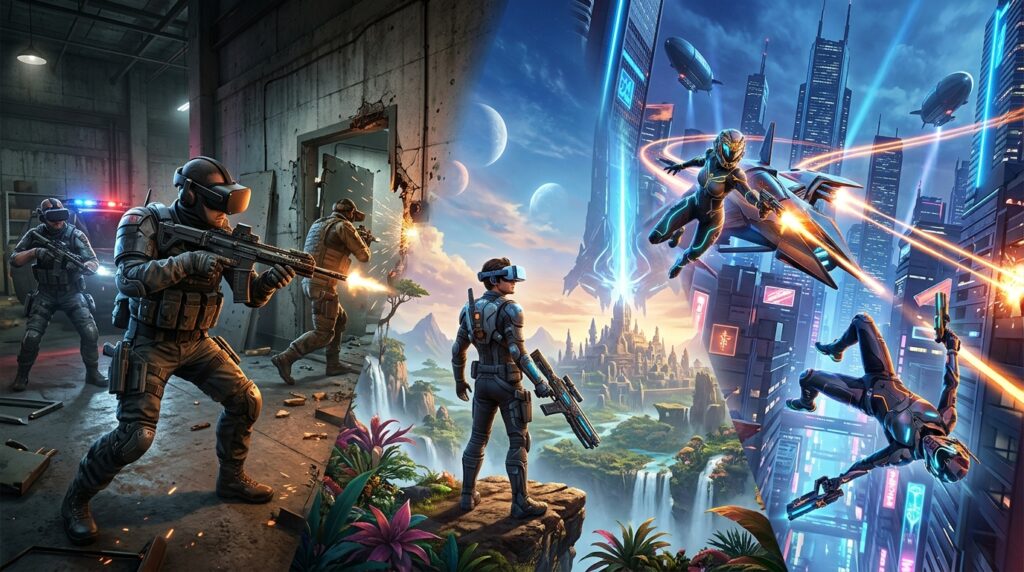
VR Games Showcase 2026 arrived with its biggest presentation yet, packing more than 25 VR games into one second-anniversary showcase. I watched new reveals, release-date announcements, gameplay updates, DLC, and surprise launches fly past at a speed that made my headset feel underqualified. The real question is simple: which games deserve my time, and which ones should be launched directly into the digital trash?
Hosted by VR veterans Jamie Feltham and Zeena Al-Obaidi, the independent showcase continues to prove that VR announcements do not need corporate fanfare or a fog machine to matter. Some reveals looked genuinely exciting, while others seemed determined to make motion sickness a core gameplay mechanic. Here is what stood out from VR Games Showcase 2026, and what can stay buried beneath the virtual floorboards.
Key Takeaways
- VR Games Showcase 2026 was the year’s biggest VR presentation so far, featuring more than 25 titles across new reveals, release dates, DLC, gameplay updates, and surprise launches.
- Breachers: Outbreak and DRIFTERS: Blackout Crew were the standout reveals, with both showing enough identity and gameplay potential to merit attention, though neither has earned a free pass before launch.
- The strongest VR games are those built around meaningful physical interaction, clear replayable gameplay loops, teamwork, comfort options, and features that make VR essential rather than gimmicky.
- Future updates and releases will determine which projects have real momentum; developers must provide concrete details on platforms, performance, accessibility, locomotion, and hands-on gameplay instead of relying on cinematic trailers.
August 2026 Showcase Snapshot
The August 13, 2026 VR Games Showcase was the biggest presentation of the year so far, packing more than 25 VR titles into its second-anniversary edition. Hosted by Jamie Feltham and Zeena Al-Obaidi, the independent, VR-focused show delivered the good stuff without requiring viewers to excavate it from a mountain of unrelated announcements. Breachers: Outbreak and DRIFTERS: Blackout Crew led the fresh reveals, while other projects received release dates, DLC, gameplay updates, and surprise launches. That is a respectable amount of VR news for one sitting, especially in a medium that sometimes treats “new footage” as showing a door opening slightly faster.
What makes this showcase matter is its focus, not just its size. It gives VR games a dedicated stage where promising ideas can stand beside expensive tech demos that feel like they were designed by a waiting room. I came away most interested in the projects that show a clear reason to exist in VR, rather than simply waving motion controls around like someone trying to swat a mosquito. The August showcase is useful as both a news roundup and a filter, helping separate games worth watching from shiny headset clutter that should be uninstalled before it finishes downloading.
Breachers Outbreak And DRIFTERS
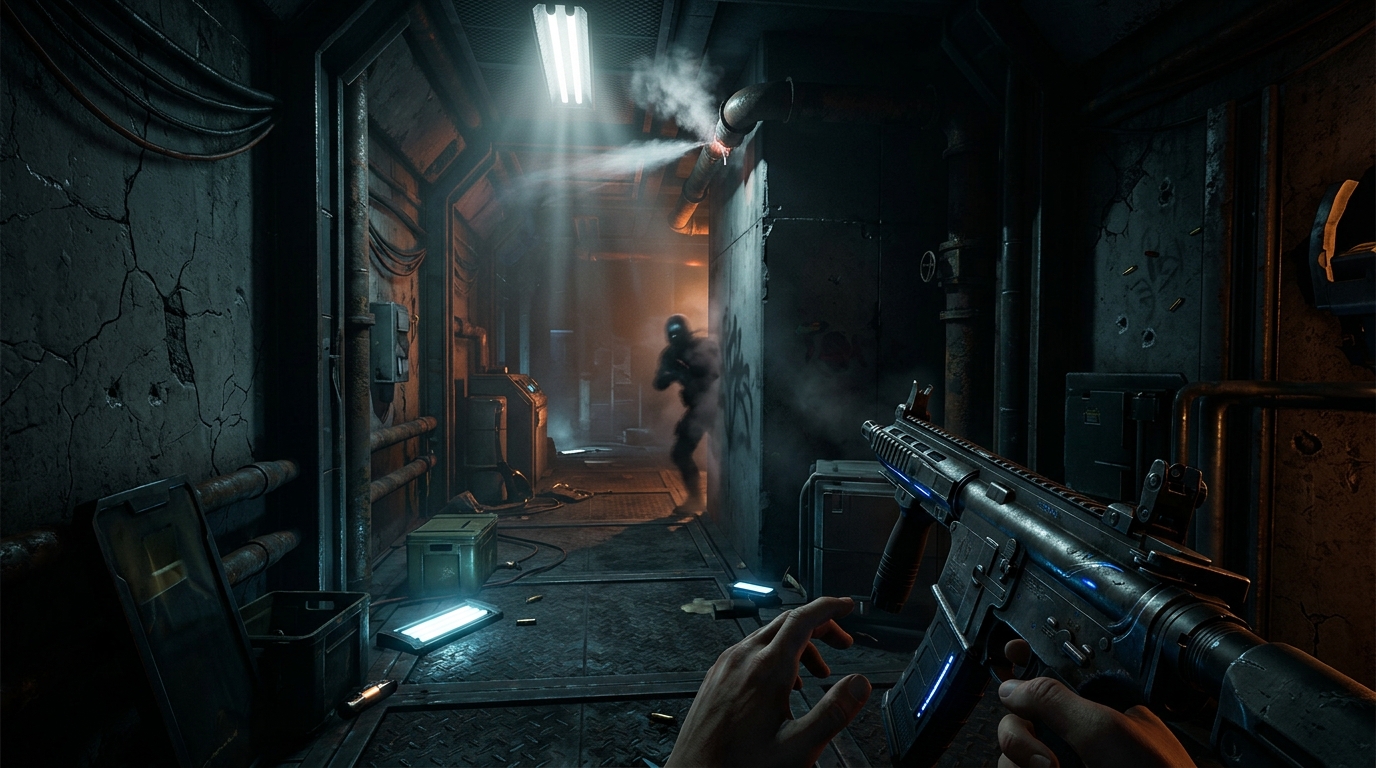
Breachers: Outbreak looks like the more immediately legible announcement from the VR Games Showcase 2026. Its title points toward a darker, outbreak-focused spin on tactical action, while the trailer suggests that familiar squad-based tension is being pushed into a more chaotic survival scenario. That could give players a genuine reason to return, provided the missions demand teamwork instead of turning every encounter into another corridor full of disposable targets. I am watching for meaningful hand interactions, readable enemy behavior, and enough variation to prove this is a full VR game rather than a shooting gallery wearing a tactical vest.
DRIFTERS: Blackout Crew is harder to judge, which is either intriguing or a warning label with good lighting. The announcement appears aimed at players who want stylish, squad-driven VR action, but presentation alone cannot explain whether its core loop is exploration, combat, extraction, or simply standing around admiring expensive shadows. Its audience will likely depend on how well it supports repeatable sessions and whether multiplayer coordination feels essential instead of decorative. Platform plans remain important too, because a VR game built around a small player base can become a very lonely lobby simulator unless its launch targets and cross-platform support are handled sensibly.
Together, these reveals show why the August showcase matters: VR needs more games with clear identities, not just cinematic trailers that evaporate the moment the headset goes on. Breachers: Outbreak has the stronger chance to convert its premise into a practical, replayable game, while DRIFTERS: Blackout Crew still has to prove that its style serves the mechanics rather than hiding their absence. I will give both credit for aiming at proper VR audiences instead of treating motion controls like a novelty button. The verdict is simple: both projects look worth watching, but neither gets a free pass just for making a headset wearer wave their hands dramatically in a dark room.
Showcase Updates Worth Watching
I will be watching the VR Games Showcase 2026 for actual games, not another parade of cinematic trailers featuring a mysterious hooded person staring at a moon. The biggest test will be whether developers support modern standalone hardware and PC VR without turning the latter into a blurry afterthought. I want concrete updates on loading times, hand tracking, comfort options, and whether mixed-reality features add meaningful gameplay instead of placing a virtual couch in my real living room and calling it innovation. A promising showcase should also explain how games use eye tracking, room-scale movement, and spatial audio, because VR is at its best when those features matter rather than sit in a marketing bullet point. If a studio cannot show a playable loop after two years of announcements, I will assume the loop is “announce game, vanish, repeat.”
I will also be looking for smaller studios willing to take risks, since the safest VR releases often feel like tech demos wearing expensive costumes. A clever example would be a co-op game that lets one player use full room-scale interaction while another joins from a standard screen, solving the eternal problem of trying to convince friends to buy a headset just to watch me panic near a digital spider. Updates should include release windows, supported platforms, accessibility options, and honest details about whether a game needs a large play area or works while seated. I am especially interested in games that build around physical presence, proper object handling, believable enemies, and environments that react to the player, instead of stapling motion controls onto a conventional shooter. The winners will be the projects that make VR feel essential. Everything else can return to the uninstall pile where most overhyped virtual experiences already live.
VR Games Worth Your Headset
The August VR Games Showcase 2026 had enough announcements to make my wishlist nervous and my storage space quietly reconsidering its life choices. More than 25 titles appeared across reveals, release dates, updates, downloadable content, and surprise launches, but quantity is not the same as quality. The promising trailers showed clear gameplay loops, readable interaction, and enough player agency to suggest these are games rather than expensive technology demonstrations. That matters in VR, where waving at a glowing cube can still be marketed as “immersive storytelling” if nobody asks follow-up questions. I am judging this lineup by whether it gives me a reason to return after the novelty wears off and my neck starts filing complaints.
Breachers: Outbreak looks like one of the safest wishlist picks because its pitch has an obvious identity: tactical shooting, room-clearing tension, and the physical decision-making that VR handles better than a flat screen. The real test will be comfort, especially during movement, turning, and firefights, but a focused loop gives it a stronger foundation than another cinematic corridor simulator. DRIFTERS: Blackout Crew also caught my attention by promising a crew-based survival experience with room for teamwork, replayable runs, and the sort of chaotic improvisation that can make VR feel genuinely alive. I am not handing either game a trophy based on a trailer, because trailers have lied to me before and usually had better lighting when they did it. Still, both showed enough gameplay identity to earn a wishlist slot instead of being sentenced to the digital dustbin.
The weaker announcements were the ones built around atmosphere first and interaction second, with trailers full of dramatic camera moves but suspiciously little evidence that players actually do anything. A VR game needs comfortable motion design, meaningful hand interactions, and a reason to replay it, not just a headset-shaped screensaver with a tragic violin soundtrack. Technical ambition is welcome, but spectacle cannot hide shallow combat, awkward locomotion, or a campaign that ends just as the tutorial starts getting interesting. My blunt shortlist from the showcase is simple: wishlist the projects that demonstrate a repeatable loop, keep an eye on the ones still hiding behind mood, and ignore anything that treats “look around” as a full feature set. VR has moved past the novelty phase, and developers should stop asking us to applaud when a door opens because we used our actual hand.
VR Finally Brings Games, Not Gimmicks
The August 13 VR Games Showcase made a convincing case that 2026 is not letting virtual reality quietly fade into the accessory aisle. More than 25 titles filled the second-anniversary presentation, with Breachers: Outbreak and DRIFTERS: Blackout Crew providing the clearest examples of ideas that could become actual games instead of expensive tech demos wearing a headset. I liked seeing updates, DLC, release dates, and surprise launches share the stage, because VR needs fewer mysterious trailers and more evidence that someone remembered to finish the project. Still, a flashy reveal only earns a provisional thumbs-up until the controls feel good, the performance holds steady, and the novelty survives the second session.
What happens next will matter more than the showcase’s trailer count. Release dates, developer follow-ups, hands-on impressions, and platform-specific updates should reveal which announcements have real momentum and which ones will evaporate after the algorithm stops clapping. I will be watching for games worth reinstalling, not merely reinstalling long enough to admire the lighting before returning to something with a flat screen and a functioning menu. For now, VR Games Showcase 2026 feels like a meaningful sign of progress, but the medium still needs fewer commitment-issue tech demos and more releases that make players say, “Put the headset back on.”