
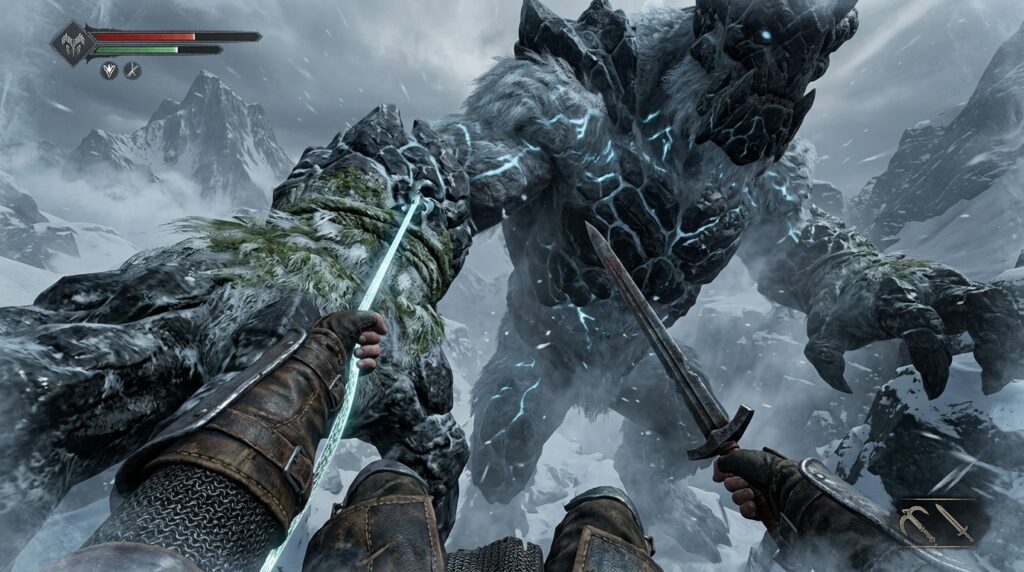
Back in late 2024, we were all holding our breath to see if Behemoth would actually deliver on its promise of slaying giants or if it was just another overhyped tech demo. Fast forward to 2026, and this titan-toppling simulator has cemented itself as the gold standard for what happens when you give a developer enough rope to hang a mountain-sized god. It’s gritty, it’s visceral, and it’s the closest you’ll get to feeling like a medieval badass without the actual risk of getting crushed into a fine marmalade.
Now that the dust has settled and the physical copies are hitting bargain bins for twenty bucks, it’s time to look back at the game that effectively served as the studio’s VR swan song. With the developers officially pivoting away from headsets to join the corporate machine, this title stands as a bittersweet reminder of a time when someone actually cared about high-fidelity VR combat. It’s a masterpiece of physics-based carnage that proves you don’t need a massive budget to make a player feel small, provided you have enough giant monsters to do the job.
Key Takeaways
- Behemoth sets a high-fidelity standard for VR by utilizing a physics-based combat system that requires deliberate, weighted movements rather than simple wrist-waggling.
- The PSVR2 hardware, specifically its OLED screens and advanced haptics, is essential for conveying the terrifying scale and physical impact of the game’s skyscraper-sized boss encounters.
- The Rites of Wrath DLC transforms the experience from a linear narrative into a replayable combat sandbox through the addition of Arena and Boss Rush modes.
- As the developer’s final VR project before pivoting to traditional gaming, this title serves as a complete, polished swan song that justifies the investment in high-end virtual reality hardware.
Brutal Combat Mechanics And Physics In The Forsaken Lands
If you thought the physics in the developer’s previous zombie outings were impressive, Behemoth takes that foundation and adds a few tons of cold, hard steel. This isn’t your typical VR waggle-fest where you can defeat a god by shaking your wrist like a caffeinated hummingbird. Every swing of your sword feels like it actually weighs something, requiring a full, deliberate motion to cleave through the armor of the Forsaken Lands’ residents. When you parry a massive blow, the haptic feedback on the PSVR2 makes your hands feel the impact, effectively simulating the sensation of metal clashing against metal. It is one of the few games that justifies the bulky headset by making you feel the physical exhaustion of a genuine life or death struggle.
The gore system is where things get truly unapologetic and, frankly, a little bit concerning for my mental health. Building on the dismemberment tech that made their past work famous, the developers have refined the “crunch” factor to a point that borders on the surgical. You can’t just aimlessly slash at enemies; you have to find the gaps in their rusted plate mail and commit to the kill. Watching a limb pop off with realistic resistance before the body reacts to the environment is morbidly satisfying in a way that most “floaty” VR titles can’t replicate. It is visceral, messy, and exactly what we need to see more of if VR is ever going to move past the tech-demo phase of its life cycle.
What really sells the experience is how the physics-based combat engine interacts with the sheer scale of your surroundings and the enemies within them. When a grunt gets knocked back, they don’t just play a pre-baked animation; they stumble over terrain and react to the actual geometry of the world. This level of environmental awareness makes the combat feel less like a programmed sequence and more like a chaotic brawl. It is the kind of design that rewards players who actually use their brains instead of just spamming the trigger buttons. While the studio might be moving away from the medium, they certainly left us with a masterclass in how to make virtual violence feel disturbingly tangible.
Scaling The Massive Behemoths On PSVR2 Hardware
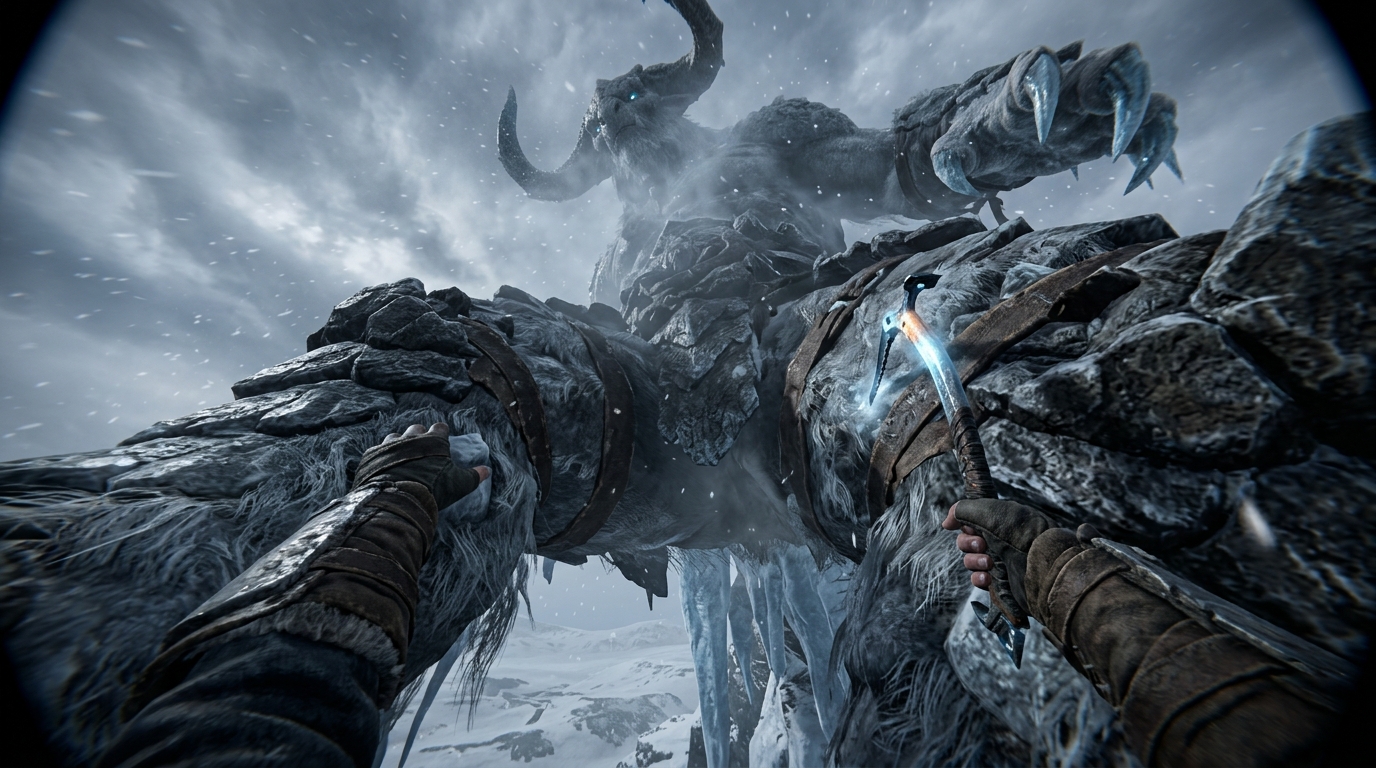
Standing at the foot of a boss in Behemoth feels less like a typical gaming encounter and more like a genuine lapse in judgment on your part. On the PSVR2, the sense of scale is legitimately nauseating in the best way possible, thanks to those OLED screens that actually deliver true blacks instead of that muddy grey soup you find on cheaper headsets. When a creature the size of a skyscraper looms over you, the contrast makes the depth perception feel terrifyingly real. You aren’t just looking at a big 3D model, because you are actively craning your neck back until it cracks just to see where the killing blow is coming from. It is one of the few times the hardware actually justifies the price tag by making you feel like a very crunchy snack.
The haptics in the headset and the Sense controllers turn every near miss into a mini heart attack. When one of these monstrosities slams a fist into the dirt, the vibration doesn’t just buzz, it rattles your skull with enough force to make you check for a concussion. You can actually feel the tension in the virtual bowstring through the adaptive triggers, which adds a layer of physical stress that most VR titles completely ignore. It is a masterclass in using hardware to distract you from the fact that you are just standing in your living room wearing a plastic bucket on your head. If you want to feel small and insignificant while sweating through your shirt, this is the definitive way to do it.
Despite the studio moving on to other things, the sheer spectacle of these encounters remains the high water mark for the platform. It is rare to find a game that does not rely on cheap jump scares but instead uses pure architectural size to trigger your fight or flight response. The PSVR2 version is the clear winner here because the HDR lighting makes the snowy, bleak landscapes pop with a clarity that makes the monsters look even more imposing. If you have been letting your headset gather dust because the library felt thin, these massive boss fights are the wake up call you need. Just try not to punch your TV when you inevitably scramble away from a giant foot.
Post Launch Updates And The Rites Of Wrath DLC
Behemoth initially felt like a lonely stroll through a frozen apocalypse, leaving hardcore players wondering what to do once the credits rolled. The Rites of Wrath DLC finally fixed that by introducing the Arena mode, which is essentially a brutal playground for anyone who hasn’t yet tired of severing limbs in VR. It turns the game from a one-and-done linear narrative experience into a legitimate combat sandbox where you can actually test the limits of the physics system. Instead of wandering through empty vistas, you are dropped into trials that demand mastery over every grapple and blade in your arsenal. It is the kind of endgame content that should have been there at launch, but I suppose better late than never when the combat feels this satisfying.
The Boss Rush trials are the real standout here, allowing you to relive those massive, scale-defying encounters without the narrative fluff in between. There is something delightfully masochistic about facing these towering monstrosities back-to-back, especially when the PSVR2 haptics are working overtime to simulate the impact of a giant club hitting your skull. It is a concentrated dose of what makes the game great, stripping away the walking simulator elements to focus entirely on the adrenaline-pumping scale of the boss fights. If you bought this headset to feel small in the face of a god, these trials are the primary reason to keep your hardware plugged in.
While the development team has unfortunately decided to pivot away from VR development, they at least left the door open with a suite of updates that make the game feel complete. The addition of these modes transformed Behemoth from a tech demo with a budget into a replayable staple of the platform. It is a bittersweet farewell to a studio that clearly understood how to make weight and momentum feel real in a digital space. For anyone who snagged this on sale or kept it in their library, the post-launch support ensures you actually have a reason to break a sweat in your living room again.
The Studio Pivot And The Future Of VR Gaming
The developers finally decided to pack up their VR headsets and head for the exit, leaving Behemoth as the studio’s massive, lumbering swan song. It is a bit of a gut punch to see the team that basically taught us how to swing a digital machete walk away from the medium entirely. While the corporate suits are busy chasing the next big flat-screen blockbuster, we are left holding a game that feels like a relic from a future that was cut short. You can practically smell the “moving on” energy in the air, but that does not mean the game itself has lost its edge. It is still a technical marvel that makes most other PSVR2 titles look like tech demos made by interns.
The big question is whether you should actually drop your hard earned cash on a game whose developers have already checked out. Usually, when a studio pivots, it means the servers are going dark and the bugs are moving in for good, but Behemoth is a different beast. Since it is a self contained odyssey of stabbing giants in the face, the lack of future roadmaps does not hurt the actual experience of playing it. You are getting a polished, physical world that actually respects the hardware you paid way too much for. If anything, the current sale prices make it an even easier sell because you are getting a premium experience for the price of a digital hat.
I am not going to sugarcoat the fact that the VR industry feels a little lonelier without this team in the trenches. However, Behemoth remains a mandatory install for anyone who wants to justify owning a PSVR2 without just replaying the same three rhythm games. It is a confident, brutal reminder of what happens when a team actually understands physics and scale in a virtual space. Even if the developers have moved on to whatever corporate project is planned next, this game stands as a high watermark for what immersive combat should look like. Buy it for the sheer satisfaction of toppling a god, even if the gods of development have already left the building.
A Rare Reason to Own PSVR2
Behemoth is the final, towering monument of an era where this studio actually cared about your headset, and it remains one of the few titles that makes the PSVR2 hardware feel like a smart purchase instead of a dusty paperweight. While the industry is busy pivoting toward safe, flat-screen sequels, this game demands you stand toe-to-toe with monsters that actually feel massive thanks to some of the best scale realization in the medium. It is gritty, heavy, and occasionally clunky, but it possesses a physical soul that most modern VR titles lack. You aren’t just clicking buttons to win here, because the haptics and physics-based combat force you to actually put some muscle into your swings. If you see this on sale for twenty bucks, you should grab it faster than a loot chest in a burning building.
The reality of the situation is that the developers have officially left the VR building to chase mainstream dreams, making Behemoth a literal swan song for high-end virtual reality production. Because there will be no more updates or sequels from this specific team, you are looking at a finished product that stands as a snapshot of what happens when a developer actually tries to push the hardware. The visuals still hold up remarkably well against newer releases, and the sense of dread you feel when a boss blocks out the sun is something you just cannot get from a standard television. Letting this rot in the bargain bin would be a genuine mistake for anyone who actually enjoys using their expensive peripheral for something other than the best PSVR2 games that finally make the hardware worth playing. It is a confident, brutal, and essential experience that proves VR can handle epic scope when the developers aren’t being lazy.
Frequently Asked Questions
1. Is Behemoth on PSVR2 just another tech demo?
Not even close. While most VR games feel like glorified Wii Sports clones, this is a full-blooded titan-toppling simulator that sets the gold standard for physics-based carnage. It is a gritty, visceral masterpiece that actually justifies the weight of the headset on your face.
2. How does the combat feel compared to other VR games?
Forget that pathetic wrist-waggling you do in other titles because this game actually requires effort. Every swing of your sword has simulated weight, meaning you have to commit to your movements if you want to cleave through armor. The haptic feedback is so intense you will practically feel the bone-shaking impact of every parry.
3. Is the game still worth playing now that the studio moved on?
Absolutely, especially since you can find physical copies for twenty bucks in bargain bins these days. Much like how the Phasmophobia console release brought a long-awaited experience to the platform, this title serves as a bittersweet swan song for a developer that actually cared about high-fidelity combat before they joined the corporate machine. It is a rare moment in gaming where the scale actually matches the ambition.
4. Can I play this if I prefer casual, relaxing experiences?
Only if your idea of relaxing involves being crushed into a fine marmalade by a mountain-sized god. This game is designed to be physically exhausting and unapologetically brutal. If you are looking for a peaceful stroll, go play a farm simulator and leave the giant-slaying to the adults.
5. Does the game look as good as it plays?
The visual fidelity is top-tier, proving you do not need a massive corporate budget to make a player feel small and insignificant. The gore system is particularly impressive, offering a level of detail that would make a horror director blush. It is high-fidelity violence at its absolute finest.
6. What makes the Behemoth fights different from standard enemies?
Standard enemies are just practice for the real work of bringing down gods. These encounters turn the environment into a weapon and force you to use every bit of the physics engine to survive. You are not just pushing buttons, you are engaging in a life or death struggle against impossible odds. Much like reading Avowed gameplay impressions to see if a fantasy RPG lives up to the hype, this title is a prime example of satisfying movement mechanics that actually feel good when translated into a virtual space.