
If you are still clutching your wallet and wondering if the nintendo switch online library is actually worth your hard-earned twenty bucks, let’s get real. We have finally moved past the era of drip-fed NES titles that nobody asked for. The current catalog is actually starting to look like a legitimate museum of greatness rather than a digital bargain bin. Between the pixel-perfect SNES gems and the handheld nostalgia of the Game Boy era, Nintendo is finally leaning into the fact that their back catalog is basically a license to print money.
Of course, the real drama starts when you look at the Expansion Pack tier and realize Nintendo expects you to pay a premium for the privilege of 64-bit polygons and GBA classics. While upscaled high-definition Mario Kart 64 is an absolute blast, the price jump still feels like a calculated mugging of our collective childhood memories. The library is massive, sure, but whether it is a curated masterpiece or a bloated subscription trap depends entirely on how much you value playing The Minish Cap on your commute.
Key Takeaways
- The standard Nintendo Switch Online tier offers essential SNES and NES masterpieces like Super Metroid, but the library is diluted by a significant amount of low-quality filler titles.
- The Expansion Pack tier functions as a ‘nostalgia tax,’ forcing users to pay premium subscription prices to rent N64, GBA, and GameCube titles they likely already owned on previous consoles.
- Subscription-based retro gaming erodes digital ownership, as games are locked behind recurring fees and ‘always-online’ check-ins that can be revoked at any time.
- Nintendo Switch Online prioritizes convenience and recurring corporate revenue over permanent game preservation, turning gaming history into a temporary rental service.
Analyzing The Standard Tier NES And SNES Catalog
The standard tier of Nintendo Switch Online feels like a digital museum where the curator occasionally forgets to dust the exhibits. On one hand, you have the absolute heavyweights like Super Metroid and The Legend of Zelda: A Link to the Past, which remain the gold standard for game design decades later. These are not just nostalgia trips, they are essential experiences that still play better than half the indie trash clogging up the eShop today. If you haven’t guided Samus through Zebes or felt the perfection of the SNES controller layout, you are basically gaming in the dark. Having these bangers available for twenty bucks a year is a solid deal, provided you actually own the hardware to play them.
However, once you move past the five or six legendary titles, the library starts looking like a garage sale in the middle of a thunderstorm. For every masterpiece, there are ten filler titles like Spelunker or some obscure mahjong game that literally nobody asked for in 2026. It is hard to feel like you are getting a premium experience when the “new additions” are often 8-bit relics that were barely playable in the eighties. Nintendo loves to tout the quantity of games available, but let’s be honest, you are never going to touch ninety percent of this digital clutter. We are essentially paying a subscription fee to rent games we already bought three times on previous consoles.
The real kicker is the constant tether to an internet connection just to verify that you are still allowed to play a thirty year old ROM. This “always online” philosophy is a slap in the face to anyone who values actual ownership over a never ending rental cycle. Subscription fatigue is real, and paying a recurring tax to access a static library of NES games feels increasingly predatory as the years roll by. While the convenience of having these classics on your handheld is nice, the lack of a permanent purchase option is a glaring middle finger to the fans. You can enjoy the quality of the SNES era, but never forget that you are just a guest in Nintendo’s walled garden.
The Expansion Pack Price Hike Versus GameCube Exclusives

Nintendo is finally dangling the GameCube carrot in front of our noses, but the price of entry feels like a digital shakedown. While playing Wind Waker in high definition on a handheld is a dream come true, locking these twenty year old gems behind the most expensive tier of the Expansion Pack tier is a classic corporate power move. We are essentially being asked to pay a yearly “nostalgia tax” just to access games we probably already own on three different consoles gathering dust in the attic. It is a brilliant way to ensure recurring revenue, but it feels incredibly greasy when you realize you are just renting your childhood memories.
The technical upgrades for the N64 and GameCube libraries are undeniably slick, yet they highlight the absurdity of the current subscription fatigue. Nintendo has perfected the art of upscaling old textures and calling it a premium feature, making us feel like geniuses for paying fifty bucks a year for stable frame rates. It is hard not to feel like a bit of a sucker when you see the hardware gatekeeping in full effect on the Switch 2. You get crisp visuals and online play, but the moment you stop paying that annual fee, your entire library of classics vanishes into the digital ether.
Let’s be real about the fact that this is a total pivot away from the era of physical media and ownership. By keeping these heavy hitters exclusive to the subscription service, Nintendo is forcing a choice between convenience and actual value. You can enjoy the buttery smooth performance of a GameCube masterpiece today, but you are tethered to a server that could be shut down whenever the next console cycle begins. It is an ingenious business strategy that treats loyal fans like ATM machines while offering just enough shiny content to keep us from walking away.
Virtual Boy Revivals And The Problem With Digital Ownership
The recent addition of Virtual Boy titles to the Nintendo Switch Online library is a move that manages to be both hilariously niche and deeply frustrating. While it is undeniably cool to see a failed experiment from 1995 finally get some modern love, the delivery method feels like a massive slap in the face to anyone who values a permanent collection. Instead of letting us buy these red-tinted oddities for a few bucks, Nintendo has tucked them behind the Expansion Pack paywall, turning gaming history into a temporary rental. It is the ultimate “look but don’t touch” scenario where your access to these relics is tied directly to an annual subscription fee.
Relying on a digital subscription to preserve gaming history is a dangerous game that usually ends with the consumer losing everything. We are essentially paying for the privilege of not owning things, and that becomes a major problem when licenses expire or servers eventually go dark. If you stop paying your yearly tribute, your entire library of classics vanishes, leaving you with nothing but memories of a red-hued headache. This always-online requirement is a parasitic way to handle retro gaming, especially when the industry expects us to be grateful for the chance to rent games we have already bought three times before.
The current state of the NSO library highlights a massive shift toward subscription fatigue that treats players like recurring revenue streams rather than fans. There is no reason why we should be forced into a “Standard” or “Expansion” tier just to play software that is decades old and takes up less space than a single high-res screenshot. When video game preservation is locked behind a recurring bill, it ceases to be about history and starts being about holding your childhood hostage for fifty dollars a year. We need to stop pretending that this digital-only, sub-based future is a win for the community when it really just strips away our right to actually own the games we love.
Subscription Fatigue And The Death Of Physical Retro Media
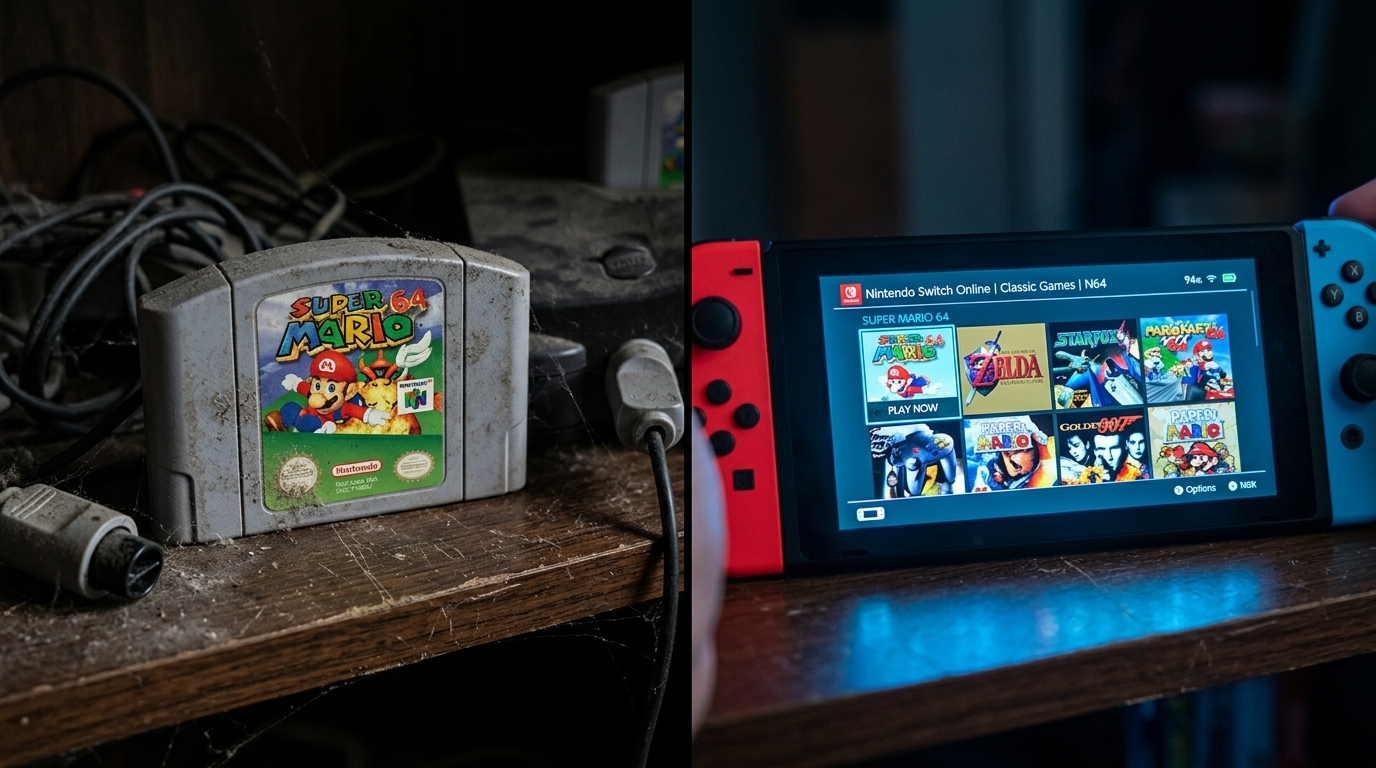
The Nintendo Switch Online library is a masterclass in convenience that simultaneously feels like a digital velvet rope. On one hand, I can jump from saving Hyrule on the NES to racing through Mario Kart 64 in seconds without blowing into a single dusty cartridge. It is an undeniable relief for my wallet when you consider that a physical copy of some of these games now costs more than a decent used car. However, that convenience comes with a nasty side effect because you are essentially renting your childhood memories. The moment you stop paying that yearly tribute, your entire retro collection vanishes into the digital ether.
Subscription fatigue is real, and Nintendo is betting on the fact that you will keep paying forever just to keep your save files alive. We have reached a point where physical collecting has become a playground for speculators and people with too much shelf space, leaving the rest of us at the mercy of a server. You do not own these games, and you never will, which is a bitter pill to swallow when you realize your disc drive is the only thing saving your library from corporate whims. While the library is massive and packed with genuine bangers, it is hard to ignore the fact that we have traded true ownership for a recurring bill.
The skyrocketing costs of retro hardware have turned the NSO library into a necessary evil for the average gamer. I love having access to the Game Boy Advance catalog on my handheld, but I hate the feeling that I am just borrowing fun from a company that could pull the plug whenever they feel like it. It is a classic bait and switch where the industry convinces us that accessibility is the same thing as value. We are trading the permanence of a plastic cartridge for the fleeting ease of a menu screen. Enjoy the nostalgia while it lasts, but remember that the gold rush is over for cheap gaming services. The fun only continues as long as your credit card remains valid.
Renting Nostalgia Is a Bitter Pill
The final verdict on Nintendo Switch Online is as clear as a low-resolution NES sprite. If you are paying for the Expansion Pack just to “rent” titles you owned three decades ago, you are essentially paying a monthly tax on your own nostalgia. While the library has grown to include some heavy hitters from the N64 and GBA eras, the lack of real ownership is a bitter pill to swallow. You are tethered to a digital ecosystem that could vanish the moment the next console cycle decides to wipe the slate clean. It is a convenient service for a quick trip down memory lane, but it is hardly a substitute for a permanent collection. If you want a more reliable way to play, check out our retro handheld guide for better hardware alternatives.
For the casual player who just wants to smash through a few rounds of Mario Kart 64 with friends, the subscription makes sense as a low-effort entry point. However, the “always online” requirement for check-ins is an annoying tether that feels more like digital leash than a premium feature. If you find yourself rarely opening those retro apps or if your internet connection is spotty, you are better off hitting the uninstall button and saving your cash. There is no reason to reward a subscription model that prioritizes recurring revenue over actually letting you keep the games you love. Keep the base tier if you must play online, but stop letting the Expansion Pack drain your wallet for the sake of a few pixels.
Frequently Asked Questions
1. Is the standard Nintendo Switch Online tier actually worth the money?
For twenty bucks a year, you get access to absolute legends like Super Metroid and A Link to the Past. It is a solid deal if you want the gold standard of game design, but be prepared to scroll past a lot of digital filler to find the actual gems.
2. What is the deal with the Expansion Pack price jump?
Nintendo is essentially charging a premium for your own childhood memories. While playing GBA classics and N64 titles in high definition is a blast, the price hike feels like a calculated mugging if you only care about a couple of games.
3. Are the NES and SNES games still worth playing today?
The heavy hitters in this catalog play better than half the indie trash currently clogging up the eShop. These are essential experiences, not just dusty museum exhibits, provided you stick to the titles that actually defined the genre.
4. Does the library feel like a curated collection or a dumping ground?
It is a bit of both, honestly. You have a handful of masterpieces surrounded by a lot of weird NES titles that nobody actually asked for, making it feel like a legitimate museum that occasionally forgets to dust the displays.
5. Is playing The Minish Cap on the go worth the subscription?
That depends entirely on how much you value your commute. Having handheld nostalgia like the Game Boy era at your fingertips is great, but you have to decide if that convenience justifies the recurring hit to your wallet.
6. Should I subscribe if I am not a fan of retro graphics?
If pixel art and 64-bit polygons offend your eyes, stay far away. This library is a love letter to the past, and if you do not have a soft spot for Nintendo’s back catalog, you are just paying for a digital bargain bin you will never open.