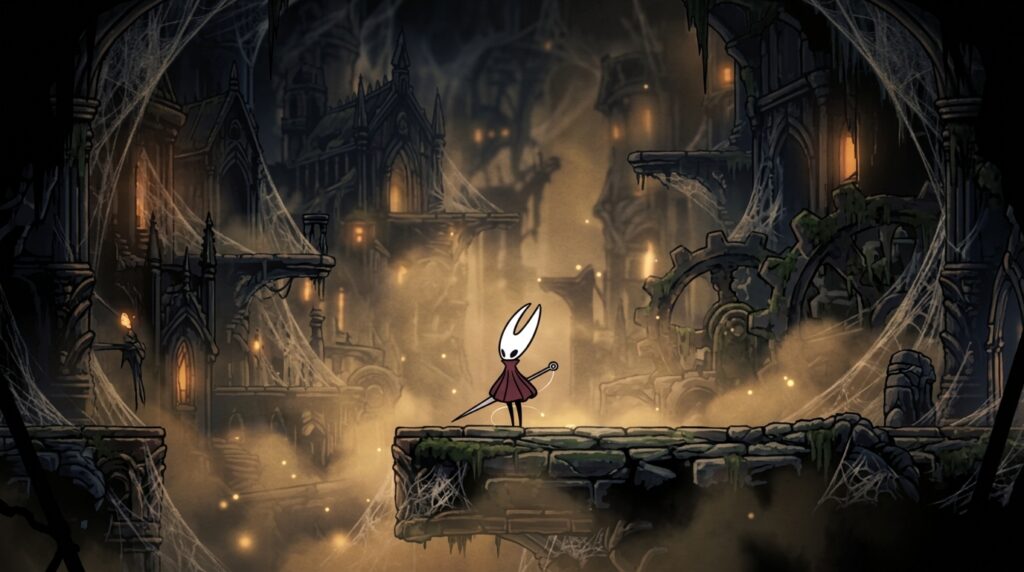
For a while there, we all thought Hornet was less of a protagonist and more of a collective hallucination fueled by years of “Silkposting” and clown emojis. The hollow knight silksong delay cycle became the industry’s favorite punchline, turning a simple sequel announcement into a multi-year endurance test that made us question our own sanity. We spent years watching major showcases with bated breath, only to be met with the kind of deafening silence that usually precedes a ghosting.
Now that the dust has finally settled and the game is actually sitting in our libraries, it’s time to look back at the chaos without the rose-tinted glasses. The “it’s getting quite big” excuse became the ultimate gaming euphemism for a project that nearly swallowed its creators whole. It wasn’t just a wait; it was a masterclass in how a tiny indie studio can hold the entire internet hostage with nothing but a red dress and a needle.
Key Takeaways
- The decision to delay the project was driven by a refusal to compromise on quality, allowing a modest DLC expansion to evolve into a massive, polished sequel that surpasses the original in scale and depth.
- Maintaining total radio silence during development is a high-risk strategy that focuses entirely on the final product at the cost of the community’s collective sanity and patience.
- A delayed game eventually achieves greatness through meticulous polish, whereas rushing a release to meet arbitrary deadlines or quarterly reports results in a permanent stain on a studio’s reputation.
- The final release justifies its lengthy development cycle by delivering a complete, bug-free masterpiece that avoids the modern industry trend of shipping broken games and fixing them with post-launch patches.
From Major Showcases To Radio Silence
We all remember where we were when a 2022 industry showcase promised us a launch within twelve months, a claim that felt like a legally binding contract to a starving fanbase. For a brief moment, it felt like the clown makeup was finally coming off and we were actually going to see Hornet in action by mid-2023. Then came the inevitable May update, which essentially told us the game had grown too massive to meet the deadline. It was the kind of direct, no-nonsense delay that you have to respect, even if it felt like getting ghosted by your favorite developer right before the big date.
The aftermath of that announcement turned the community into a digital wilderness where “Silkposting” became the only way to cope with the absolute radio silence. The studio went completely dark, leaving us with nothing but memes and a desperate need to find hidden meanings in every single tweet from a marketing intern. It was a masterclass in how to build hype by doing absolutely nothing, proving that a silent developer can be just as loud as a corporate PR machine. We spent months dissecting three-year-old trailers because when a studio stops talking, the players start seeing shapes in the clouds.
While the industry usually expects a steady drip-feed of screenshots and developer diaries to keep the lights on, this project thrived in the shadows of its own mystery. This period of silence was frustrating for anyone who likes actual information, but it also cut through the typical marketing fluff we are forced to swallow during long development cycles. There were no fake “behind the scenes” videos or scripted interviews to distract us from the fact that the game simply wasn’t ready yet. By the time 2024 rolled around, the wait had transcended mere hype and turned into a collective test of patience that only a project this anticipated could pull off.
Why The Studio Refused To Rush Hornet
Let’s be real, the delay became a legendary test of patience because the developers committed the ultimate indie sin of making the game too damn good. What started as a modest DLC expansion for the original masterpiece spiraled into a massive, sprawling sequel that eventually dwarfed its predecessor in every measurable metric. Instead of trimming the fat to meet a deadline, the team leaned into the scope creep, choosing to polish every single needle-sharp mechanic until it met their impossible standards. This wasn’t about laziness or getting stuck in development hell, it was about a tiny team refusing to serve an undercooked meal when they knew they had a five-course feast on the stove.
The reality of indie development is that without a corporate overlord breathing down your neck, the temptation to add “just one more feature” is basically a professional hazard. Every time we got a snippet of gameplay, it was obvious that Hornet’s movement and the world of Pharloom had evolved into something far more complex than a simple map pack. The developers ignored the screams of the community because they cared more about the game’s legacy than satisfying a quarterly earnings report. They knew that a delayed game is eventually great, but a rushed game is a permanent stain on a flawless reputation, especially when you are following up one of the best metroidvanias ever made.
If you were looking for some corporate apology or a sanitized PR roadmap during those years of silence, you clearly don’t know how these creators operate. They didn’t owe us a progress bar, and they certainly weren’t going to compromise the scale of Hornet’s journey just to stop the memes on Reddit. By the time the game finally landed in late 2025, it was clear that the extra years were spent cramming every corner of the world with the kind of detail that makes most AAA studios look incompetent. Rushing this sequel would have been a tragedy, and honestly, the sheer size of the final product proves that their stubbornness was the best thing that could have happened to the franchise.
Lessons From The Long Road To Pharloom
The Hollow Knight Silksong delay became the stuff of legend, transforming from a simple development hiccup into a multi-year test of sanity for every bug enthusiast on the planet. For years, we were fed nothing but radio silence while the community descended into a fever dream of clown emojis and increasingly desperate theories. The developers basically pulled a disappearing act that would make a magician blush, leaving us to wonder if Hornet had actually just retired to a nice cottage in the woods. It was a masterclass in how to stress out a fanbase, yet the raw power of the final product proves that they weren’t just sitting around twiddling their thumbs. Now that we finally have the game in our hands, it is clear that every extra month was spent cramming an absurd amount of polish into every single frame.
Other developers should take a long, hard look at this saga before they decide to go dark for half a decade. While the silence was excruciating and arguably a bit of a PR nightmare, it allowed the team to ignore the outside noise and actually finish the damn game without cutting corners. We live in an era where most studios ship broken, half-baked disasters and promise to fix them with a year-one patch, but this sequel arrived as a complete and terrifyingly dense masterpiece. It is a rare example of a game actually justifying its own developmental hell by refusing to compromise on quality for the sake of a quarterly earnings report. The lesson here is simple: if you are going to make your fans wait until 2025, you better make sure the game is good enough to make them forget why they were ever mad in the first place.
Polished Perfection vs. Mental Collapse
Looking back at the absolute chaos of the last few years, it is clear that the delay was both a masterclass in development and a total disaster for our collective sanity. The team clearly used every extra second to polish the game into a masterpiece, but they did it while leaving the community to rot in a basement of silence and clown memes. While the final product is undeniably massive and refined, no one can convince me that the radio silence was a tactical stroke of genius. It was a brutal test of patience that nearly turned the entire fanbase into a hollowed-out shell of its former self.
The verdict is simple: the game is a triumph, but the journey to get here was unnecessarily exhausting. We finally have the sprawling, tight, and punishing sequel we craved, yet the scars from years of “Silkposting” and false hope remain. You can feel the extra layers of depth in every boss fight and every new traversal mechanic, proving the time was spent wisely in the studio. However, the industry needs to learn that you can build a massive world without making your fans feel like they are shouting into a void for half a decade.
Ultimately, Silksong is a rare case where the finished game actually justifies the agonizing wait, even if the PR strategy was nonexistent. It is a masterpiece that makes the original look like a rough draft, which is a terrifyingly impressive feat for such a small team. I am thrilled to finally be playing it instead of theorizing about its existence, but let’s not pretend the delay was a victimless crime. It is the best game you will play this year, but please, never make us go through a drought like that ever again.
Frequently Asked Questions
1. Why did Silksong take so long to actually release?
The developers basically fell victim to their own ambition and let the project grow into a massive beast that nearly swallowed them whole. The game became far too big for their original timeline, forcing them to choose between a rushed mess and a multi-year development marathon.
2. What happened to the 2023 release date promise from the platform holder?
A major platform holder made a bold claim that every game in their 2022 showcase would launch within a year, but the developers clearly didn’t get that memo. They had to break our hearts in May 2023 by admitting the game was still expanding and wouldn’t meet the deadline.
3. Was the long period of radio silence actually necessary?
While it drove the community to the brink of insanity, the studio opted for total silence to focus entirely on development. It was a bold move that turned Hornet into a digital myth, but it beats getting empty PR promises every two weeks.
4. What exactly is Silkposting and why did it happen?
Silkposting was the internet’s collective coping mechanism for being ghosted by a developer for years on end. It involved a chaotic mix of clown emojis and delusional memes used to fill the void left by the lack of actual news.
5. Is the final version of the game actually worth the years of waiting?
Now that it is finally in our libraries, the answer is a resounding yes. The wait was agonizing, but the sheer scale of what the team built proves that their “it’s getting quite big” excuse wasn’t just corporate fluff.
6. Did the delay help or hurt the final quality of the game?
The delay was the only thing that saved this game from being a hollow shell of its predecessor. By taking the extra years, the developers managed to polish a tiny indie project into a massive masterpiece that actually lives up to the disastrous launches that actually got fixed by other studios in the past. Even now, as Silksong release updates continue to roll out, the level of care remains unprecedented.