When it was announced that the silent hill 2 remake was being handed to a studio known for jump-scares rather than psychological depth, I prepared for a dumpster fire of legendary proportions. Messing with a masterpiece is a dangerous game, especially when that masterpiece involves a mannequin-obsessed protagonist and the most iconic fog in gaming history. I went into this expecting a soulless cash grab that would make me want to stick my head in a rusty birdcage.
Instead of a cheap facelift, it turns out we actually have a functional survival horror game on our hands. I spent the last few days wandering through the grime to see if this reimagining honors our collective childhood trauma or if it is just another high-definition desecration of a classic. James Sunderland is back, his mental health is still in the gutter, and it is time to figure out if this journey is worth the emotional damage.
Key Takeaways
- The modernized over-the-shoulder camera and refined controls enhance the game’s claustrophobia without sacrificing the protagonist’s vulnerability or the original’s psychological tension.
- Unreal Engine 5 is utilized to deepen the atmosphere through physical, suffocating fog and high-fidelity grime that reinforces the town’s sense of decay and environmental storytelling.
- The updated voice acting and facial animations provide a more grounded, emotionally raw interpretation of the characters while maintaining the narrative’s essential subtlety and restraint.
- Every combat encounter remains a desperate, heavy struggle for survival, ensuring the experience never devolves into a power fantasy or a generic action shooter.
Modern Combat Mechanics And Over The Shoulder Terror
The biggest fear surrounding this remake was that modernizing the camera would turn James Sunderland into a budget John Wick, but the developers actually showed some restraint here. By shifting to an over the shoulder perspective, the game manages to make the claustrophobia feel personal rather than just a byproduct of 2001 technical limitations. You are no longer fighting the controls just to turn around, yet the tight framing ensures you never feel truly safe or powerful. Every dark corner in the Wood Side Apartments feels like a potential death trap because your field of view is intentionally restricted. It is a smart evolution that respects the original intent while acknowledging that nobody actually misses wrestling with tank controls in 2024.
Combat in the remake feels heavy, desperate, and appropriately clumsy for a guy who has no business swinging a steel pipe in a foggy nightmare. James does not snap to targets with military precision, and every swing of his weapon feels like it is draining his actual soul along with his stamina. When a Lying Figure lunges at you, the scramble to dodge and counter feels like a genuine struggle for survival rather than a rhythmic dance of death. The impact of the wooden plank or the crack of a handgun shot carries a visceral weight that makes every encounter feel high stakes. You are not clearing rooms for XP or loot, you are just trying to get through the hallway without losing a chunk of your health bar.
This mechanical shift manages to bridge the gap between retro purists and modern players without selling out the game psychological roots. The tension does not come from a lack of control anymore, but from the terrifying realization that even with a better view, you are still woefully outmatched. Bullets are scarce enough to make you sweat, and the melee system is just polished enough to be functional without becoming a power fantasy. It is a relief to see that the developers understood the assignment by keeping James a vulnerable mess of a human being. They successfully kept the soul of the combat intact by focusing on the frantic terror of a man who is clearly in way over his head.
Visual Fidelity And The Evolution Of Psychological Horror
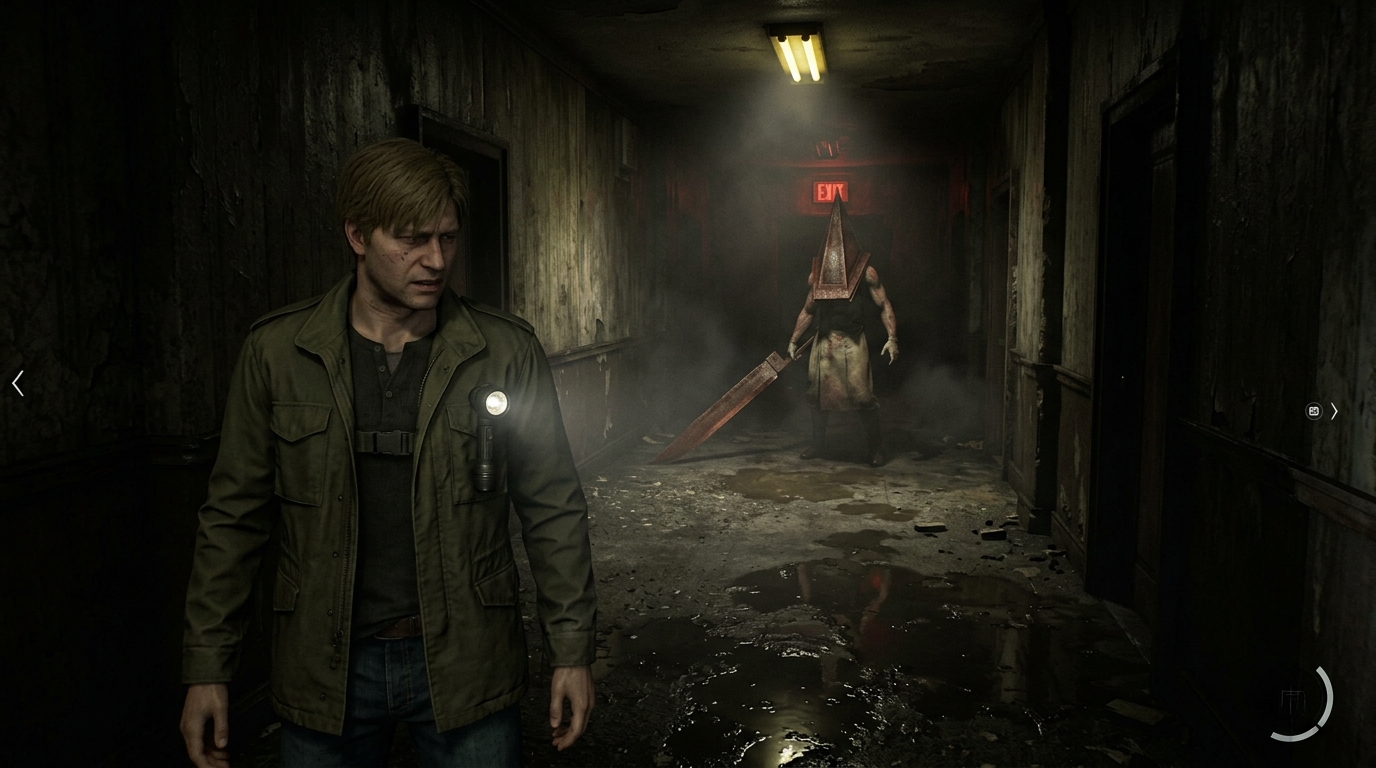
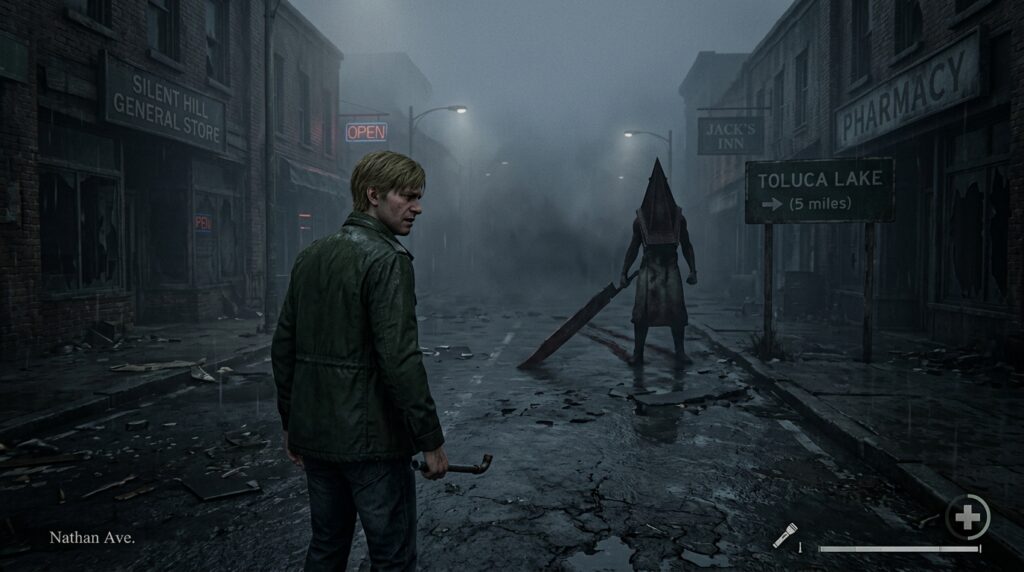
Unreal Engine 5 is often a recipe for making everything look like a shiny tech demo, but the development team actually understood the assignment here. The fog is not just a hardware limitation masquerading as a feature anymore, as it now feels like a physical, suffocating entity that clings to James as he wanders the streets. Instead of losing the mystery in high definition, the extra pixels are used to render layers of grime and decay that make the town feel genuinely lived in and then abandoned. It is a relief to see that the atmosphere has not been sacrificed at the altar of 4K resolution. The environmental storytelling is arguably stronger now because you can actually see the mold growing on the walls of the Brookhaven Hospital without squinting at a blurry texture.
The creature designs have received a similar glow-up that manages to stay faithful to the original body horror while amping up the revulsion factor. Seeing a Lying Figure skitter toward you with wet, fleshy sound effects and visible skin tension is a far cry from the blocky polygons of 2001. Some purists might argue that showing too much detail ruins the psychological impact, but the lighting engine does a fantastic job of keeping the most disturbing bits hidden in the shadows. The Mannequins are particularly offensive to the eyes now, twitching with a fluidity that makes your skin crawl every time they catch a stray beam from your flashlight. It turns out that high-fidelity filth actually works in the game favor by making the nightmare feel uncomfortably real.
This is not just a lazy upscale meant to trick you into buying the same game twice for seventy bucks. The visual upgrades serve the narrative by making the world feel as heavy and exhausted as James himself looks in the cutscenes. There was a legitimate fear that the soul of the game would be polished away, but the developers leaned into the ugly, rusted aesthetic that made the original a masterpiece. Every flickering light and blood-stained floorboard feels intentional rather than just a way to show off a new graphics card. If you were worried that the remake would be too clean for its own good, you can rest easy knowing that Silent Hill is still the most miserable place on earth.
Voice Acting And Narrative Reinterpretation Of James Journey
Luke Roberts had the impossible task of stepping into James Sunderland shoes without making him sound like a generic action protagonist or a total caricature. The original game relied on a dreamlike, almost stilted delivery that felt like everyone was underwater, which worked perfectly for that specific era of psychological horror games. In this remake, the performances are much more grounded and emotionally raw, which initially made me worry we would lose that eerie, Lynchian detachment. Thankfully, Roberts captures the pathetic, crumbling nature of James with a performance that feels less like a hero and more like a man who is actively rotting from the inside out. He manages to hit those high-stakes emotional beats without losing the awkward, desperate energy that makes James such a uniquely miserable character to inhabit.
The dialogue has seen some subtle polishing, but the remake is smart enough to know when to leave the heavy lifting to the subtext. I was bracing myself for some modern writer to come in and over-explain every metaphor, yet the script remains surprisingly restrained and respects the player intelligence. The interactions with characters like Angela and Eddie feel even more uncomfortable now, largely because the new facial animations and voice work highlight the deep-seated trauma that the original hardware could only hint at. It is a relief to see that the team understood that the horror of Silent Hill 2 is found in what is left unsaid rather than in some loud, cinematic monologue. This version maintains the disturbing soul of the narrative while making the actual delivery feel like it belongs in this decade.
Whether the rewritten lines hit as hard as the 2001 classic depends on how much you worship at the altar of nostalgia, but for my money, the emotional gut-punches are still bruising. There is a specific vulnerability in the new performances that makes the realization of James actions feel even more devastating than they did when we were looking at a handful of polygons. The game manages to avoid the trap of being a lazy cash-in by actually deepening the psychological profile of its cast through these nuanced reinterpretations. It is a rare case where the new voices do not replace the old ones in your head, but rather sit alongside them to provide a more detailed look at a man losing his mind. The remake proves that you can update the presentation without stripping away the subtle, disturbing layers that made the original a masterpiece.
A Masterpiece Modernized Without the Mess
The final verdict is in, and I can happily report that the Silent Hill 2 remake is not the soulless cash-grab we all feared it might be. While modernizing a masterpiece is usually a recipe for a digital disaster, this version manages to respect the psychological weight of the original while actually making it playable by 2024 standards. It is a rare example of a remake that understands the vibe is just as important as the resolution, ensuring the fog feels heavy rather than just looking like a GPU stress test. If you were worried that James Sunderland’s trauma was going to be turned into a generic action movie, you can finally breathe a sigh of relief. This is a mandatory purchase for horror fans, successfully bridging the gap between nostalgic reverence and modern mechanical polish.
Silent Hill is officially back from the abyss, and it did not even need a cheap jump-scare to prove its point. For those who grew up with the 2001 classic, this is the definitive way to relive that nightmare without having to wrestle with a fixed camera that hates you. For newcomers, it is the perfect entry point into a franchise that has spent far too long being the industry favorite punching bag. We are no longer stuck in the gaming equivalent of a bad dream, as this remake proves there is still plenty of life in the foggy streets of Maine. Grab your radio, keep your steel pipe handy, and get back in because the town has never looked, sounded, or felt more terrifyingly alive.
Frequently Asked Questions
1. Is the combat just another generic action shooter?
Not even close. James still fights like a guy who has never held a weapon in his life, which is exactly how it should be. The combat is heavy and clumsy, making every encounter feel like a desperate struggle for survival rather than a power trip.
2. Did the new camera ruin the spooky atmosphere?
Surprisingly, the over the shoulder perspective actually makes the game feel more claustrophobic. You lose the cinematic fixed angles, but the tight framing means you never know what is lurking just outside your limited field of vision. It is a smart modernization that does not sacrifice the tension.
3. Are the controls still as clunky as the original game?
The nightmare of tank controls is finally dead and buried where it belongs. You can actually move like a human being now without fighting the controller. It feels responsive enough for 2024 while still maintaining the weight of a psychological horror experience.
4. Does the remake stay true to the original story?
The development team managed to keep the soul of the masterpiece intact without turning it into a soulless cash grab. James is still a mental wreck, and the game respects the psychological depth that made the 2001 version iconic. It honors your childhood trauma instead of desecrating it.
5. Is the fog still a major part of the experience?
The iconic fog is back and looks better than ever, serving as more than just a trick to hide technical limitations. It creates an oppressive atmosphere that keeps you on edge throughout your entire trip through the grime. You will still feel like you are wandering through a beautiful, terrifying nightmare.
6. Should I play this if I never played the original?
This is a perfect entry point for anyone who missed out on the PS2 era but wants to understand the hype. You get all the emotional damage of the original story with modern mechanics that actually work. It is a functional survival horror game that stands on its own two feet. Much like how Metal Gear Solid Delta changes the way we interact with a classic, this remake proves that some updates are truly essential for the modern era. Whether a project is a visual masterpiece or a lazy cash grab depends on the care taken with the source material.