
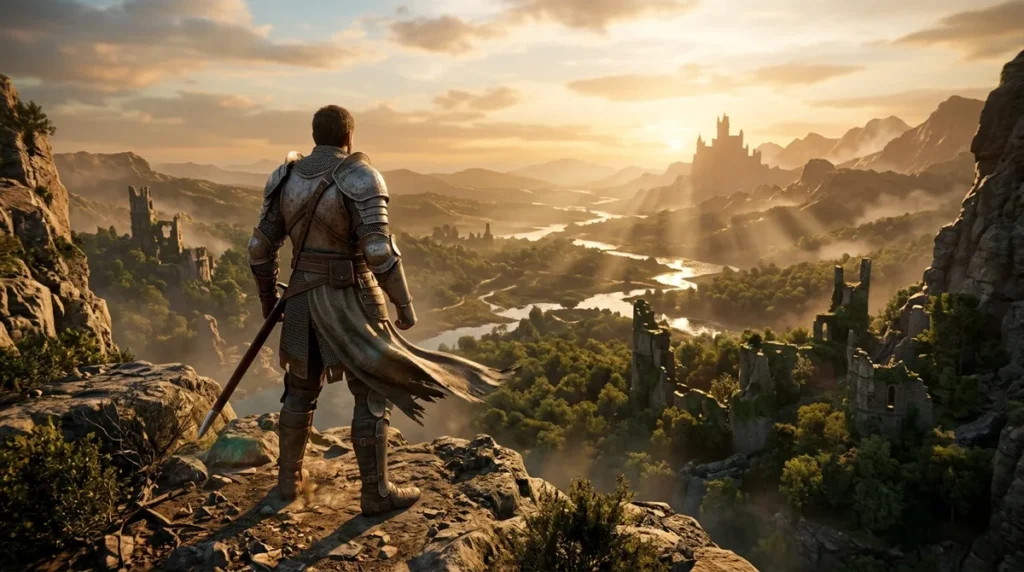
The best single-player games respect your time, deliver a complete experience, and never make you hunt for a squad before the fun starts. Baldur’s Gate 3 is a strong example. It won The Game Awards’ 2023 Game of the Year, and its party RPG lets your choices ripple through the story. It isn’t the only proof that solo play still matters. Elden Ring took the 2022 trophy, and Astro Bot took 2024, which suggests the industry hasn’t given up on the lone player yet. Think of what follows as a shortlist, not a ranking, because your ideal night depends on what you want to feel. Some of you want to vanish into a sprawling epic. Others want a tight loop you can finish between dinner and bedtime.
The range is wide, and that’s the point. Hades is a roguelike dungeon crawler that normally sells for $24.99 on Steam, and a current sale has it at $6.24 through December 1, 2026, which is hard to argue with. Hollow Knight, released February 24, 2017, trades that speed for twisting caverns and a ruined kingdom that rewards patience. Stardew Valley, released February 26, 2016, proves a farming sim can eat an entire weekend without a single explosion. Prices move, so treat every number here as a snapshot rather than a promise. On to the games.
Key Takeaways
- Gamers should pick their next solo game by free hours, not by whatever is trending online.
- The Witcher 3: Wild Hunt gives its side quests the same care as the main story, which almost never happens.
- The Elder Scrolls V: Skyrim is the pick for players who want to ignore the main quest entirely.
- The Last of Us Part I finishes in about 15 hours, making it a clean weekend story with a real ending.
- BioShock Remastered delivers an eerie mystery in about 12 hours without an RPG grind.
What Makes a Single Player Game Worth Your Hours
The strongest solo games come from RPGs, action-adventure, survival sims, and roguelikes, and the best of them give you a complete experience without needing another player in the room. If a game makes you sit through a matchmaking queue before the fun starts, it isn’t respecting your time.
The list covers both ends of the length spectrum. Some picks are sprawling open worlds that can swallow a month. Others are tighter games you can finish in a handful of sessions. Nintendo lists The Legend of Zelda: Tears of the Kingdom as a one-player Switch game released May 12, 2023, and it’s a time sink you should plan for. Match the length to your schedule, not to the hype cycle.
Every pick here is a game you can play alone from start to finish. None of the main picks are free-to-play. Free games deserve their own conversation, and this list is about paid, finished experiences with an ending you can actually reach.
We also didn’t sort these by which title is loudest on social media. Each pick is grouped by what it does best, whether that’s choices that carry weight, combat that demands respect, or a world that rewards wandering off the map.
The Witcher 3: Wild Hunt: Side Quests That Set the Bar
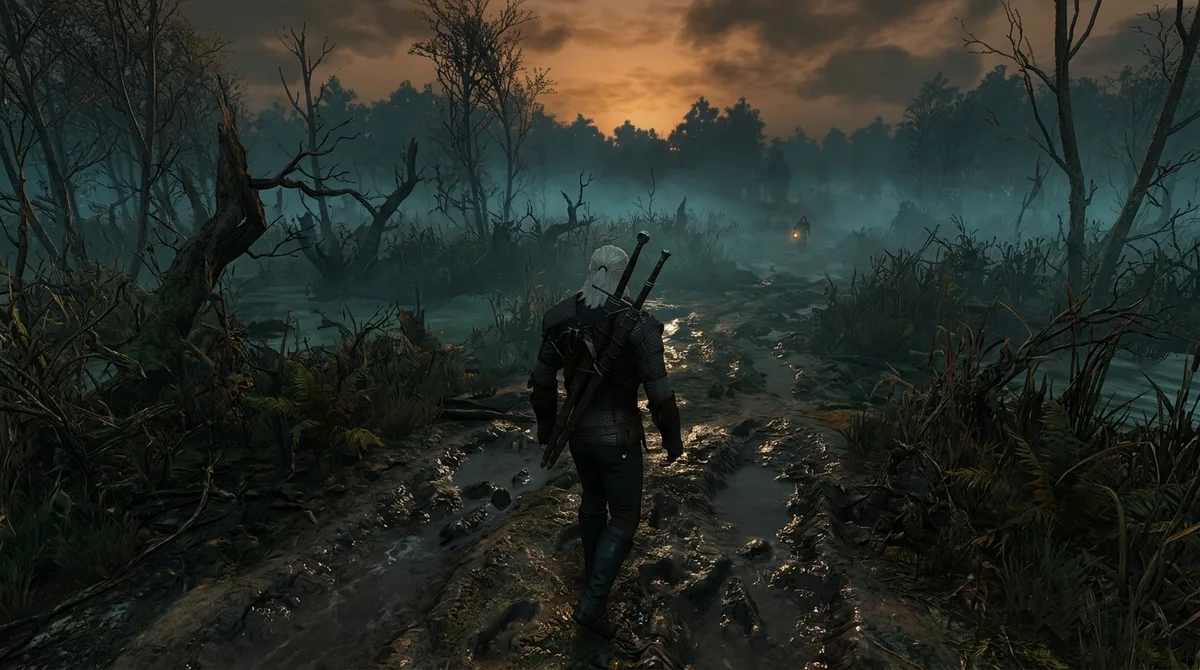
The Witcher 3: Wild Hunt is an open-world fantasy RPG, and the open world is more than a map full of icons. You play Geralt of Rivia, a monster slayer searching for his adopted daughter Ciri while he takes contracts across the war-ravaged Northern Kingdoms. The original launched on May 19, 2015, and the official site lists versions for nearly every current console and for PC.
Most games treat side quests as filler, a fetch errand with a nicer coat of paint. Here, the side work gets the same care as the main story. The game is also morally messy. Dialogue choices in main quests and side tasks can decide what happens to characters, and the good option is rarely clean. The game remembers what you did, and you’ll have to live with it.
Time is the real commitment. HowLongToBeat, as cited by GOG, puts the main story at 56.5 hours, the main story plus side content at 123.5 hours, and a completionist run at 188 hours. Hearts of Stone and Blood and Wine are widely considered essential, and the Remastered edition includes both at no extra cost to owners. A third expansion, Songs of the Past, is planned for 2027. PC players also have a long-running modding community that keeps the game alive well after launch.
At a glance
- Best for: Story-focused players and RPG fans who enjoy long quests, exploration, and character progression
- Platforms: Windows PC, PlayStation 4, and Xbox One at launch; also Nintendo Switch, PlayStation 5, Xbox Series X|S, and Nintendo Switch 2
- Price or Free-to-Play: Paid, not free-to-play; the Steam listing consulted showed €49.99
- Playtime: 123.5 hours for the main story plus side content, according to HowLongToBeat
- Expansions: Hearts of Stone and Blood and Wine, both included with the Remastered edition
- Age Rating: M for Mature 17+
Elden Ring: Brutal Bosses and Endless Builds
Elden Ring is a dark-fantasy action RPG where you create a Tarnished, wander the Lands Between, and try to claw your way to becoming Elden Lord. The 2022 Game of the Year trophy from The Game Awards went to a game that treats your patience as a resource, and it spends that resource freely. Bosses hit hard and don’t care how tired you are.
The world is seamless, so vast landscapes flow into intricate dungeons without a break. You can fight head-on, sneak past, or summon help, and the weapon, magic, and stealth options let you build a character that feels like yours. Want a sword-swinging brute? Go for it. Want a sorcerer who avoids melee entirely? Also fine. The story is cryptic and mostly told through the environment, so the lore rewards anyone willing to read item descriptions and poke at ruins. If you need cutscenes to tell you what’s happening, you’ll feel lost.
Shadow of the Erdtree, released June 21, 2024, adds a whole new realm and gives you more reasons to keep going. The main path plus some expansion side content runs about 70 to 105 hours, while seeing everything in both can take 140 to 160 hours or more. This is a paid game, not free-to-play, and the Switch 2 Tarnished Edition lists at $79.99. Check the official site for current pricing.
At a glance
- Best for: explorers, punishing-fight fans, and build tinkerers
- Platforms: PC, PlayStation 4 and 5, Xbox One and Series X|S, and Nintendo Switch 2 (Tarnished Edition)
- Release Date: February 25, 2022
- Playtime: About 70 to 105 hours for the base campaign plus some expansion side content; 140 to 160+ hours to explore everything
- Expansions: Shadow of the Erdtree (June 21, 2024)
Baldur’s Gate 3: The Party RPG That Actually Listens
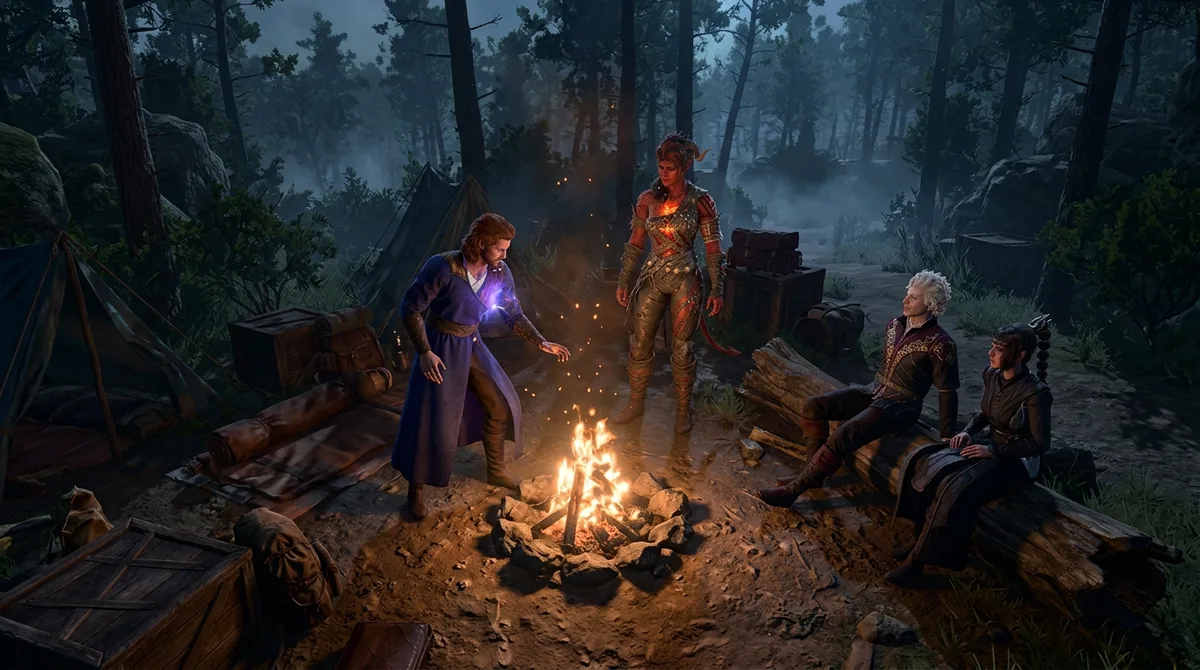
Baldur’s Gate 3 is a fantasy role-playing game set in Dungeons & Dragons’ Forgotten Realms. A mind-flayer parasite takes root in your head, and you decide whether to resist it or embrace its power. Along the way you explore, recruit companions, and shape your own fate. The 2023 Game of the Year trophy was well earned.
Combat is tactical and turn-based, and the dice rolls come straight from D&D’s rulebook. Choices carry real weight. A decision about one companion can change how a quest ends, and that’s where the game earns its reputation. Your party feels like a team you built, not a set of stat sheets you inherited.
Steam lists it as a single-player, story-rich, choice-driven RPG, released August 3, 2023, at $59.99 when the page was checked in November 2026. Prices move around, so check the official site for current availability. A guide citing HowLongToBeat puts the main story at about 68 hours, with a completionist run near 163. Larian has said it won’t make expansions or major new narrative content, so that’s the whole package.
It suits story fans, party builders, and anyone who likes testing what happens when they make a strange choice. If you want something free or prefer fast, twitchy combat, look elsewhere.
At a glance
- Best for: story-rich RPG fans and party-building tacticians
- Platforms: PC (Steam and GOG), PlayStation 5, Xbox, Mac, and GeForce NOW
- Price: $59.99 on Steam when checked in November 2026
- Release Date: August 3, 2023 (PC)
- Playtime: About 68 hours for the main story, 113 on average, 163 for a completionist run
- Expansions: none planned
Red Dead Redemption 2: A Western That Takes Its Time
Red Dead Redemption 2 is a single-player, open-world action-adventure western set in 1899. You play as Arthur Morgan, an outlaw in the Van der Linde gang, trying to survive while the law closes in. You ride, fight, rob, hunt, fish, and explore a sprawling frontier, with story missions threaded through all of it.
What sets it apart is how much attention goes into the small stuff. The expansive frontier and contextual interactions make it feel different from tightly focused adventures. Campfire conversations, a stranger on the road, and a robbery that goes sideways make each playthrough feel like your own story. The cinematic narrative backs it up, and the characters hold up when the plot slows down.
The commitment is real. The main story takes about 50 to 60 hours, and RDR2.org’s playtime guide puts a run with substantial side content at 80 to 100 hours. A 100% completion run sits around 170 to 190 hours. A 2019 report said Rockstar had no plans for a single-player expansion, so the story you get is the story you get.
The pacing is deliberate, and that’s the point, but it’s not for everyone. Long rides and quiet stretches will frustrate anyone who wants constant action. If you love payoffs, patient exploring, and chasing every last collectible, this is your game. If you want a fight every five minutes, you’ll be bored before the first big set piece.
At a glance
- Best for: Story fans, patient explorers, and completionists
- Platforms: PlayStation 4, Xbox One, and Windows PC
- Price: Paid retail game, not free-to-play; the current price depends on store, edition, and sale
- Release Date: October 26, 2018 on PlayStation 4 and Xbox One; November 5, 2019 on Windows PC
- Playtime: About 50 to 60 hours for the main story; 170 to 190 hours for 100%
- Age Rating: Mature 17+ for blood and gore, intense violence, nudity, sexual content, strong language, and drug and alcohol use
The Elder Scrolls V: Skyrim: Freedom With a Modding Problem
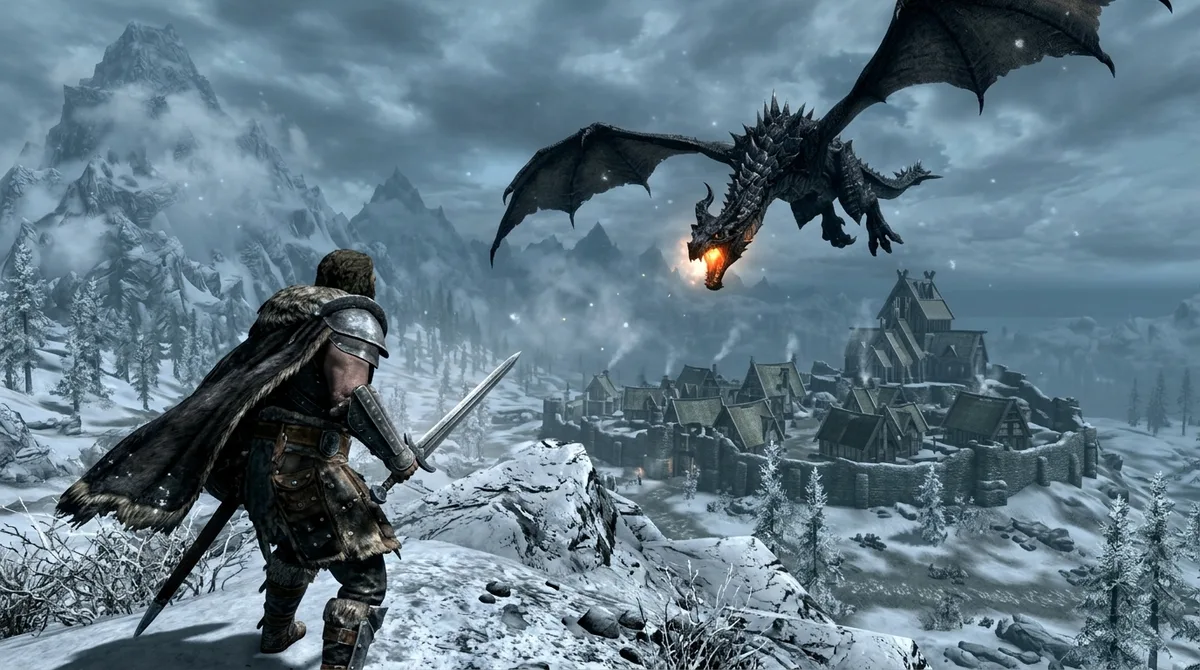
The Elder Scrolls V: Skyrim is an open-world fantasy RPG where you play as the Dragonborn, the one hero who can stand up to the dragons threatening a northern province. You can chase the main story, join factions, take side quests, craft gear, and build a character through combat, magic, stealth, or whatever you actually use. Skills improve through use, so the game rewards the way you really play.
The freedom is the selling point. Nobody forces a schedule on you. You can ignore the main quest entirely, follow a smoke plume into a cave, and wake up three hours later holding a sword you never meant to find. The world is packed with places to discover, and that’s the hook.
Plan for a long haul if you wander. HowLongToBeat estimates about 25.5 hours for the main story, 110.5 hours with side content, and 203 hours for a completionist run. The Anniversary Edition bundles the Dawnguard, Hearthfire, and Dragonborn add-ons along with Creation Club content. On PC, the modding scene keeps adding quests, creatures, and tweaks for years, so the game you finish may not be the one you started.
It suits exploration fans, players who want to skip the main quest and do their own thing, and anyone who enjoys tinkering with mods. It’s a paid game, not free-to-play, and the official site covers current availability.
At a glance
- Best for: exploration fans, players who want to ignore the main quest, and mod tinkerers
- Platforms: Xbox (One and Series X|S), PC, PlayStation (4 and 5), and Nintendo Switch and Switch 2 (Anniversary Edition)
- Price or Free-to-Play: Paid, not free-to-play; $16.49 on sale from $49.99 on the PlayStation Store on November 26, 2026, with the offer ending December 1, 2026
- Playtime: Main quest alone runs about 25.5 hours, while a completionist run can eat 203
- Age Rating: M, covering gore, intense violence, language, sexual themes, and alcohol use
Fallout: New Vegas: The Faction Politics Masterclass
Fallout: New Vegas is a single-player action RPG set in a post-nuclear Mojave Desert, and it opens with you nearly dead. You play a Courier who was left for dead and spends the game hunting for whoever tried to finish the job. The official site describes an open-world journey where you meet factions and characters, then choose a side or chase an outcome of your own.
Most RPGs let you pick a side and call it a day. New Vegas makes the factions argue over you. Allegiances and quest choices change your relationships, which paths stay open, and how the fight for control of the city ends. Faction ties can open some quests while closing others.
The combat is the weak spot. Shooting feels clunky next to newer games, and it shows its age. The writing and consequences carry the game through those rough patches, and on PC the mod community can fix or expand many of its systems.
Time is not the problem. HowLongToBeat estimates about 27 hours for the main story, 61 hours with side content, and 131 hours for a completionist run. Four story add-ons, Dead Money, Honest Hearts, Old World Blues, and Lonesome Road, stretch that further, along with two smaller packs, Courier’s Stash and Gun Runners’ Arsenal.
This one suits story-focused RPG players who love faction politics, role-playing their own version of the Courier, and digging through piles of optional content. It’s a paid game, not free-to-play, so it’s a commitment for anyone who wants a long campaign.
At a glance
- Best for: Story-focused RPG players who enjoy faction politics and optional content
- Platforms: Windows PC, Xbox One, and Xbox Series X|S
- Price or Free-to-Play: Paid, not free-to-play
- Release Date: October 21, 2010 (Steam)
- Playtime: About 27 hours for the main story, 61 hours with sides, 131 hours for completionists
- Age Rating: Rated M by the ESRB for blood and gore, intense violence, sexual content, strong language, and drug use
The Legend of Zelda: Breath of the Wild: Freedom Done Right
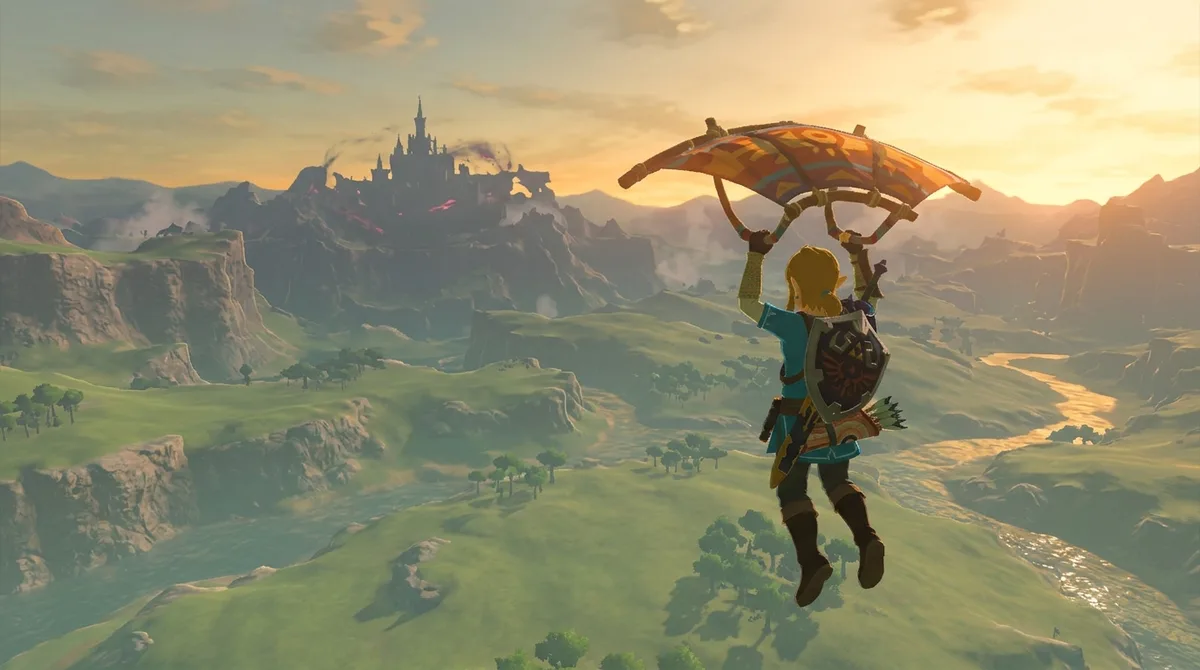
The Legend of Zelda: Breath of the Wild is a single-player open-world action-adventure. Link explores Hyrule, recovers his memories, and tries to save the kingdom, with shrine puzzles, resource gathering, and combat filling the map. It’s a game about going where you want, when you want.
What sets it apart is that the world doesn’t force a single path. Nintendo promotes choosing your own route, and GameSpot highlights the physics system as a key part of solving puzzles. Stuck at a cliff? Climb it, glide off it, or find another way around. Combat works the same way, so a fight can be won with a clever setup, a fire arrow, or a sneaky approach. Gathering materials and climbing create a loop that keeps pulling you off the main route.
That freedom eats hours. A deal-tracking site, citing HowLongToBeat, reports player estimates of about 50.5 hours for the main story, 98 hours with extras, and 193.5 hours for a completionist run. The Expansion Pass adds two DLC packs, The Master Trials and The Champions’ Ballad, plus three bonus treasure chests. The US Nintendo Store lists the Switch 2 edition at $69.99 and the Expansion Pass at $19.99, so this is a paid game, not free-to-play.
It suits explorers and puzzle solvers who like working things out at their own pace. Story-first players may find the plot less guided than they’d like. Its sequel, Tears of the Kingdom, builds directly on this map and these tools, so it’s the natural next step once you finish this one.
At a glance
- Best for: Explorers and puzzle solvers who enjoy experimenting with physics and wandering off the map
- Release Date: March 3, 2017 on Nintendo Switch and Wii U
- Playtime: About 50.5 hours for the main story, 98 hours with extras, and 193.5 hours for a completionist run (player-reported estimates)
- Expansions: The Master Trials and The Champions’ Ballad, plus three bonus treasure chests, through the Expansion Pass
- Age Rating: E10+ for Everyone 10+, with fantasy violence, mild suggestive themes, and use of alcohol
The Last of Us: Emotional Storytelling With Accessibility to Spare
The Last of Us Part I is a third-person action-adventure with survival-horror elements. You guide Joel, a smuggler hired to get 14-year-old Ellie out of a military quarantine zone, and the two cross a ravaged United States together. You scavenge, sneak past infected and human survivors, fight when you have to, and work through environmental puzzles on the way.
Ammo and supplies are scarce, so a reckless shootout usually ends badly. Every encounter asks you to slow down, pick your moment, and make the resources you have count. The real standout is the story. Joel and Ellie’s relationship carries the game, and the environmental detail, from abandoned rooms to overgrown towns, tells you as much as the dialogue does. Gustavo Santaolalla’s score adds to the mood without drowning it out. PlayStation’s store page lists 32 accessibility features, which is a rare amount of thought for a game this intense.
The campaign is focused and mostly linear. A guide estimates about 15 hours for the main story, plus roughly 2 more for the Left Behind prequel, which follows Ellie and Riley and comes with every edition. Another listing puts main story plus extras at about 20 hours and a completionist run near 28. It’s a weekend-sized story you can finish without grinding.
It suits players who want an emotional story with real tension and a clear ending. If you want open-ended RPG progression, look elsewhere. It’s a paid game, not free-to-play, and in November 2026 the official site showed a $29.39 sale price, down from $69.99, running through December 1, 2026. Prices change, so the site is the place for current figures.
At a glance
- Best for: Story-driven players who want tense stealth and survival combat with a finish line
- Platforms: PlayStation 5 and PC
- Price: Paid, not free-to-play; $29.39 sale price (reduced from $69.99) through December 1, 2026, as checked in November 2026
- Release Date: September 2, 2022 on PS5; March 28, 2023 on PC
- Playtime: About 15 hours for the main campaign, plus roughly 2 for Left Behind
- Age Rating: Mature 17+; gore, intense violence, sexual themes, strong language, and drinking
God of War: Ragnarok: Norse Myth With Weighty Combat
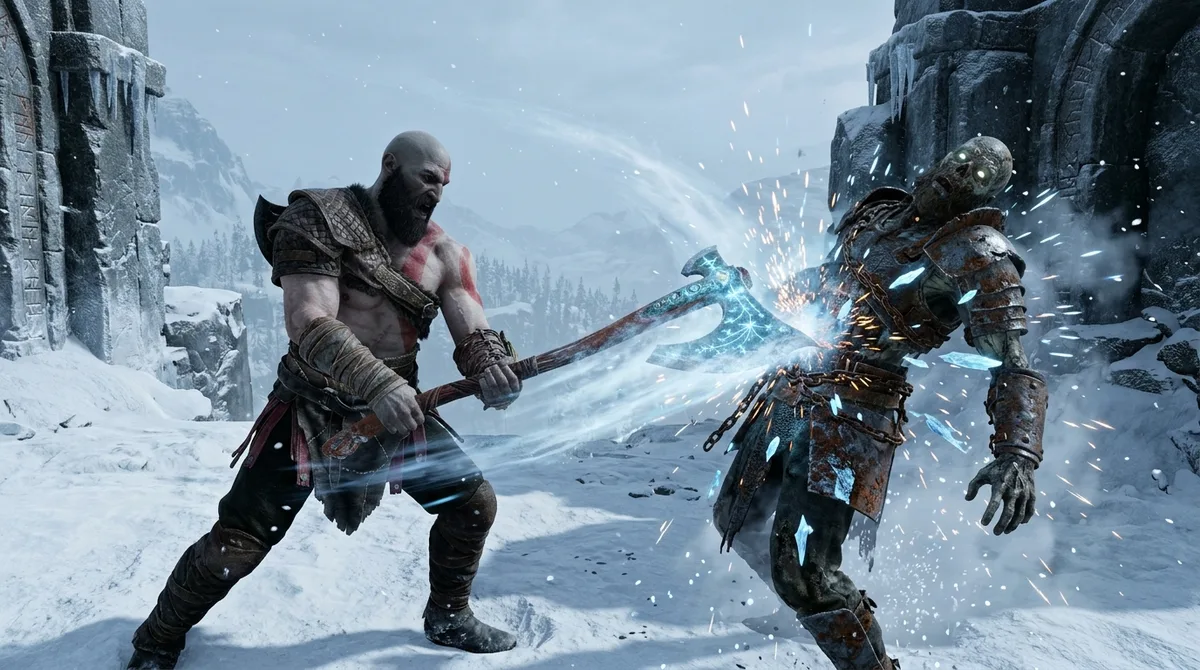
God of War Ragnarök is a single-player action-adventure in which Kratos and Atreus journey through the Nine Realms, fight Norse gods and monsters, and try to protect their family as Ragnarök closes in. It’s a father-and-son story first and a brawler second, and the brawling is excellent.
The camera stays close and mostly unbroken, so every swing lands in your face. Combat feels heavy in the best way, and bosses punish lazy button mashing. Equipment progression rewards experimentation, because the build you bother to test is often the one you end up keeping. The cinematic presentation and strong performances keep the story hitting hard, even when it’s busy dumping lore on you.
Plan on up to 40 hours for the main story plus a selection of side quests, or 55 to 60 hours to see everything in the base game. The side content earns its playtime. Valhalla, a replayable roguelite-style add-on, is free for anyone who owns the game, so the fun doesn’t end at the credits. Difficulty runs from Give Me Story, which minimizes combat focus, to Give Me God of War, which wants your reflexes and strategy. The base game is paid, not free-to-play, and current pricing is on the official site.
It suits story fans who want a long, cinematic adventure with optional exploration and a fight that can actually test them. If you want a fast, shallow brawler, this is a bigger commitment than you need.
At a glance
- Best for: story fans who want a long, cinematic adventure with optional exploration and demanding combat
- Platforms: PlayStation 4, PlayStation 5, and PC
- Price: Paid, not free-to-play; PS5 standard edition $69.99 and PS4 standard edition $59.99 in the US
- Release Date: November 9, 2022 on consoles; September 19, 2024 on PC
- Playtime: 55 to 60 hours to see everything in the base game, though the main story alone is far shorter
- Age Rating: Mature 17+ (ESRB), flagged for gore and intense violence plus strong language
Horizon Zero Dawn: Hunting Robots With Brains
Horizon Zero Dawn is a single-player open-world action RPG set in a post-apocalyptic world where human communities live among mysterious mechanized creatures. You play as Aloy, an outcast hunter who explores a lush world, uncovers the past, crafts gear, and takes down machines with weapons, stealth, and tactical attacks.
The machine hunt is the real hook. Every creature has weaknesses, and learning them shapes how you fight it. Aloy’s Focus helps with that, since it can track people, mark enemies, locate loot, and reveal machine weaknesses. Battles stop being a button-mashing contest and start feeling like a plan you have to work out.
Plan for a real commitment. HowLongToBeat’s estimates for the Complete Edition put the main story at 28.5 hours, the main story plus sides at 52 hours, and a completionist run at 75.5 hours. The Frozen Wilds expansion, which released on PS4 on November 7, 2017, adds a new area, storylines, characters, and machines, and the Remastered edition includes it.
It suits story-driven explorers who enjoy tactical combat, hunting for upgrades, and piecing together what happened to the old world. It’s a paid game, and it’s also offered through the PlayStation Plus Extra catalog, so the official site is the place for current availability.
At a glance
- Best for: Story-driven explorers who enjoy tactical machine hunts and crafting upgrades
- Platforms: PS4 (original), PS5 and PC (Remastered)
- Price: Paid game, also offered through the PlayStation Plus Extra catalog
- Release Date: February 28, 2017 on PS4
- Playtime: 28.5 hours for the main story, 52 hours with sides, 75.5 hours for completionists (HowLongToBeat)
- Age Rating: Teen (ESRB), for blood, drug reference, language, mild sexual themes, and violence
BioShock: Rapture and Its Twists
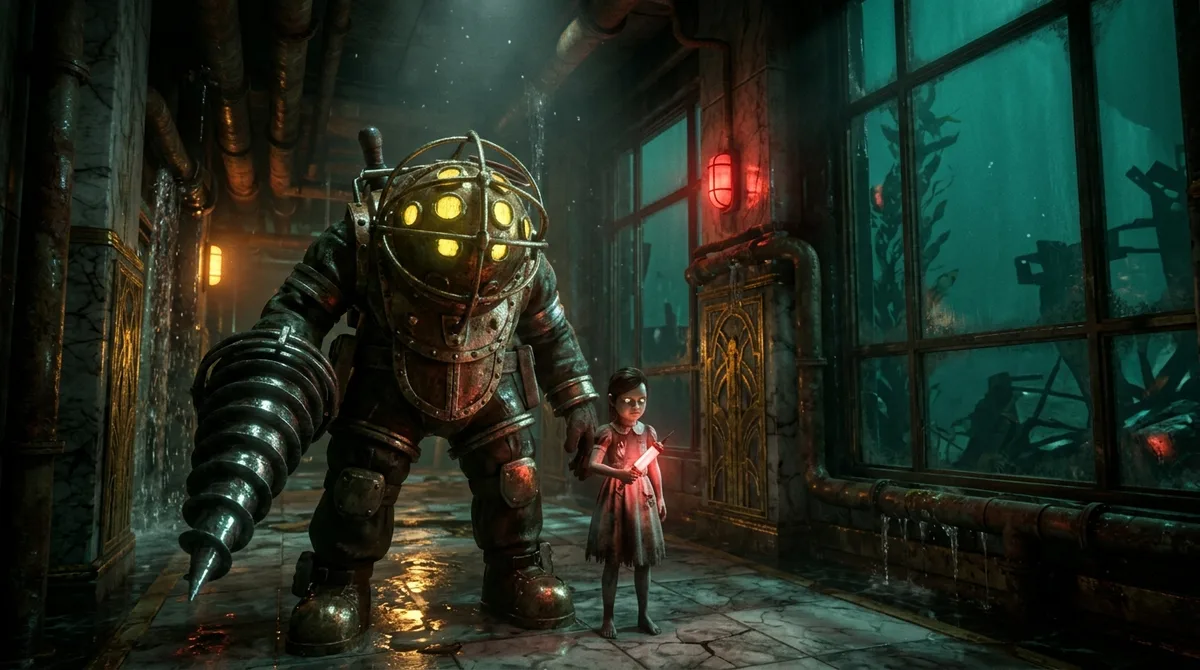
BioShock is a single-player first-person shooter with action and RPG elements, and it drops you into Rapture, a ruined underwater city that never got the memo about being finished. You fight mutated inhabitants with guns and genetic powers called Plasmids, which let you hurl fire, lightning, or a swarm of bees at anyone who gets too close. The story arrives in pieces through characters, radio messages, and audio logs, so you assemble the city’s history yourself.
The atmosphere is what sets it apart. Rapture feels eerie in a way most shooters never attempt, and the environment does a lot of the talking. GameSpot’s review pointed to the audio-log storytelling and the mix of Plasmids with conventional weapons as central to its appeal. The RPG side is light, so progression never turns into a spreadsheet. It plays like a focused shooter with a mystery wrapped around it.
Time is the easy part. HowLongToBeat estimates put the main story at about 12 hours, 16 hours with extras, and 24 hours for completionists. GameSpot figured that properly exploring Rapture could take 15 to 20 hours, so a few focused sessions can get you to the ending if you don’t linger in every corner. The Remastered edition adds the Museum of Orphaned Concepts and Challenge Rooms as bonus content.
It suits story fans and players who want a solo shooter with a real mystery and no grind. If you’re an RPG grinder who wants stat trees and endless loot, this is a lighter meal than you’re used to. BioShock is rated M for Mature 17+, and it’s a paid game, not free-to-play. 2K’s storefront listed BioShock Remastered at $19.99 when checked.
At a glance
- Best for: Story-led shooter fans who want an eerie mystery without an RPG grind
- Platforms: Windows PC, PlayStation 3, Xbox 360, and Xbox One
- Price or Free-to-Play: Paid, not free-to-play; BioShock Remastered listed at $19.99 when checked
- Release Date: August 21, 2007
- Playtime: About 12 hours for the main story, 16 with extras, 24 for completionists
- Age Rating: M, for gore, drug references, violence, sexual themes, and swearing
Dark Souls: The Game That Made Difficulty a Selling Point
Dark Souls: Remastered is a dark-fantasy action RPG set in Lordran. You explore dangerous areas, fight enemies and bosses, and shape your character with hundreds of weapon, armor, magic, and crafting options. Builds range from a heavy knight to a sorcerer who keeps enemies at arm’s length, and you can switch approaches as you learn the world.
The world is interconnected, so a ladder you climbed early can lead you back to a shortcut you never expected. Hidden routes reward curiosity, and the lore comes from what you find in the environment rather than from cutscenes. Nobody explains the story to you. You piece it together from ruins, item descriptions, and the places you’re too scared to enter. The combat is the real hook. Enemies hit hard, bosses punish sloppy play, and you’ll die often. Each death teaches you something, which is the game’s favorite lesson.
Playtime depends heavily on your skill. Estimates put the main story at about 29.5 hours, 44 hours with extras, and 68 hours for a completionist run. A player who learns the bosses quickly can finish far sooner than someone stuck on one fight for a whole evening. The remaster includes the Artorias of the Abyss expansion, and the official Bandai Namco page lists it alongside the base game.
It suits players who want a demanding challenge from the first hour and enjoy trial and error. If you want a story-first experience with clear direction, look elsewhere.
At a glance
- Best for: Players who want punishing combat, interconnected exploration, and build experimentation
- Platforms: Available on Switch, Windows PC, and both PlayStation 4 and Xbox One
- Price: Paid release; the US Steam listing showed $39.99
- Release Date: May 25, 2018 (North America and Europe)
- Playtime: About 29.5 hours for the main story, 44 with extras, 68 for completionist play
- Age Rating: M for Mature 17+ (blood and gore, partial nudity, violence)
Octopath Traveler 2: Eight Stories, One Turn-Based Party
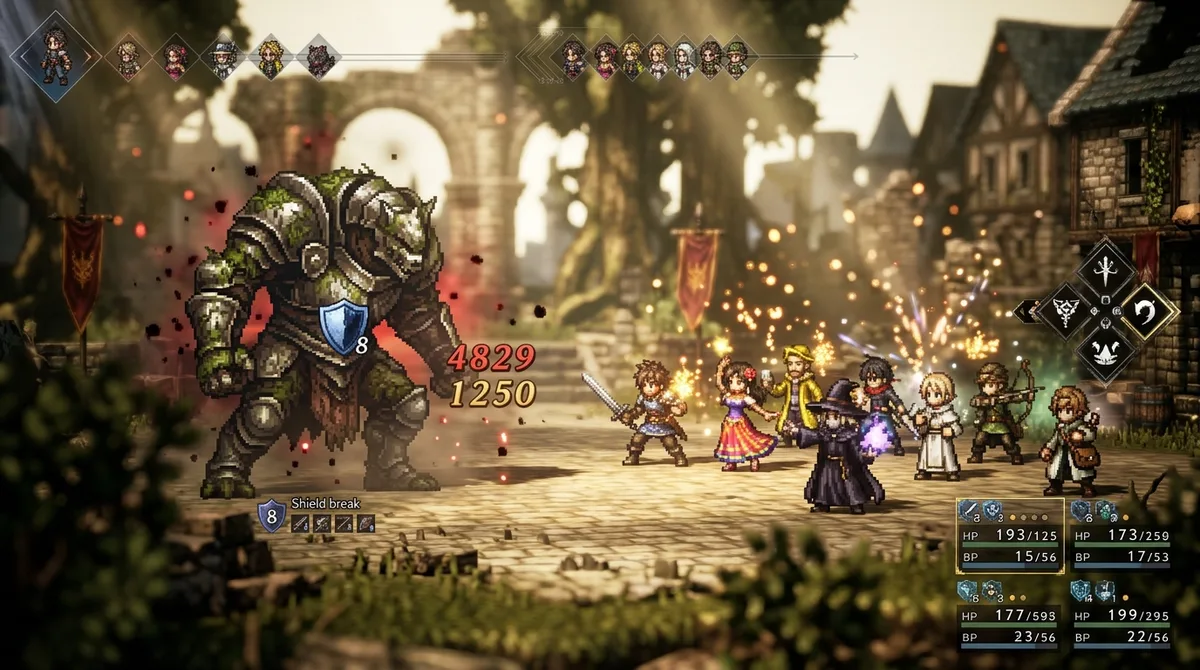
Octopath Traveler II is a single-player, turn-based JRPG set in Solistia, where you recruit and follow eight travelers, each with a story of their own. Eight protagonists sounds like a lot to juggle, and it is. That’s the whole point.
The look is the first surprise. The HD-2D style sets retro pixel art inside 3D imagery, and it works better than it has any right to. The day-night cycle changes which towns you can visit and which Path Actions you can use, so the same village feels different at dusk. In battle, you win by exploiting enemy weaknesses and using Boost, while every character builds jobs and skills. Your party can be a team of specialists or a jack-of-all-trades mess.
Finishing it takes real commitment. HowLongToBeat estimates put the main story at about 59.5 hours, the main story plus side content at 82 hours, and a completionist run at 94.5 hours. There’s no separate expansion, so the base game is the whole package.
The eight-character structure, freeform exploration, and customizable jobs make it especially suited to ensemble-story fans and party builders. If you want to test it first, the free prologue demo lets you play a protagonist for three hours, and your save data carries into the full game. The full game is paid, not free-to-play, with a $59.99 standard price and a $23.99 sale running through December 2, 2026. Prices move, so the official site has current figures.
At a glance
- Best for: JRPG fans, ensemble-story lovers, and party builders who enjoy strategic fights
- Platforms: Switch and Switch 2, PS4 and PS5, Xbox One and Series X|S, and PC
- Price or Free-to-Play: Paid, not free-to-play; free three-hour prologue demo available
- Release Date: February 24, 2023
- Playtime: About 59.5 hours for the main story, 82 with side content, and 94.5 for completionists
- Age Rating: Teen (ESRB) for fantasy violence, mild blood, mild language, suggestive themes, and use of alcohol and tobacco
RimWorld: The Colony Sim That Writes Its Own Chaos
RimWorld is a single-player sci-fi colony-management and survival sim, and it starts with a bad day. Three shipwreck survivors land on a hostile world and have to build a settlement while managing colonists, resources, relationships, and threats. There’s no fixed campaign to follow. You make the colony work or it falls apart.
The standout is the AI storyteller, which picks events like storms and raids to shape each colony’s story. Two runs rarely look the same. Your colonists get sick, pick fights, fall in love, and occasionally get eaten by something with too many teeth. The learning curve is steep, and the first in-game days can feel like juggling chainsaws while needs pile up. PC Gamer’s review warned that anyone expecting a perfect colony will be frustrated, while players who accept disasters may enjoy the sandbox.
Plan for real time. HowLongToBeat estimates 65.5 hours for the main game, 108 hours with side content, and 299 hours for completionist play. The expansions, Royalty, Ideology, Biotech, Anomaly, and Odyssey, add further systems and scenarios. On PC, mod support is extensive and can add new content and new systems, so the game keeps changing long after you’ve learned it.
It suits players who love systems, management, and emergent drama more than a written plot. If you want an authored story or an RPG leveling grind, look elsewhere. It’s a paid game, not free-to-play, with a regular US price of $34.99 on Steam. The official site has current availability.
At a glance
- Best for: systems fans and players who enjoy emergent drama over an authored plot
- Platforms: Windows, Mac, and Linux; the console edition supports PlayStation 4 and Xbox One and can be played on current consoles through backward compatibility
- Price: A paid purchase, listed at $34.99 in the US
- Release Date: October 17, 2018 (PC)
- Playtime: Main game runs 65.5 hours, while completionists can reach 299
- Expansions: Royalty, Ideology, Biotech, Anomaly, and Odyssey
Kenshi: Patience Required, Reward Guaranteed
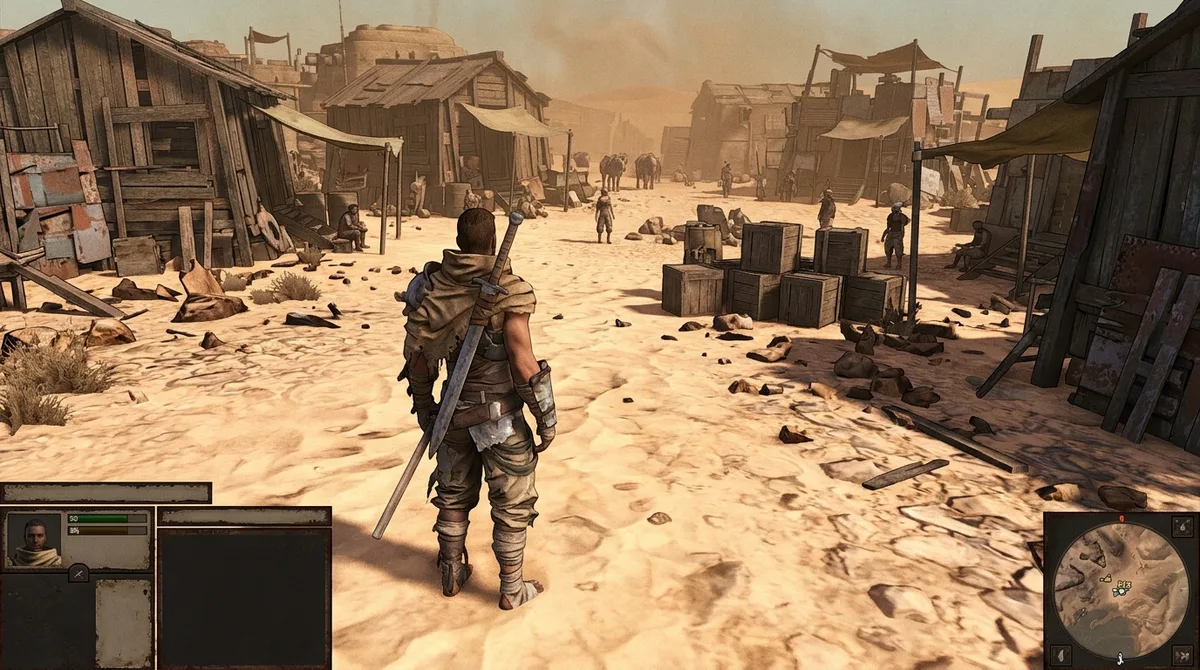
Kenshi is a single-player, squad-based RPG and survival sandbox set in a harsh sword-punk wasteland. You build a squad, train its members, explore a seamless world, trade, fight, and build a base, or aid and oppose factions as you see fit. There’s no quest log leading to a fixed finale. It’s a free-roaming sandbox, and it doesn’t pretend to be anything else.
The hook is that you aren’t a chosen hero. You’re one more nobody in a world that was dangerous before you showed up and will stay dangerous after. The world doesn’t level-scale to your strength, so the bandit camp that wiped your squad yesterday is still sitting there today. The early game is brutal, and fights can go bad fast. But push through, and the story becomes the one your characters create through their setbacks: the squad that got wiped, the base that nearly fell, the survivor who came back angrier.
Time is the part that scares people off. HowLongToBeat estimates about 83 hours for the main story, 134 hours with main content and side activities, and 261 hours for completionist play. Those numbers come with a catch, since the game has no conventional main quest or fixed ending. The sandbox absorbs as many hours as you’re willing to give it.
Kenshi suits patient players who enjoy open-ended role-playing and difficult survival systems. If you want a guided, plot-led campaign, look elsewhere. It’s a paid game, not free-to-play, and the Lo-Fi Games official site is the place for current details.
At a glance
- Best for: Patient sandbox players who want open-ended roleplay and tough survival
- Platforms: Windows PC (64-bit)
- Release Date: December 6, 2018
- Playtime: About 83 hours for the main story, 134 with main content and sides, and 261 for completionists (HowLongToBeat data)
- Age Rating: No ESRB or PEGI rating is displayed, but the Steam listing’s mature-content notice warns of heavy combat, blood, death, limb severance, and illegal drug trade
- Expansions: The Kenshi Original Soundtrack, a soundtrack release rather than a gameplay expansion
Smaller Solo Picks That Punch Above Their Size
Hades is the speedy one. It’s a roguelike dungeon crawler where every death sends you back to the start with a little more knowledge and a little less patience. Runs are short, the combat is snappy, and the story rewards you for trying again. It’s the rare game that works in a lunch break, which is exactly why it’s dangerous before bed.
Hollow Knight is the opposite of a quick fix. Its caverns tangle into a map that expects you to get lost and then respect the game for making you do it. Combat is precise, and bosses want you to learn their patterns rather than mash your way through. Nobody holds your hand, and that’s the appeal. If you enjoy working things out with no arrow pointing the way, this one earns every hour.
Stardew Valley runs on a different engine entirely. You plant crops, mine caves, fish, and slowly learn the names of your neighbors. Nothing is on fire, and nobody is yelling at you about a timer. It’s a low-stress loop, but it’s not empty. Keep the farm running and the valley opens up, and before you know it you’ve lost an entire weekend to turnips.
The Legend of Zelda: Tears of the Kingdom takes the physics-driven playground from Breath of the Wild and hands you the toolbox. Ultrahand lets you snap parts together, so a pile of wheels and a fan becomes a cart that actually drives. Fuse bolts a weapon onto nearly anything, which turns a stick and a monster horn into a club with an attitude. Experimentation is the whole game, and nobody scolds you when your creation flips over on the first try.
Astro Bot is the platformer that reminds you why the genre exists. It won The Game Awards’ 2024 Game of the Year, and it spans more than 50 planets, each one built like a small toy box packed with tricks. The levels are generous, the controller is used cleverly, and the whole thing is so charming that you’ll forget you’re grinning at a robot.
Picking Your Next Solo Adventure Without Regret
Start with your calendar. Short sessions suit Hades or Stardew Valley, while RPGs and open worlds like Baldur’s Gate 3 and Skyrim want long stretches. Check age suitability before buying. The ESRB’s ratings guide defines its Teen category as generally suitable for ages 13 and up, so read the rating first.
Prices vary by store and promotions, so treat any number here as a snapshot and check before you buy.
Story-first players should start with The Last of Us Part I, which has a clear ending. Puzzle tinkerers should try Tears of the Kingdom, and anyone with a spare hour a night should start with Hades.
Making the Final Call
Pick one game tonight, not five. If you have a free evening and a controller, start with Hades, where a single run is short enough to finish before bedtime and a bad death costs you minutes. If you have a whole month to spare, Baldur’s Gate 3 is the commitment, with a main story around 68 hours and a completionist run near 163.
Before you buy, compare your calendar to the playtime figures in each section and pick the game that fits the week you actually have, not the one with the loudest trailer. Then check the current price on your platform’s store, because sales come and go. Hades is discounted through December 1, 2026, so if your budget is tight, that’s the deadline to watch.
Still undecided? Match your mood. Want a story with a clear finish line? Try The Last of Us Part I. Want to build something ridiculous? Tears of the Kingdom is your toolbox. Want a farm that quietly eats your weekend? Stardew Valley is waiting. Play your choice for two hours. If it hasn’t hooked you by then, uninstall it and move on. Your time is too valuable for a game you’re only finishing out of guilt.