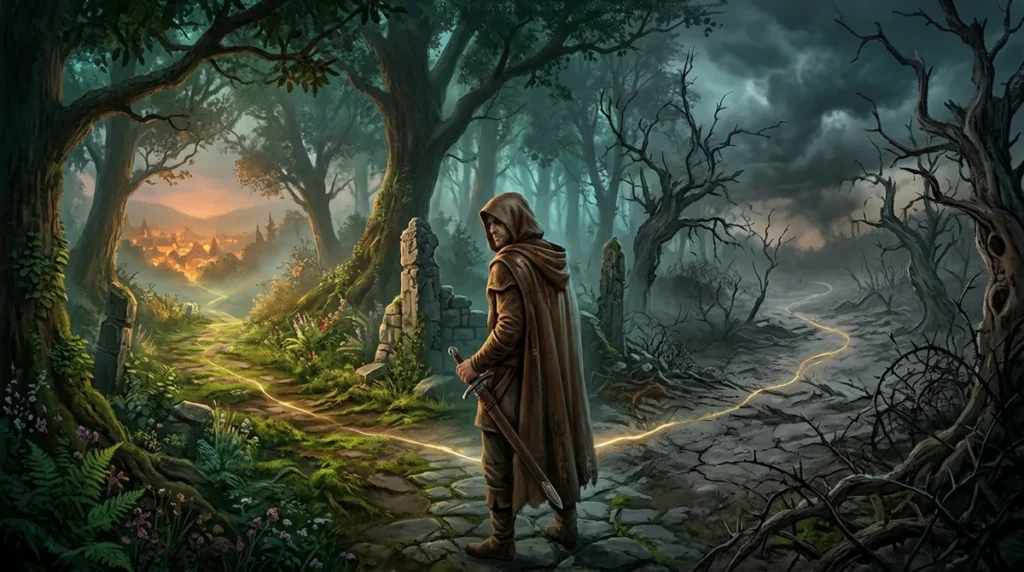
Branching narrative games are stories that shift with your decisions, and the good ones let those decisions rewrite relationships, story routes, or the final scene. Detroit: Become Human is the scale example, with around 40 possible endings and a Steam listing that was $39.99 at the time of research. But a choice that flashes on screen isn’t the same as one that matters. Plenty of games hand you a dialogue wheel and a little notification, then deliver the exact same plot with a different haircut on the protagonist. So we use a simple test: does the choice change who likes you, where the story goes, or how it ends? If the answer is no, it’s decoration. Shiny decoration, maybe, but decoration.
Choice count is also a marketing magnet, and it’s the wrong number to chase. Detroit’s script runs past 4,000 pages, according to its developer, Quantic Dream, yet size alone doesn’t make choices land. Scattering a hundred trivial options across a chapter is less impressive than three decisions that actually follow you into the next scene. Life Is Strange Remastered shows what happens when a choice reshapes events you can revisit, while Tales from the Borderlands uses five episodes to let choices reshape who trusts whom. Both prove that consequence can be emotional as well as structural. Variety and placement matter more than volume, and that’s the lens we’ll use below.
Key Takeaways
- Choice count is the lazy metric publishers love to print on the box, so judge a branching game by whether its choices change relationships, routes, or endings.
- Variety and placement matter more than volume, according to a 2022 Uppsala University degree project on Detroit: Become Human, so fifty identical be-nice-or-rude wheels are not richer than five decisions that feel different.
- A game that merely acknowledges your choice can sell you on agency, since four of five pairwise comparisons in the Achieving the Illusion of Agency study found no significant difference between a branching story and a non-branching version with choice feedback.
- Before you commit your evenings to a branching game, check whether its relationships change in visible ways that come back later, whether its routes split into scenes you can’t reach on another run, and whether its endings differ beyond the final slide.
- Triangle Strategy and Tactics Ogre: Reborn deliver heavy branching where votes and decisions reshape routes, recruits, and endings, while DioField Chronicle keeps its story linear, so check the branching table before you buy.
Choices That Change Endings Versus Choices That Just Look Busy
Branching narrative games let your decisions change where the story goes, who stays on your side, and how it finishes. The ones worth your time are the ones where those changes stick around after the scene that caused them.
Choice count is the lazy metric, and it’s the number publishers love to print on the box. A 2022 Uppsala University degree project analyzing Detroit: Become Human concluded that varied choice types and careful placement are what make choices feel meaningful. In plain terms, a game with fifty identical “be nice or be rude” wheels is not richer than one with five decisions that feel different. Variety means choices that differ in kind, such as trust, timing, sacrifice, and loyalty. Placement means the big ones arrive after the story has given you a reason to care.
The research also backs up the skepticism. In an experiment reported in the paper Achieving the Illusion of Agency, 79 participants read a branching story, 54 read a non-branching version with choice feedback, and 44 read a non-branching version with minimal feedback. Four of the five pairwise agency comparisons found no significant difference between the branching story and the feedback version. So a game that visibly acknowledges your choice can sell you on agency even when the plot stays put. That’s useful to know, and it’s also a warning. Acknowledgment is the minimum, not the reward.
Life Is Strange Remastered, released February 1, 2022, is a good example of a choice that alters events you can revisit and live with. Tales from the Borderlands, whose Steam release date is February 16, 2021, works differently. Its choices pile up in the relationships, so the character you snubbed early has a memory and a grudge when the bill comes due.
So when you’re deciding whether a branching game deserves your evenings, skip the dialogue-option count and run three checks:
– Do relationships change in ways you can see, and do those changes come back later? – Do the routes split into scenes you can’t reach on another run? – Do the endings differ in more than the final slide, with different characters and consequences?
If the answer to all three is no, you’re just reading a very interactive book.
Quick Map of What Each Game’s Choices Actually Change
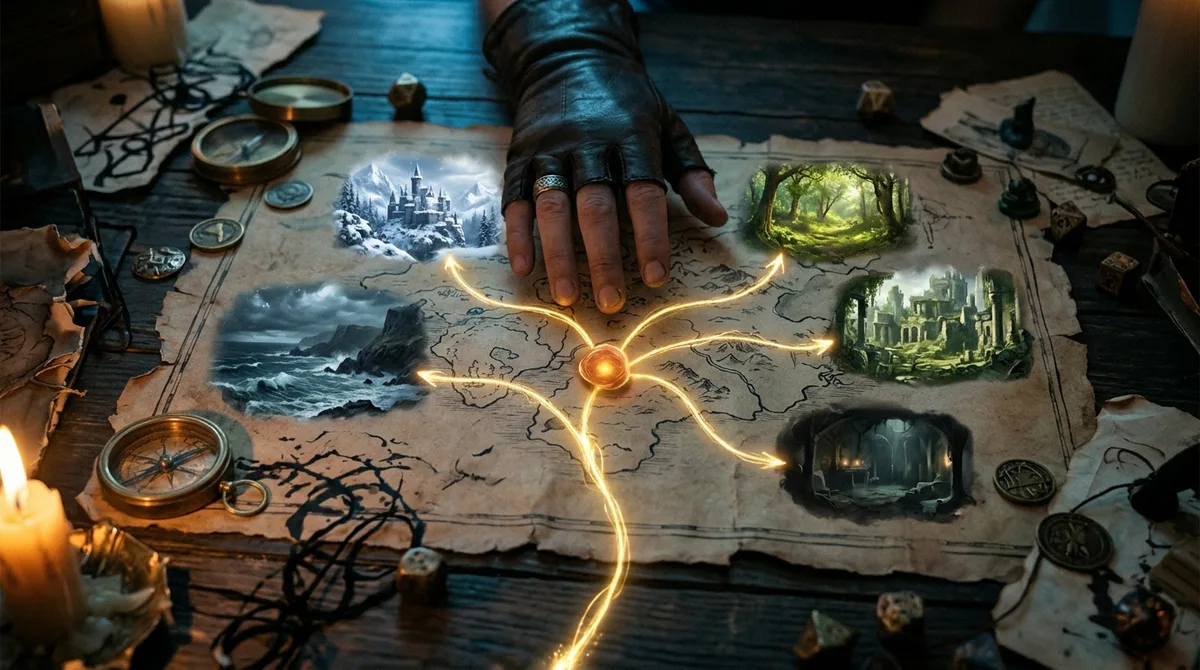
Before the table, a quick reality check from research. A 2024 benchmark built on Choose-Your-Own-Adventure data, the CHADPOD decision-point study, found that a fine-tuned DeBERTa-v3-large model identified character decision points with 89% test accuracy, while zero-shot GPT-4-turbo managed 62%. Even software struggles to tell a meaningful fork from a cosmetic one, so you’ll have to use your own judgment.
Use the table below to sort by what you care about. Heavy branching means the route, the cast, or the ending can change in ways you’ll notice. Light branching means the choices matter, but mostly inside a scene or a relationship. Light and optional means you may never see it unless you go looking.
| Game | What your choices change | How much branching to expect |
|---|---|---|
| Citizen Sleeper | Dice-based decisions affect alliances, interlinked character stories, and endings | Moderate to heavy, and the dice mean outcomes can swing on a bad roll |
| Triangle Strategy | Allied votes through the Scales of Conviction shape routes, recruits, and the ending | Heavy, since votes decide who joins you and where the story goes |
| Tactics Ogre: Reborn | Decisions change routes, character fates, recruitable allies, and endings | Heavy, with characters who can live, die, or never show up |
| Marvel’s Midnight Suns | Relationship and Light-or-Dark choices | Light, because relationships and tone shift but the ending stays put |
| Live A Live | Choices alter individual scenarios and the finale | Moderate, since most branches stay inside each era until the finale reacts |
| Witch on the Holy Night | The main story is linear | Light and optional, with branching only in a post-game chapter |
| The Centennial Case | The main story is linear, and wrong deductions lead to bad-end scenes | Light, since mistakes end scenes early rather than rewriting the plot |
Notice how many entries land in the light column. That isn’t a knock on those games. Some of them are excellent mysteries or strategy experiences that never promised a branching tree. The problem is when a box promises a choose-your-own-adventure and delivers a single road with a few detours.
Citizen Sleeper: Dice, Debt, and Choices That Stick
Citizen Sleeper leads the list because its choices are built around relationships and endings, not dialogue-wheel decoration. It’s a tabletop-inspired narrative RPG about an escaped worker whose human consciousness is trapped in a decaying artificial body. You’re trying to survive on Erlin’s Eye, a lawless station on the edge of an interstellar capitalist society, and the official site lays out the basics.
Each cycle, you roll dice and decide how to spend limited time on work, survival, exploration, or helping the station’s residents. Earning money for food or medicine competes directly with the people who need a hand, and that survival pressure ties straight into the story’s themes. Every decision costs time, so skipping someone today means their problem is still waiting when you return. Choices and setbacks shape interlinked character stories, alliances, and possible endings.
That’s what makes it stand out. Dice-based resource planning and text-led storytelling turn every choice into a tradeoff rather than a bonus. You can’t help everyone, and the game doesn’t pretend you can. Most branching games hand you options. This one hands you a bad roll and asks what you’re willing to give up.
It suits fans of narrative games who like resource planning and moral tradeoffs, especially players who enjoy text-heavy RPGs and slow-burn mysteries with memorable side characters. GamesRadar+ estimates an average playtime of around 12–15 hours. For current platform and price details, the official site is the place to look.
At a glance
- Best for: narrative fans who like resource planning and moral tradeoffs
- Platforms: PC, Xbox, Nintendo Switch, PlayStation 4 and 5, and Nintendo Switch 2
- Price: Steam listed the U.S. base price at $19.99; storefront prices and discounts may vary
- Playtime: around 12–15 hours
- Release Year: 2022 (released May 5, 2022)
Triangle Strategy: Votes That Reshape the Map
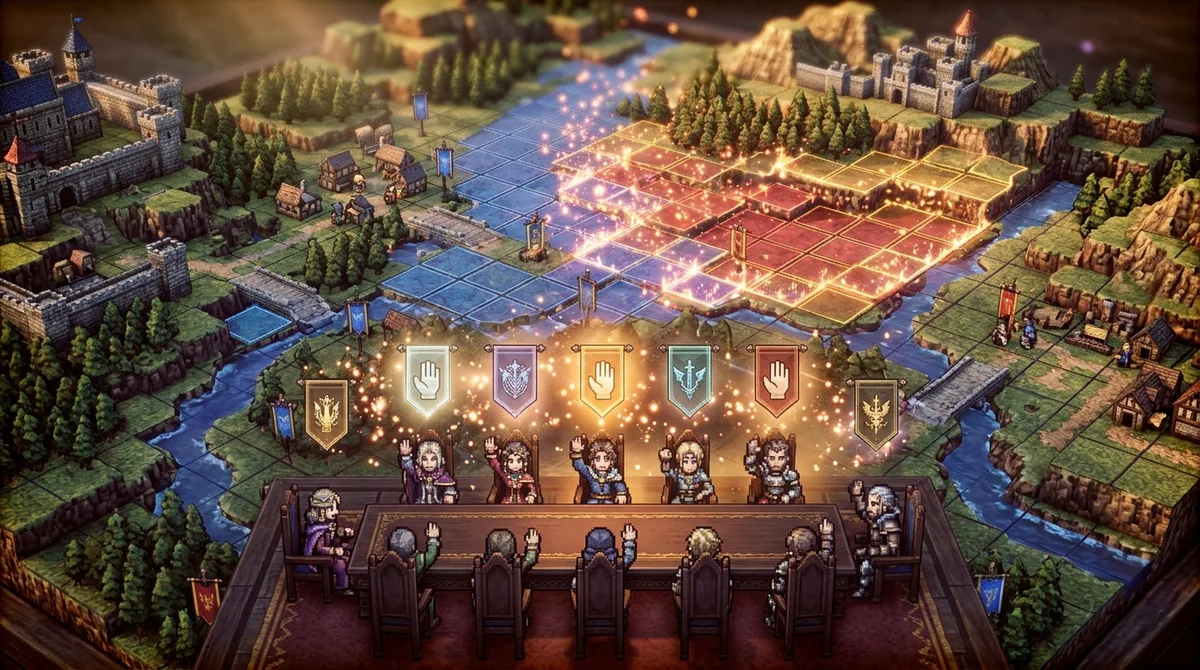
Triangle Strategy is a single-player tactical RPG set in Norzelia, where three nations fight over salt, iron, and political power. You guide Serenoa Wolffort through turn-based battles on a grid, then through story decisions that carry real weight. The HD-2D presentation makes the battlefields look like a storybook diorama, and the morally messy political drama keeps the whole thing from feeling like a cute tactics game with a plot stapled on. The official site describes the conflict in those terms, and the game backs it up.
The big decisions go to a vote. Allies weigh in on pivotal choices through the Scales of Conviction, and your own Utility, Morality, and Liberty convictions help decide which story route opens and which characters will fight in your army. Some options are hard trade-offs with no clean answer. A Game Informer review notes that these choices can determine whether companions join battles and which of several endings you reach.
What makes it stand out is how much the first playthrough feels like yours. The branching responds to what you actually did, so you’re not guessing which ally will walk out on you until the vote is already over. Expect 40 to 50 hours for a typical run, according to Inverse, and more than one playthrough if you want the alternate routes and the full story.
It suits tactics fans who want politics with their grid battles, and anyone who doesn’t mind a dialogue-heavy story. If you only want the battles, the talking will feel like a toll booth.
At a glance
- Best for: Strategy and RPG fans who enjoy a substantial, dialogue-heavy story, political intrigue, and choices with trade-offs
- Platforms: Nintendo Switch (March 4, 2022), PC (October 13, 2022), PlayStation 5 and Xbox Series X/S (August 20, 2025)
- Price: The standard edition was listed at $59.99 on the US Steam store; check the official site for current pricing
- Playtime: Roughly 40 to 50 hours for a typical playthrough
- Release Year: 2022
Tactics Ogre: Reborn: Rewinding Politics and Battles
Tactics Ogre: Reborn is a tactical RPG, so the story and the fighting are the same job. Denam is a young man pulled into a politically charged civil war in the fantasy Valerian Isles, and you lead a recruited army through turn-based battles on isometric maps. It’s a strategy RPG where your army is a political problem as much as a combat one.
Decisions change the route, the fate of your characters, which allies can join, and how the game ends. Key decisions change which special characters you can recruit. The World Tarot lets you go back to story points and explore alternate routes while keeping your roster intact. The Chariot Tarot rewinds battle turns, so a bad move in a fight doesn’t have to cost you the whole chapter.
What sets it apart is how the two halves feed each other. The people you recruit to fight are the same people whose fates you’re weighing in the political plot. Army building stops being a menu chore and becomes a moral headache, which is exactly the kind of tension branching games should be selling.
It suits fans of deep strategy and branching politics who want to try a different path through a story they’ve already finished. Be warned, though: one reviewer spent about 40 hours on the Chaos path alone, and the main story may take around 60 hours.
At a glance
- Best for: fans of deep strategy and branching politics who want to try a different path
- Platforms: PlayStation 5, PlayStation 4, Nintendo Switch, and Steam for PC
- Price: $49.99 for the standard edition on the US Steam listing when checked; the official site has current pricing
- Playtime: about 40 hours on the Chaos path, with the main story around 60 hours
- Release Year: 2022 (released November 11)
DioField Chronicle: Strategy RPG Without the Branching
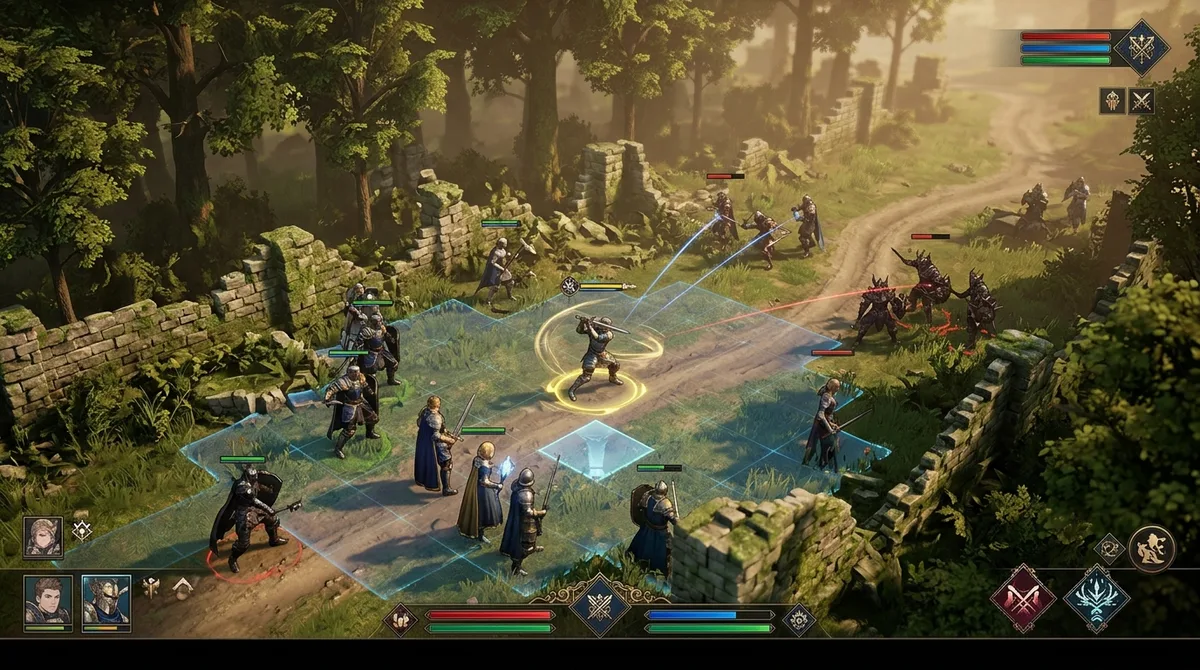
The DioField Chronicle is a strategy RPG about the Blue Foxes, an elite mercenary company dragged into a war full of political intrigue. Between missions you manage and upgrade your squad, then take control in real-time tactical battles, issuing orders and using each unit’s skills, classes, and equipment. The world mixes medieval and modern influences, and battles play out in diorama-style scenes. That presentation is the real hook, and it sets the game apart from turn-based strategy RPGs.
The story has political twists, but it is linear. Your choices don’t open alternate paths or endings, so if you’re hoping for a Detroit-style flowchart, look elsewhere. What you get is one road, told well enough that you’ll care about the Blue Foxes, with battles short enough that retrying a tough skirmish doesn’t feel like a chore.
It suits strategy RPG fans who want combat first and story second. Newcomers looking for approachable tactical combat will find it a friendly entry point. Mystery fans and anyone chasing a choice-driven plot should skip it. The standard edition was listed at $59.99 on the US Steam store at the time of research, and the official site has current pricing.
At a glance
- Best for: strategy RPG fans who want combat first and story second
- Platforms: PlayStation 5, PlayStation 4, Xbox Series X|S, Xbox One, Nintendo Switch, and PC via Steam
- Price: $59.99 standard edition on the US Steam listing at the time of research
- Playtime: roughly 25 to 30 hours in one review, around 30 hours in another
- Release Year: 2022
Marvel’s Midnight Suns: Friendships With Light-or-Dark Strings Attached
Marvel’s Midnight Suns is a supernatural tactical RPG from Firaxis Games, and it’s a superhero story at heart. You play as the customizable Hunter, leading Marvel heroes against Lilith and her demonic forces. Battles are turn-based and card-based, with each hero’s abilities played from a deck. Between missions, you head to the Abbey to explore, investigate mysteries, and hang out with the team.
The choices here are about people, not endings. Dialogue and Light-or-Dark decisions shift your alignment and raise or lower each hero’s friendship score. Those friendships unlock new abilities and cards for the battlefield, so the people you bother with directly affect your fights. The overarching story still runs one road, though. You won’t get different final chapters, so if you want a Detroit-style flowchart, look elsewhere.
What sets it apart is the mashup of deck-based tactics and a superhero social sim. Party experimentation is the real fun: swapping heroes and cards to see which combinations work. The systems take time to learn, but once they click, building your squad feels like drafting a dream roster.
It suits strategy fans and superhero fans who care more about relationships than endings. If you like getting to know Marvel characters and don’t mind a long road, this one is a strong pick.
At a glance
- Best for: superhero fans and strategy players who care more about relationships than endings
- Platforms: Windows PC, PlayStation 5, Xbox Series X|S, PlayStation 4, and Xbox One
- Price: $59.99 for the standard edition on the US Steam store at the time of research
- Playtime: about 40 hours for the main story, 66 hours with extras, and 97 hours for completionist play (player-reported)
- Release Year: 2022
Elden Ring: Lore Hunting for Hidden Endings
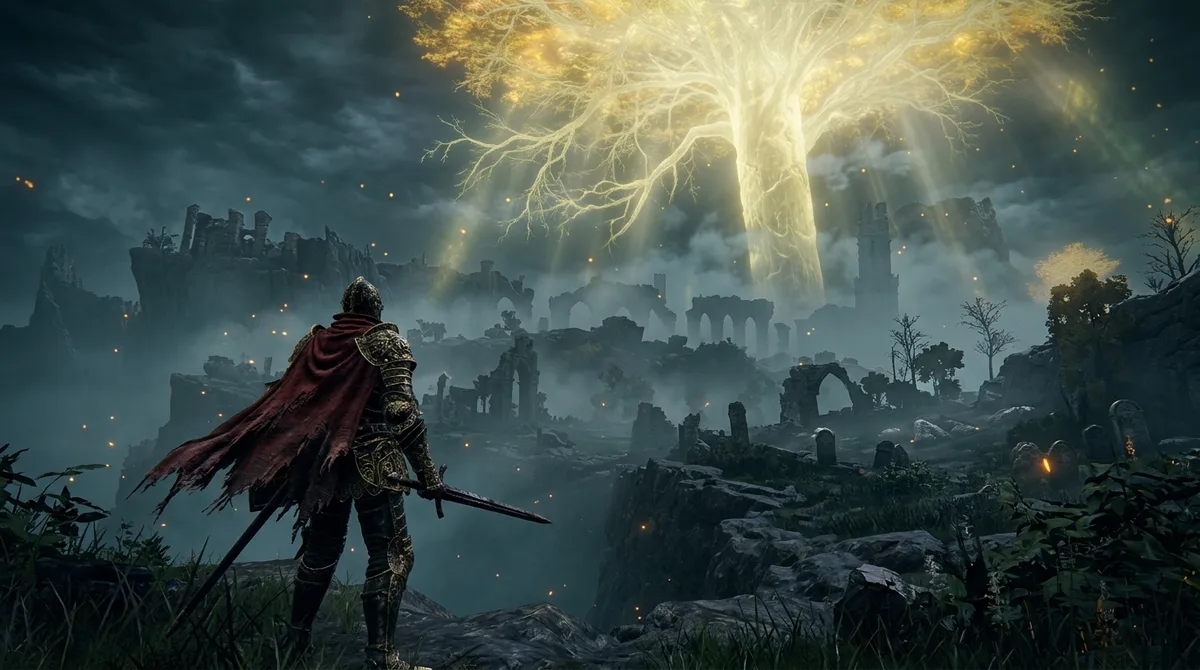
Elden Ring is an open-world dark-fantasy action RPG where you create a Tarnished, explore the Lands Between, and fight your way toward becoming Elden Lord. This is not a conversation-driven game. No dialogue wheel steers the plot. Its branching hides in cryptic lore, optional character questlines, and the different endings you reach by digging through the world’s secrets.
Some of those secrets change everything. Following Ranni’s quest unlocks an alternate ending, and you only find that route by chasing optional NPC storylines the game never spells out. Exposition is sparse, so the history of the world comes from environments and item descriptions. You piece it together yourself, and if you skip a side path, you may never know it existed.
What sets Elden Ring apart is how much else is happening. Vast exploration, flexible builds, and demanding tactical combat sit beside the story choices, so you’re learning boss patterns while you hunt for lore. The RPG label has to stretch a long way to cover all of that. The game suits players who enjoy roaming freely and adapting to tough bosses. If you want a guided, character-focused story, the sparse exposition and punishing difficulty will test your patience.
At a glance
- Best for: players who enjoy discovery, deep combat, and piecing together a story themselves
- Platforms: PC, PlayStation 4 and 5, and Xbox One and Xbox Series X|S, plus a Tarnished Edition for Nintendo Switch 2 that bundles the base game and Shadow of the Erdtree
- Price: the standard edition was listed at $49.99 for PlayStation 5 and $39.99 for PlayStation 4 on Bandai Namco’s US store; see the official site for current pricing
- Playtime: roughly 50 to 70 hours for the main campaign, and at least 90 hours, often 110 or more, for extensive completion
- Release Year: 2022
Live A Live: Choosing Your Own Era Anthology
Live A Live is an HD-2D remake of a Japanese RPG, and it works more like an anthology than a single adventure. Seven heroes get their own stories, spread across eras from prehistory to the distant future, and you choose the order you play the first seven stories. The chapters change shape as you go, from stealth sequences to tactical grid battles, with fighting-game-style duels and even horror along the way. Secrets connect the stories until they converge in the finale.
Your choices matter, but mostly within each era. Dialogue and gameplay decisions can change how a chapter ends, unlock extra scenes, or grant rare equipment. The big payoff arrives in the final chapter. Picking one of the seven heroes leads to the heroic route, while choosing Oersted leads to a villain route. Recruit all seven heroes and spare the final boss, and you unlock the true ending. Relationships aren’t the star here, so don’t expect a trust meter to carry the plot.
What makes it stand out is the variety. The chapters use distinct formats while sharing one RPG framework, and that restlessness keeps the experience from going stale. The stages are short enough that a clumsy chapter doesn’t overstay its welcome.
It suits JRPG fans who enjoy varied, relatively short chapters, tactical positioning, and mysteries to piece together. Strategy fans will like the grid battles, and mystery fans will enjoy hunting down the secrets that link the heroes.
At a glance
- Best for: JRPG fans who like varied, relatively short chapters, tactical positioning, and mysteries to piece together
- Platforms: Nintendo Switch, PlayStation 4, PlayStation 5, and Steam
- Price: $49.99 for the PS4 and PS5 edition on the US PlayStation Store; see the official site for current pricing
- Playtime: About 20 to 22 hours for the main story, and roughly 25 to 30 hours to complete everything
- Release Year: 2022 on Nintendo Switch, and 2023 on PS4, PS5, and Steam
Witch on the Holy Night: Linear Visual Novel With a Hidden Branch
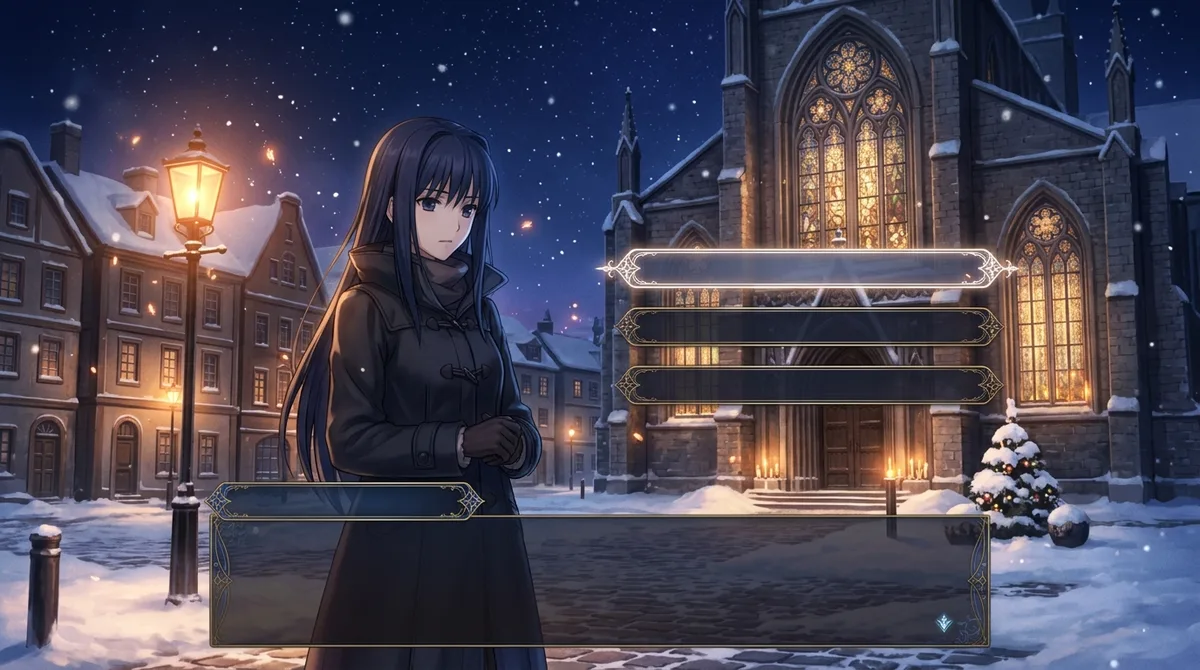
Witch on the Holy Night is a supernatural fantasy visual novel about a young man and two witches whose lives intersect in late-1980s Japan. You mostly read, and the story arrives with full voice acting, HD visuals, animation, and dramatic magical confrontations. If you came for a flowchart, this is the wrong door, because the main story is linear and offers no branching routes.
The choices live in an optional post-game murder-mystery chapter. There, your decisions lead to different endings, so the branching is something you go looking for after finishing the shared story. You won’t stumble into it while reading the main plot.
The main draw is the writing and presentation. The characters carry the game, and the fully voiced performances and animated fights make the story feel like a produced anime rather than a text box with a soundtrack. It isn’t trying to be a decision tree, and it doesn’t need to be.
It suits visual novel fans who want a polished supernatural story and don’t mind a mostly fixed path. Strategy and RPG fans should look elsewhere, since its reading-focused format has little to offer players who want systems to master.
At a glance
- Best for: visual novel fans who want a strong supernatural story and are fine with a mostly fixed path
- Platforms: PlayStation 4, Nintendo Switch, and Steam for PC
- Price: $39.99 on the standard US Steam listing at the time of research. The official site has current pricing.
- Playtime: about 24 hours for the main story, according to HowLongToBeat
- Release Year: 2022 on PlayStation 4 and Nintendo Switch, with the Steam release following in 2023
The Centennial Case: Mystery Deductions and Bad Endings
The Centennial Case: A Shijima Story is a live-action mystery-adventure in which mystery writer Haruka Kagami investigates four murder cases tied to the Shijima family over a century. You watch filmed scenes, gather clues at each incident, and combine them into hypotheses in a reasoning phase. Then you pick the deductions that solve each case. It’s detective work built on filmed scenes, not a choose-your-own-adventure with a magnifying glass.
The choices are narrower than the setup suggests. The developers describe the main plot as essentially linear, and wrong deductions trigger short bad-ending skits rather than new routes or endings. Reviewers found that incidental dialogue choices don’t meaningfully change the narrative. A mistake costs you a scene, not the plot. The cases are still worth solving, because the cast plays characters across different time periods and the cases build toward one larger family mystery.
Its standout feature is the multi-era whodunit presentation. Watching one cast move through different generations makes each clue feel like a thread you’ll pull on later. It suits mystery fans who enjoy puzzle-solving and filmed storytelling. If you want character building or strategy progression, look elsewhere, because the game offers little of either.
At a glance
- Best for: mystery fans who enjoy deduction puzzles and filmed storytelling
- Platforms: PlayStation 5, PlayStation 4, Nintendo Switch, and PC via Steam
- Price: The U.S. Nintendo Switch digital listing showed $19.99 on sale against a $49.99 list price, with the offer ending November 17. For current details, see the official site.
- Playtime: about 15 to 20 hours
- Release Year: 2022 (released May 12)
Xenoblade Chronicles 3: Big World, Mostly Fixed Story
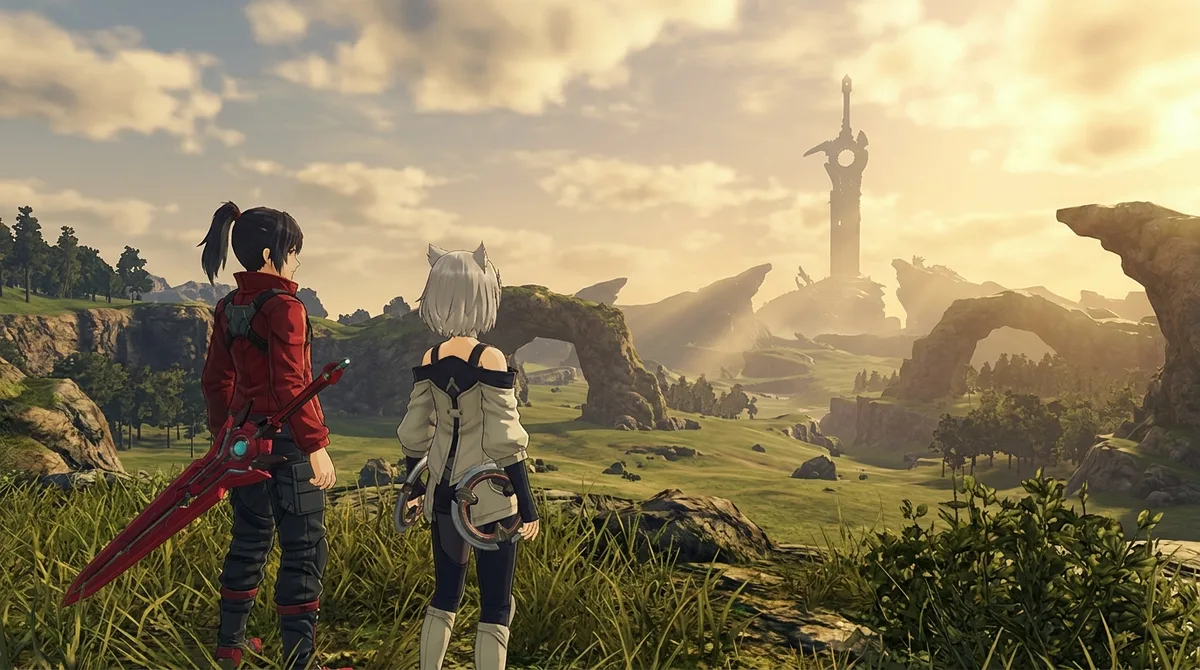
Xenoblade Chronicles 3 is a single-player action RPG set in Aionios, where soldiers from two warring nations join forces to uncover the truth behind their conflict. The huge open world explains a lot of its appeal. You explore it, finish quests, and fight in real-time battles.
Your six-character team stays together for the whole adventure, and their relationships grow through the main story and side quests. Combat lets you switch between party members mid-fight, use class-specific Arts, manage positioning, and customize classes and equipment. Certain pairs can fuse into Ouroboros forms, which are as flashy as they sound.
The story is linear, though. Your choices don’t steer you toward different routes or endings, so if you came for a Detroit-style flowchart, this isn’t it. What you get is a cast that evolves, a steady stream of world mysteries, and an adventure big enough to swallow a season of your life.
It suits RPG fans who want a long, character-driven journey and enjoy building a party. If you want consequential decisions, look elsewhere.
At a glance
- Best for: RPG fans who want a long, character-driven adventure with tactical party building
- Platforms: Nintendo Switch, with the Switch version supported on Nintendo Switch 2 and a separate Nintendo Switch 2 Edition scheduled for December 3, 2026
- Price: $59.99 regular price for the Nintendo Switch version; see the official site for current pricing
- Playtime: around 90 hours for a relaxed playthrough of the core campaign, or about 70 to 80 hours if you focus on main quests
- Release Year: 2022, with the Nintendo Switch release on July 29
Astlibra Revision: Twists in a Side-Scrolling Action RPG
ASTLIBRA Revision is a long-form, side-scrolling action RPG about a young man and his talking crow companion, Karon. Their search for a lost childhood friend leads into a mystery about time and fate. Chapter-based areas, large bosses, and steady progression through equipment and skills keep the game moving. The official site describes it as a full-length game with added story, skills, and a postscript chapter.
Don’t expect routes or endings shaped by dialogue wheels. Developer KEIZO said he chose not to build a branching storyline. The one real fork is a Chapter 5 event about whether to save Sihro. The twists come from the plot itself, and the time-travel reveals keep stacking until you’re going back over earlier scenes to make sense of them.
What makes it stand out is the pairing of demanding combat with a sprawling, twist-heavy story. RPGFan points to its complex character progression, distinctive combat, and mind-bending time-travel narrative. The length is real: HowLongToBeat data lists about 39 hours for the main story and 63 hours with extras.
It suits action RPG fans who want a story that rewards close attention, along with fans of lengthy action JRPGs and time-travel mysteries. If you mainly want dialogue choices or relationship routes, look elsewhere.
At a glance
- Best for: action RPG fans who want a story that rewards close attention
- Platforms: PC and Nintendo Switch
- Price: $24.99 standard in the U.S., with a sale price of $17.49 through November 16, 2026
- Playtime: about 39 hours for the main story, 63 hours with extras
- Release Year: 2022 on PC, 2023 on Nintendo Switch
Vampire Survivors: The Contrast Pick for Build-Over-Story Fans
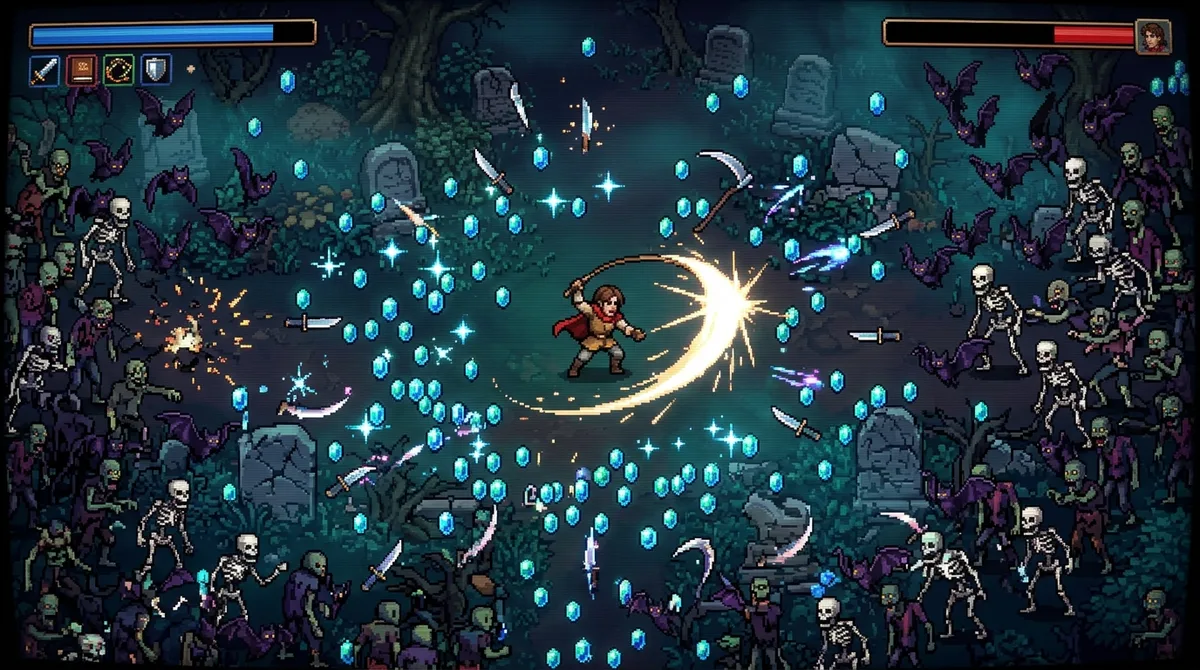
Vampire Survivors is a gothic time-survival roguelite, often called a bullet-heaven game. You guide a survivor through monster hordes while the attacks fire on their own, so your real job is positioning and picking upgrades. Gold earned in one run buys upgrades for future survivors, which keeps the roguelite loop turning.
Your choices shape your build and your survival inside a run, not the story. The weapons you grab and the upgrades you stack decide whether a horde melts or buries you. The core game has little plot and no relationship-driven branching, so there are no endings to unlock. The optional Adventures are the exception, adding short story modes with chapters, custom challenges, and lore text that ties the missions together.
What makes it stand out is how small decisions snowball. PC Gamer highlights the unusual auto-firing weapons, which can grow into a screen-filling cascade of attacks during a single run.
It suits strategy and RPG fans who enjoy build-crafting and want a quick, replayable loop without a story. It’s a poor fit for players chasing mysteries, character relationships, or branching endings. Platforms and prices change, so the official site is the best place for current details.
At a glance
- Best for: strategy and RPG fans who enjoy build-crafting and a quick, replayable loop without needing a story
- Platforms: Steam, Xbox, PlayStation 4 and 5, Nintendo Switch, Android, iOS, and the Epic Games Store, with a Nintendo Switch 2 version also announced
- Price: Steam lists the U.S. base price at $4.99, though sale pricing and other platforms can differ
- Playtime: Steam reviewers typically reported about 17 hours, which is not a fixed completion estimate
- Release Year: 2022, with the full game released on October 20
Choosing Your First Branching Game Without Regret
Start with the evening you actually have. If you want a game with a clear, bounded length, Citizen Sleeper is the cleanest first step, since its roughly 12–15 hour runtime is short enough to finish and every cycle forces a tradeoff you’ll feel. If you want decisions that stack across a whole cast and reshape the finale, Tactics Ogre: Reborn is the better bet, but expect to replay it before you’ve seen everything it offers.
Before you commit, ask yourself whether you’ll actually replay it. A DiGRA 2023 study of Detroit: Become Human found that player agency supported replay, with players returning to explore different narrative paths. If you finish one run and feel no pull to see what you missed, a single well-written road like Xenoblade Chronicles 3 might suit you better. That’s a fine choice, not a failure.
Then run the cheap checks. Read the endings list on the publisher’s page, look up a route-split scene on video, and skim reviews that name specific choices instead of just saying “so many decisions.” If a game hides its routes, that can be a delight, but it can also be padding dressed up as mystery. Pick one of the games above, play the first few hours with a notebook, and write down every choice that makes you wince. The ones you remember a week later are the ones that actually changed something.