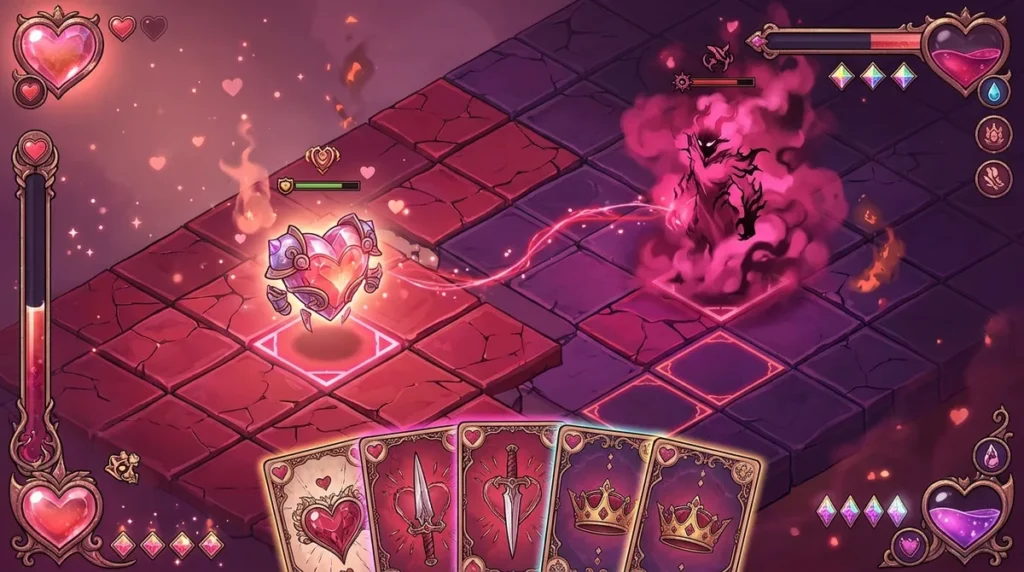
Love is a Roguelite was unveiled at the October 20, 2026 ID@Xbox and IGN showcase as a hybrid of turn-based tactics, deck-building, and dating-sim choices. According to Xbox Wire, it’s listed for Fall 2027 on Xbox Series X|S and Xbox PC. The mix is strange enough to be either brilliant or a bold way to lose a partner mid-fight.
The hook is LoveSync, the game’s proprietary system. Your dialogue and battle decisions shift your companion’s emotional state, and those shifts change party passives and companion actions in real time. Being charming, it turns out, now has tactical consequences.
Key Takeaways
- Love is a Roguelite is listed for Fall 2027 on Xbox Series X|S and Xbox PC, so Xbox players should treat that window as a listing, not a release date.
- Love is a Roguelite’s LoveSync system lets dialogue and battle decisions shift Lakshmi’s emotional state across 25 possible states, changing her party passives and companion actions mid-fight.
- Love is a Roguelite needs several successful runs before its full story is revealed, though the announcement doesn’t say exactly how many.
- Love is a Roguelite on PC requires Windows 10, 8 GB of RAM, DirectX 11, and 3 GB of free storage, so PC players should clear that space before release night.
- Love is a Roguelite on Steam is worth wishlisting for launch and sale notifications, but buyers should wait for real player hours and reviews before paying full price.
Love Is a Roguelite Gets Its Big Reveal
Love is a Roguelite, or LIAR for short, got its big moment at the October 20, 2026 ID@Xbox and IGN showcase. Developer Titan1Studios brought a pitch that sounds like a bar bet gone wrong: turn-based tactics, deck-building, and dating-sim choices, wrapped in a procedurally generated love story.
Tactics, cards, and courtship in one package. Nobody asked for that combination, and it shows.
Most games keep romance in cutscenes and combat in the menu. LIAR puts them in the same room and makes them fight over the lights. Because the love story is generated, no two runs are guaranteed to play out the same way. That’s great for replay value, and less great if the randomness wanders somewhere mushy.
The premise is Space Marshall Rex trying to recover the scattered memories of his partner Lakshmi from King Knorg while the two of them are trapped in a time loop. Romance and a time loop is a lot of plot to juggle at once.
The project already has some credibility. Titan1Studios announced in November 2024 that the game had won Best Pitch at the Montreal International Game Summit (MIGS).
LoveSync Lets Your Dating Choices Hit Harder
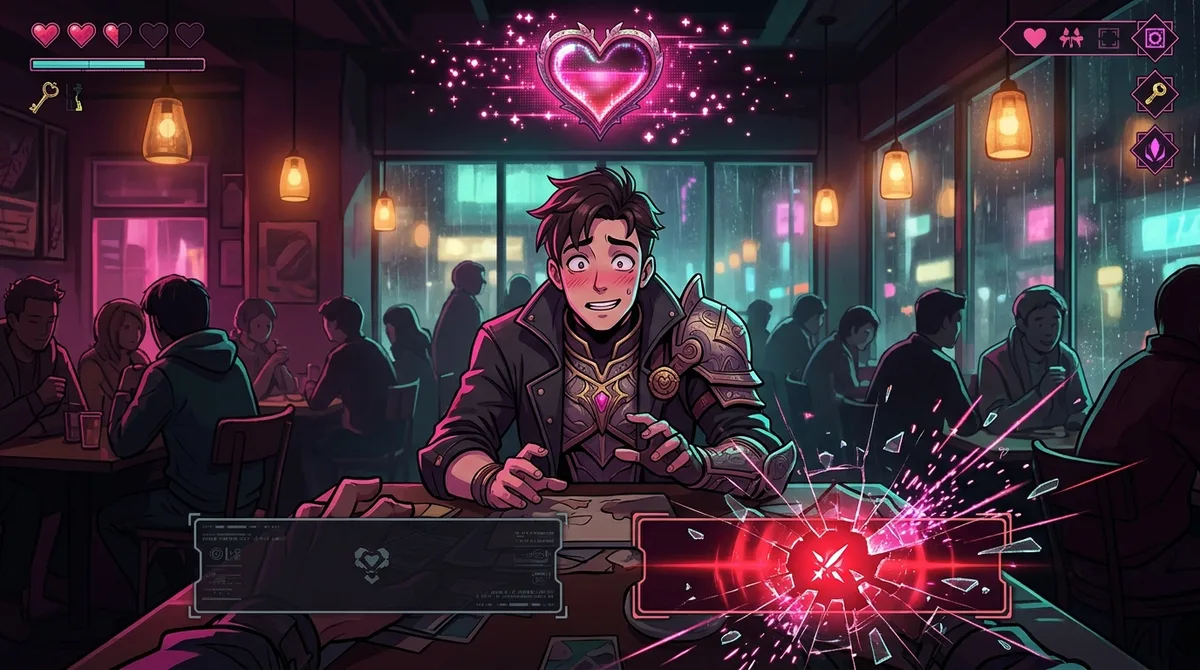
LoveSync is where the game stops being a clever pitch and becomes a real design question. The Steam store listing advertises 25 emotional states for your partner, and each one is a lever you can pull mid-fight. Lakshmi isn’t a fixed stat block with a pretty face. She’s a mood with a battle plan attached.
Dialogue choices and battle decisions both move her state. Say the wrong thing in a conversation, or leave her exposed on the grid, and the change follows you into combat. Keep her happy and she might hand the party a passive that actually helps. Push her the wrong way and the companion action you were counting on could look very different.
That’s what separates LIAR from a simple genre mashup. Bolting a card game onto a tactics game, and a dating sim onto both, is a feature list. Making the romance change the rules of the fight is a design idea. Most genre blends just take turns on the same screen. LIAR tries to make them argue.
Some players will hate the idea that a relationship is a number in a nice outfit. Fair enough. The real test is whether the feelings and the tactics actually talk to each other.
Why You Need Several Runs to See the Story
Here’s the catch: the story doesn’t arrive in one sitting. Each run recovers some of Lakshmi’s scattered memories, and the Xbox recap says you need several successful runs before the complete narrative is revealed. The announcement doesn’t say how many, so budget for plenty of resets and a healthy supply of patience.
The time loop is what makes that structure work. Space Marshall Rex and Lakshmi are trapped reliving the same situation, so every restart feels like a natural part of the plot rather than a punishment. Steam’s listing says you can swap classes at the start of every run, so your next attempt doesn’t have to repeat your last one.
The memory hunt also changes how the procedural generation feels. You aren’t just chasing a high score. You’re chasing the pieces of Lakshmi’s past that King Knorg is holding onto. Whether that feels clever or exhausting depends on how much you enjoy reloading the same mess until it finally makes sense.
Grid Combat, Cover, and Swappable Card Decks
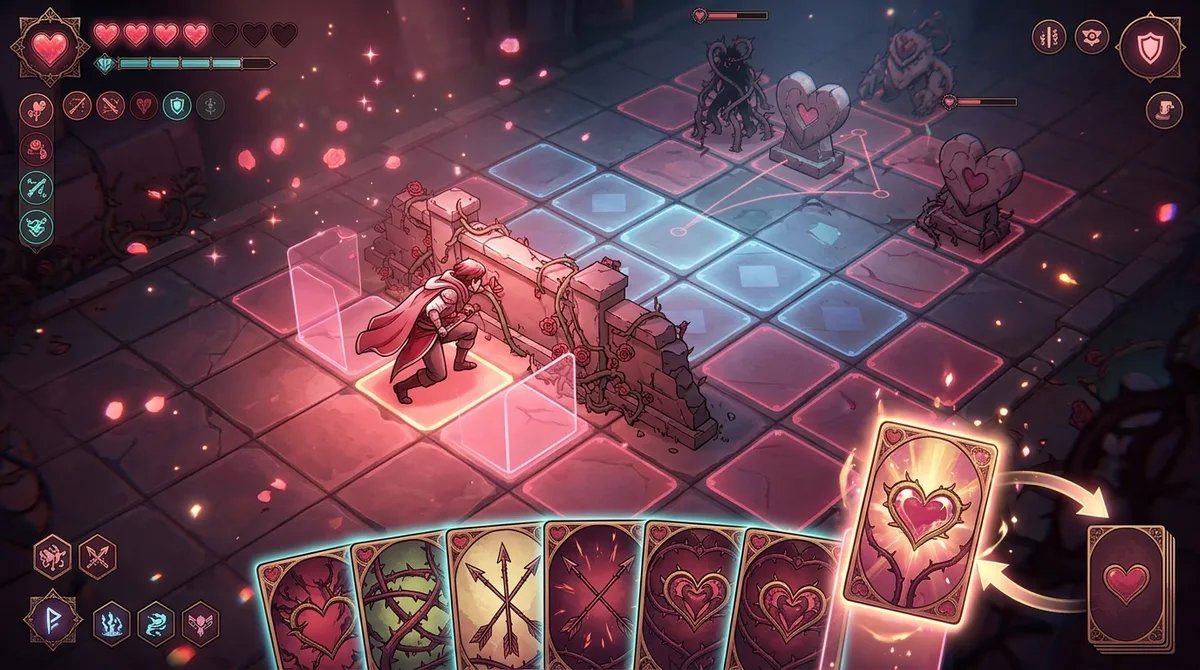
Combat takes place on a grid, and that’s where LIAR either earns its tactical credibility or wastes it. You move Rex and Lakshmi across tiles, duck behind cover, and use the environment against the alien foes. Cover matters, and so do the environmental elements, which is a polite way of saying there’s probably a barrel nearby that you should be shooting.
Cards sit on top of all that. Deck synergies should reward you for building around a plan instead of playing whatever you happened to draw. Specialized decks unlock through play, and boss rewards add more, so your collection should grow the longer you survive.
The class swap at the start of each run is a smart way to keep the tactics fresh. It also means you could spend an entire run learning a deck you might not see again for a while.
On paper, the grid, the cards, and a companion whose mood changes the rules all sound compatible. The real question is whether they cooperate or just crowd the same screen and hope for the best.
From an Old Valentine’s Day Target to Fall 2027
Titan1Studios once aimed for an Early Access release on Valentine’s Day 2025, which is either a cute bit of marketing or proof that someone on the team has a sense of humor about the holiday. That target is old news, and the current listing is Fall 2027. The premise leans on the genre’s favorite ritual: you die, you start over, and you carry a little something forward each time. Here, that repetition wraps around a romance story, so every failed run becomes another attempt at a relationship that’s apparently more complicated than the usual boy-meets-pixel. Roguelites live or die on whether dying feels worth it, and that’s the question this game has to answer.
The timeline in the section title points to Fall 2027, and that’s where industry habits start to smell. Long gaps between a launch and the next milestone can be healthy, but only if the wait produces something meaningful instead of a roadmap full of buzzwords. Players have heard “coming soon” plenty of times, and they’ve learned to ask what’s actually changing. Those are the right questions here, because a roguelite with a story hook needs both a replay loop that stays fresh and a narrative payoff that justifies the grind.
If you’re deciding whether to jump in now or wait for the next phase, stick to what’s confirmed rather than what’s hinted at. A romance-driven roguelite can be sharp, funny, and surprisingly sincere, but only if the writing keeps pace with the randomness of each run. If the game delivers a satisfying arc before 2027 rolls around, it earns your attention. If it’s just a loop with a heart slapped on the front, well, nobody needs that much Valentine’s Day in their life.
Should You Wishlist Love Is a Roguelite Now
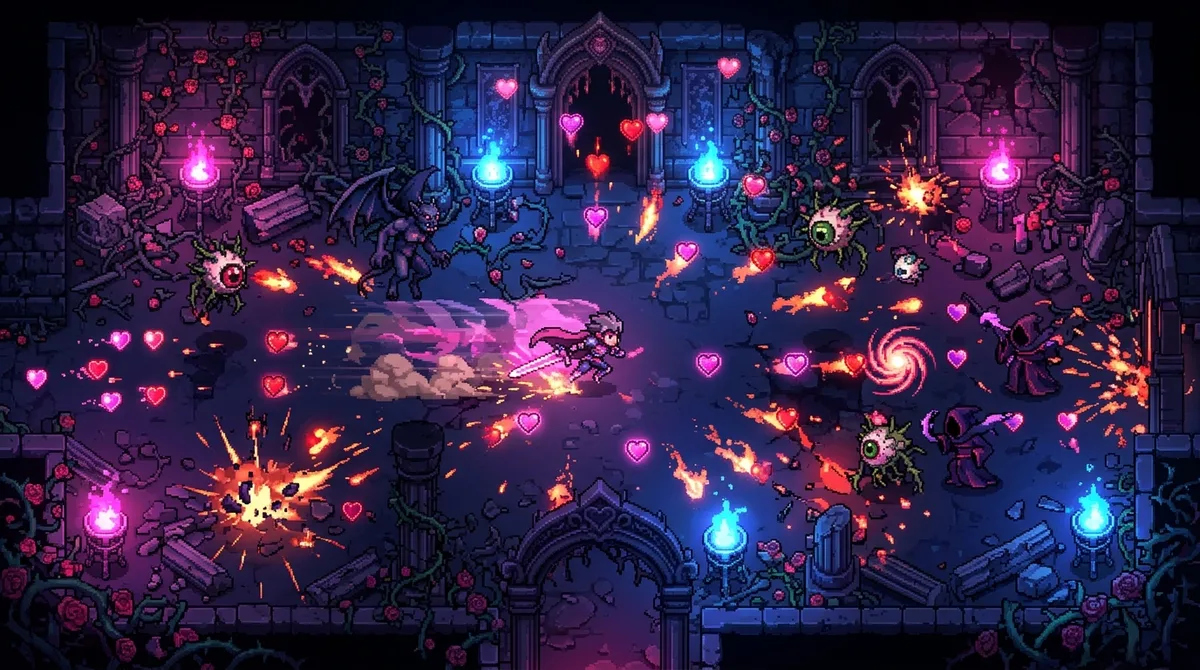
Wishlisting a game is the modern equivalent of bookmarking a recipe you’ll never cook, so it deserves a proper gut check before you click. Love is a Roguelite builds on the genre’s favorite loop of dying, restarting, and dying again, then wraps it in a love-themed premise that’s meant to make the repetition feel less like punishment and more like a date that keeps going sideways. Roguelites are crowded, and a theme alone won’t save a game from its fifth identical run. The hook is clever, but the real question is whether the gameplay underneath it has enough variety to stay interesting.
Here’s the good news: a wishlist costs you nothing. On Steam, it gets you a notification when the game launches and when it goes on sale, which is the closest thing PC gaming has to a free membership with perks. You don’t have to commit to anything, and you don’t have to pretend you’ve made up your mind. If you enjoy roguelites with a bit of personality, it’s a sensible move to keep the game on your radar and see how it develops. Just don’t confuse “this sounds cute” with “this will still be fun after twenty runs.”
So should you wishlist it? Yes, if you like the genre and the romance angle sounds more charming than cringe. Hold off on buying until you’ve seen what players say after they’ve actually spent real hours with it, not just the first hour of polished trailer footage. Roguelites live or die on repetition, and a discount tends to arrive faster than most developers’ patch notes. Wishlist it, forget about it for a while, and let the reviews do the heavy lifting.
Your Checklist Before You Click
If you’re on Xbox Series X|S, your only job right now is patience. Fall 2027 is a listing, not a date you can plan a weekend around.
If you play on PC, check the minimum requirements before you get excited. You need Windows 10, 8 GB of RAM, DirectX 11, and 3 GB of free storage, so clear that space now instead of discovering the problem on release night.
Already have a favorite tactics game? Play it for a few runs first. LIAR’s grid fights and card synergies will make more sense once you know what a well-built deck feels like, and you’ll be less likely to blame your partner’s mood for your own bad positioning.
Then set a reminder to check the Steam page for a price. That’s the moment to decide whether a deck-builder where Lakshmi’s mood can ruin your turn deserves your money. Until then, the wishlist is the only commitment on the table.