The best Nintendo DS games still feel good in your hands more than two decades after the handheld debuted, not the ones that needed a stylus to justify their existence. The DS hit North American shelves on November 21, 2004, and spent the next decade stacking up hits, duds, and an alarming number of games that wanted you to blow into the microphone. Some of those games still hold up beautifully. Plenty do not.
Our short list starts with Grand Theft Auto: Chinatown Wars, which holds a 93 on Metacritic’s all-time DS list. Its M rating means it is not a bedtime story, but it is the kind of portable crime sandbox that makes you forget you’re holding a handheld. Mario Kart DS is the obvious party pick, with more than 30 courses and up to eight players, and it sold 23.60 million copies worldwide. Then there is The World Ends with You, a stylish oddball that uses the touch screen, both displays, and the microphone in ways most DS games only promised. Not every classic survives the trip. The ones that do are worth blowing the dust off the cartridge.
Key Takeaways
- Grand Theft Auto: Chinatown Wars is the strongest classic DS pick on this list, but its M rating and fiddly touch screen controls during chases mean it is not for everyone.
- Mario Kart DS remains the party pick because its local multiplayer works without any internet connection, even after Nintendo Wi-Fi Connection was discontinued on May 20, 2014.
- Judge any DS game by four tests: critic reception, whether the dual screens and stylus earn their keep, whether the controls feel good today, and whether it works offline.
- Bundled DS games like New Super Mario Bros. inflate sales numbers, since a bundled copy counts the moment the hardware leaves the shelf, whether or not anyone plays it.
- Check completed sales on PriceCharting, where Mario Kart DS lists at $15.24 loose, $18.99 complete, and $59.99 new, and add shipping to every price before you buy.
How Do You Decide Which DS Games Still Hold Up?
A DS game still holds up if it passes four tests: how critics received it, whether the dual screens and stylus still earn their keep, whether the controls feel good in your hands today, and whether it works without the online services Nintendo has shut down.
Start with critic scores, but treat them as a starting point. Chrono Trigger sits at 92 on Metacritic, based on 57 critic reviews, and that number tells you the game was loved in 2008. It does not tell you whether the battle menus will feel snappy on a Tuesday night in 2026. A high score from 2007 is a receipt, not a guarantee.
Touch screen and stylus controls are where most DS games age badly. Phantom Hourglass scored 90 and deserves credit for its ambition, but it asks you to steer Link with the stylus, swing your sword with it, and draw the path of a boomerang across the screen. For the first hour, that feels clever. By the third dungeon, it feels like someone asked you to write your signature with a fork. Video Games Chronicle’s 30-game retrospective, published for the system’s 20th anniversary, credits the touch screen with enabling new kinds of games, and that is true. Many of those experiments were better as ideas than as chores, though.
Online play is the other trap. Nintendo Wi-Fi Connection was discontinued on May 20, 2014, which means the online matches many of us remember are gone. Offline play still works, so Mario Kart DS with a few friends in the same room is as good as it ever was. Anything that was only a lobby with strangers now needs a generous imagination.
Finally, remember that these rankings are our editorial judgments, not measurements. A spreadsheet can count courses, players and sales, but it cannot tell you whether a game is fun. Whether a classic has aged gracefully is a judgment call, and we will say so out loud when a game has not aged well.
Which Classic DS Games Still Hold Up Today?
Three classics still hold up well: Grand Theft Auto: Chinatown Wars, Chrono Trigger, and Mario Kart DS. Each one is still fun to play, and each one shows its age in a different place.
Grand Theft Auto: Chinatown Wars arrived on March 17, 2009, and it is the strongest pick on this list. It is a crime story told from above, with a sense of place that makes the city feel bigger than the screen. Its M rating is no joke. The Entertainment Software Rating Board lists blood and gore, drug reference, sexual content, strong language, and violence, so this is not the game to hand a kid between homework and dinner. For adults, it is still a clever piece of handheld design. The in-game cell phone handles missions and side jobs without stopping the action every five seconds.
The age shows up in the touch screen. Browsing the map and switching items with a stylus works, but it is fiddly in the middle of a chase. You will tap the wrong thing at the worst possible moment, and you will wish someone had just given you a button.
Chrono Trigger is the easiest recommendation on this list for anyone who loves role-playing games. Its DS release, dated November 25, 2008, carries a Metacritic score of 92, and the portable version brings a time-travel story, a memorable cast, and combat that still feels tight. It started life as a Super Nintendo classic, and this version does not pretend to be anything else. It has no interest in modern pacing. Random encounters still interrupt your exploration, and the systems assume you have patience. The touch screen mostly stands in for button presses. That is fine, but it is not the reason to play.
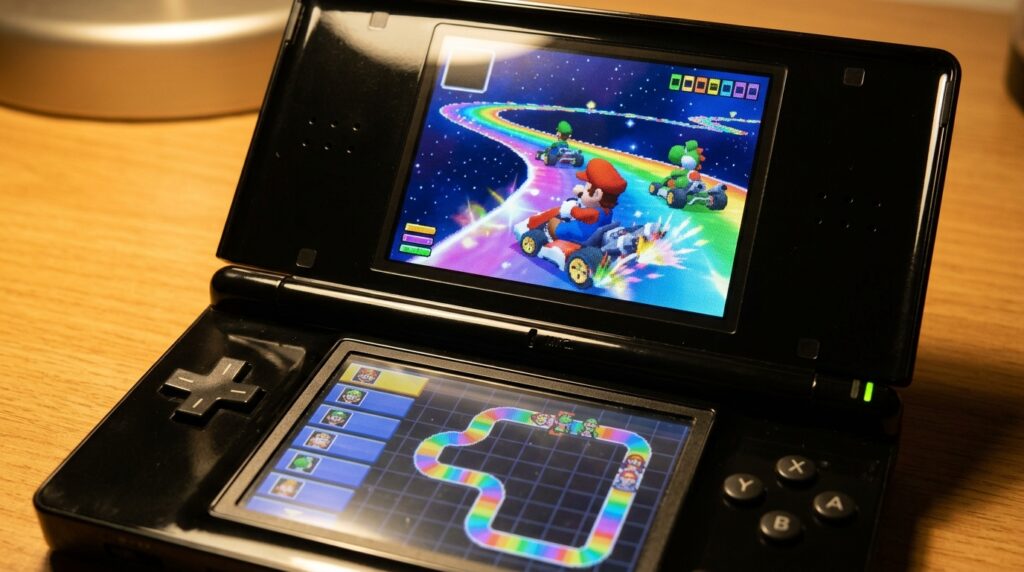
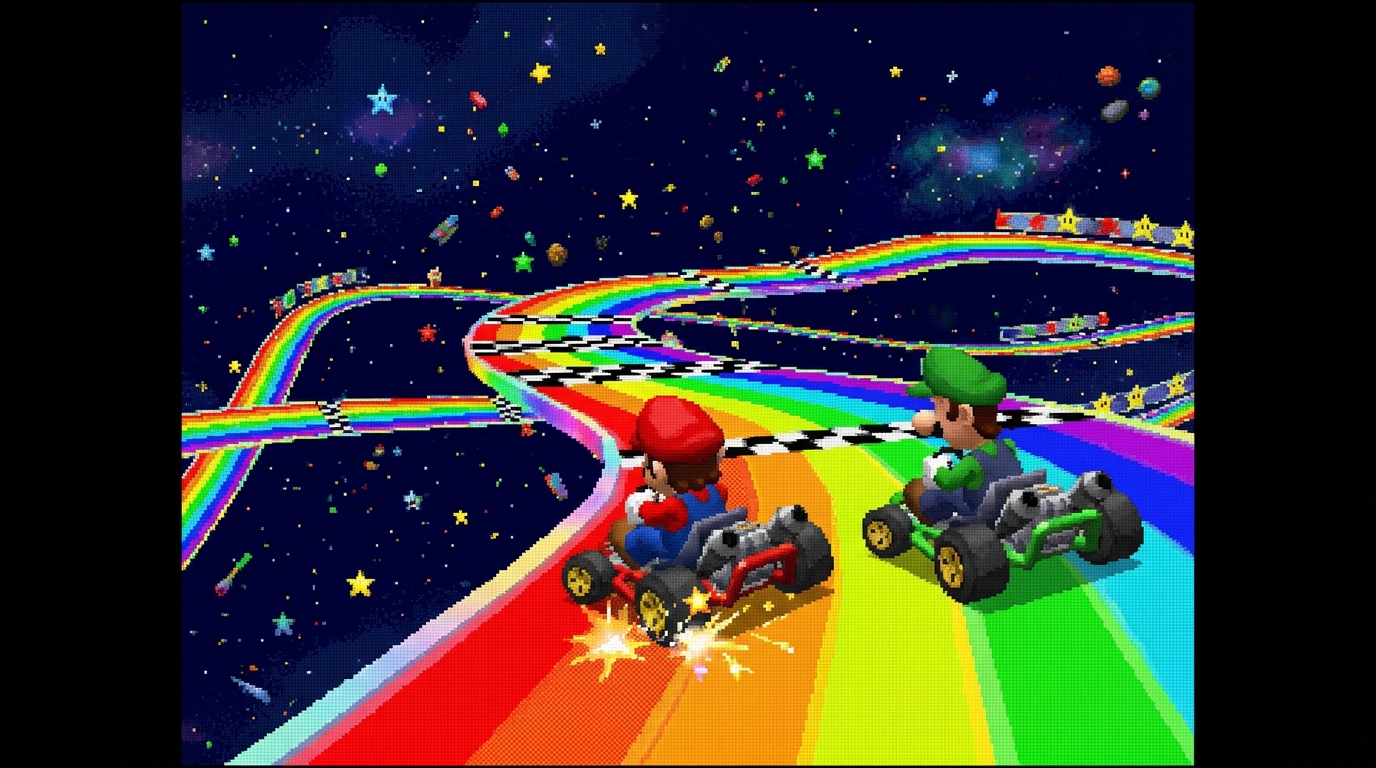
Mario Kart DS, released November 14, 2005, scored 91 and remains the party pick. Local multiplayer still works without any internet connection, so a room full of friends with a stack of handhelds is as good as it ever was. The game was built for that exact situation, and it still delivers.
Its age shows in the controls. The DS has no analog stick, just the d-pad, and steering with it feels stiff next to anything made in the last decade. The bottom screen also demands constant glances at the map and your held item. That is a clever use of two displays, but it can feel cramped when you are trying to hold a racing line. The course list is long enough that you will have favorites and a few tracks you would happily forget. Online matchmaking is gone, so these races now depend on the people sitting next to you. That was always the best way to play it anyway.
Were the Best-Selling DS Games Actually Good?
Mostly, but a big sales number only tells you how many people got a copy, not how many of them loved it. Nintendo’s investor data puts New Super Mario Bros. at 30.80 million units worldwide as of September 30, 2016, the top of the DS pile. nintendogs follows at 23.96 million, and Pokémon Diamond Version and Pearl Version reached 17.64 million combined. Those are huge numbers, and they come with a catch: they include software bundled with hardware.
That catch matters more than the industry would like. When a publisher packs a game into a console bundle, the sale counts the moment the box leaves the shelf, whether or not the cartridge ever leaves its plastic. A bundled game sells because the hardware sells, not because anyone sat down and picked it. Calling it a bestseller is a bit like calling the free pen in the drawer the most popular stationery item in the office.
So we split the blockbusters into two groups. The first group is famous for being everywhere. The second group earned its crowd.
- New Super Mario Bros.: A competent side-scrolling platformer that did exactly what it said on the box. It is fine. Fine is not a crime, but it is not a reason to buy a DS in 2026.
- nintendogs: A delightful toy for about a week, then a chore with a microphone attached. Keep it if you want a virtual puppy. Skip it if you want a game.
- Pokémon Diamond and Pearl: Sinnoh is big, the adventure is long, and the trading and battling that drew people in are the parts that now need the Wi-Fi service Nintendo shut down. The campaign still deserves your evenings.
- Mario Kart DS: The rare hit that earned every copy it moved. It was built for a room full of friends, and it still works that way.
The pattern is easy to spot. The games that sold on hardware bundles were often the safest choices a publisher could make, which is great for a shareholder and less great for a player who wanted something memorable. Sales tell you the marketing department did its job. They do not tell you whether the game is worth an evening.
Popularity also has a funny way of making people forget what they actually played. Ask someone which DS game they remember and you will hear the title that was in the box, not the one they finished. That is not a reason to dismiss the big sellers. It is a reason to check whether the game still rewards you when nobody is watching it sell.
The Weird DS Experiments Worth Dusting Off
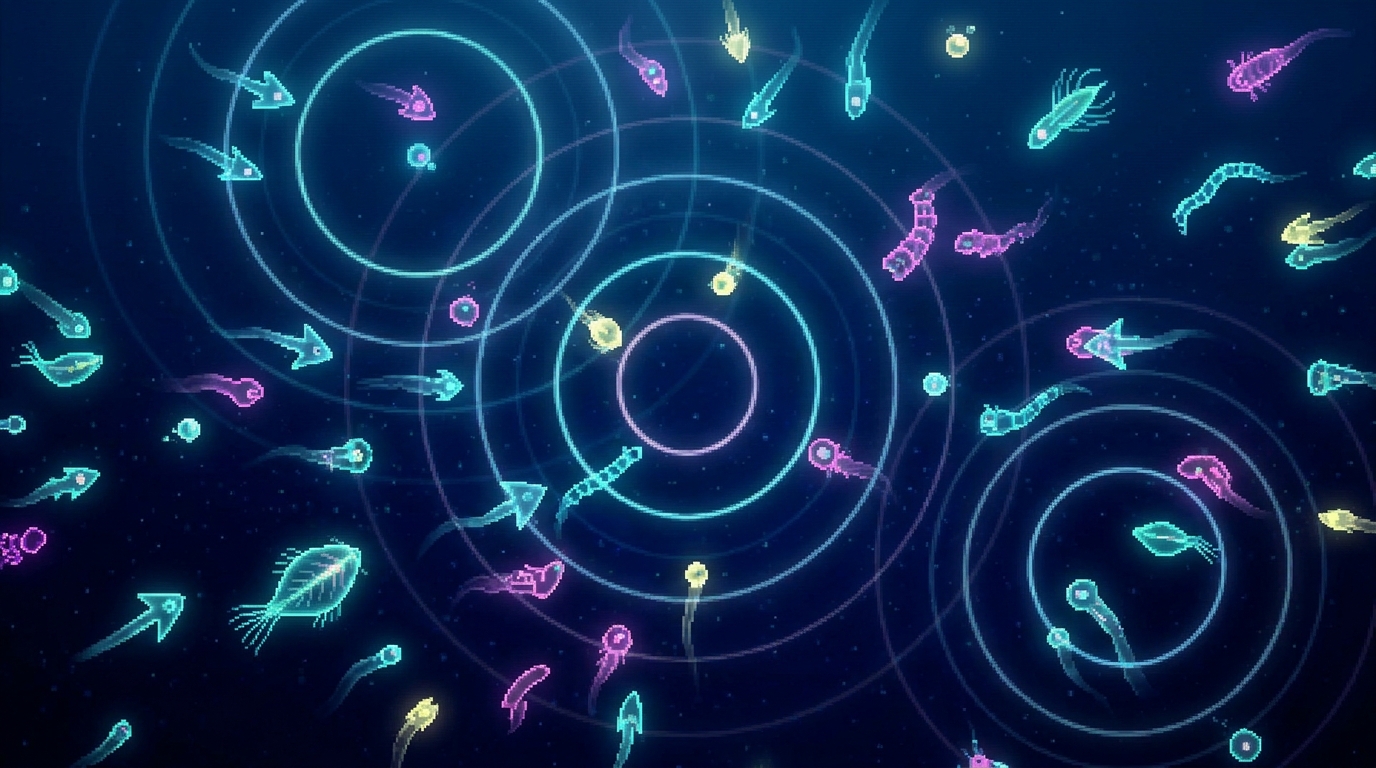
Some of the DS’s strangest games are also its best, and they are the ones that bet everything on the hardware. They are not always comfortable. They are often brilliant, though, and a few still feel like nothing else on a modern console.
The World Ends with You landed on April 22, 2008, and Metacritic gives it an 88 from 59 critic reviews. It is a stylish action RPG set in Shibuya, and it treats the DS as a tool rather than a gimmick. The bottom screen is where the fighting happens, and the top screen shows the crowd, the map, and the other half of your team. Because the game splits your attention on purpose, it does something you cannot do on a single display.
The microphone gets a few moments to shine, and the game is better for not leaning on it too hard. Most DS games used the mic as a party trick. Here it feels like part of the world’s personality, which is a rare compliment for a feature that usually ends up in a drawer.
The controls are where your patience gets tested. You are asked to tap, drag, and swipe across the touch screen for long stretches, and your hand will start to cramp well before your brain does. Modern players who expect a dedicated button for every action will feel like they are fighting the interface, not the enemies. Stick with it, though. The rhythm settles in, and the combat stops feeling like a chore once you know what the screen wants from you.
Phantom Hourglass scored 90 on Metacritic and arrived on October 1, 2007. It is a Zelda game built around the stylus, and the stylus does everything. You steer Link by dragging the pen, you slash your sword by swiping across enemies, and you draw the path of your boomerang on the map so it can curve around obstacles. On paper, that sounds delightful. In practice, it is a mixed bag.
Stylus movement is the weak point, and no amount of nostalgia will fix it. Steering Link can feel slow and imprecise if you are used to a thumbstick, where a tiny nudge gives you a tiny move. Here, a slightly off drag can send Link wandering into a pot or a pit, and the game does not forgive you quickly. Players who grew up with analog sticks will spend the first few hours adjusting their expectations, and some will never fully stop grumbling.
The boomerang and sword work better than the walking does, and when the game locks into its rhythm, it is charming. Drawing a curved path to flip switches and clear paths is the kind of clever design that makes you grin. Just do not expect it to feel as crisp as a controller would.
Which DS Games Belong in the Cartridge Drawer?
The DS games that belong in the cartridge drawer are the ones where the stylus was bolted on at the last minute, the multiplayer only worked while Nintendo’s servers were running, or the entire pitch was “look, it’s a DS thing.” Those games age like milk left on the dashboard.
The stylus does the most damage, so start there. A stylus can be the design or it can be the chore. A puzzle that only works when you drag pieces across the bottom screen makes sense on that hardware. A game where you tap a menu, tap a button, then tap a different button to do what a d-pad handles in a second is a game where somebody needed a feature for the back of the box. Gimmicks feel worse now because decades of muscle memory have taught our thumbs where the buttons are, and every pointless tap reminds you the developers were chasing a checkbox.
Online play is the next trap. Nintendo Wi-Fi Connection was discontinued for affected DS and DSi games on May 20, 2014. Offline play still works, and that matters more than people think. A game with a solid local mode for friends in the same room still holds up. A game whose multiplayer existed only in online lobbies full of strangers is now a single-player campaign with an empty waiting room and a nice paint job. Check the multiplayer menu before you commit. If it says local, you’re fine. If online was the whole reason the game existed, let it go.
Novelty is the third problem, and mini-game collections suffer the most. Blowing into the microphone, rubbing the screen to clean a window, or flipping a pancake with your stylus is a fine party trick for about ten minutes. Then it becomes homework. Full games have structure, progression, and a reason to come back tomorrow. A mini-game collection spends its entire charm budget in the first session, and once that is gone, you are left with fifty ideas that each last about thirty seconds. Surprise expires quickly, and these collections never had anything else to offer.
Dated graphics are not the enemy here. The DS’s low-resolution sprites and chunky 3D models have a certain handheld charm, and nobody sensible throws a game out because the pixels look like pixels. Lazy design is a different animal. Copy-pasted fetch quests, backtracking through the same corridor for the fifth time, timers that force you to wait out dialogue, and menus that bury basic functions are all signs that a team stopped caring before the game shipped. A plain-looking game with tight rules will beat a pretty one that stretches a single idea across fifteen hours. We would rather replay something ugly with a clean loop than sit through something gorgeous that never respects our time.
What Should You Expect to Pay for DS Carts?
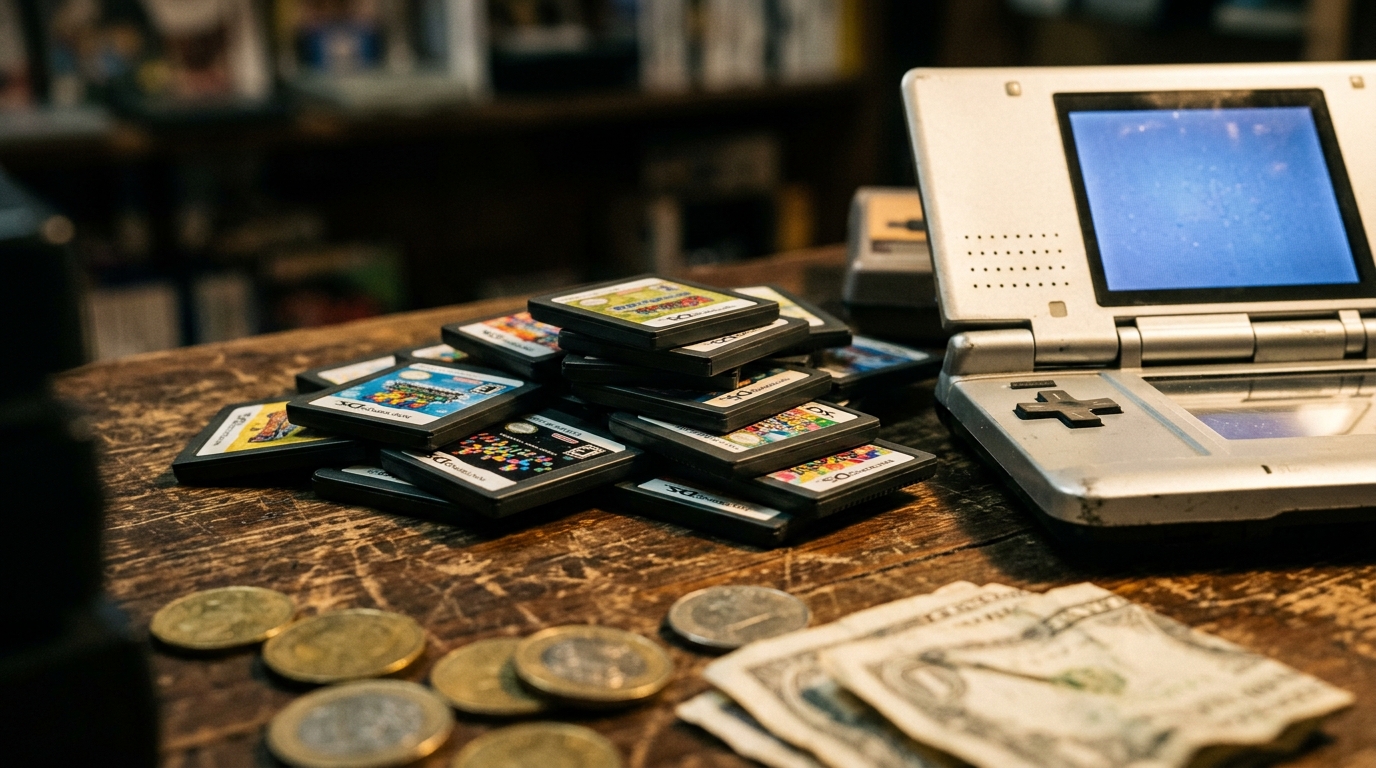
Expect to pay roughly the loose price for a working cartridge, a bit more for a boxed copy, and a lot more for one that has never been opened. Current market estimates put Mario Kart DS at $15.24 loose, $18.99 complete, and $59.99 new, and those estimates are based on completed sales. That spread covers the whole market in three numbers: the cartridge alone, the cartridge with its box and manual, and the copy nobody has ever unwrapped.
The gap between loose and sealed is where the money goes. A sealed Mario Kart DS costs almost four times the loose price, and many DS titles show a similar spread, though not every game carries a sealed premium that steep. Complete-in-box copies usually land between the two: more than the loose cartridge, far less than the sealed version. For most players, that middle option is the sweet spot, since you get the box and manual without paying for packaging you will never tear open.
The best money-saving habit is ignoring asking prices. Anyone can list a copy for an absurd amount and hope. A listing that never sold tells you about optimism, while a completed sale tells you what a buyer actually paid. Sort by sold listings, throw out the outliers that sit far above the rest, and look at what the typical copy changed hands for.
Region matters too. Prices shift between markets and sometimes between versions of the same game, so a bargain may come from a market you were not searching in. Check the listing’s region and language before you pay, and do not assume a number you saw somewhere else applies to your local market.
Condition moves the price more than most sellers admit. Photos of the actual cartridge beat stock images, and “works great” is a claim, not a receipt. Look for label wear, shell scratches, a cracked box, or a missing manual, and remember that a complete copy with a torn box is still a complete copy in the eyes of a bargain hunter.
Shipping can erase a good deal in seconds. A cheap cartridge with postage that costs more than the cartridge is not a deal. It is a tax on your patience. Add delivery costs to the price before you compare listings, and you will spot the real bargains faster.
Three DS Carts to Start With Tonight
Pick one tonight and leave the other two for later. Trying to start all three is how a cartridge ends up back in the drawer by Thursday.
If you have a DS somewhere in the house and a friend within arm’s reach, start with Mario Kart DS. Local multiplayer doesn’t need Wi-Fi, so the race starts the moment everyone has a handheld and a cartridge.
If you’re playing alone, go with Chrono Trigger. Give it a few evenings and get past the first major battle before you judge it. If random encounters are interrupting your exploration within the first hour, you’ll know it’s not for you, and you’ve lost nothing but an evening.
If you’re an adult with a quiet night and a taste for crime stories, load up Grand Theft Auto: Chinatown Wars. Play through the opening missions, then decide whether fiddling with the touch screen during a chase is a price you’re willing to pay.
Once you’ve chosen, skip the asking prices and check what similar copies actually sold for. Look for a complete copy with a box that isn’t falling apart, add the postage to the total, and only then hit buy. Charge the handheld, blow the dust out of the cartridge slot, and start playing.