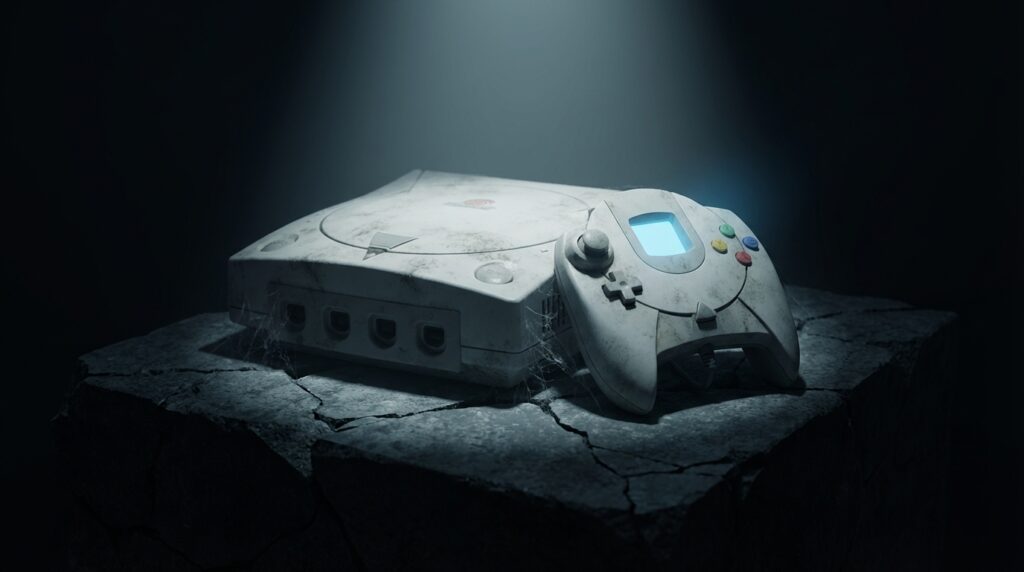
If you were around in late 1999, you probably remember the hype of playing a console that actually felt like the future instead of a slightly less blurry version of the past. Writing a proper Dreamcast retrospective today feels like eulogizing a brilliant friend who drove a car off a cliff while inventing the seatbelt. The creators packed this little white box with arcade-perfect DNA, slapped a 56k modem on the side, and inadvertently built the bridge between coin-op nostalgia and the modern era of getting yelled at by strangers online. It was an absolute masterpiece of hardware design that failed so spectacularly it dragged its parent company’s entire console manufacturing division into the grave.
Underneath that sleek plastic shell sat a custom 200 MHz processor and a dedicated GPU pushing millions of polygons, effectively embarrassing the clunky 32-bit era that came before it. The manufacturer even invented the proprietary 1.2 GB GD-ROM format specifically to stop piracy. That supposedly genius move lasted all of five minutes before bootleggers cracked it wide open. It was a beautiful, doomed machine years ahead of its time, murdered by corporate blunders and an industry that simply wasn’t ready for it. I still miss the loud, obnoxious grinding noise of its disc drive every single day.
Key Takeaways
- The Dreamcast pioneered modern connected gaming by including a built-in 56k modem and delivering arcade-perfect ports that completely outclassed previous 32-bit consoles.
- Rampant piracy from easily bypassed GD-ROMs and the launch of a rival console with a built-in DVD player ultimately destroyed the system.
- Experimental features like the battery-draining Visual Memory Unit and massively expensive titles like Shenmue showcased brilliant ambition ruined by poor financial execution.
- Despite its spectacular commercial failure, the console remains a must-play system today for its pure, microtransaction-free library built on fast-paced arcade adrenaline.
Built-In Modems And Digital Pet Memory Cards
The creators practically hurled the console industry into the future by slapping a built-in 56k modem right into the back of the Dreamcast. While rival hardware makers were perfectly content letting you play split-screen multiplayer on a tiny tube television, this console decided you should be getting headshots against strangers across the country. It was a genuinely brilliant, forward-thinking move that paved the way for the modern connected era of gaming we take for granted today. I still remember the absolute magic of playing Phantasy Star Online at dial-up speeds while completely tying up the family phone line. Of course, the executives still managed to totally fumble the console generation despite having this massive technological head start.
Then we have the Visual Memory Unit, which was essentially what happened if a standard memory card and a digital pet had a horribly mutated baby. I have to give them credit for the sheer ambition of putting a secondary screen directly into the controller to display secret plays or tiny pixelated animations. However, the execution was an absolute trainwreck because this little plastic block devoured expensive batteries faster than you could say Crazy Taxi. You would pop in two fresh button cells, play a quick minigame on the bus, and it would immediately start shrieking that iconic, high-pitched death beep the very next time you turned on the console. It was a neat gimmick that ultimately became a massive financial burden, forcing me to just accept a life of playing games with a controller that constantly screamed for a fresh power supply.
Software Built On Pure Arcade Adrenaline
The beating heart of the Dreamcast was essentially a repackaged arcade board, and that brilliant piece of engineering gave us the greatest launch lineup in console history. We didn’t just get watered-down ports of arcade hits. We got the exact same games running flawlessly in our living rooms. Just look at Soul Calibur, a fighting game so visually stunning and mechanically tight that it still makes modern brawlers look like they are sleepwalking. I remember booting it up on launch day in 1999 and realizing the days of accepting blurry textures and missing frames as the cost of playing at home were officially dead. The developers basically handed us the keys to the arcade kingdom, letting us experience pure gaming adrenaline without needing a pocket full of quarters.
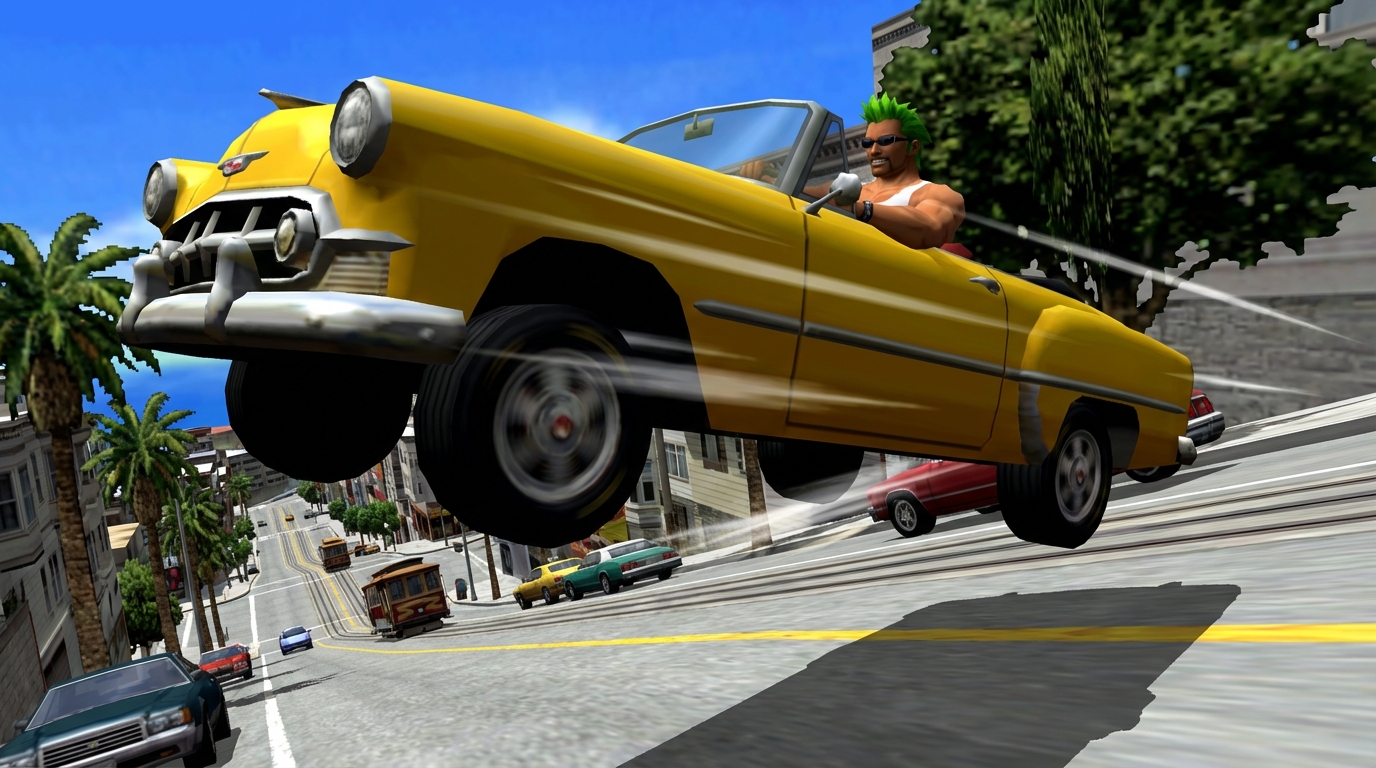
Titles like Crazy Taxi perfectly captured that blistering, high-score-chasing energy that defined the era. You had a strict time limit, a screaming punk rock soundtrack, and absolute chaos on the streets. That is all a good video game really needs. There were no mandatory stealth sections, no bloated skill trees, and absolutely no audio logs to collect while pretending to care about the lore of a fictional city. It was just you, a bright yellow convertible, and an overwhelming urge to drive off a parking garage to shave two seconds off your route. The console knew exactly what it was trying to be, and it delivered that fast-paced perfection flawlessly.
Of course, the creators couldn’t just stick to what worked, which brings us to the glorious, baffling mess that is Shenmue. The director decided the system needed a massive, ridiculously expensive life simulator where you spend half your time driving a forklift and interrogating strangers about sailors. It was a wildly ambitious concept that pushed the hardware to its absolute limits, but it also bankrupted the studio with its absurd development costs. We got a beautiful failure that tried to invent the modern open-world genre years before anyone was ready for it, complete with agonizingly slow walking speeds. It is the perfect encapsulation of why this console died so young. The executives gambled everything on bizarre innovations while completely forgetting how to actually run a profitable business.
Burned Discs And The Rival Juggernaut
The manufacturer thought they were being incredibly clever with their proprietary 1.2-gigabyte GD-ROM discs, assuming the weird format would keep the pirates at bay. I have to laugh looking back at it, because it took the internet about five minutes to realize you could just rip the game data and burn it onto a standard CD-R. You didn’t even need a modchip to play stolen games. Anyone with a spindle of blank discs and a dial-up connection could amass a massive library for the price of a cheap lunch. It was a brutal reality for a company already drowning in massive debt from their previous disastrous console generation. They essentially built a beautiful, arcade-perfect console and accidentally left the back door completely unlocked.
While rampant piracy was actively bleeding the platform dry, an unstoppable hype train was barreling down the tracks to finish the job. A massive rival console was on the horizon, packing a built-in DVD player that completely changed the value proposition for the average consumer. I remember people buying that competitor’s box just to watch movies, treating the actual video games as a neat bonus feature. The Dreamcast simply couldn’t compete with a machine that doubled as the centerpiece of a modern home theater setup. It was a dedicated gaming machine built for purists, but the mainstream audience had already decided they wanted a Trojan horse for their cinematic living room experience.
It is honestly hilarious and tragic how quickly the walls closed in on this genuinely innovative hardware. Between the rampant disc burning and the staggering financial hole left by previous hardware failures, the company simply ran out of money to fight a marketing war against a DVD-playing juggernaut. They pulled the plug in early 2001, effectively ending their legendary run as a hardware manufacturer. We lost a fantastic console with brilliant arcade ports, all because of an easily bypassed disc drive and a rival box that could play popular blockbuster movies. It was the ultimate fatal blow to a system that deserved so much better from a very unforgiving market.
A Brilliant Console Ruined by Hilarious Incompetence
I will always look at the Dreamcast as the ultimate tragic martyr of the gaming industry. It was a console that sprinted toward the future before immediately tripping over its own shoelaces. The creators built a genuinely innovative machine with arcade-perfect ports and built-in online multiplayer, only to completely fumble the execution. They slapped their games onto proprietary GD-ROM discs to stop piracy, which hackers bypassed with standard CD burners almost immediately. It is honestly hilarious in hindsight, but that kind of staggering corporate incompetence doomed a console that fundamentally changed how we play together. You simply have to respect a machine that successfully bridged the gap between the loud arcade cabinets of the nineties and the connected living rooms we have today.
Despite the spectacular business failure, this weird little white box absolutely deserves a permanent spot under your television right now. I still fire mine up regularly just to experience a library entirely devoid of modern gaming garbage like microtransactions, battle passes, or day-one patches. Every game feels like a pure shot of arcade adrenaline designed to be fun rather than a tedious second job. If you want to remember what it felt like when developers took massive creative risks instead of releasing the same tired sequels every year, you need to plug one in. The Dreamcast might have died young, but it left behind a beautiful legacy that puts most modern gaming hardware to shame.
Frequently Asked Questions
1. Why did the Dreamcast fail?
I can confidently say it was murdered by past corporate blunders and an industry that just wasn’t ready for it. The manufacturer burned all their goodwill with previous hardware mistakes, leaving this beautiful white box to die despite being years ahead of its time. It failed so hard it literally dragged the company’s entire console manufacturing division into the grave.
2. What made the Dreamcast hardware so special in 1999?
Underneath that sleek plastic shell, it packed a custom 200 MHz processor and a dedicated GPU that pushed millions of polygons. It effectively embarrassed the clunky 32-bit era that came before it by delivering actual arcade-perfect ports. It felt like playing the future instead of just a slightly less blurry version of the past.
3. Did the proprietary GD-ROM format actually stop piracy?
Absolutely not. The creators invented the 1.2 GB GD-ROM format specifically to stop piracy. That supposedly genius move lasted all of five minutes. Bootleggers cracked it wide open almost immediately, letting anyone burn games onto standard CD-Rs and play them without even installing a modchip.
4. How did the Dreamcast handle online multiplayer back then?
The developers practically hurled the console industry into the future by slapping a built-in 56k modem right into the back of the machine. While rival hardware makers were perfectly content with tiny split-screen multiplayer, this console let you get headshots against strangers across the country. I still remember the absolute magic of playing Phantasy Star Online while completely tying up the family phone line.
5. Why do people still obsess over the Dreamcast memory cards?
The Visual Memory Unit, or VMU, was basically a standard memory card crossed with a digital pet. You could unplug it from your controller and play little minigames on its tiny monochrome screen while riding the bus. It was a massive battery hog, but it was a genuinely brilliant innovation that no one else had the guts to try.
6. What is the deal with the loud disc drive noise?
The Dreamcast is notoriously loud, producing an obnoxious grinding noise every time it reads a disc. It sounds like a tiny robot trying to chew its way out of a plastic cage. Honestly, I still miss that terrifying sound every single day because it meant a great game was about to start.
7. Is it worth playing a Dreamcast today?
I absolutely think it is worth your time if you respect pure gameplay and weird, experimental titles. The library is packed with massive hits and bizarre gems that never got ported to modern systems. Just be prepared to buy a mountain of watch batteries to keep your memory cards alive.