
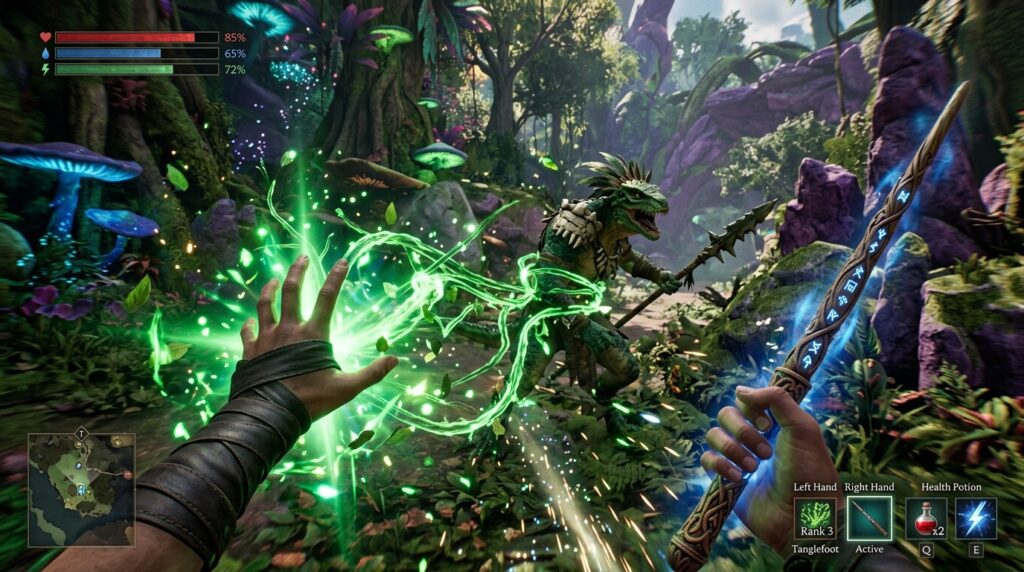
After years of waiting for the developers to finally let us loose in the Living Lands, Avowed has officially landed, and it’s time to see if the avowed gameplay mechanics actually live up to the hype. I am back in the world of Eora, but instead of managing a whole party of isometric bobbleheads, I am seeing the world through a first-person lens that feels surprisingly snappy. It’s a classless system, which is basically developer-speak for “do whatever you want as long as it kills things.”
The combat is all about versatility, letting you dual-wield a sword and a magic wand like some kind of caffeinated battle-mage. You’ve got the standard array of axes and bows, but the real fun starts when you realize you can parry an attack and immediately follow up with a face-full of arcane fire. Just keep an eye on your Essence levels, because wearing heavy armor makes you a tank but leaves your magical gas tank feeling pretty empty.
Key Takeaways
- Avowed features a classless progression system that replaces rigid roles with six core attributes, allowing you to build highly customized hybrid characters without career-path restrictions.
- The dual-wielding combat system enables the simultaneous use of diverse gear, such as flintlock pistols and magic wands, to exploit enemy weaknesses through elemental synergies.
- Equipment weight directly impacts your magical capabilities through the Essence system, forcing a tactical trade-off between the protection of heavy armor and the ability to cast high-level spells.
- Environmental interaction is a core combat pillar, rewarding players who use terrain and elemental combos—like freezing water or using lightning on wet targets—to gain a tactical advantage.
Dual Wielding And The Chaos Of Elemental Combat
The developers are finally letting us live out our most chaotic battle fantasies by ditching restrictive class systems in favor of a “if it fits in your hand, you can kill with it” philosophy. The dual-wielding system is the undisputed star of the show, allowing you to mix a flintlock pistol with a frost-enchanted wand or a heavy axe with a grimoire. While marketing fluff often promises “limitless freedom,” Avowed actually delivers by letting you freeze a group of Xaurips solid before shattering them into icy confetti with a point-blank gunshot. It feels less like a stiff simulation and more like a playground for elemental bullying. You are not just a fighter or a mage, you are a walking disaster zone with a custom loadout designed to exploit every enemy weakness.
The real magic happens when you stop worrying about traditional RPG roles and start treating your gear like a chemistry set. Swapping between loadouts is snappy enough to keep the momentum high, which is a relief because nobody wants to pause a fight to change their socks. You can lead with a two-handed arquebus to thin the herd, then instantly switch to dual-wielding scepters to shower the survivors in a rhythmic barrage of arcane fire. It is loud, it is messy, and it makes those old-school, one-button combat systems look like they belong in a museum. The game encourages you to be a proactive jerk to your enemies, using elemental combos to turn every encounter into a punchline where you get the last laugh.
Despite the obvious comparisons to other first-person fantasy epics, the combat here has a distinct weight and punchiness that those older titles never quite mastered. Parrying an incoming strike feels meaty, and the tactical trade-off between heavy armor and your Essence pool means you actually have to think about your build instead of just clicking until things die. The animation canceling adds a layer of responsiveness that rewards players who bother to learn the timing rather than just flailing their mouse around. It is refreshing to play a fantasy RPG that understands combat should be an active participation sport rather than a chore you do between dialogue scenes. If the industry standard is “floaty and forgettable,” the team decided to go with “crunchy and explosive” instead.
Ditching Rigid Classes For Open Attribute Progression
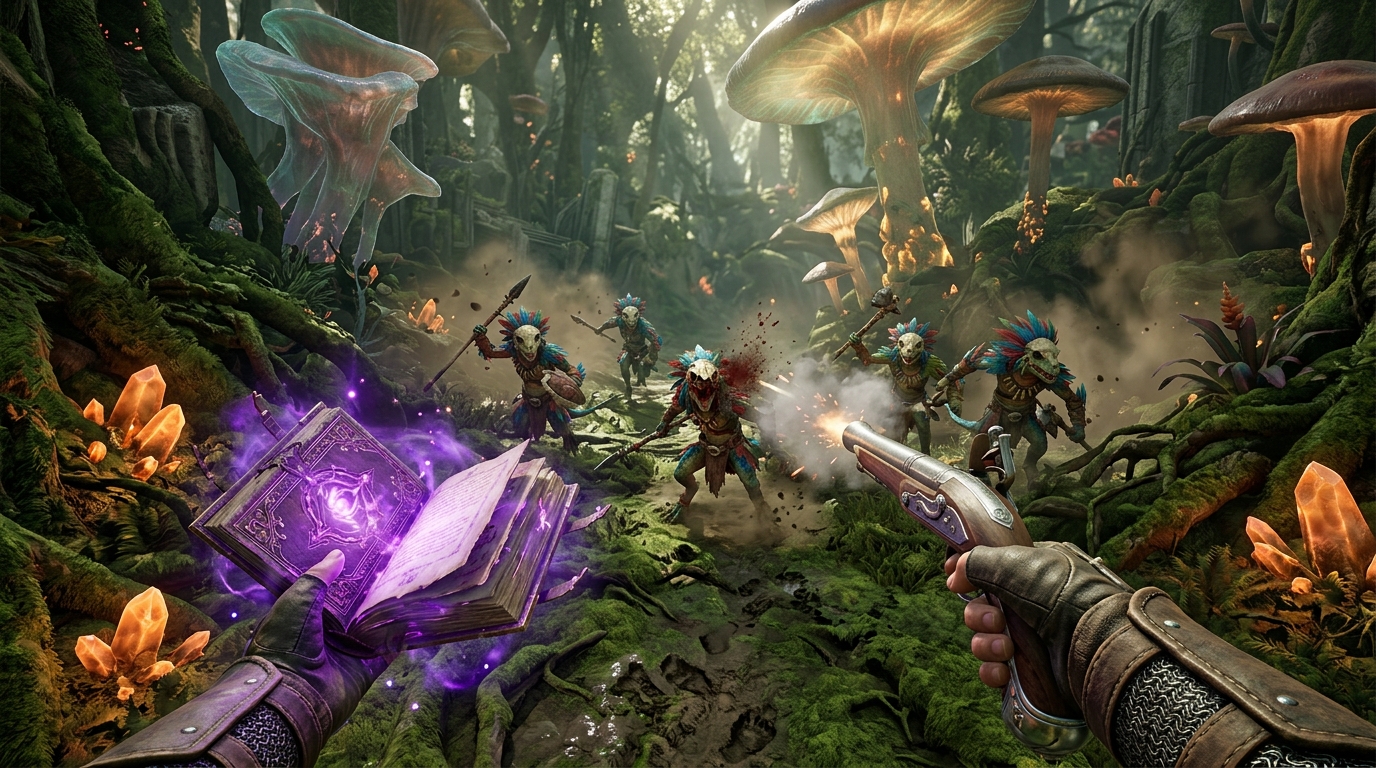
The studio has finally decided that the “holy trinity” of warrior, mage, and thief is a relic of the past that belongs in a museum. Instead of locking you into a rigid career path at level one, the game hands you six core attributes and tells you to go nuts with your own bad ideas. This classless approach means you can pour points into Might and Intelligence simultaneously, creating a scholar who solves ancient riddles and then proceeds to bench press the monster guarding the treasure. It is a refreshing middle finger to the traditional RPG trope that says you have to be either a glass cannon or a brainless meat shield.
The real beauty of this system lies in how it handles your combat loadout without checking your credentials first. You can walk into a dungeon with a heavy claymore in one hand and a magical grimoire in the other, effectively playing as a wizard who hits like a runaway freight train. This flexibility allows for on the fly experimentation that actually rewards you for thinking outside the box instead of punishing you for not following a build guide. If you want to wear heavy plate armor while sniping enemies with a magical wand, the game lets you do it, though you will have to manage the fact that heavier gear eats into your maximum Essence.
This progression model serves as a direct answer to the marketing fluff we have been fed for years about “total player freedom.” By removing the invisible walls between skill trees, the game ensures that your character is a reflection of how you actually play rather than a pre-determined template. It is the kind of design that respects your intelligence and your time, allowing you to pivot your strategy without needing to restart a thirty hour campaign. Whether you want to be a silver-tongued duelist or a fireball-slinging tank, the attributes provide the foundation while you provide the chaotic energy.
Essence Management And The Heavy Armor Tradeoff
The developers are finally forcing us to face the consequences of our fashion choices by tying Essence to your equipment weight. In most first-person RPGs, choosing heavy armor is a total no-brainer because looking like a walking tank usually has zero downside once you level up your carrying capacity. Here, every plate of cold iron you strap to your chest actively suffocates your magical battery, meaning you cannot just spam fireballs while pretending to be an invincible hunk of metal. It is a refreshing bit of tactical friction that makes you actually think about whether that extra physical defense is worth losing your ability to cast high-level spells without collapsing.
The balance here feels less like a traditional class restriction and more like a constant, high-stakes negotiation with your own stamina bar. If you want to lean into the hybrid combat style, you have to find that sweet spot where you are protected enough to survive a mace to the face but light enough to keep your scepter humming. I found myself agonistically swapping gear in the inventory screen because the game actually punishes you for being a greedy generalist who wants everything at once. It is a smart way to handle progression without locking you into a rigid role, even if it means my dreams of being a heavy-metal wizard are constantly being crushed by the weight of my own leggings.
Ultimately, this system proves that the developers are more interested in meaningful trade-offs than just letting you steamroll through the world. You can definitely try to ignore the Essence penalties, but you will quickly find yourself standing in the middle of a battlefield with a very expensive suit of armor and absolutely no magical juice left to finish the job. This mechanic adds a layer of depth that keeps the combat from feeling like a shallow button-masher where the best gear always wins. It forces you to commit to a playstyle, which is exactly the kind of intentional design that separates a real RPG from a mindless action game.
Environmental Interaction And Tactical Spell Synergy
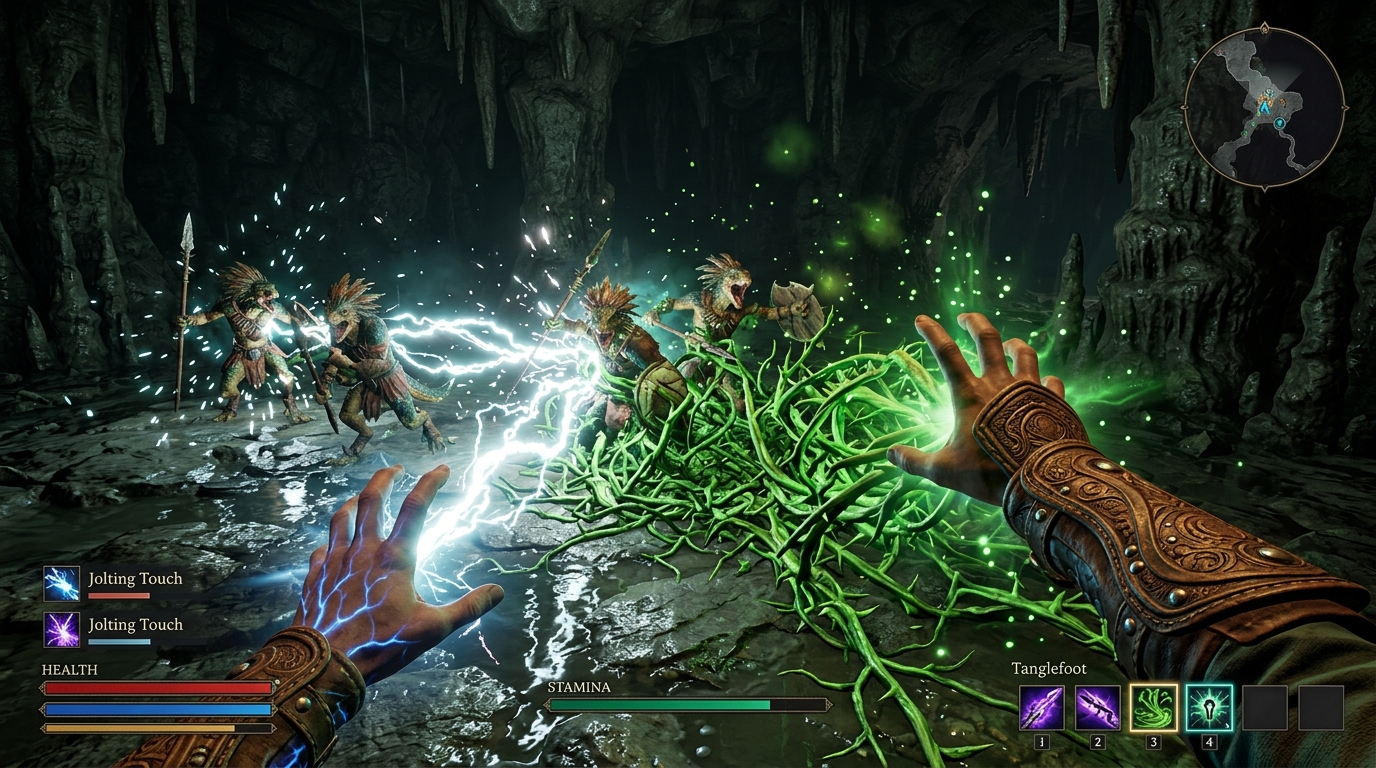
One of the most refreshing things about combat in the Living Lands is that it actually rewards you for having a brain instead of just a fast trigger finger. While other first-person RPGs often devolve into a mindless frenzy of swinging a sword until the health bar disappears, this game treats the environment like a giant, elemental chemistry set. You can freeze a lake to trap a group of charging enemies in place, then shatter them with a heavy mace before they even have a chance to thaw. It turns every encounter into a tactical puzzle where the solution usually involves something exploding or turning into an ice cube. This isn’t just window dressing for a marketing trailer, it is a core loop that makes you feel like a literal force of nature.
The synergy between different spell types and weapon loadouts is where the “playground” feel really starts to shine. I found myself constantly swapping between a wand and a shield just to see how many different ways I could ruin a monster’s afternoon using the surroundings. If you see a group of enemies standing in a puddle, you better believe that hitting them with a lightning spell is more satisfying than any standard melee combo. It moves the needle away from the typical button-mashing chore and toward a system where your creativity is your strongest weapon. You aren’t just managing cooldowns, you are actively looking for ways to make the map do the dirty work for you.
The elemental weaknesses aren’t just suggestions, they are the difference between a clean victory and a frustrating slog through a spongey health bar. Taking the time to observe the terrain and choosing the right damage type feels genuinely impactful rather than like a forced chore. Whether you are burning through wooden shields or using wind to push enemies off a convenient cliff, the game constantly validates your choices. It is a confident step away from the floaty, weightless combat that has plagued this genre for decades. You get to play the role of a tactical genius who just happens to have a very large axe and a book full of fire spells.
Tactical Combat That Actually Feels Good
Ultimately, Avowed succeeds because it stops trying to be a pale imitation of other open world giants and leans into the weird, wonderful soul of Eora. The “fantasy RPG with guns” marketing might have hooked the casual crowd, but the actual gameplay mechanics offer a level of tactical depth those other titles haven’t touched in decades. Being able to blast an Xaurip with a flintlock pistol before instantly freezing its friends with a grimoire feels fluid rather than clunky. It is a refreshing change of pace to play an RPG where my character’s build actually matters during a scrap. You can tell the developers prioritized the “fun factor” of dual wielding over the typical stiff animations we usually see in first person fantasy.
If you are sitting there wondering if you should just reinstall the original isometric classics instead, let me put your mind at ease. While the perspective has shifted to your character’s eyeballs, the DNA of the Living Lands remains intact through its reactive world and punishing combat choices. The Essence system adds a genuine layer of risk versus reward that prevents you from just becoming an invincible tank in heavy plate armor. You will actually have to think about your loadout before diving into a ruin, which is more than I can say for most modern action games. It is a polished, punchy experience that honors its roots while finally giving us a combat system that does not feel like swinging a pool noodle in a dark room.
The Living Lands are absolutely worth your time, provided you are ready to trade those nostalgic pixels for some high octane spellcasting. It is not a perfect masterpiece, but it is a confident step forward that proves first person magic can actually feel impactful. You get the lore richness of a deep CRPG paired with a combat loop that does not make me want to alt-tab out of boredom. Stop overthinking the transition and just go enjoy the fact that someone finally made a fantasy RPG where the swords and sorcery actually have some weight behind them. It is the best thing to happen to the franchise since the first time we stepped into Defiance Bay.
Frequently Asked Questions
1. Can I play as a traditional class like a Warrior or a Mage?
Forget the rigid class boxes of yesteryear because the studio finally realized that freedom is better than a spreadsheet. You can build a character that does everything, meaning you are never stuck in a role that stops being fun halfway through the game.
2. How does dual-wielding actually work in combat?
It is a chaotic playground where you can put a flintlock pistol in one hand and a freezing wand in the other. The system encourages you to mix physical carnage with elemental bullying, letting you shatter frozen enemies with a well-placed gunshot.
3. Is there a penalty for wearing heavy armor?
You can certainly dress like a walking tank, but your magical gas tank will pay the price. Heavy armor significantly drains your Essence levels, so you have to choose between being a damage sponge or a spell-slinging glass cannon.
4. What are Essence levels and why should I care?
Essence is your fuel for all things arcane and interesting. If you mismanage it by over-encumbering yourself with plate mail, you will find yourself swinging a sword like a peasant instead of melting faces with fire.
5. Are the combat mechanics slow like traditional isometric RPGs?
Not even close. The first-person perspective is snappy and responsive, making the transition from parrying a blow to casting a spell feel incredibly fluid. It feels more like an action-packed disaster zone than a stiff simulation.
6. Can I swap my weapon loadouts during a fight?
Swapping is fast enough to keep the momentum high, so you can adapt to any enemy weakness on the fly. You are encouraged to treat your gear like a chemistry set, constantly rotating tools to maximize the elemental carnage.