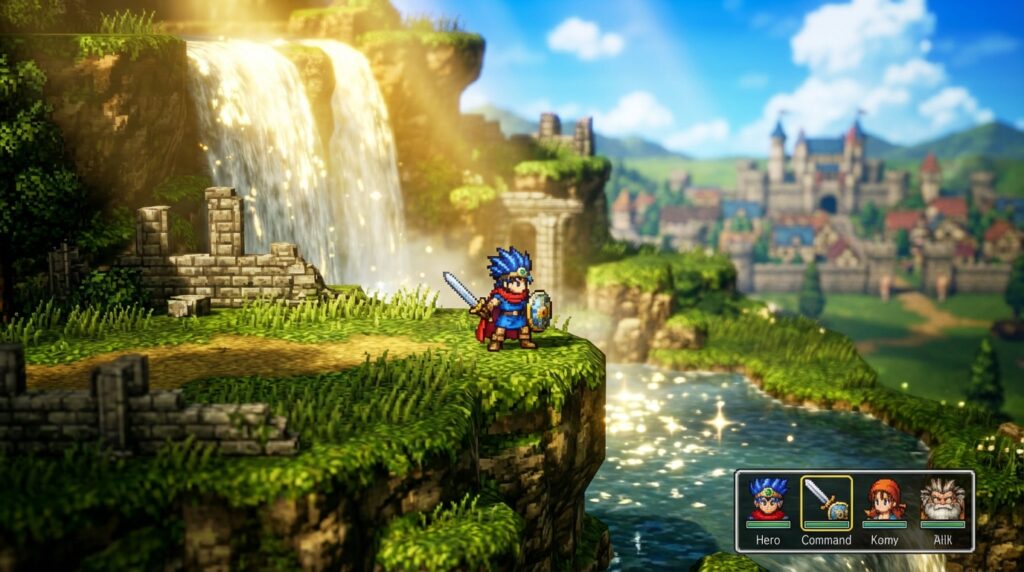
Forget the dusty cartridges and the eye-straining flicker of a childhood CRT; the Erdrick Trilogy finally received the glow-up it deserves. The foundational DNA of the JRPG genre has been dipped in the glorious, tilt-shifted magic of the dragon quest hd-2d engine. It feels less like a cash-grab remake and more like seeing an old friend after they spent a decade in the gym and mastered lighting design.
By tackling the timeline in reverse, dropping Dragon Quest III first before circling back to the original duo, the developers are actually respecting the narrative flow. I am getting all the charm of 16-bit pixel art without the headache of 1980s UI clunkiness or the “where do I go” existential dread. It is a rare moment where the industry chooses to polish a crown jewel instead of just scuffing it up for a quick buck.
Key Takeaways
- The HD-2D engine successfully modernizes the Erdrick Trilogy by layering dynamic lighting and 3D depth over classic pixels, creating a ‘playable diorama’ that respects the original soul while removing technical hurdles.
- Releasing the trilogy in chronological order—starting with Dragon Quest III—aligns the gameplay experience with the narrative timeline, making the overarching story more accessible to new players.
- Modern quality-of-life improvements and UI overhauls eliminate the clunky navigation and extreme difficulty spikes of the 1980s, though they risk reducing the original games’ sense of challenge.
- The HD-2D aesthetic serves as the definitive way to preserve gaming history, offering a premium alternative to low-quality mobile ports and the visual strain of original hardware.
The HD-2D Aesthetic Versus Classic Sprite Soul
The HD-2D aesthetic is less of an artistic revolution and more of a clever way to sell the same pixelated childhood memories at a premium price point. While the tilt-shift lighting and fancy 3D depth look great in a trailer, they often feel like putting a tuxedo on a cat. You can throw all the dynamic shadows and particle effects you want at the screen, but you are still grinding slimes in a world originally designed for a toaster. It is a strange middle ground that tries to please everyone while occasionally distracting from the simple, clean charm of the original sprite work.
The biggest issue with this modern coat of paint is how it messes with the visual clarity I used to take for granted. Back in the day, a pixel was a pixel, and you knew exactly what you were looking at without needing a lens flare to tell you it was important. Now, the environments are so cluttered with bloom and depth-of-field effects that the actual characters can feel like they are floating on top of a diorama rather than living in a world. It is undeniably pretty, but there is a fine line between enhancing the atmosphere and just burying the classic soul of the Erdrick Trilogy under a mountain of post-processing effects.
Despite the visual noise, there is no denying that these remakes make the ancient world of Dragon Quest feel significantly more alive than a flat 8-bit map ever could. Seeing the sun set over a 3D horizon while your 2D party treks across the landscape adds a sense of scale that actually matches the epic narrative. It is a convenient way to modernize the series for a generation that refuses to look at a game unless it has high-definition lighting, even if it feels like a corporate shortcut. If you can ignore the occasional glare, the core gameplay remains as solid as it was forty years ago, proving that good design outlasts any graphical gimmick.
Reselling The Erdrick Trilogy For The Umpteenth Time
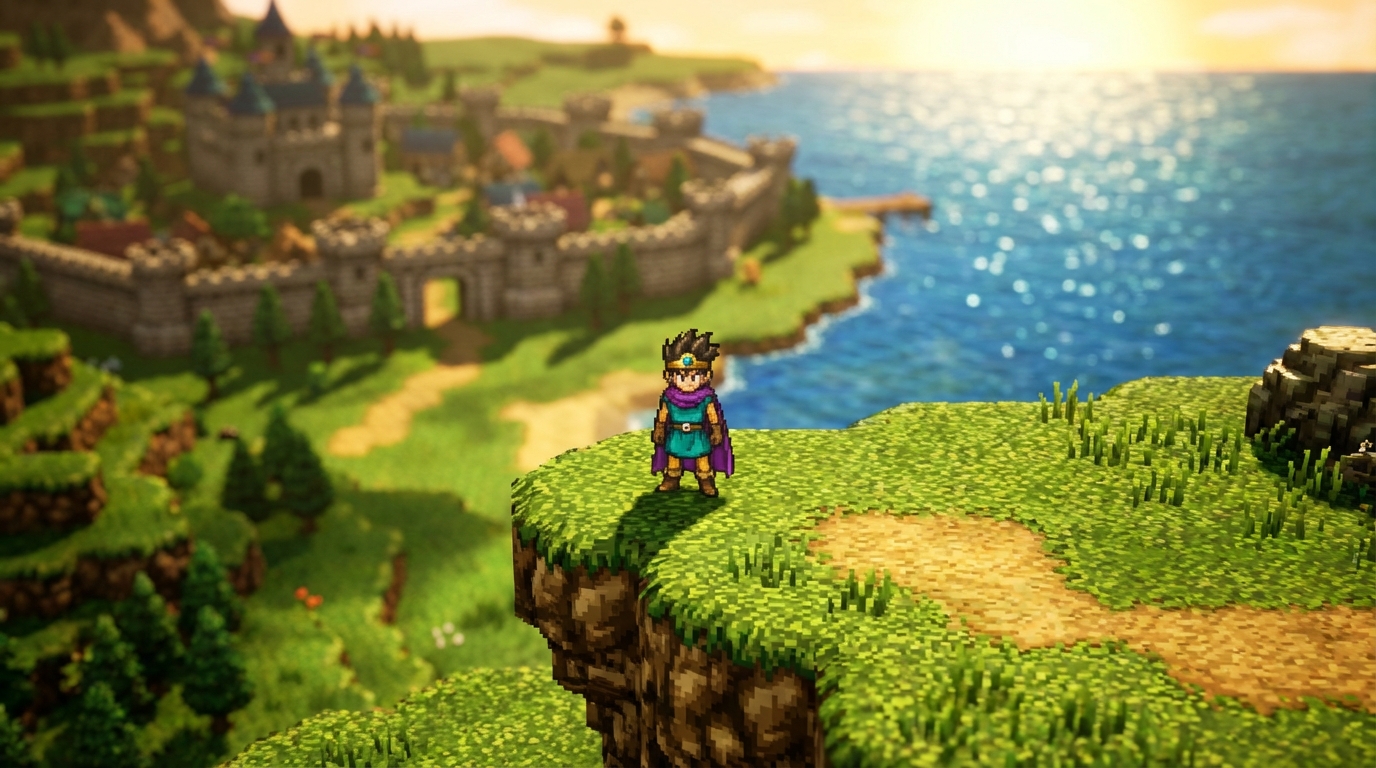
The industry has officially mastered the art of selling us the same three games once every decade, and this time the hd-2d engine is the ultimate shiny lure. While the aesthetic blend of pixel sprites and lush, tilt-shift 3D environments looks undeniably gorgeous, you have to wonder if it is a genuine artistic evolution or just a clever way to mask NES-era assets. It is the video game equivalent of putting a designer suit on a mannequin and charging entry just to look at it. I have seen the Erdrick Trilogy on everything from the Super Famicom to mobile phones, yet here we are again, ready to open our wallets for the exact same turn-based grind.
The HD-2D style is the current favorite “get out of jail free” card because it triggers intense nostalgia while requiring significantly less overhead than a full 3D remake. By layering modern lighting effects and depth of field over classic pixels, developers can create the illusion of a massive leap forward without actually touching the ancient skeleton of the gameplay. It is a convenient middle ground that allows a studio to slap a premium price tag on titles that originally ran on hardware with less processing power than a modern toaster. You get the same stiff movement and basic combat loops, just wrapped in a filter that makes your TV look like a high-end diorama.
Despite the skepticism, there is no denying that these versions are the most palatable way for a new generation to experience the roots of the JRPG genre. The real question is whether the visual upgrade justifies the cost of admission for those of us who have already saved Alefgard half a dozen times. If you are a sucker for particle effects and atmospheric fog, you will probably find enough beauty here to ignore the fact that you are paying for forty-year-old math. It is a beautiful coat of paint on a very old house, proving that as long as you make the lighting look dramatic enough, people will keep buying the same bricks forever.
Modern Quality Of Life Or Just Hand Holding
The HD-2D aesthetic is a gorgeous way to dress up a fossil, but the developers did not stop at a coat of paint. They decided to mess with the actual DNA of the Erdrick Trilogy. While the visuals make these decades-old worlds feel vibrant and alive, the gameplay tweaks feel like the developers were terrified we might actually have to think for five seconds. Take the Princess of Cannock, for instance, who has gone from a fragile liability to a powerhouse with an expanded role that practically carries the party. It is nice to see her get some respect, but when the game hands you a tactical nuke in a dress, the original sense of desperate survival starts to evaporate.
The new boss battles and mid-game encounters follow a similar pattern of trying to fix what was not necessarily broken. These additions are clearly meant to smooth out the jagged difficulty spikes of the NES era, but they often cross the line into blatant hand-holding. You get more direction, more flashes of light telling you where to go, and boss mechanics that feel more like a choreographed dance than a brutal test of grit. It is a genuine artistic leap to see these creatures rendered in such stunning detail, yet I cannot help but feel like the quality-of-life improvements are just a polite way of saying the game thinks you are too soft for the old-school grind.
Ultimately, we have to decide if we want a museum-grade restoration or a theme park ride with safety rails. The HD-2D engine is a brilliant way to resell these assets without it feeling like a lazy cash grab, but the mechanical changes risk stripping away the series’ identity. I love not having to walk in circles for three hours just to level up, but I also miss the feeling of being genuinely afraid of a random encounter. It is a beautiful package that treats the player like a guest of honor, which is great for newcomers but might leave the veterans wondering where the teeth went.
Final Verdict On The Dragon Quest Remake Strategy
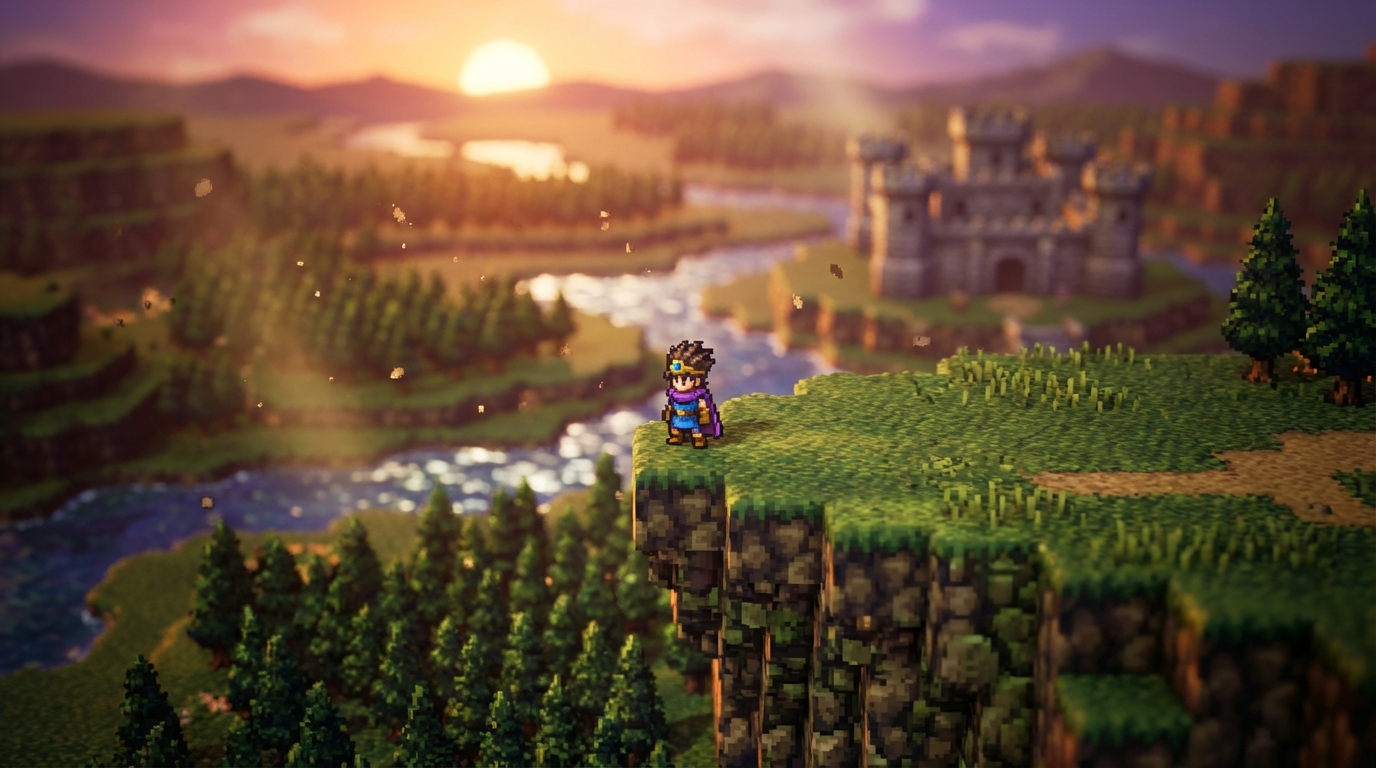
Ultimately, the HD-2D treatment of the Erdrick Trilogy is less of a revolutionary artistic leap and more of a very expensive, very beautiful coat of paint on a forty-year-old house. The industry has mastered the art of making pixels look like they belong in a high-budget diorama, using depth of field and dynamic lighting to trick your brain into thinking these ancient grinds are brand new experiences. It is a clever way to resell the same assets we have owned on five different platforms, but the charm is undeniable when you see a Dragonlord battle rendered with modern particle effects. If you are looking for a reason to revisit Alefgard without getting a headache from flickering sprites, this visual style is the gold standard for preserve gaming history through modernization.
You have to decide if you are paying for the game or the nostalgia of how you imagined the game looked when you were eight years old. While the quality of life improvements like auto-saves and faster combat are godsends, the core loops remain stubbornly old school, which might grate on players used to more dynamic mechanics. Digging out a Famicom and a heavy CRT monitor is a fun weekend novelty, but let us be honest, nobody actually wants to deal with RF adapters and blown-out capacitors in 2025. These remakes are the definitive way to play the classics, provided you can stomach the premium price tag for what is essentially a very fancy history lesson.
The HD-2D strategy succeeds because it respects the source material enough to leave the soul intact while scrubbing away the technical limitations that make retro gaming a chore. It is not exactly a bold new frontier for the franchise, but it beats the hell out of those smoothed-out, soulless mobile ports we were forced to endure a few years back. If you have the gold to spare, buy the trilogy for the convenience and the eye candy, but do not expect a fundamental shift in how Dragon Quest feels. It is the same comfortable pair of boots you have always worn, just polished to a mirror finish and fitted with much better insoles.
Shiny New Paint on 1980s Homework
The Dragon Quest HD-2D trilogy is a fascinating case study in whether the developers are actually evolving or just found a prettier way to sell us the same 1980s homework. By wrapping the Erdrick Trilogy in this signature aesthetic, they successfully masked the aging bones of these grind-heavy classics with gorgeous lighting and depth-of-field effects that make every town look like a high-end diorama. It is undeniably charming to see the world of Alefgard treated with this much visual respect, even if the core gameplay remains as stubborn and traditional as a mule. While the non-chronological release order felt like a weird flex, seeing the series that birthed the genre get a professional facelift is a win for anyone who values gaming history.
Whether this project is a genuine artistic leap or just a clever way to recycle decades-old assets is a question that depends entirely on how much you enjoy looking at shiny sprites. The HD-2D style does a massive amount of heavy lifting here, turning what would be flat, boring landscapes into vibrant environments that actually feel worth exploring in the modern era. It is a smart move that avoids the soul-crushing “smoothing” filters of previous mobile ports, but let us not pretend the developer is reinventing the wheel. These remakes are the ultimate comfort food for JRPG fans, offering a polished, expensive-looking bridge to the past that manages to be both a nostalgic trip and a blatant reminder that the studio knows exactly how to make us buy the same game for the fourth time.
Frequently Asked Questions
1. Wait, why is Dragon Quest III coming out before the first two games?
The developers realized the timeline makes more sense this way. Since Dragon Quest III is a prequel, playing it first lets you experience the Erdrick saga in chronological order without the narrative whiplash.
2. Is the HD-2D style just a fancy way to overcharge me for old pixels?
It is definitely a premium coat of paint on a very old house, but it looks gorgeous in motion. You are paying for the tilt-shift magic and dynamic lighting that makes your childhood memories look like they actually went to the gym.
3. Does the new lighting and depth of field make the game harder to play?
Sometimes the screen gets a bit cluttered with bloom and lens flares that nobody asked for. While it looks great in trailers, you might occasionally miss the simple clarity of a pixel being just a pixel without a tuxedo on it.
4. Is the combat still the same old slog from the eighties?
The foundational DNA is still there, but the developers finally killed off the clunky UI that used to give everyone a headache. You can still grind slimes to your heart’s content, but now you can do it without the existential dread of 1980s menu navigation.
5. Should I play this if I still have my original NES cartridges?
Unless you really enjoy squinting at a flickering CRT monitor, this is the version you actually want to play. It keeps the soul of the original sprites while adding enough modern polish to make it feel like a crown jewel instead of a dusty relic.
6. Is this just another lazy cash-grab remake?
Actually, no, because the professional development team clearly put in the work to respect the source material. It is a rare moment where the industry chose to polish a masterpiece instead of just scuffing it up for a quick buck. If you prefer the original hardware experience, check out our retro handheld guide for the best ways to play the classics on the go.