The gaming industry has officially run out of ideas, so now we are just paying sixty dollars to play our childhoods on a loop. Sorting through the mess of remasters vs remakes has become a full-time job thanks to publishers who love blurring the lines to justify a price hike. One day you are getting a ground-up reconstruction that actually justifies its existence, and the next you are buying an HD Edition that is just the original game with a fresh coat of digital paint and the same clunky controls from 2004.
A proper remake is a massive undertaking that rebuilds the engine and fixes the stuff that sucked the first time around. Remasters, on the other hand, are the industry’s favorite low-effort cash grab, upscaling some textures and hoping you do not notice the janky physics. You deserve to know if you are buying a thoughtful love letter to a classic or just a lazy port designed to meet a quarterly earnings goal. Stop letting nostalgia blind you to the difference between a masterpiece reborn and a cynical polished turd.
Frequently Asked Questions
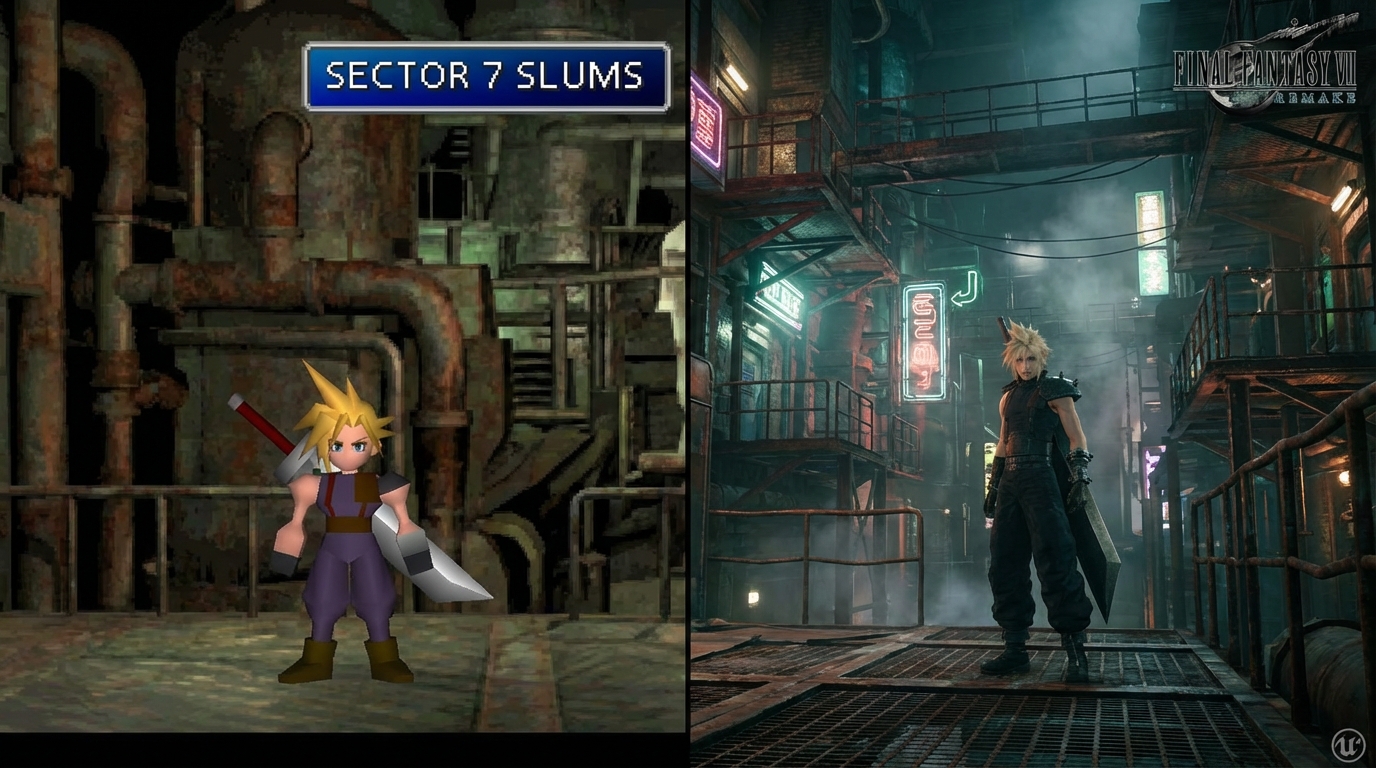
1. Is Final Fantasy VII Remake a true remake or just a remaster?
Final Fantasy VII Remake, released in 2020, is a true remake that rebuilds the Midgar section of the 1997 original in Unreal Engine 4. It adds a new combat system and expanded story scenes, but it covers only the opening portion of the original game. Calling it a full remake of the whole adventure would be a stretch.
2. Should a remaster cost the same as a full-priced remake?
In our view, no. A remaster that mainly bumps resolution, unlocks the frame rate, and tidies up textures should not carry the same sticker as a game rebuilt from the ground up. Full-price tags only make sense when the developers have changed the engine, the mechanics, or the core experience.
3. Can a remake be worse than the original game?
Yes, and it happens more often than publishers admit. A remake can strip out beloved mechanics, change the tone of the story, or pad the pacing with filler that slows everything down. A shiny new look does not guarantee a better game, so check whether the changes improve the original design or replace it with generic systems.
4. Do remasters usually fix the old bugs from the original release?
Not always, and many remasters carry the original bugs straight into the new version. Some even add new glitches while chasing higher resolutions and frame rates. Before buying, check the patch notes or recent reviews to see whether the developers actually addressed known problems.
Key Takeaways
- Distinguish between low-effort remasters and ground-up remakes to avoid paying premium prices for simple resolution bumps and minor texture updates.
- Demand that remakes justify their existence by rebuilding engines and fixing outdated mechanics while preserving the original atmosphere and soul of the game.
- Stop rewarding publishers for ‘lazy cash grabs’ by refusing to purchase overpriced ports that offer nothing more than basic technical patches.
- Prioritize quality over nostalgia by supporting developers who treat classic franchises with genuine care rather than using them to meet quarterly earnings goals.
The Remaster Lazy Cash Grab Blueprint
We need to have a serious talk about the industry’s favorite low-effort hustle: the fifty-dollar HD port. You know the drill by now because you have seen it a dozen times this console generation. A publisher takes a game from ten years ago, bumps the resolution up to 4K, unlocks the frame rate, and calls it a definitive experience. There are no new assets, no mechanical fixes, and certainly no reason to charge full price for a game that already looks fine on your shelf. It is the equivalent of putting a new pair of shoelaces on a worn-out sneaker and trying to sell it as a limited edition collectible.
The math behind these releases is insulting to anyone who actually pays attention to development cycles. While a proper remake requires building a world from the ground up in a modern engine, these lazy remasters are often finished in a fraction of the time with a skeleton crew. They rely on your nostalgia to mask the fact that you are paying a premium for a patch that should have been a free backward compatibility update. If the most exciting bullet point on the back of the box is improved menu textures, you are being taken for a ride. We are essentially rewarding companies for doing the bare minimum while they sit on massive piles of cash.
Stop letting these publishers guilt you into rebuying your childhood for the price of a week’s worth of groceries. A real overhaul like Resident Evil 4 or Final Fantasy VII shows what happens when a studio actually respects the source material and the player’s wallet. When you settle for a slightly sharper version of a game you already finished in 2014, you are telling the industry that quality is optional. Demand more than a glorified brightness slider and a stable sixty frames per second before you hand over your credit card. Let the lazy ports gather dust until they hit the five-dollar bargain bin where they actually belong.
Keep an eye on the marketing copy too. When a publisher leads with “enhanced visuals” and buries the phrase “no changes to gameplay” in the fine print, that is a warning sign. The industry has gotten very good at making a resolution bump sound like a generational leap, and it counts on you being too excited to read the press release. Read it anyway. A classic deserves better than a sales pitch written by someone who has never finished it.
Rebuilding the Classic Foundation From Scratch
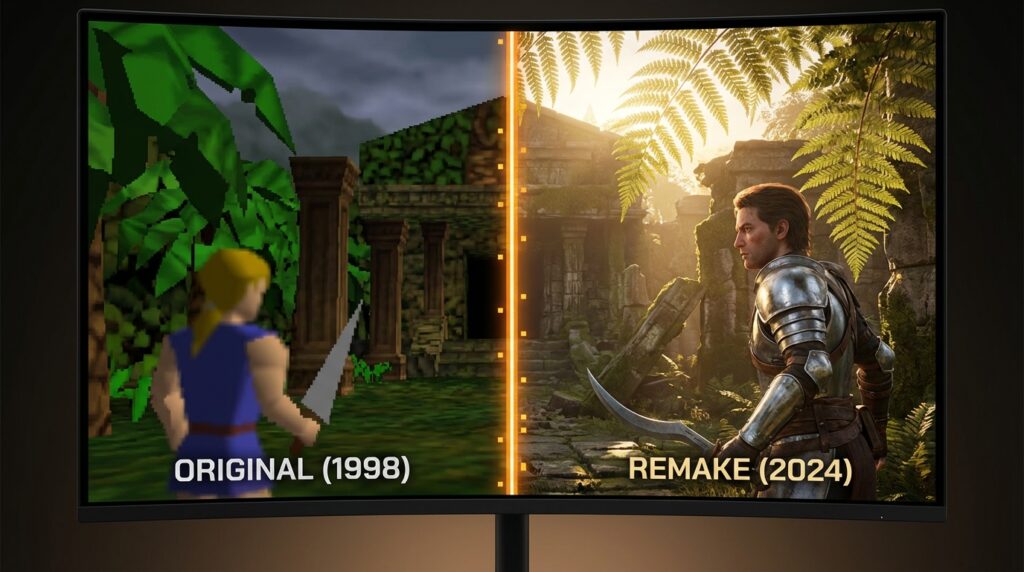
While a remaster is basically a fresh coat of paint on a crumbling fence, a true remake is like tearing the whole house down to build a mansion on the same plot of land. We are talking about the heavy lifters like Resident Evil 4 and Dead Space, where developers actually bothered to open a code editor instead of just running old textures through an AI upscaler. These projects do not just polish the rough edges, they rethink the entire experience from the ground up using modern engines that actually belong in this decade. It is the difference between finding an old toy in the attic and buying the high end collectors edition that actually moves and speaks. When a studio puts in this level of effort, they are not just asking for your money, they are earning it by respecting the legacy of the original.
The brilliance of a top tier remake lies in how it manages to trick your brain into thinking the game always looked this good. If you go back and play the original Dead Space today, you will realize your nostalgia was doing a lot of the heavy lifting for those jagged polygons and clunky menus. The remake fixes outdated mechanics that aged like milk while keeping the atmosphere that made you jump out of your skin the first time. It is a delicate balancing act of modernizing the controls and lighting without stripping away the soul of the classic. You get the same terrifying necromorphs and claustrophobic hallways, but now they actually look like a nightmare instead of a blurry mess of brown and grey pixels.
Under the hood, the game engine decides how much a remake can actually change. Older games were built around the limits of their hardware, so their animations, lighting, and level layouts were compromised from day one. A modern engine lets a studio rebuild those systems rather than patch them, which is why a proper remake can have shadows that react to the world and a camera that does not fight you in tight corridors. Visuals are the part everyone notices first, but the engine is what keeps the gameplay experience from falling apart when the new lighting reveals how janky the old animations were.
A real remake like Resident Evil 4 proves that you can change the mechanics and expand the story without ruining the magic that made the game a masterpiece. These developers took the risk of messing with perfection and actually succeeded by adding depth where there was once just a hardware limitation. It is refreshing to see a studio treat a classic with genuine care instead of just hitting the export button on a decade old project. If we are going to keep buying games we already played twenty years ago, this is the standard we should be demanding every single time.
Preservation vs Innovation in Modern Gaming
The gaming industry is currently obsessed with digging up the past, but there is a massive difference between a respectful restoration and a lazy cash grab. A solid remaster should feel like a high definition time capsule that keeps the original soul intact, including those weird physics exploits that speedrunners have spent decades mastering. If I cannot clip through a specific wall to skip a tedious water level, did you even preserve the game, or did you just sanitize the fun out of it? High frame rates and 4K textures are great, but they should never come at the expense of the technical quirks that defined the original experience. We want our childhood favorites to look better on a modern TV, not to be rewritten by a committee that thinks every rough edge needs to be sanded down.
When we move into the territory of full blown remakes, the rules of engagement change because nobody wants to fight a clunky camera system from 1998 in a game that looks like a Pixar movie. If you are rebuilding a title from the ground up in a modern engine, you have a moral obligation to fix the control schemes that used to give us actual hand cramps. There is no nostalgic value in tank controls or menus that take six button presses just to heal a character. A successful remake respects the source material while acknowledging that gaming technology has evolved past the point of basic frustration. It is a delicate balancing act where innovation must enhance the legacy rather than overwriting it for the sake of a quick buck.
Unfortunately, many publishers treat these re-releases as an easy way to pad their quarterly earnings without putting in the actual effort. We have all seen those remasters that are essentially just a basic upscale filter slapped over a broken port that somehow runs worse than the original disc. It is insulting to be asked to pay full price for a game that still has the same bugs it had twenty years ago, just now in a higher resolution. I want to see developers take pride in their history by either perfecting the original code or learning how to play abandonware to understand the technical foundations of the best retro games. Anything less is just corporate recycling that expects us to pay for our own nostalgia while offering nothing new in return.
New Audiences, Fan Favorites and the Reboot Question
Not everyone buying a remake has the original sitting on a dusty shelf somewhere. A kid who grew up on the current console generation has never touched the 2004 version of Resident Evil 4, and for them a remake is the first time they meet the game. That is a fair reason for these releases to exist, and it is one the industry loves to bring up in press releases. The catch is that a new audience deserves a game that works as a game today, not a museum piece with a fancy label stuck to the box.
Reboots are the wild cousin of the remake. A reboot throws out the original story and characters and starts over, sometimes with a different tone entirely. Fans of the original tend to hate that, and they have every right to. A remake keeps the bones of the story while a reboot takes a sledgehammer to the blueprint. Modernization can happen in either direction, and the good ones keep fan favorites recognizable instead of replacing them with a focus-grouped hero who spends the opening hour brooding in a rain-soaked alley. If the studio cannot explain what the new version does that the old one could not, then it is a reboot in disguise, and nobody asked for that.
New Content, DLC and the Extra Charge
Here is where publishers love to get sneaky. A remaster might arrive with a handful of bonus outfits, a museum of concept art, or a “director’s cut” button that changes nothing you would actually notice. Real new content means new levels, new quests, or new mechanics that expand the game rather than just decorate it. Some remakes add side stories that feel like they belonged there all along, and those are the ones worth your money. Others bolt on a season pass the moment the box art is revealed, which is less a bonus and more a toll booth on the road to the ending.
Judging DLC is simple if you ask one question: does this make the gameplay experience better, or does it just give you more things to collect? A new boss fight that tests everything you learned in the base game is a gift. A fifteen-dollar cosmetic helmet is a receipt. The game industry has trained players to expect that bundled extras are a sign of generosity, when in many cases they are simply a way to make the upgrade look bigger than it is.
Final section: Conclusion
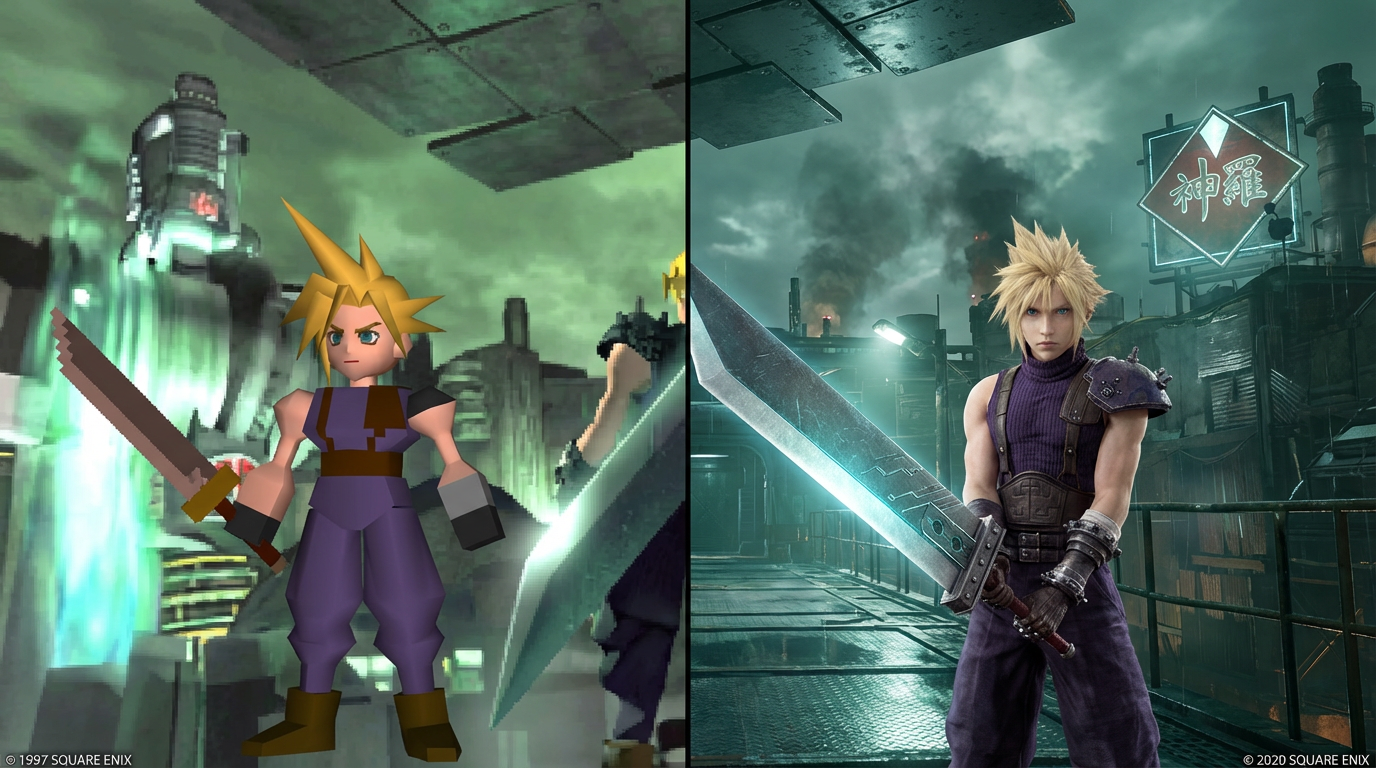
The verdict is simple: you should embrace the nostalgia trip only when the developers actually put in the work to justify your hard-earned cash. A great remake like Resident Evil 4 proves that rebuilding a classic from the ground up can breathe new life into aging mechanics without losing the original soul. These projects are the gold standard because they respect your time and your memories by offering a transformative experience. On the flip side, a lazy remaster that merely slaps a 4K coat of paint on a stuttering engine is nothing more than a corporate shakedown. If the gameplay feels like it belongs in a museum, a slightly sharper resolution will not save it from being a chore to play.
Stop rewarding publishers for recycling their garbage by pre-ordering every definitive edition that pops up on your storefront. We have entered an era where technical upgrades are often used as a smokescreen to hide a complete lack of new ideas or effort. You can tell a genuine labor of love from a cynical cash-grab by looking at whether the team addressed old bugs or just upscaled the textures and called it a day. If a game was a masterpiece twenty years ago, it deserves a remake that matches modern standards, not a greasy port that still runs at thirty frames per second. Vote with your wallet and demand the level of quality that these legendary franchises actually deserve.
Ultimately, the choice between a remaster and a remake comes down to whether you want a trip down memory lane or a modern evolution. Remasters are fine for a cheap weekend of binging on your childhood favorites, provided the price tag reflects the minimal effort involved. However, you should never settle for mediocrity when the industry is fully capable of delivering ground-up overhauls that redefine the genre. Keep your standards high and your skepticism sharp so you do not end up with a digital library full of shiny trash. Life is too short to play the same broken game twice just because the lighting looks a little bit moodier this time around.
Polished Relics or Total Rebuilds?
Deciding between a remaster and a remake usually comes down to whether you want a nostalgic coat of paint or a total structural overhaul. Remasters are the industry’s favorite way to print money by upscaling textures and unlocking frame rates without touching the actual soul of the game. They are perfect for preserving classics on modern hardware, but let’s be honest, we all know when we are being sold a glorified resolution slider for forty bucks. If the clunky controls from 2005 still make you want to throw your controller, a simple remaster is not going to save your sanity. You have to decide if seeing your favorite protagonist in 4K is worth enduring gameplay that aged like milk left in a hot car.
Remakes are an entirely different beast because they actually require the developers to put in the work of rebuilding a title from the ground up. When a studio uses a modern engine to reinvent a classic, they can fix the broken cameras and tedious missions that we conveniently forgot through our rose tinted glasses. These projects are massive technical undertakings that justify their price tags by offering a fresh experience for both veterans and newcomers alike. Of course, this also gives the suits a chance to mess with the original vision, which is a risk we have to take for better graphics. A great remake honors the source material while a lazy remaster just hopes you are too distracted by the shiny lighting to notice the dated mechanics.
The flood of re-releases in this console generation means you have to be a skeptical consumer to avoid the obvious cash grabs. I love a technical masterpiece that breathes new life into a dead franchise, but I have no patience for publishers who think a basic port deserves a premium sticker. Always check if the enhancements actually improve the way the game feels or if they just smoothed out a few jagged edges on a character model. We deserve projects that respect our intelligence and our wallets instead of just recycling the same assets for the third time in a decade. If a game is truly legendary, it deserves a treatment that matches its legacy rather than a quick patch job meant to pad out video game preservation efforts that actually matter.