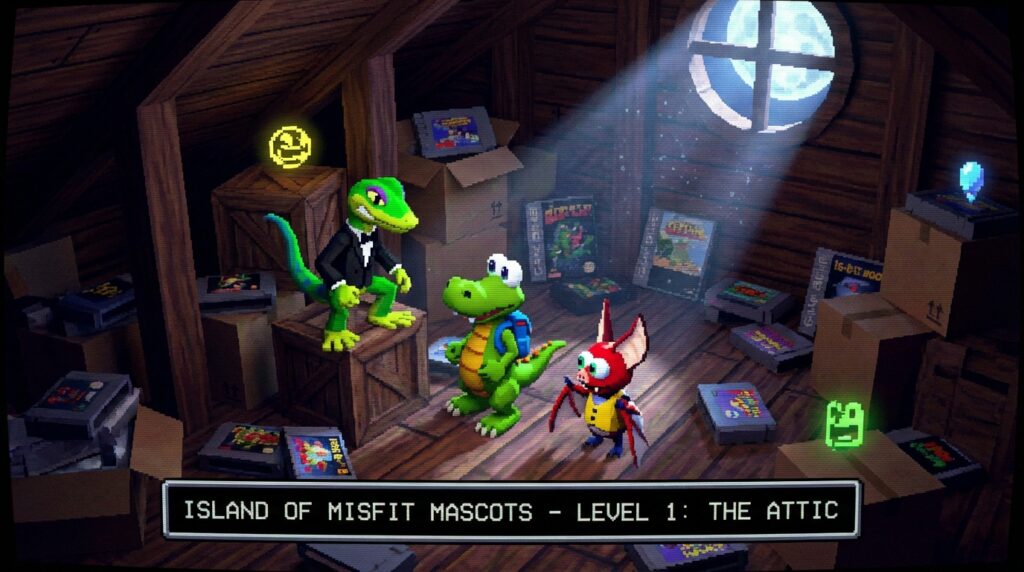
Back in the nineties, every hardware manufacturer with a pulse tried to manufacture a digital god to sell you plastic boxes. We all know the heavy hitters, but the bargain bins of history are littered with forgotten console mascots that were essentially Mario with a worse attitude and more denim. These characters weren’t just victims of bad luck. They were corporate fever dreams designed by committees who thought “cool” meant a bipedal animal with sunglasses and a platforming physics engine made of wet soap.
The 16-bit era was a gold rush of mediocrity where companies like NEC and Hudson Soft bet the farm on a caveman with a massive forehead. For every Sonic that changed the industry, there were a dozen rejects like Bonk or Aero the Acro-Bat who were destined to be trivia questions rather than icons. Most of these mascots didn’t fade away because of a shift in the market. They vanished because their games were derivative garbage that couldn’t survive a world where players actually developed taste.
Key Takeaways
-
The 16-bit era’s ‘mascot wars’ failed because companies prioritized focus-group-driven characters and ‘edgy’ marketing over tight gameplay and third-party developer support.
-
A console’s success depends on a diverse library of quality software rather than a single gimmick or a bizarre corporate avatar like Bonk or Polygon Man.
-
Sega of Japan’s Segata Sanshiro proved that unhinged, creative branding can create a lasting cult legacy, even if it cannot ultimately save failing hardware from superior technical competition.
-
Modern gaming has rightfully moved past the era of cynical, ‘attitude-heavy’ mascots in favor of polished mechanics and cinematic experiences that don’t rely on forced brand spokespeople.
The Prehistoric Failure of Bonk and PC Engine
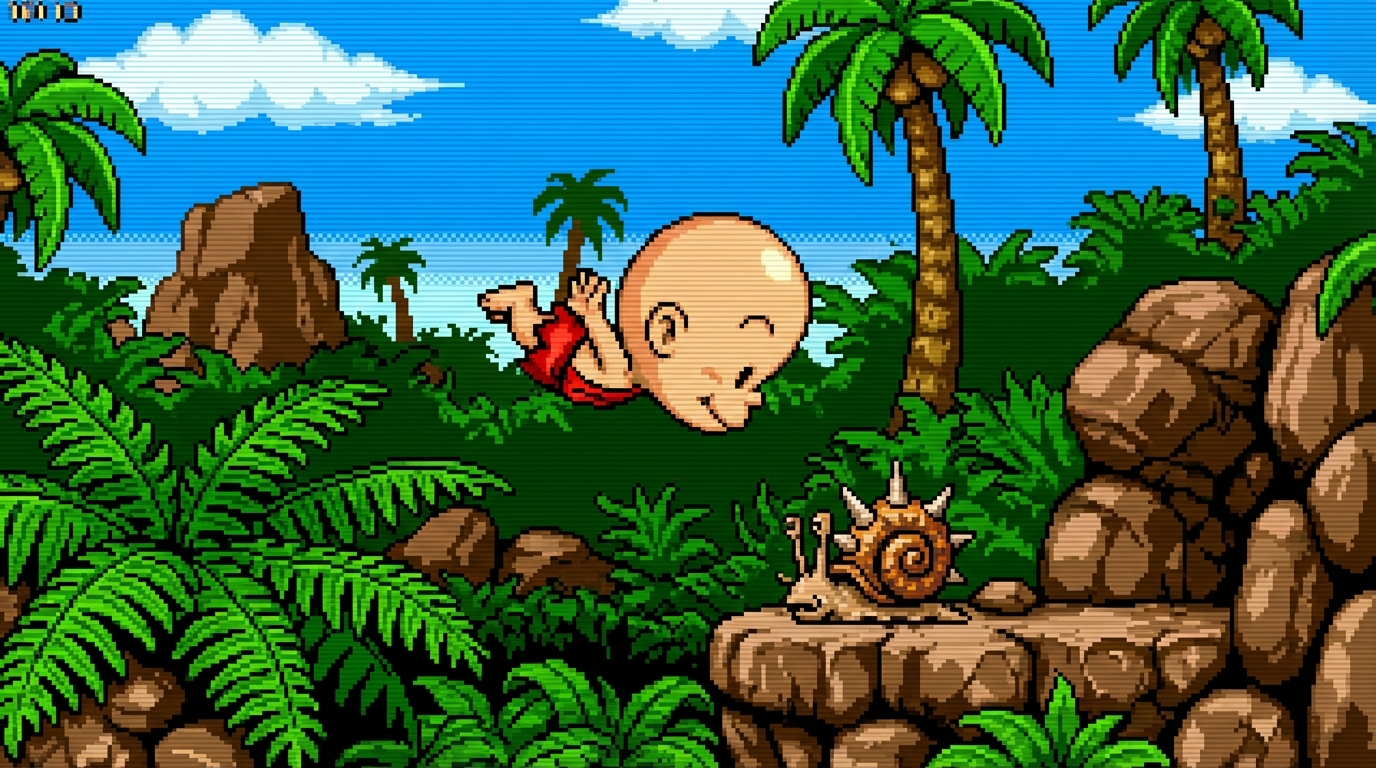
NEC really thought they had a hit on their hands with a bald, head-butting caveman named Bonk. While Nintendo had a charming plumber and Sega had a fast hedgehog, the TurboGrafx-16 banked its entire identity on a toddler who attacked prehistoric snails with his forehead. The gameplay was actually decent, but the marketing felt like a desperate attempt to make “weird” the new “cool” for the 90s. Unfortunately, a mascot who looks like a giant thumb with a dental problem was never going to win a popularity contest against Sonic. NEC tried to sell us on the idea that Bonk was the edgy alternative, but he mostly just looked like he needed a nap and some aspirin.
The real tragedy of Bonk was the complete lack of third-party support that left the PC Engine starving for variety. While the Super Nintendo was drowning in legendary RPGs and action titles, Bonk was stuck carrying the entire weight of a failing ecosystem on his oversized skull. NEC clung to their exclusivity deals like a life raft, refusing to let their prehistoric hero branch out until it was far too late. By the time they realized that one caveman couldn’t fight off an army of third-party developers, the console was already a fossil. It turns out that having a unique gimmick is worthless if you do not have any other games for people to play.
Even the most aggressive marketing campaigns could not save a console that felt like it was hiding from its own potential. NEC spent a fortune trying to convince kids that Bonk or Aero the Acro-Bat was the “Mario killer,” but they forgot that Mario actually had a supporting cast and a consistent release schedule. The TurboGrafx-16 became a niche collector’s item rather than a household name because it relied on a single, bizarre hook. Bonk eventually crawled onto other platforms as a guest star, but his days as a frontline mascot were over before the 16-bit era even peaked. He remains a cautionary tale about why you should never bet your entire company on a single gimmick, especially one involving cranial trauma.
Polygon Man and Sony’s Marketing Nightmares
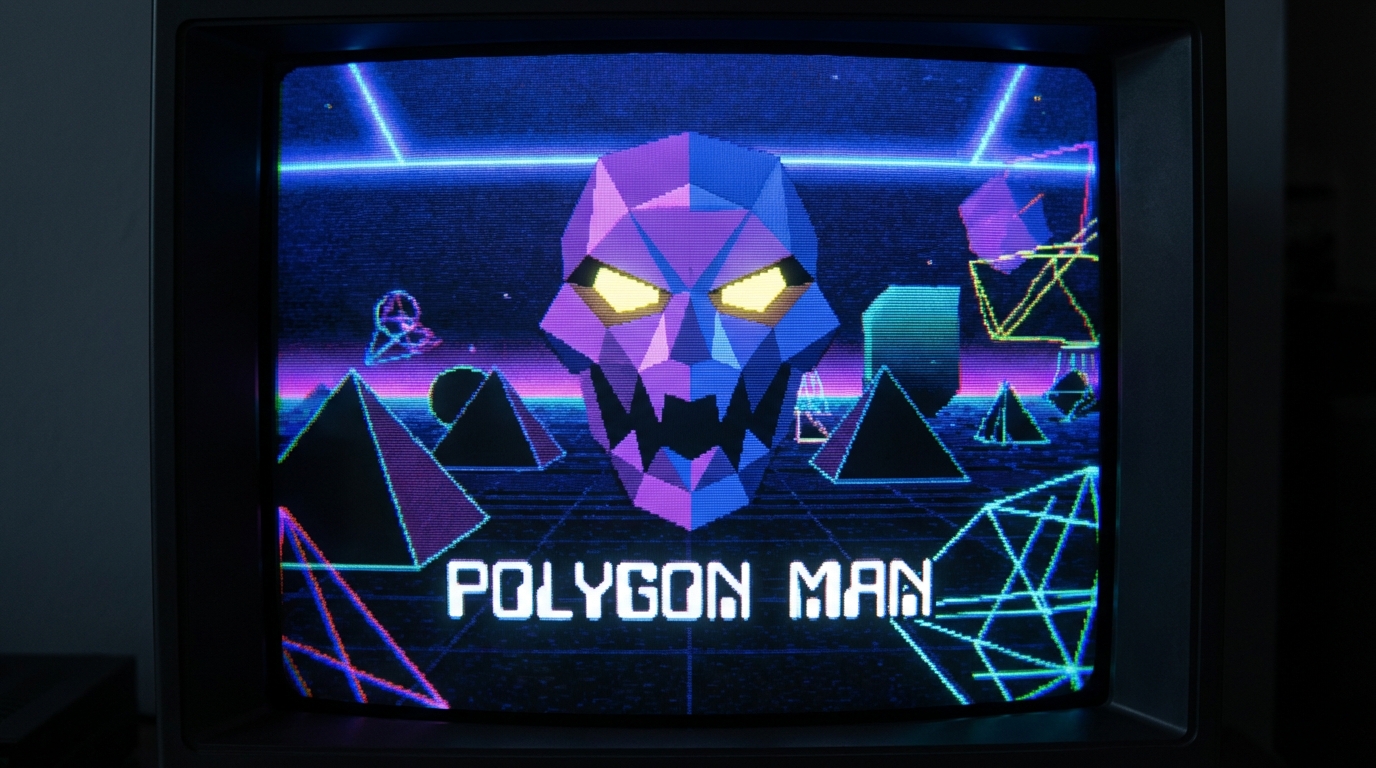
Before Sony became the king of sleek industrial design, they tried to sell the original PlayStation using a jagged, purple floating head named Polygon Man. This monstrosity looked like a collection of glass shards having a mental breakdown, and he was supposed to represent the raw power of 3D processing. In reality, he looked less like a gaming icon and more like a villain from a low budget fever dream that would haunt your sleep. Sony of America thought this aggressive, spiky face would appeal to the edgy youth of the mid nineties, but they clearly forgot that humans generally prefer characters who do not look like they want to harvest your soul. The marketing was a chaotic mess of jagged edges and weird threats that felt completely detached from the actual joy of playing a video game.
The execution of Polygon Man was swift and brutal once the Japanese executives actually saw what their American counterparts had cooked up. Ken Kutaragi, the father of the PlayStation, reportedly became furious when he saw the mascot at E3 because it completely ignored the brand’s actual design philosophy. He didn’t just dislike the character, he wanted it erased from existence as if it were a glitch in the system. Sony quickly pivoted to a more sophisticated aesthetic, leaving the spiky head in the trash bin of gaming history where it belonged. It was a rare moment of corporate clarity where the suits realized that a terrifying geometric ghost was a terrible way to sell a consumer electronic device.
Polygon Man eventually made a pathetic comeback as a final boss in PlayStation All Stars Battle Royale, proving that Sony at least has a sense of humor about their past failures. He functioned as a meta joke for the hardcore fans who remembered the pre launch disaster, but he was still just as eyesore inducing as he was in 1995. Seeing him next to actual legends like Kratos or Nathan Drake only highlighted how desperate those early marketing attempts really were. It serves as a permanent reminder that even the biggest companies in the world can occasionally lose their minds and try to sell us a literal nightmare. Thankfully, the brand survived its own ego, and we got a legendary console instead of a lifetime of therapy.
Segata Sanshiro and the Art of Violent Branding
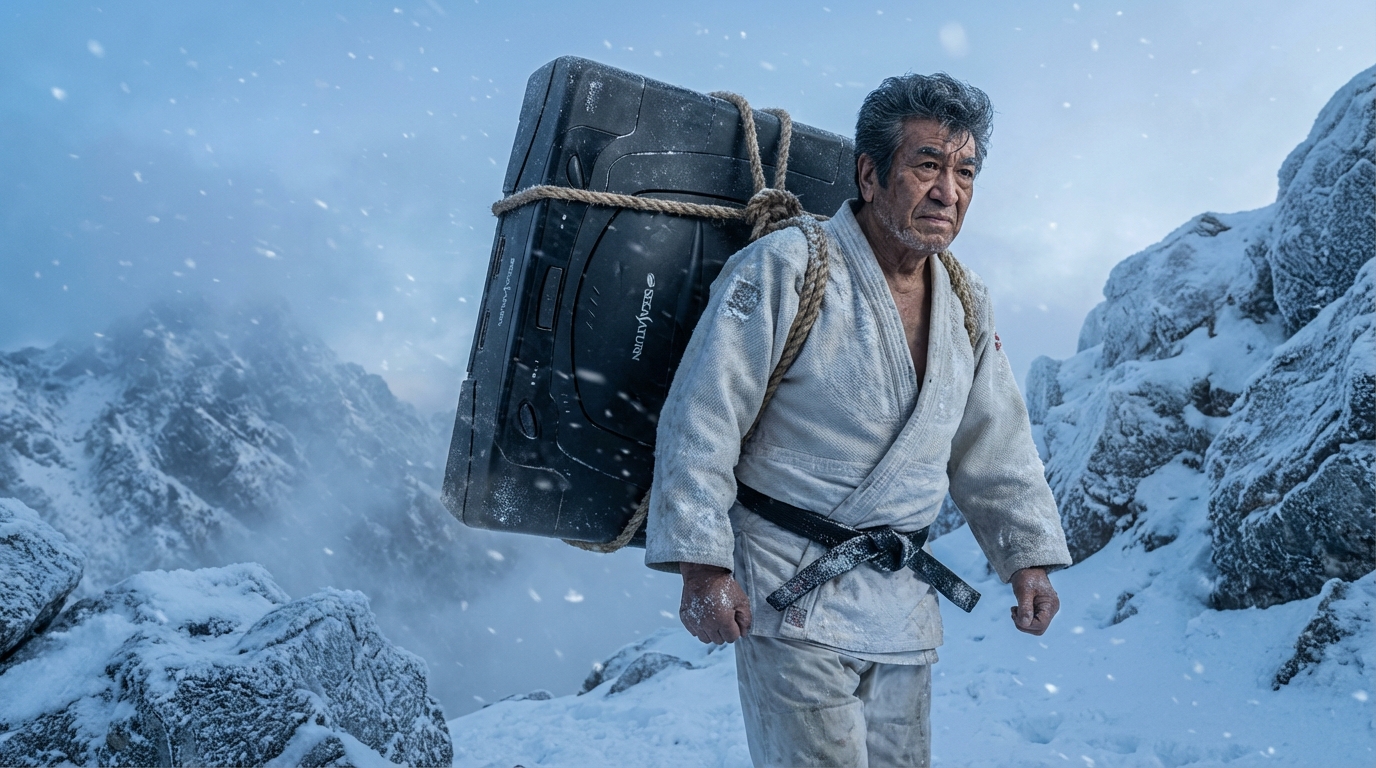
While the West was drowning in generic attitude mascots with backwards caps and skateboards, Sega of Japan decided to hire a judo master to beat the living hell out of their customers. Segata Sanshiro was not your typical cuddly platforming hero, but rather a stoic warrior who lived as a hermit in the mountains just to train with a giant Sega Saturn strapped to his back. His entire marketing philosophy was simple: if you are not playing the Saturn, Segata will find you, throw you through a building, and make your life a living nightmare. It was a brilliant piece of unhinged branding that turned a struggling console into a cult legend through sheer, concentrated violence. Most companies beg for your money, but Segata Sanshiro demanded your soul and a high score in Burning Rangers.
Despite his ability to make a human being explode twice by throwing them onto a judo mat, even Segata could not stop the inevitable march of progress. The Nintendo 64 was looming large with its fancy polygons, and the original PlayStation was busy eating everyone’s lunch with its massive library. Segata eventually went out in a literal blaze of glory, sacrificing his life by intercepting a missile aimed at Sega headquarters in a final, cinematic commercial. It was a poetic end for a character who represented the last gasp of Sega’s eccentric hardware dominance before they transitioned into a software company. Even though the Saturn eventually bowed out of the race, Segata remains the only mascot brave enough to physically assault the audience into buying a console.
The Corporate Graveyard of Soulless Sellouts
The era of the corporate mascot finally died because the industry grew up and realized that a radical attitude and a backwards cap cannot hide a broken camera. We spent an entire decade watching every boardroom executive scramble to find their own Mario, resulting in a mountain of generic platformers that had no soul and even less polish. These characters were not born from creative sparks, but from focus groups trying to sell plastic boxes to kids who just wanted something that actually controlled well. As hardware evolved, players traded in the neon colored animals for cinematic experiences and tight mechanics that did not rely on a gimmick. We should be thankful that the market moved on from the days when every console required a snarky mammal to act as its primary spokesperson.
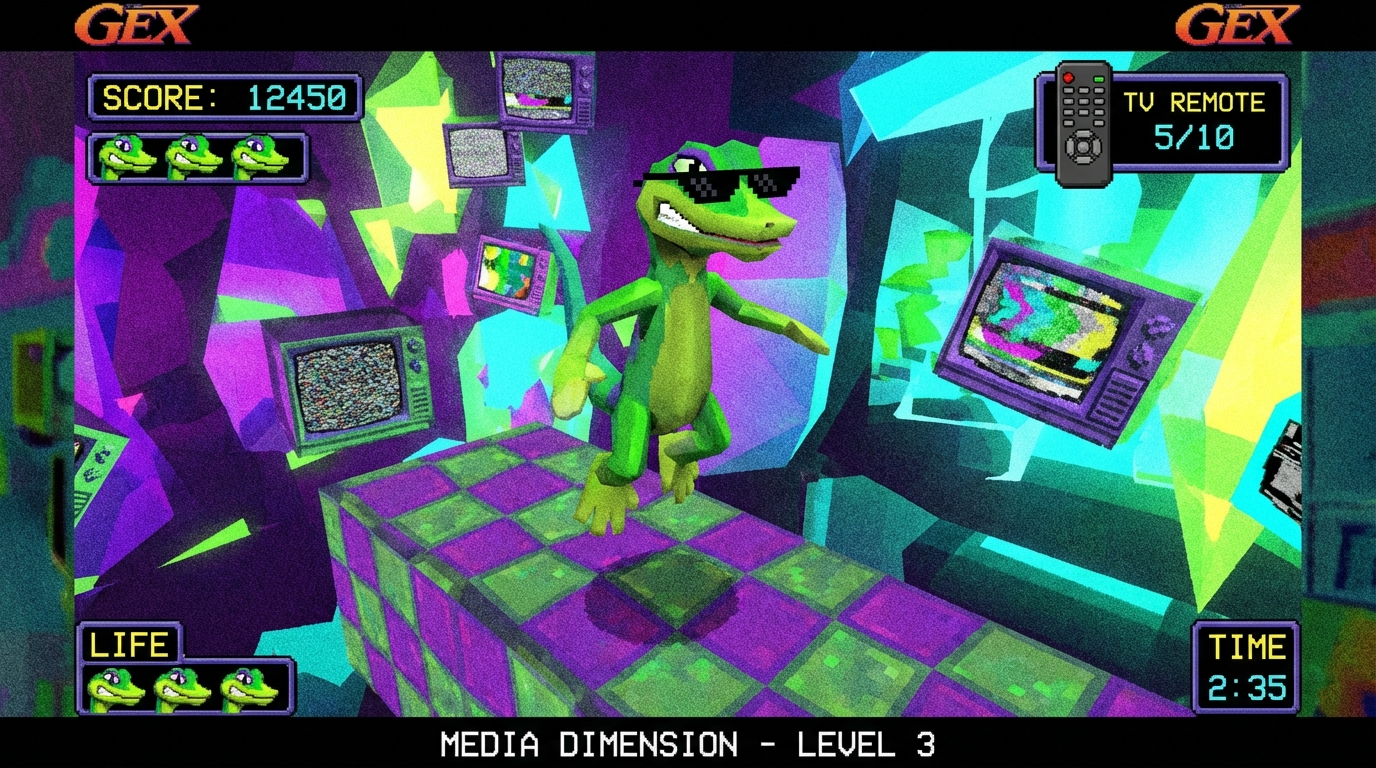
Most of these forgotten icons deserve to stay buried in the bargain bins of history where they can no longer hurt our sensibilities. While nostalgia might make you think you miss the days of Gex or Bubsy, five minutes with their floaty jumping and grating voice lines will cure that delusion quickly. Our modern SSDs are far too valuable to be occupied by half baked 3D mascot clones that only existed to fill a quota on a retail shelf. We have reached a point where a game has to actually be good to survive, rather than just having a recognizable face on the front of the box. Letting these characters fade away was an act of mercy for both the developers and our collective sanity.
The reality check is simple. If a character was actually worth keeping, they would still be here today alongside the few legends that survived the purge. The winners of the mascot wars earned their spots through legendary level design and consistent quality, not just by being the loudest creature in a commercial. Today, we get to enjoy a diverse collection of indie gems and polished blockbusters without needing a cynical corporate avatar to hold our hands. It is better to remember the nineties for the innovation it brought rather than the video game preservation of failed marketing experiments. If you want to revisit these titles, you can learn how to play abandonware without the headache of outdated hardware. Let the relics sleep, because the gaming world is much more interesting without a dozen forced mascots fighting for a scrap of your attention.