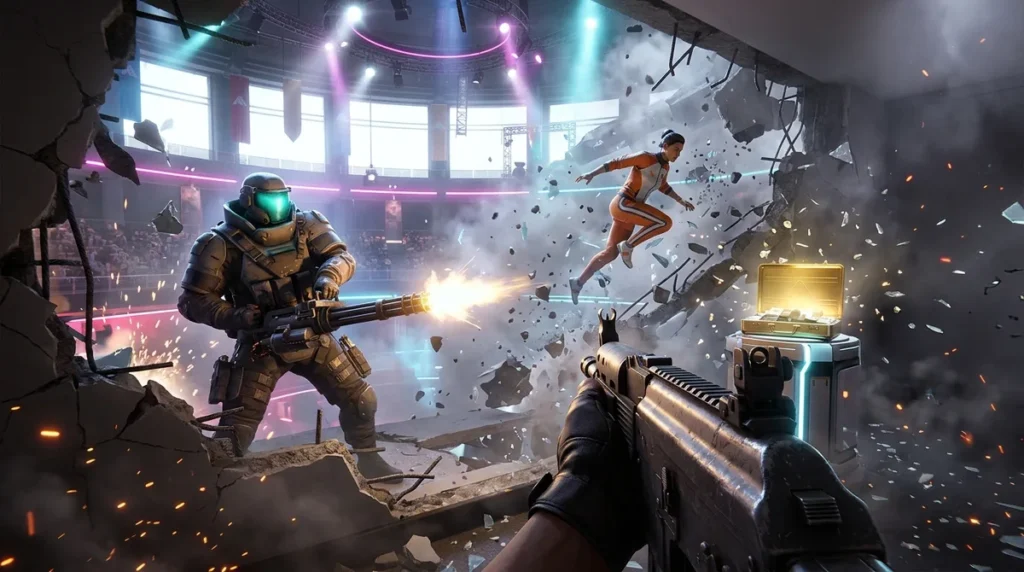
The Finals Prime Time is Season 12 of THE FINALS. It launched on October 20, 2026, and its most important change isn’t the trailer’s explosions: buildings can now deform gradually. Structures can hinge, sag, and bend instead of standing perfectly still until they shatter. Explosions can also shove or damage nearby objects, and debris and smoke react more dynamically than before. The season announcement from Nexon confirms the free-to-play shooter is available on PC, Xbox Series X/S, and PlayStation 5. Buildings are no longer just set dressing, and that changes how every fight plays out.
The update also lists 14 weapons, objects, and events that can generate Blast Waves, including Breach Charge, RPG-7, C4, and Meteor Showers. The balance changes are just as concrete. Heavy base health drops from 350 to 325, while Light base health rises from 150 to 175. In Cashout and Ranked Tournament, vault opening shrinks from 20 seconds to 10, and the final round is cut from 20 minutes to 14. The trailer promises a bigger, louder game. The patch notes reveal something more interesting: a shooter where terrain, tools, and classes are all being reshuffled at once.
TL;DR: The Finals Prime Time is Season 12 of the free-to-play shooter, launching October 20, 2026 on PC, Xbox Series X/S, and PlayStation 5, and its biggest change is that buildings now hinge, sag, and bend before they break. Blast Waves from 14 weapons, objects, and events can shove crates, debris, and walls mid-fight, so cover and flanking routes can shift without warning. Balance changes add to the reshuffle, with Heavy base health dropping to 325, Light rising to 175, and shorter vault openings and final rounds in Cashout and Ranked Tournament.
Season 12 Lands With Buildings That Bend
The trailer wants you to think Season 12 is about noise: bigger booms, more dust, more things flying into the sky. Fair enough, it’s a shooter. But the change that will actually affect your matches is what happens after the explosion stops.
Buildings no longer sit there looking pretty until someone turns them into rubble. Under PRIME TIME, structures can hinge, sag, bend, and deform gradually. A wall you’ve been using as cover can slowly lean toward you, and a floor can droop before it gives up entirely. That’s a different kind of pressure. Players used to a simple “intact or broken” read now have to watch the geometry like it’s a threat in its own right.
The physics cuts both ways. A blast that shoves a crate or a chunk of debris can wreck the route you planned, and a wall weakened by a Breach Charge might still be standing when you need it gone. Nobody gets a clean, scripted collapse on cue. The environment is now a participant, and it doesn’t care whose plan you were executing.
The trailer sells spectacle, and spectacle is easy to show off in a short clip. Gameplay is harder to sell because it only proves itself in a long fight. The real question is whether destruction changes who wins, and gradual deformation has a genuine shot at that. A building that bends instead of snapping can keep a sniper’s lane open a few seconds longer, or close it just when a push needs it. That’s more interesting than a bigger fireball.
It’s worth saying out loud that the new physics only matters if it’s readable. A structure that sags in a way you can’t see coming is just a cheap trick. The good news is that the system is built around players noticing the lean before the collapse. The bad news is that this kind of promise always gets tested the first time a sagging wall ends a round you were winning.
Blast Waves and the Debris Problem
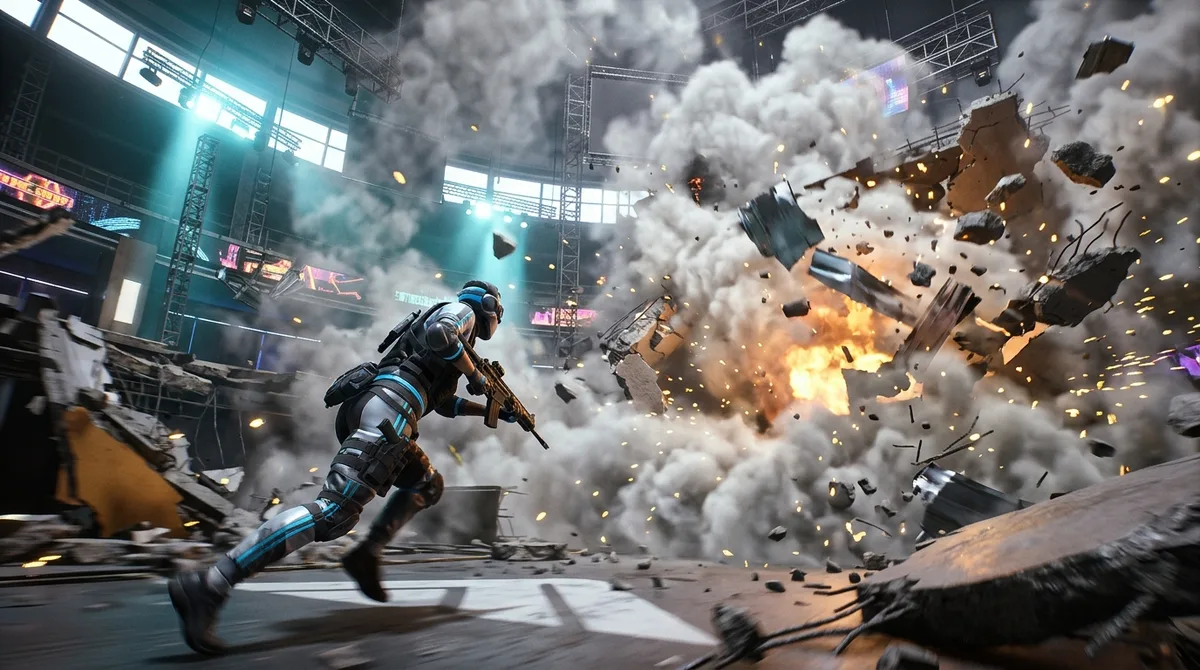
Blast Waves are the shockwaves that spread out from explosions, and the update says 14 weapons, objects, and events can generate them. The list includes obvious culprits like the Breach Charge, the RPG-7, and C4, plus less obvious ones such as Meteor Showers. If something goes boom in PRIME TIME, assume the nearby furniture is about to move.
That’s where cover starts to look shaky. In earlier seasons, a pillar was a promise. You found one, parked behind it, and trusted it to stay put. Now a Blast Wave can shove that pillar, shift the crate you were leaning on, or tilt the wall beside you until the angle you were holding is gone. Cover has an expiry date, and nobody printed it on the box.
Flanking gets messier too. A shockwave can throw crates and chunks of debris into doorways and corridors, so the route you scouted in the first minute might be blocked by the time you need it. Flanking routes are no longer fixed lines on a map. They’re suggestions that the last explosion may have overruled.
Debris piles are the sneaky part. A pile that settles into a gap can seal a path you planned around, or open a sightline you never wanted to see. A sniper who spent a full round perfecting a lane can find a fallen slab blocking it, while a rival gets a clean angle through a wall that gave way. Team play takes a hit as well. A callout like “behind the blue crate” stops being useful the moment the blue crate ends up in the stairwell.
Gradual deformation adds another layer. Because buildings bend over time instead of snapping at one moment, the layout you memorized can drift during a fight. A lean you ignored early can decide who holds the high ground at the end. The map stops being a fixed reference point and becomes a running record of every explosion that went off in it.
The practical lesson is simple: re-check your angles after every big blast. Look at which walls are leaning, which doorways are cluttered, and where the debris settled. Players who keep reading the map will keep their advantage. Players who trust the layout they saw at round start will find out, usually at the worst possible moment, that the building has been quietly rearranging itself.
Smoke That Follows the Room
Smoke in PRIME TIME no longer sits in a neat ball wherever the canister lands. Smoke and toxic-gas clouds now conform to the surrounding environment, so they spread down corridors, pool in stairwells, and wrap around corners. Duck into a narrow hallway and the cloud follows the hallway’s shape, which makes it a lot less reliable than it used to be.
Explosions can partially suppress these clouds for a brief period. A Breach Charge or an RPG-7 round that goes off inside a cloud thins it out and opens a sightline, but only for a moment before the smoke drifts back. That’s a gift to the player who just blew the wall and a warning to anyone hiding behind the haze.
Hiding is now a geometry problem. Smoke fills the rooms you’d duck into, so the cloud can give away the shape of the space you’re standing in. Pushing through is riskier too. A plan that relies on running blind through the middle of a cloud only works if the walls around it are where you think they are.
The Light Infiltrator playstyle adds True Sight, which reveals opponents through smoke, including cloaked or disguised contestants. The cloud that hid you last season can now show everyone where you are, and that changes the math on every smoke grenade you throw. Smoke hides you from the eye, not from the Infiltrator’s gadget.
So the practical advice is simple. If you smoke a doorway, expect the cloud to fill the frame and creep into the stairwell beyond it. Watch for nearby explosions that might thin it out. And before you assume a cloud is a shield, count the Infiltrators on the other team.
Light Infiltrators Get True Sight and New Gadgets
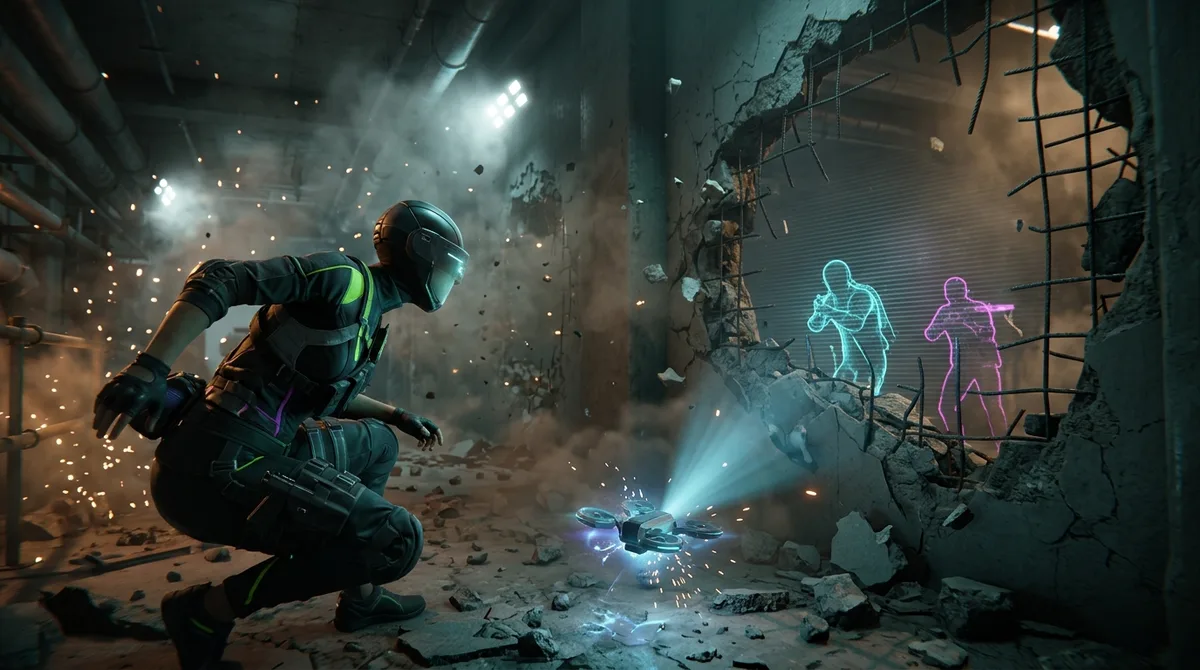
The new Light Infiltrator playstyle is the most distinctive addition in PRIME TIME. Its job is to get close to the enemy without being seen, and the Light archetype suits that role well. Light base health went up from 150 to 175 this season, so a player who prefers sneaking to trading shots now has a little more room for error.
The headline ability is True Sight, which reveals opponents through smoke, including cloaked or disguised contestants. For as long as smoke has been a tool in this game, it has carried one promise: the other team can’t see you in it. True Sight breaks that promise for anyone running the Infiltrator playstyle. Every smoke grenade you throw is now a cloud that Infiltrators can see through.
The kit also includes two new gadgets, the Mimic Device and the Translocator. They fill out the Infiltrator’s toolbox, and they’re the part of the update that most resembles a checklist of new things to unlock.
So is this innovation or just another gadget pile? The honest answer is that the playstyle is a real new angle. It isn’t a reskin of an existing class with a fresh coat of paint. Smoke has been a familiar tool for ages, and True Sight changes what it means in a fight. An enemy who used to vanish into a cloud now has to be tracked through a counterplay read.
The gadgets are where the skepticism belongs. Two new toys can make a class feel busy without making it deeper. What decides whether the Infiltrator works is how smoke is tuned. If True Sight pierces clouds too reliably, smoke stops being a shield and becomes a glowing sign that says “stab here.” If it’s too narrow, Infiltrators become expensive scouts who only work in one corner of the map. The concept is solid. The balance numbers will decide whether it’s good.
Balance Tweaks: Heavies Lose Health, Lights Climb Slopes
Heavies just lost 25 points of base health. The Heavy archetype drops from 350 to 325, and that sounds small until you remember the Heavy’s whole job is absorbing hits and pushing through them. In a fight where the gap between alive and dead is often one burst of fire, those missing points are the difference between finishing a push and watching your teammates finish it without you.
Light base health goes the other way, rising from 150 to 175. Lights have always been the glass cannons who win by staying out of trouble, and the glass is now a little thicker. Put the two changes side by side and the gap between the classes narrows from both ends. A Heavy has to think twice before walking into a crossfire, and a Light can survive a stray shot that would have ended the run last season.
Does this make Heavies bad? No. A Heavy still soaks more damage than a Light, and the cut doesn’t change who the tank is. What it changes is the margin for error. Heavies who relied on raw toughness to bail out a bad push will now need better positioning and timing, which is what the class should have needed all along.
The slope change is the quieter one. The maximum run-up slope rises from 45 degrees to 50 degrees. Five degrees sounds trivial until you’re sprinting up a ramp that used to stop you dead and realize it no longer does. Routes that once demanded a detour can now go straight up, and scrambling over rubble piles or steep embankments is less of a guessing game.
This is a quality-of-life buff with teeth. It kills the annoying moment where you’re stuck at the bottom of a slope like a tourist who forgot stairs exist. The teeth come from flanking. A Light who can sprint up a slope that used to stop them cold can reach a high sightline before the other team notices. Anyone holding a ledge on a steep map should expect company from an angle they used to consider safe.
So here’s the practical read. Heavy players should stop treating the high ground as their personal property. Light players should scout the slopes they used to write off, because the ones that were too steep yesterday might be your shortcut today.
Arena Reworks: Monaco, Seoul, Skyway and Las Vegas
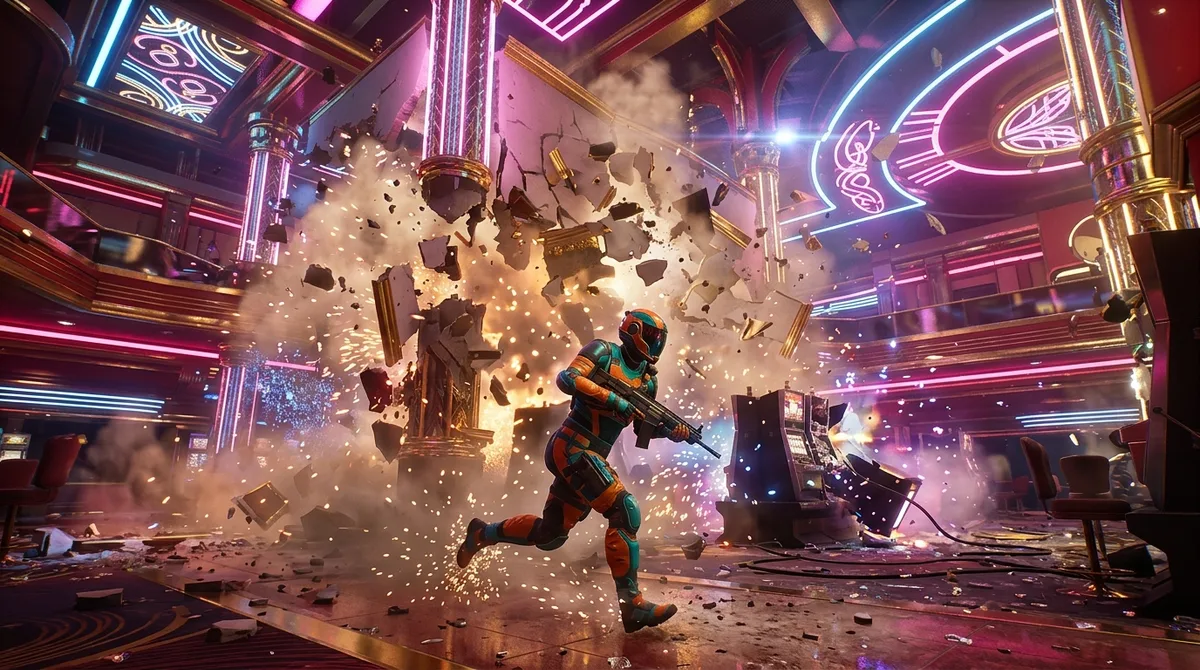
The PRIME TIME patch reworks four arenas: Monaco, Seoul, Skyway Stadium, and Las Vegas Stadium. The changes go beyond the surface and reach routes, cover, layouts, and sightlines. If you’ve been playing these maps since the season began, your first match will feel like someone moved the furniture while you were out of the room.
The difference between a remaster and a redesign is simple. A remaster keeps the skeleton and updates the skin: better lighting, sharper textures, prettier screenshots. A redesign changes the skeleton, meaning where paths lead, where cover stands, and what you can see from each spot. A new coat of paint is a remaster. A moved wall that kills your old rotation is a redesign.
Sightlines matter more than paint for one reason. Paint changes how a map looks in a trailer. A sightline change decides where you die. Open one window and a sniper’s favorite perch becomes a trap. Close one doorway and the flank you’ve trusted for months becomes a funeral route. Nobody writes a headline about a sightline, but sightlines decide most rounds.
Cover is the trickiest part. In a static arena, a reworked piece of cover only needs to be checked for position. This season, cover also has to survive the physics. A wall that bends and a crate that a Blast Wave can shove mean a reworked hiding spot has to be judged twice: once for where it stands, and once for how long it stays put.
Routes will be the first thing players notice. Veterans will reach for the old rotations out of habit and run into corners that have quietly changed shape. Our advice is blunt: spend your first few rounds on each map walking the routes slowly, looking at the sightlines from each spot, and noting which cover you’d actually trust. Then start playing.
Cashout and Ranked Get Shorter Vaults and Final Rounds
The Cashout and Ranked Tournament changes are small on paper, but they reshape how matches end. The PRIME TIME patch adjusts three timers, and all three push the endgame toward a faster, tighter finish.
- Vault opening: cut from 20 seconds to 10
- Cashout round: extended from 9 minutes to 9.5
- Final round: trimmed from 20 minutes to 14
The vault change hits hardest in the moment. Halving the opening time means a team that reaches a vault first can’t sit back and make the other side wait out a long countdown. Ten seconds is short enough that you either contest the vault early or accept that it’s already gone.
The Cashout round gets half a minute longer. That’s a modest bump, but it gives teams a little more room to set up, rotate, and build pressure before the round tips. Nine and a half minutes won’t feel like a marathon, but it’s enough time for one bad decision to snowball.
The final round is where the real shift happens. Cutting six minutes from a 20-minute clock removes a big chunk of the time, and that matters. Long final rounds let a team claw back from a bad start through attrition, trading fights, resetting, and slowly grinding the other side down. At 14 minutes, there’s less room for that comeback, so every fight carries more weight.
Put the faster vault and the shorter final round together and the endgame becomes a sprint. Mistakes cost more because there’s less time to fix them. The tension favors the team that’s ahead and makes the team that isn’t miserable, which is pretty much the point of a final round.
The catch is that a shorter clock rewards players who already know the maps. Veterans will read the pressure and act fast. Newer players may feel like the match ended while they were still looking for the objective.
Solo Showdown, Footsteps and the Presentation Layer
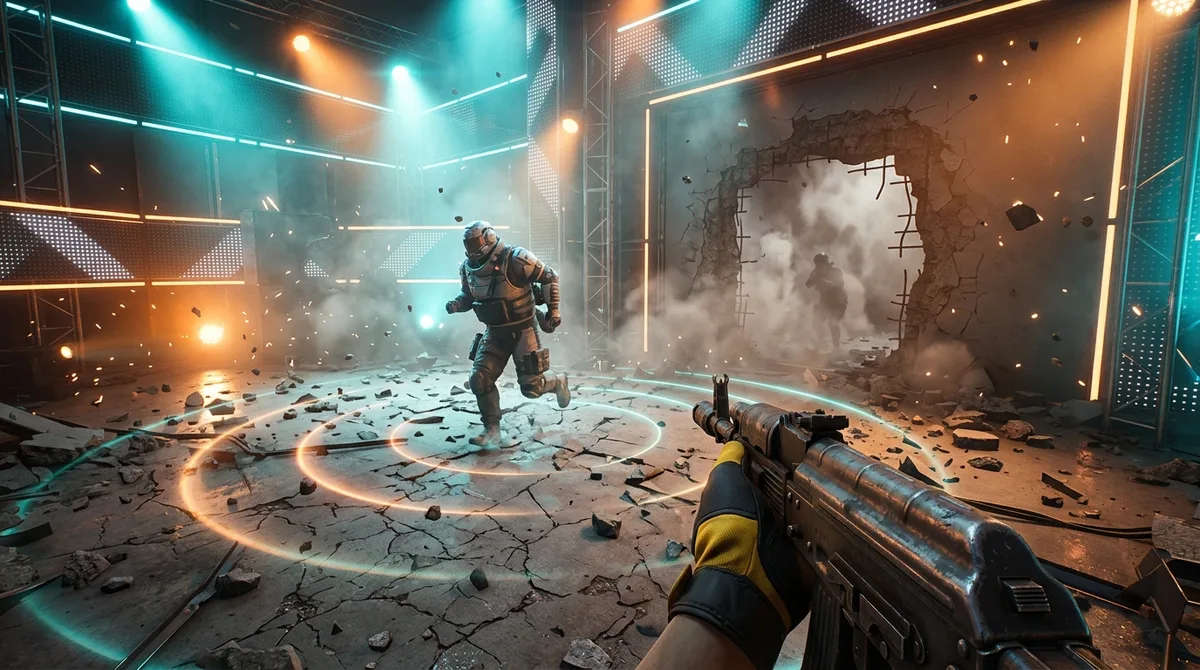
Solo Showdown is the new 12-player tournament, and it’s built for people who don’t mind being alone with their mistakes. Twelve players compete through three elimination rounds, with no teammates to blame when things go wrong.
Each round uses a mini-mode picked at random from a pool of eight. You can’t build your whole run around one trick or one favorite loadout. Some rounds will suit your style. Others will feel like someone rewrote the rules halfway through the match. That’s a fun gamble until the mode you hate lands in a round you were winning.
The footstep rework is the quieter change, and it’s the one that will matter most in ordinary matches. PRIME TIME rebalances footsteps across arena surfaces, so movement on one kind of floor no longer sounds the same as movement on another. That makes listening a more useful skill.
The bigger fix is priority. Enemy footsteps now take precedence over your own and your teammates’. That’s the right call. A game built around sneaking up on people shouldn’t let your own boots drown out the one sound you need to hear, which is the other team coming around the corner.
New cues for elevation and indoor-versus-outdoor position add more detail. They help you tell whether a sound is coming from above, below, or from a space you can’t see into yet. Quiet, useful changes like these rarely get a trailer shot, but they change decisions.
The trailer promises a bigger, louder game, and its claims are worth sorting. The real changes are the ones that alter choices: buildings that deform, Blast Waves that move cover, smoke that follows the room, and footsteps you can actually trust. The spectacle is the dust, the flying debris, and the big booms. Those look great in a clip, but they only matter when they change who wins the round.
Where Season 12 Goes From Here
Start with the Infiltrators if you want the most information per match. Smoke is their whole identity, so throw a few grenades into doorways and see how True Sight treats them. Count how often a cloud actually hides you, and check whether the Mimic Device or Translocator gets you anywhere useful.
Heavies should spend their first rounds on walls. Pick one you’d normally trust, hit its base with a Breach Charge, and watch how far it leans before it gives up. Then see whether your team can still reach the high ground you were holding.
Lights should test the ramps they used to skip. Run the slopes that once stopped you cold, and note how often a flank now beats the other team to a sightline. Pay attention to whether your own footsteps still sound quieter than the enemy’s.
The open questions get harder once a lobby fills up. Several blasts in one stairwell could pile debris into a chokepoint faster than anyone can clear it. Smoke suppression sounds useful until three explosions go off in the same cloud and nobody can see anything. And we don’t yet know whether the physics stays readable when a crowd is making the building sag at the same time.
Hotfixes will tell the real story. True Sight is the first thing to watch, because it can swing from a useless gimmick to a glowing target depending on a single tuning pass. Expect the Heavy and Light health numbers, the slope change, and the Cashout timers to get poked at as the data comes in. If a reworked arena has a sightline that kills too many people from one spot, the fix will show up fast.
Your Practical Starting Plan
Your next step depends on how you play, but everyone should start with one practice session. Stand in a doorway, throw a smoke grenade, and watch how the cloud fills the frame and creeps into the stairwell beyond it. A short session of that will teach you more than any patch summary.
If you’re going to try Solo Showdown, queue for it before you commit to the grind. The mini-mode is drawn at random from a pool of eight, so your first few matches are scouting, not ranking. Note which modes you enjoy and which ones make you want to uninstall, then decide where to spend your time.
Cashout and Ranked Tournament players should spend one session practicing the vault. With the opening window now 10 seconds long, the team that waits for the other side to commit usually loses the race. Contest it early, even if it costs you a flank.
If you want to revisit an old favorite, pick the arena that changed most and walk its routes slowly before you play a ranked match. Look at the sightlines from each spot and decide which cover you’d actually trust. Then play it like you mean it.