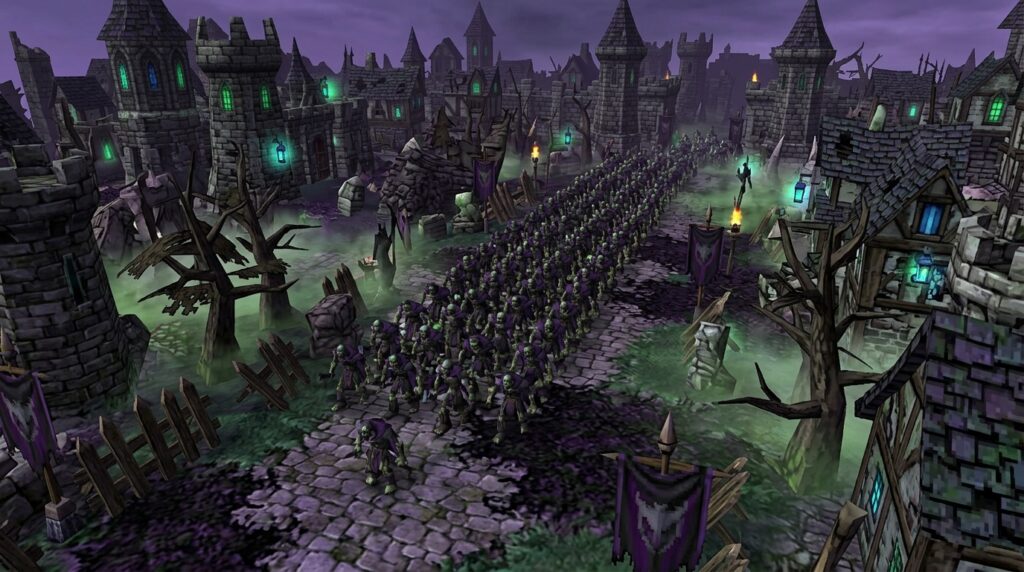
Blizzard’s Warcraft III story campaign, Forsaken Kingdom, is the first new story for Warcraft III: Reforged in more than 23 years, and it has been available since October 17, 2026. Blizzard revealed it at BlizzCon 2026, which is a bigger deal than the usual anniversary announcement. The campaign fills the four-year gap between Arthas’s return to Lordaeron and the emergence of the Undercity, sitting between Warcraft III and World of Warcraft. For a game whose story has been quiet for years, that’s a real event. It finally gives the Forsaken their moment in the spotlight.
The campaign opens with a four-mission prologue called Last Days of Lordaeron, followed by three main chapters. Blizzard estimates about 30 hours of play, including nearly an hour of in-game cinematics. That’s a lot of story for a franchise that has mostly been tapping its foot. A September 12, 2026 report put the expansion at $29.99 USD as a standalone purchase, and it requires Warcraft III: Reforged to run. Patch 3.0 arrives alongside it with optional Definitive Edition graphics and a new multiplayer hero, the Forsaken Paladin. Whether this is a real comeback or just a nostalgia tap is a question we’ll get to. The short answer is that the story is back, and it isn’t just a rerelease wearing a new hat.
Key Takeaways
- Forsaken Kingdom is a standalone expansion reported at $29.99 USD on September 12, 2026, and it won’t run unless you already own Warcraft III: Reforged.
- Forsaken Kingdom fills the four-year gap between Arthas’s return to Lordaeron and the emergence of the Undercity, and its four-mission prologue, Last Days of Lordaeron, is the best way to judge whether the three main chapters are worth your time.
- Patch 3.0’s optional Definitive Edition graphics mode updates more than 600 units, and Warcraft III: Reforged owners get it at no additional cost.
- The Forsaken Paladin is free in multiplayer, so anyone can test the first new Warcraft III hero in more than 20 years without spending a cent.
- Forsaken Kingdom borrows the RPG structure of the Rexxar campaign from The Frozen Throne, with exploration, an expanded inventory, and a talent system, and no further Warcraft III story content has been confirmed.
Blizzard Brings Warcraft III Back With Forsaken Kingdom
The Forsaken have been one of Azeroth’s most interesting factions for more than two decades, yet the game that introduced them has been coasting on its old story. Blizzard’s official timeline places Warcraft III: The Frozen Throne in July 2003, and it counts Sylvanas’s rebellion and the creation of the Forsaken as part of that expansion’s story, as the Blizzard timeline lays out. That’s a big chunk of lore with very little follow-up.
Reforged gave the game a fresh coat of paint, but a remaster is not a new chapter. Players got sharper models and a cleaner interface, and the plot stayed exactly where it was. Forsaken Kingdom is the first real attempt to answer the question nobody in the fandom stopped asking: what happened next?
The timing is clever, if a little convenient. Blizzard chose a moment in the timeline that works as a bridge rather than a sequel. The expansion asks you to care about how the Forsaken went from a freshly freed undead army to a city with a government. That’s a smarter pitch than “here’s a bigger sword,” and it rewards people who remember the original campaigns.
Putting this on the BlizzCon stage also says something. Companies don’t usually headline a story expansion for a strategy game unless they think the lore still moves people. Whether that bet pays off depends on what’s inside, not on the stage.
Still, a single campaign is a single campaign. The announcements establish one substantial new story, not a promise of regular Warcraft III narrative updates. Nobody has said the game is getting a steady drip of new missions. Until someone does, treat this as a standalone visit rather than a new address.
For longtime players, that’s still a meaningful visit. A story that finally explains the Forsaken’s place in the world is worth more than another skin pack, and the fact that it arrived without a long wait makes it harder to dismiss. The bar was low because the story had been silent for so long. Blizzard cleared it, but only by a margin that tells you exactly how much was left to say.
Filling the Four-Year Gap Between Warcraft III and World of Warcraft
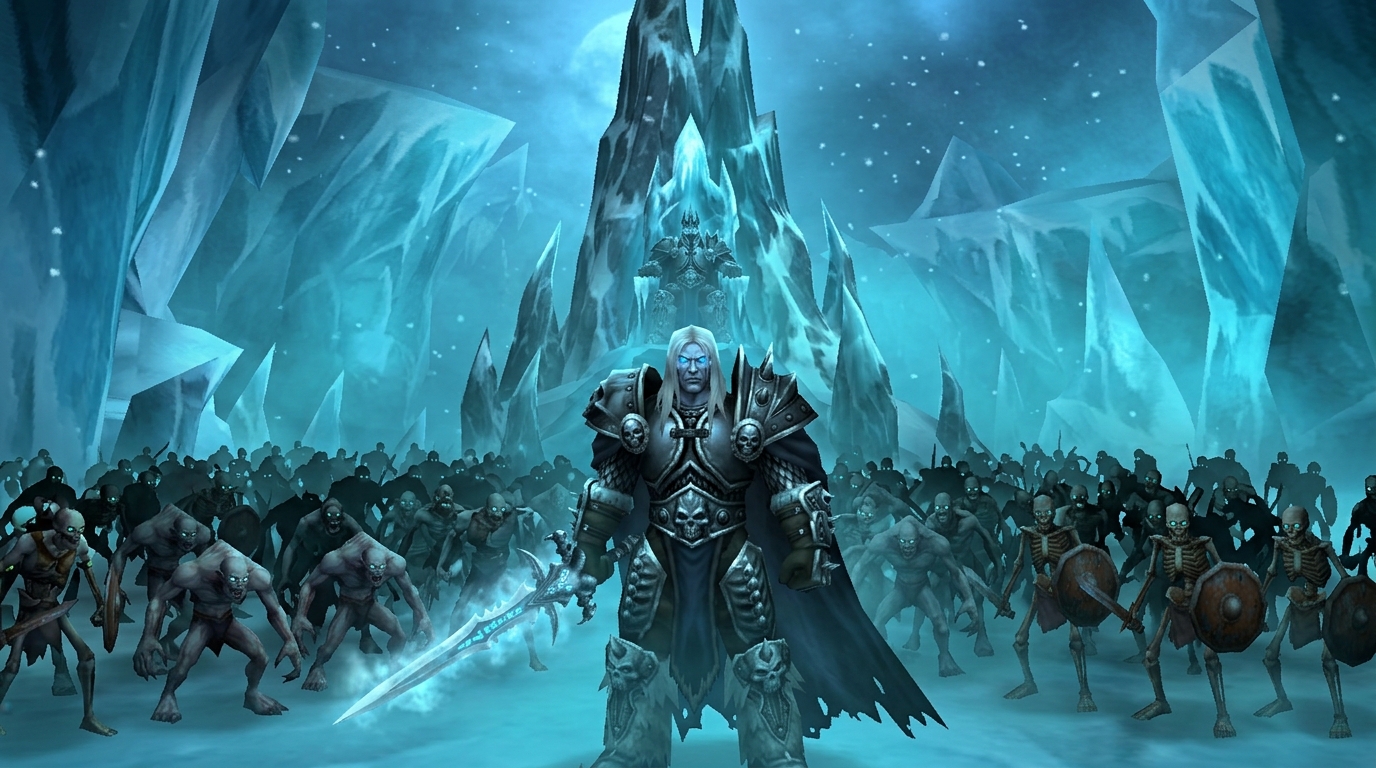
According to Blizzard’s September 2026 panel recap, Forsaken Kingdom covers the events between Arthas’s return to Lordaeron and the emergence of the Undercity. That’s a four-year hole between Warcraft III and World of Warcraft, and until now most players have had to fill it with their imagination and a pile of ominous lore pages.
Let’s refresh the memory. Warcraft III: The Frozen Throne arrived in July 2003, and it ended with the Lich King on the throne, Arthas gone bad, and Lordaeron in ruins. The Frozen Throne also gave us Sylvanas Windrunner, who broke free of the Lich King’s control, took the Dark Lady’s banshees with her, and started the Forsaken. Those undead were no longer puppets. They were a people with their own cause, and they needed somewhere to live.
That gap matters because the Forsaken went from rebellion to nation with very little on-screen explanation. Somewhere between a freed undead army and a functioning city, somebody had to decide where the Forsaken would go, who would lead them, and what kind of place they would build. The game has been coasting on that question for years.
The new campaign starts where the old story ended. The four-mission prologue, Last Days of Lordaeron, follows the Capital City Guard through the Capital of Lordaeron, its sewers, Andorhal, and Stratholme after the culling. If you ever wondered what the Alliance-era soldiers were doing while the kingdom fell apart, this is your answer, and it isn’t pretty.
Here’s the part that makes the timing work. The story doesn’t just retell the fall of Lordaeron. It sits in the crack between two stories that Warcraft fans already know. You’re not revisiting a famous battle. You’re watching the ground shift under the people who had to live through it.
It’s also a smart way to bring new players in. You don’t need to have memorized every Warcraft III campaign to follow the beats, and the prologue gives you a clear view of the chaos before the Forsaken take center stage. Veterans will spot the callbacks. Newcomers will get a good story and a useful map of the wreckage.
So yes, the timeline makes sense now. Arthas came home, Lordaeron fell apart, Sylvanas broke the chains, and the Undercity eventually appeared beneath the ruins. The missing four years were never empty space. They were just waiting for someone at Blizzard to stop ignoring them.
The Last Days of Lordaeron Prologue and Three Main Chapters
Forsaken Kingdom has a simple shape. According to Blizzard’s September 2026 announcement, the campaign opens with a four-mission prologue called Last Days of Lordaeron, then moves into three main chapters. Four missions is a short runway, but it’s enough to set the stage before the story pivots.
The prologue belongs to the Capital City Guard, so the opening is about soldiers holding a city together, not undead clawing their way out of the dirt. That’s a smart choice. You see the fall from the side that was losing, and that makes the later shift to the Forsaken hit harder.
Blizzard puts the whole package at about 30 hours of gameplay, and that’s the number most people will use to decide how to spend an evening. The announcements don’t split those hours between the prologue and the three chapters, so you can’t tell how much of your time goes to the opening missions. Don’t assume the prologue is a quick tutorial with a cutscene attached.
Nearly an hour of that total is in-game cinematics. That leaves the rest for actual play, which is the part that counts for a game. A story-heavy campaign can easily spend half its runtime watching characters talk, so it’s good to see the balance still leans toward doing things.
Three main chapters is a modest count for a story this big. Each chapter has to carry real weight, and there’s little room for filler. The announcements don’t say how long each chapter runs, which is worth watching once you’re playing. Chapters that drag would be the first sign that the 30-hour figure is padded.
We like the structure because it’s easy to follow. Four missions to establish the fall, three chapters to explain what came after, and a clear line between the two halves. Plenty of expansions bury their setup under a pile of side quests and wander off track. This one at least knows where it’s going, which is a refreshing thing to say about a Warcraft campaign.
Garek and Anya Carry a Story About the Forsaken Rising
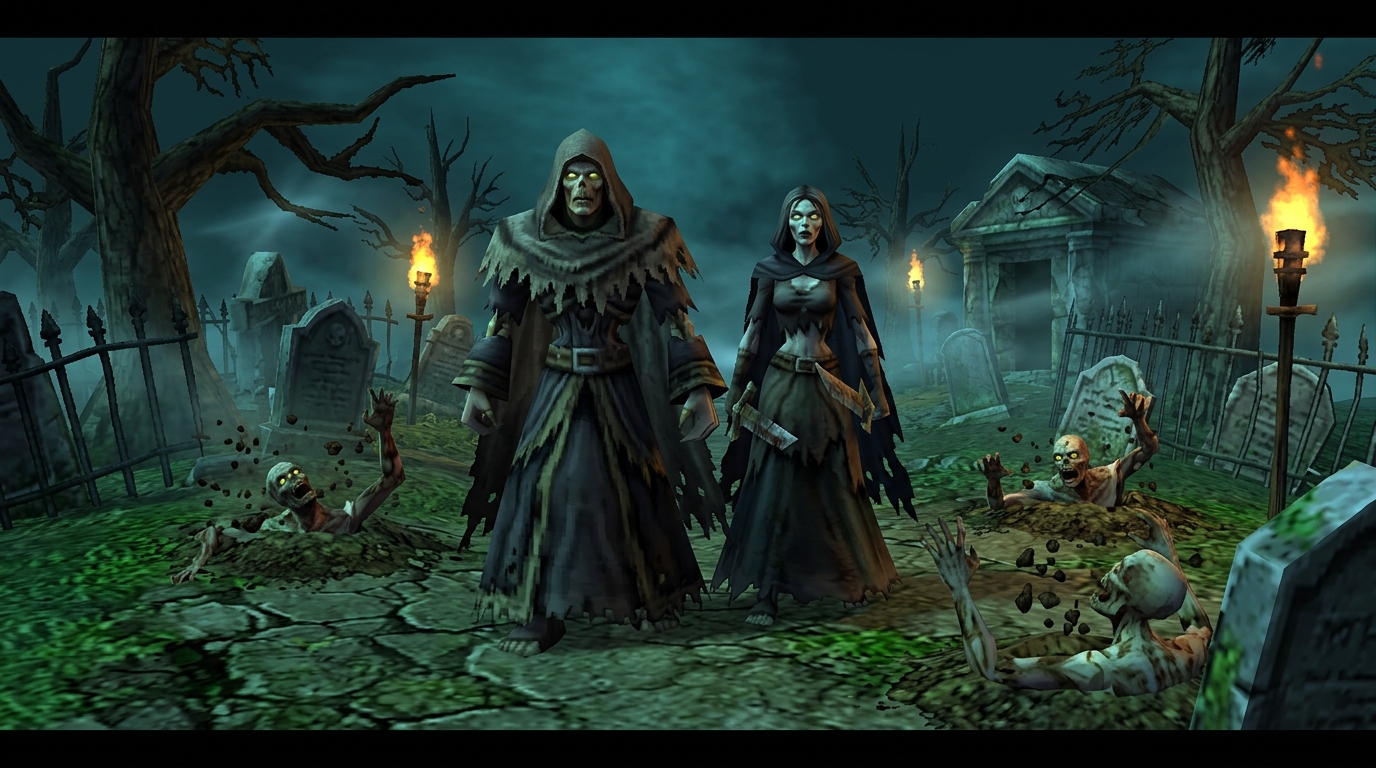
The main campaign hangs on two protagonists, and they’re the reason the story has a face. Garek Bandarion is a newly risen Forsaken warrior, which means he has just woken up dead and is already expected to pick a side. Dark Ranger Anya is the other lead, and the two of them are the characters you spend the most time with as the story moves forward.
The plot follows Garek and Anya while the Forsaken establish the Undercity and join the Horde. That’s a big assignment for two people. The Undercity isn’t just a location on the map. It’s where a scattered group of undead has to become an organized society, and the campaign puts the two leads at the center of that process.
Here’s the honest part. The story is about the Forsaken as a faction, not about Garek or Anya as individuals. The two of them are lenses. They let the plot show you what the Forsaken want, what they fear, and how they fit into the Horde. That’s a useful approach for a faction that has been a side note for most of the franchise’s history.
Garek works best as an everyman. He’s a soldier who didn’t get a vote on his resurrection, and that gives you an easy way into a world built on tragedy. You don’t need a lore encyclopedia to understand why he’s angry, confused, or determined to make the best of a bad deal.
Anya has a harder job. As a Dark Ranger, she has to represent the faction’s history and its present at the same time, and the story leans on her to explain how the Forsaken think about their own existence. When that works, she’s the sharpest voice in the campaign. When it doesn’t, she sounds like someone handed the exposition and told to deliver it with a straight face.
So do they carry the story? Mostly, yes. They don’t carry it because they’re deeply written individuals. They carry it because the campaign has a clear goal, and the two of them are the vehicles for that goal. Warcraft has a long habit of making its lore louder than its people, and Garek and Anya are a reminder that a good story needs both. Whether they’re memorable enough to outlast the Undercity’s ruins is a question the campaign doesn’t fully answer.
A Rexxar-Style RPG Campaign Instead of Another Linear Run
Here’s the change that matters most. Blizzard calls the main campaign a soft-open, single-player RPG structure, and it openly borrows from the Rexxar campaign in The Frozen Throne. That’s a bigger swing than most players expect from a series that has spent two decades refining the same mission formula.
Rexxar’s campaign was the odd one out back in 2003. Instead of marching from objective to objective, you moved through a world, collected gear, and built a hero who could handle what came next. It played less like a string of battles and more like a role-playing game with a strategy game’s bones underneath. Forsaken Kingdom points back at that experiment, which suggests Blizzard still thinks it worked.
The campaign rests on three pillars: exploration, an expanded inventory, and a talent system. Exploration means the map is no longer a corridor with a fancy name. An expanded inventory gives you a reason to care about loot. A talent system means your choices shape how your heroes grow instead of following a fixed checklist. The announcements don’t go deep on how those systems connect, so the proof will be in the playing.
Here’s why this matters. A standard RTS mission is a closed box. You know the objective, you know the enemy, and you know roughly how long it takes. Forsaken Kingdom opens the box and asks you to wander around inside it, which is an ambitious idea for a franchise known for tight, timed scenarios.
Now the risk. If you loaded up Warcraft III for a clean sequence of missions, a build order, and a clock ticking in the corner, a wandering campaign may feel like someone swapped your sports car for a minivan. Exploration eats time that a mission-based campaign would never ask for. Inventory management is a chore if you came for the battles.
Talent choices carry their own danger. Pick the wrong path early and you could be stuck with a hero who is great at the wrong job when the story throws a fight at you. Classic mission players rarely have to plan that far ahead, and some will hate being asked to.
The soft-open label is doing a lot of heavy lifting, too. It suggests the game leaves room for players to find their own way through the campaign. That’s appealing, but it also means the difficulty and pacing depend on how well the design holds together when you stop following a straight path.
Still, nobody should write this off as a gimmick. A story that asks you to explore the Forsaken’s rise, rather than just complete its checkpoints, is more interesting than another round of linear missions. The question is whether Blizzard can make wandering feel like progress instead of padding. If the answer is yes, the old-school fans who wanted a strict campaign may find themselves enjoying a different kind of Warcraft III entirely.
Patch 3.0 Adds Graphics Upgrades and a New Multiplayer Hero
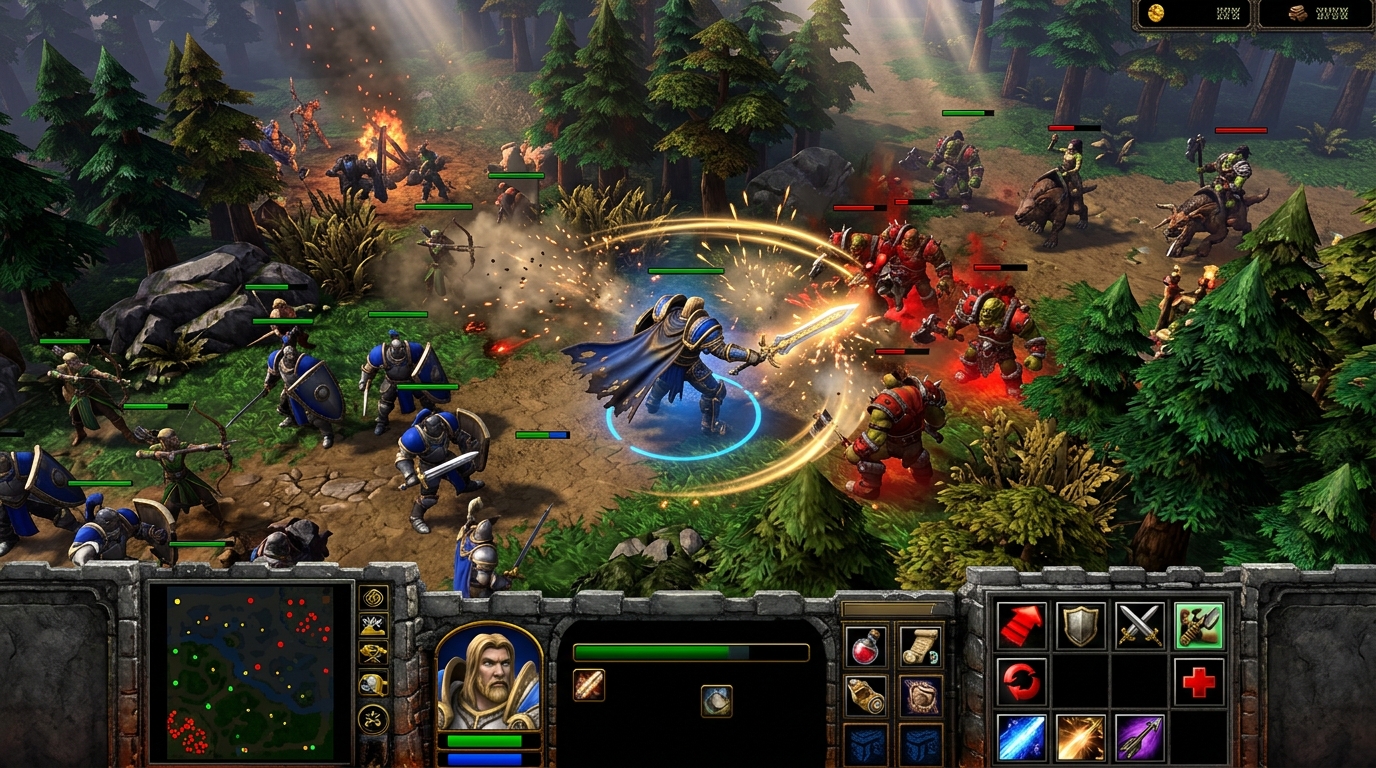
Patch 3.0 is the quieter half of this update, and it changes how the game looks and plays. Blizzard says its optional Definitive Edition graphics mode updates more than 600 units, which means a long list of orcs, undead, and very unhappy peasants are getting a visual pass.
The mode is optional, which is the sensible choice. Players who like the current look can stay put, and players who want the upgraded models can switch over. It works with the new campaign and with existing Reforged content, so you don’t have to choose between the old maps and the new story.
Existing Reforged owners don’t pay extra for it either. Blizzard describes the Definitive Edition update as included at no additional cost for anyone who already has access to Reforged. In an industry that loves charging for extras, that’s a refreshing bit of restraint.
Then there’s the hero. Patch 3.0 adds the Forsaken Paladin, which Blizzard calls the first new Warcraft III hero in more than 20 years. Two decades is a long wait for a new name on the roster, and it’s the kind of detail that makes longtime players sit up and pay attention.
The paladin also comes at no additional cost in multiplayer. No paywall stands between you and a ladder match, so anyone who wants to try the new hero can do it without opening a wallet. Competitive players will start testing it for balance almost immediately, which means the first few weeks of lobbies will be full of people trying to break it.
The announcements don’t explain how the Forsaken Paladin fits against the existing heroes, so the real verdict will come from the matches themselves. Until then, the paladin is a fun addition with a price of zero, and that alone makes it easier to recommend than most DLC.
The graphics mode is a switch rather than a forced overhaul, so it’s worth checking the settings after the patch lands. If the upgraded models look good on your machine, you’ll get a fresh look at familiar battlefields. If they don’t, you can drop back to the standard visuals without losing access to anything else.
What Forsaken Kingdom Costs and What You Need to Play
Forsaken Kingdom is a standalone expansion, and Shacknews reported on September 12, 2026, that it was available for $29.99 USD. That figure is a reported price, not a sale run by GameRuckus. We cover what the game costs. We don’t sell it.
The expansion won’t run on its own, though. You need Warcraft III: Reforged to play it, so if you’re starting from scratch, the expansion is only part of the bill. Think of it as a second ticket to a show you still have to get into.
If you already own Reforged, the upgrade side is kinder to your wallet. The Definitive Edition update is included at no additional cost for players who already have access to Reforged, so the upgraded graphics mode doesn’t come with a surprise invoice. Nobody likes paying twice for the same pixels.
Here’s the short version:
- Standalone expansion price: $29.99 USD, as reported on September 12, 2026
- Requirement: Warcraft III: Reforged
- Definitive Edition update: no additional cost for existing Reforged owners
- Forsaken Paladin: no additional cost in multiplayer
The reported figures don’t include Reforged’s own price. If you don’t own the base game, check what it costs before you commit, and add that to the expansion’s price. Don’t assume the $29.99 is the whole cost of getting into the Forsaken’s story.
Is it worth the money? That depends on your appetite for a single, substantial campaign. Compare the price with what you’d pay for other story-driven games of similar length, then decide whether the Forsaken are worth it to you. Your wallet will have opinions, so let it vote. Just don’t let it veto the lore.
Real Comeback or Nostalgia Tap? What Comes Next
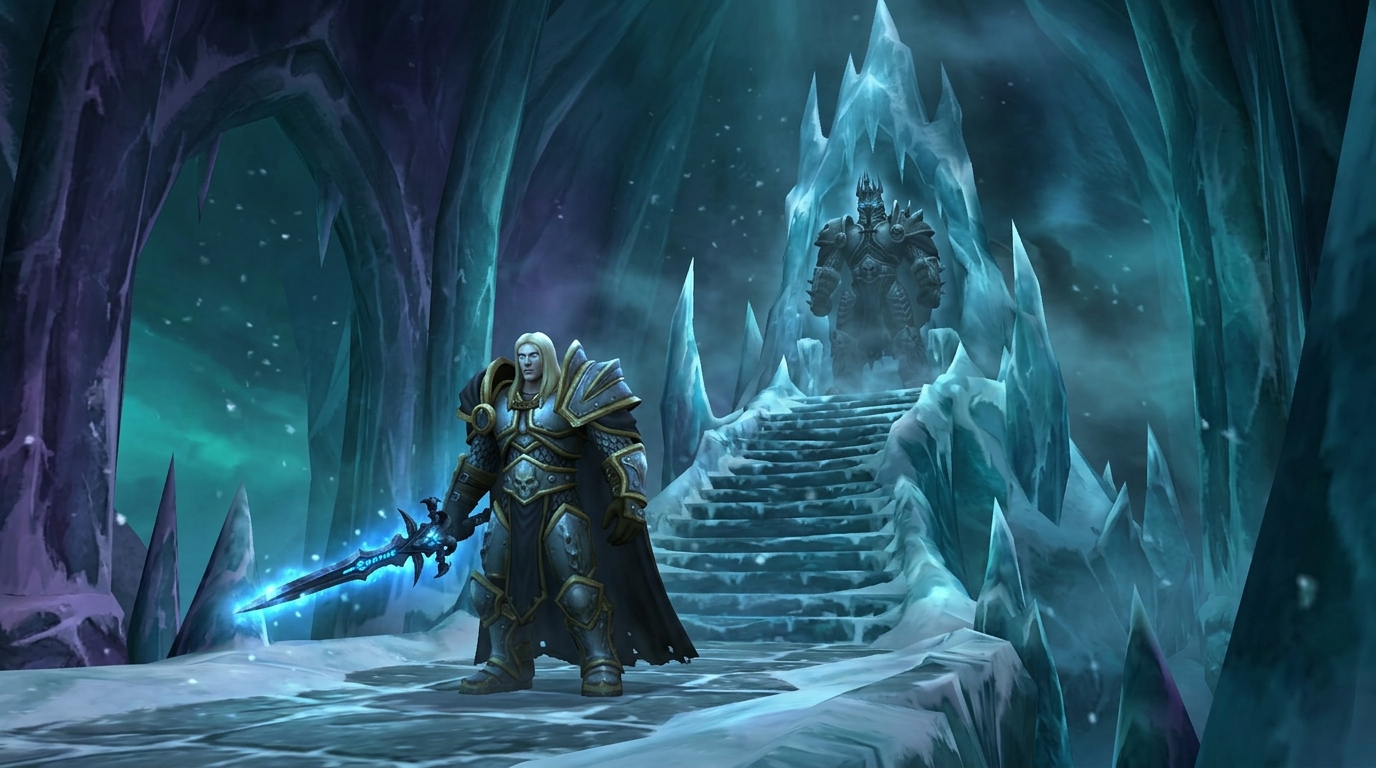
Here’s the honest answer to the big question. Forsaken Kingdom is more than a nostalgia tap because it pairs one substantial new campaign with Patch 3.0, and the patch changes more than the paint job. A pure nostalgia move would have been a graphics refresh and a bundle of old maps. This is a new story with new campaign mechanics, plus a new multiplayer hero.
That doesn’t mean the franchise has committed to anything beyond it. The announced coverage covers this single campaign, and no further Warcraft III story content has been confirmed. Anyone promising a steady drip of new missions is guessing. Blizzard hasn’t said whether the RPG structure will return or whether another campaign is in development, so treat that silence as silence, not as a yes.
Over the coming weeks, watch two things. The first is how players respond to the RPG structure. If people finish the campaign talking about exploration and talent choices, Blizzard has a reason to keep experimenting. If reviews say the wandering felt like padding and mission-focused players were left out in the cold, expect the next project to play it safe.
The second is any future story news. Big reveals tend to land at events and in official channels, so keep an eye on Blizzard’s Warcraft announcements for specifics: a named campaign, a release window, or a faction focus. Vague lines about “more to come” don’t count. Until a title and a date show up, it’s a rumor wearing a party hat.
The RPG shift may matter more than the story itself. A Warcraft III campaign built around growing your heroes suggests a different path for a series known for tight, timed scenarios. It hints at strategy games where your choices carry over from fight to fight, rather than resetting at every checkpoint. That’s a big if, and one campaign can’t prove it on its own. Still, it’s the first real sign in years that Blizzard is willing to rethink how its strategy games tell their stories, and that’s worth more than another anniversary skin.
Deciding Whether to Head Back to Lordaeron
Start with the cheapest question: do you already own Warcraft III: Reforged? If you do, the Definitive Edition update is included at no additional cost, so install Patch 3.0 and switch on the graphics mode. Then decide whether the upgraded models are worth a return trip to Lordaeron.
If you don’t own Reforged, add the base game to the $29.99 expansion price before you commit. Check the combined total on your storefront, because the expansion can’t run without it.
Next, judge the campaign by its opening, not its promise. Play the Last Days of Lordaeron prologue, the four missions with the Capital City Guard, and pay attention to whether the wandering feels like a reward or a detour. If you’re bored by the exploration and the inventory juggling early on, you’ll know before you’ve sunk real hours into the three main chapters.
Players who want a free test can queue up the Forsaken Paladin in multiplayer, since it costs nothing there. Play a few matches and see whether a new hero earns a place in your rotation, or whether you miss the old lineup too much to care.