
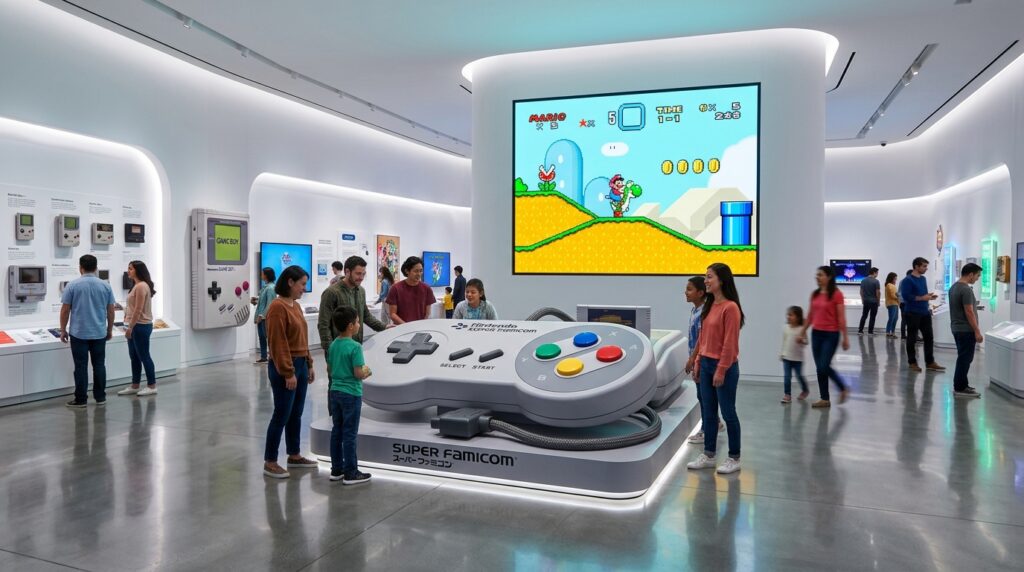
Nintendo finally stopped playing hard to get and opened the doors to its past at the renovated Uji Ogura Plant in Kyoto. This isn’t some dusty corporate archive; the Nintendo Museum exhibits are a full-blown pilgrimage through 135 years of playing cards, weird strollers, and the consoles that defined our childhoods. It’s basically a chapel built on the site where they used to fix our broken Famicoms, and frankly, it’s about time they leaned into the nostalgia.
The layout is refreshingly blunt, ditching the usual museum fluff for a “Learn, Experience, Create” setup that actually respects your time. You can gawk at original Zelda sketches on the second floor or realize just how many bizarre gadgets they tried to sell us before Mario became a household name. It’s a rare look behind the curtain at a company that usually keeps its secrets locked tighter than a Bowser castle.
Key Takeaways
- The Nintendo Museum prioritizes a ‘Learn, Experience, Create’ philosophy that lets the physical evolution of hardware and original design sketches tell the company’s 135-year story without corporate PR or dense text.
- Interactive exhibits, such as room-sized controllers requiring two players to operate, celebrate Nintendo’s history of experimental gimmicks by turning past hardware into oversized, collaborative challenges.
- The museum honors Nintendo’s 1889 origins as a gambling supply company by offering hands-on workshops where visitors craft traditional Hanafuda playing cards using historical techniques.
- Located at the renovated Uji Ogura Plant in Kyoto, the facility serves as a high-end shrine that balances a curated ‘victory lap’ of the brand’s legacy with rare access to its developmental DNA.
A Hoarder Dream In The Historical Gallery
Stepping onto the second floor of the Nintendo Museum feels like walking into the vault of a high-end digital hoarder who happens to have impeccable taste and zero interest in explaining themselves. The gallery is a concentrated hit of nostalgia that ditches the typical museum fluff in favor of letting the hardware do the talking. You will find every single console, handheld, and peripheral the company has ever birthed, ranging from the legendary Famicom to the weirdly specific Mamaberika stroller. It is a massive, silent flex that proves they have been weird and experimental since long before we were born. By stripping away the usual placards and dense history lessons, they have created a space where the plastic and silicon tell the story of a company that refuses to follow anyone else’s rules.
The minimalist design is a bold move that essentially tells visitors to look at the objects and figure out the greatness for themselves. There are no long-winded descriptions explaining why the Virtual Boy was a headache-inducing disaster or why the Game Boy changed the world, because the physical evolution of the tech is visible right in front of you. This hands-off approach is actually brilliant because it treats the audience like they have a brain instead of spoon-feeding them corporate PR. You get to see the transition from Hanafuda cards to primitive electronic toys and eventually to the Switch without a single marketing buzzword getting in the way. It is a rare moment of a giant company letting its legacy stand on its own merits, even the parts that are gloriously strange.
Seeing these items in person highlights just how many risks they took before finding the winning formula that defines modern gaming. You can track the DNA of your favorite franchises through original Zelda sketches and development materials that look like they were pulled straight from a designer’s desk. The Art Gallery section is a gold mine for anyone who wants to see the rough edges of icons like Mario or Link before they were polished for global consumption. It is refreshing to see a brand curate its history by showing the actual “stuff” rather than just showing a timeline of sales figures and milestones. This is a chapel for the gearheads and the curious, proving that sometimes the best way to tell a story is to just show the receipts.
Giant Controllers And Modern Twists On Classics
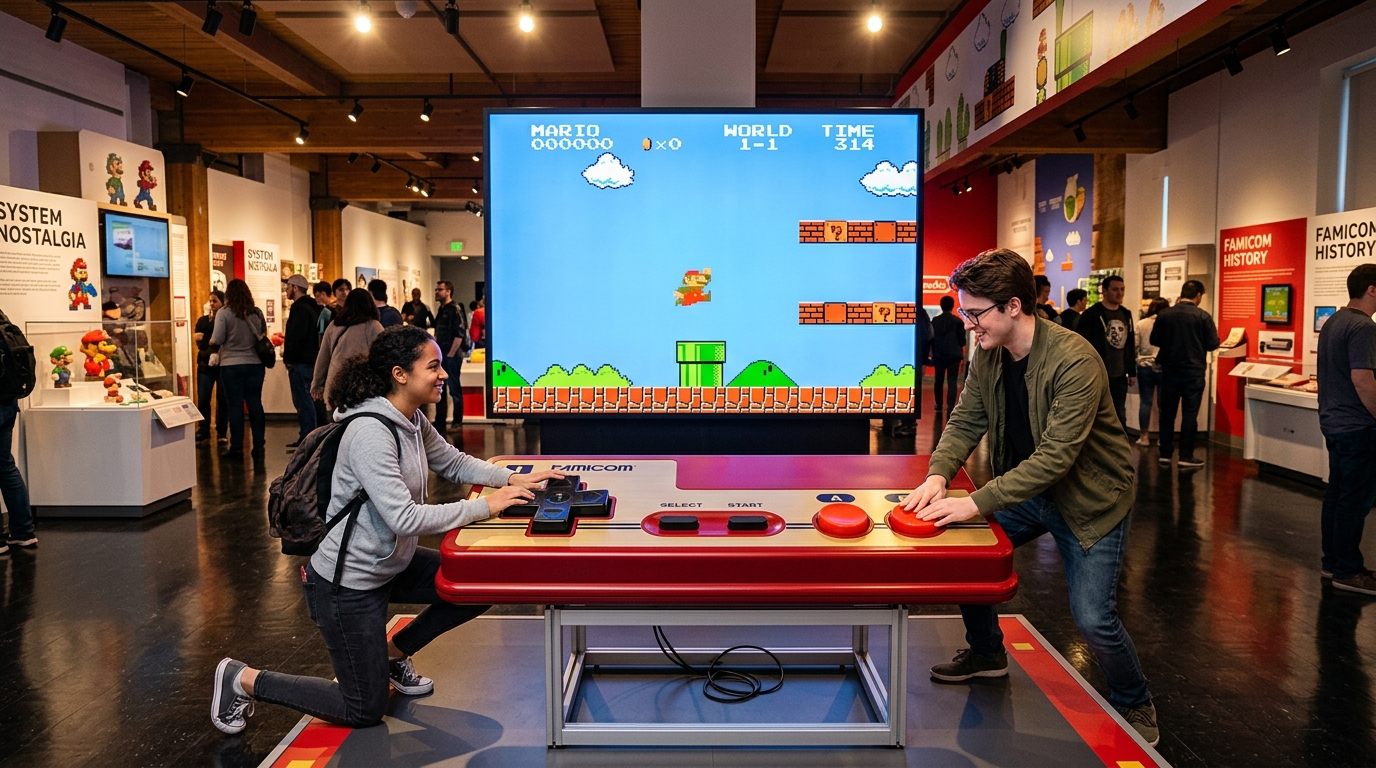
The interactive floor of the Nintendo Museum is essentially a fever dream designed by someone who thought the only thing missing from the Wii era was a crippling case of back strain. The highlight, if you can call it that, is the collection of room-sized controllers that require two fully grown adults to operate a single game of Super Mario Bros. Watching a pair of tourists struggle to jump over a Goomba because they had to physically body slam a D-pad the size of a coffee table is the kind of high-quality entertainment money usually can’t buy. It is a hilarious testament to Nintendo’s obsession with gimmicks, proving that while their legacy is built on precision, they are perfectly happy to let you look like a flailing idiot in the name of nostalgia.
If you manage to survive the surfboard-sized Wii Remote without throwing out your shoulder, the Zapper and Super Scope shooting gallery offers a much more polished thrill. This isn’t just a dusty CRT television in a basement, as the museum has scaled the experience up into a massive, high-tech theater where you blast away at digital targets with surprising accuracy. It feels like the ultimate version of the arcade dreams we had in the nineties, finally realized with hardware that actually works. There is a certain irony in seeing a company so protective of its family-friendly image dedicate an entire section to light-gun carnage, but it is easily the most addictive “modern twist” in the entire building.
The brilliance of these exhibits lies in how they manage to roast the company’s own history while simultaneously celebrating it. You get the sense that the designers knew exactly how absurd some of these peripherals were, so they leaned into the madness by making them even more impractical. It is a refreshing departure from the usual corporate self-congratulation found in most brand museums. Instead of just looking at plastic behind glass, you are forced to grapple with the physical reality of Nintendo’s design evolution, even if that reality involves losing a game of Tetris because your partner didn’t move a giant block fast enough.
Crafting Hanafuda Cards At The Uji Plant
The Nintendo Museum is housed in the renovated Uji Ogura Plant, a location that served as the literal heartbeat of the company back when they were churning out physical playing cards instead of digital plumbers. While the flashy consoles on the upper floors get all the glory, the ground floor workshops are where you actually get your hands dirty with the company’s 1889 origins. Nintendo is essentially forcing you to acknowledge that they were a gambling supply company long before they were a toy giant, and they do it through a surprisingly charming Hanafuda card-making class. It is a clever way to curate their legacy, reminding us that even if their modern hardware occasionally drifts into gimmick territory, their foundation was built on tangible, high-quality craftsmanship.
Getting into the “Create and Play” section feels like a mandatory history lesson that you actually want to attend, mostly because you get to fold and paste your own set of cards. You are not just looking at a dusty deck behind a glass case; you are using the same basic techniques that Hiroshi Yamauchi’s ancestors probably used to keep the lights on. It is a refreshing break from the usual corporate sanitization of history where companies pretend they were born perfect. Here, Nintendo leans into the fact that they spent decades making paper products for people to lose their money over, and they want you to appreciate the texture of that history one card at a time.
The workshop is a blunt reminder that Nintendo has always been about “play” in its most basic, tactile form, even if the modern version involves a lot more firmware updates. You can choose to paint your own cards or simply assemble them, which is perfect for those of us who lack the artistic talent of a Miyamoto but still want a souvenir that isn’t a cheap plastic keychain. It is the ultimate flex for a platform holder to turn a former factory into a chapel of nostalgia while making the fans do the manual labor. It works because it connects the dots between a deck of flower cards and a Joy-Con, proving that while the tech changes, the desire to sell us colorful experiences has been there since day one.
A High-End Shrine to Nintendo’s DNA
Ultimately, the Nintendo Museum feels less like a sterile corporate archive and more like a high end shrine built for the faithful. While the price of admission and the trek to Uji might seem like a lot for a walk down memory lane, the level of polish in the historical gallery is genuinely impressive. It is a rare treat to see the company acknowledge its weird, non gaming roots with the same reverence it gives to a pristine Famicom. You are paying for the privilege of seeing the DNA of your childhood laid out in a way that feels both deliberate and surprisingly personal.
Whether this is a mandatory pilgrimage or a fancy gift shop experience depends entirely on your tolerance for Nintendo self-mythologizing. If you are the type of person who finds joy in seeing the evolution of a d-pad or the original sketches of a Koopa Troopa, you will get your money’s worth. The interactive experiences add a layer of fun that keeps the atmosphere from feeling too much like a dusty library. It is undeniably a calculated move to solidify their legacy, but they have executed it with enough charm to make you forget you are essentially paying to look at old advertisements.
If you are looking for a gritty, unbiased look at video game preservation, you probably will not find it within these renovated factory walls. This is a curated victory lap that skipped the embarrassing failures in favor of a polished narrative of innovation. However, for the average fan who just wants to stand in the presence of greatness and maybe play an oversized Wii Remote, it is a blast. It is a polished, expensive, and deeply nostalgic experience that proves Nintendo knows exactly how to pull at our heartstrings while reaching for our wallets.
Frequently Asked Questions
1. Where exactly is this Nintendo shrine located?
The museum is built right into the renovated Uji Ogura Plant in Kyoto. It is a poetic choice because this is the exact site where they used to manufacture playing cards and repair your busted Famicom consoles.
2. Is it just a bunch of boring plaques and corporate history?
Not even close. The layout ditches the dry museum fluff for a Learn, Experience, and Create setup that values your time. It is a rare look behind the curtain at a company that usually treats its secrets like state intelligence.
3. What kind of weird stuff is in the Historical Gallery?
You will find every piece of hardware they have ever birthed, including the legendary consoles and the bizarre Mamaberika stroller. It is a massive flex of their 135 year history that proves they have been experimental weirdos since long before you were born.
4. Does the museum explain why some of their inventions failed?
No, and they do not care to. The minimalist design lets the hardware do the talking without long-winded descriptions or apologies for things like the Virtual Boy. You are expected to look at the objects and figure out the greatness, or the madness, for yourself.
5. Can I see original concept art for games like Zelda?
Yes, the second floor houses original sketches and design documents that are usually locked in a Bowser castle. It is a hoarder’s dream come true for anyone who wants to see the DNA of the franchises that defined their childhood. Even cult classics are represented, though F-Zero GX fans are still waiting for their favorite high-speed racer to return to the spotlight.
6. Is it worth the trip for a casual fan?
If you have even a passing interest in how plastic and silicon turned into a global obsession, then yes. It is a concentrated hit of nostalgia that respects the hardware enough to let it stand on its own two feet. While the physical museum is a physical archive, many fans still feel that the Nintendo Switch Online library is the most accessible way to experience this history, even with its limitations.