Let’s be honest about that sweaty piece of plastic currently clamped to your skull like a torture device from a budget sci-fi movie. You bought it because the box promised virtual surround sound and had enough RGB lighting to land a plane, but now your ears are boiling in their own juices. That standard closed-back design is essentially sealing a pair of cheap drivers against your head and praying the bass rattles your teeth enough to distract you from the muddy audio. It creates a vacuum where sound waves bounce around chaotically before dying a sad death against a wall of faux leather. You probably think this is what audio is supposed to sound like, but you have actually just developed a severe case of Stockholm syndrome with your peripheral.
Open back headphones are exactly what they sound like, which is a rare instance of truth in hardware marketing. Instead of sealing the driver inside a plastic tomb, the back of the ear cup is left wide open to let air and sound pass through freely. This design prevents pressure build-up and stops low frequencies from accumulating into a headache-inducing hum that drowns out subtle details. Think of it as opening a window in a stuffy room rather than trying to circulate air in a sealed submarine. The result is audio that actually breathes, giving your games a sense of space that feels unsettlingly realistic compared to the underwater muffling you are used to.
The Cheese Grater Ear Cup Design
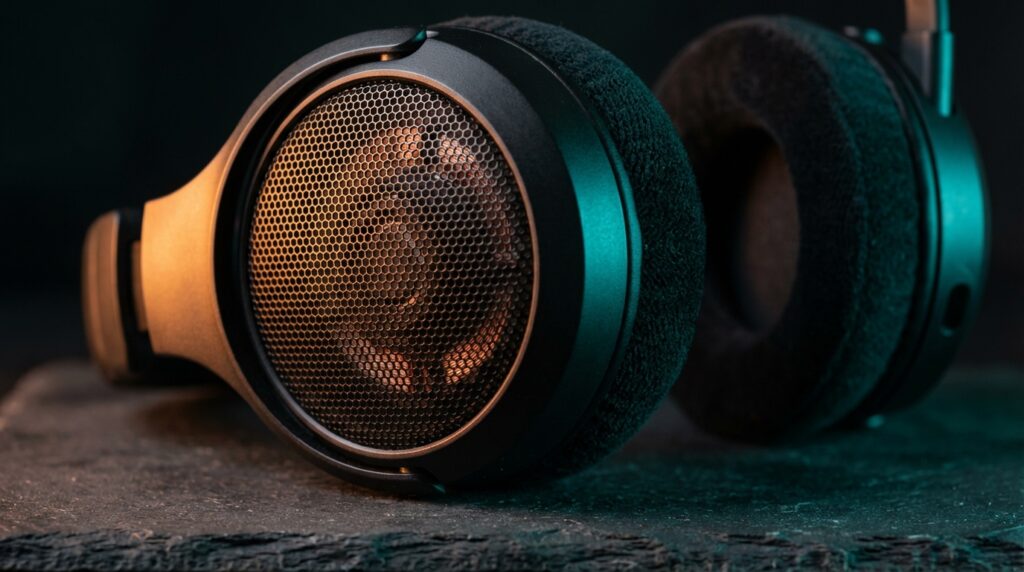
If you look at the side of these headphones, you might think you accidentally bought a high-end strainer from Williams Sonoma. That perforated mesh or grill isn’t just there to make you look like a Cyberman from a low-budget sci-fi show. Manufacturers punch hundreds of holes in the ear cups to let the drivers breathe freely instead of suffocating them in cheap plastic. It looks weird to the uninitiated, but that open design is the secret sauce for actual audio fidelity. You are basically wearing a screen door on your head, but trust me, it is a necessary fashion crime.
By removing the solid barrier behind the driver, sound waves can escape into the room rather than bouncing back into your ear canal like a confused echo. This prevents that muddy, claustrophobic resonance that makes standard gaming headsets sound like you are listening to music underwater. It also means your ears won’t turn into a swampy biological hazard zone after a three-hour raid. Air actually circulates through those cheese grater holes, keeping your head cool while the audio stays crisp. You are trading isolation for basic hygiene and superior physics, which is a trade I will take any day of the week.
Audio Wallhacks via Soundstage Expansion
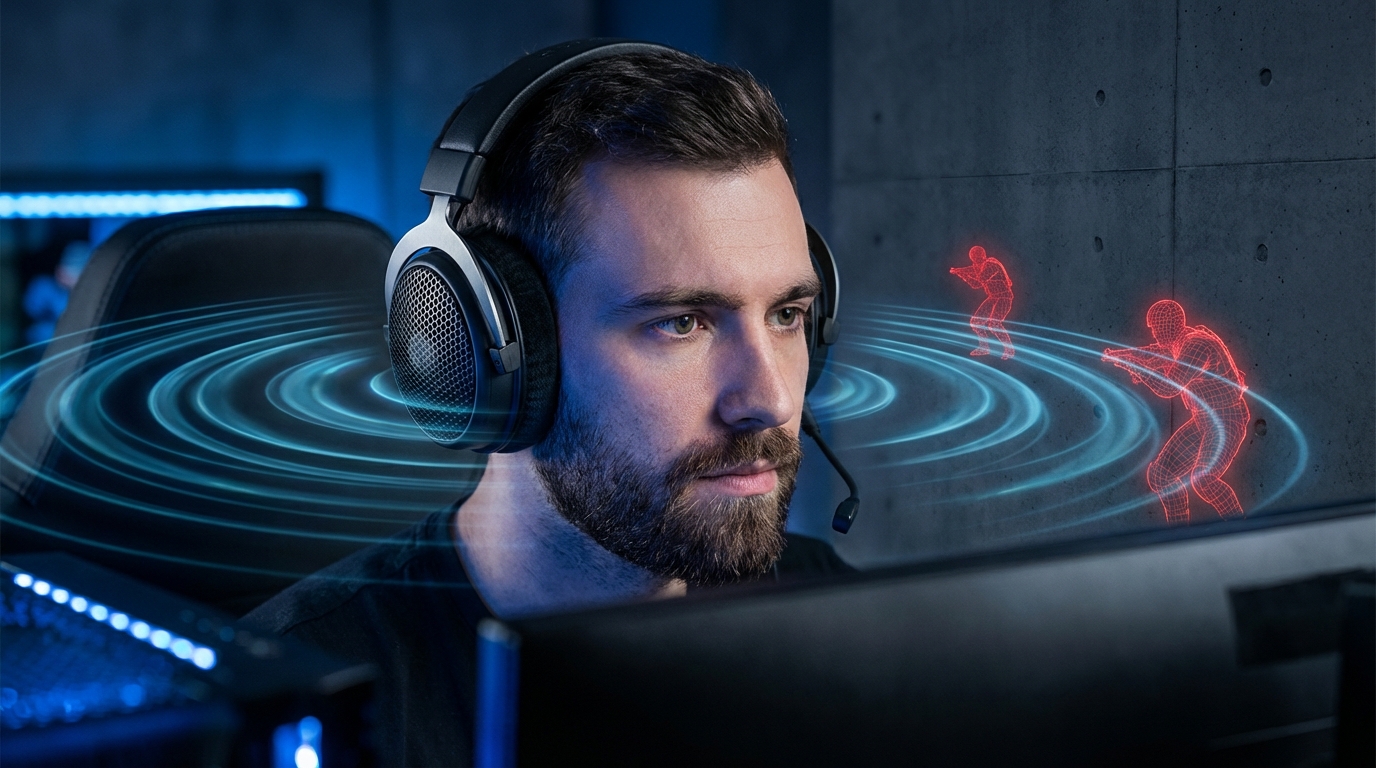
Most gaming headsets jam sound directly into your brain stem like you are wearing a fishbowl on your head. Open back headphones let the audio breathe, creating a soundstage that feels less like a claustrophobic closet and more like an actual room. This expansion gives you a ridiculous advantage that borders on legal cheating. Instead of wondering if that reload sound came from left or right, you can pinpoint the exact coordinate of the enemy trying to flank you. It is basically an audio wallhack that lets you track targets through solid concrete before they even pop onto your screen.
The air flowing through those perforated grilles allows specific sounds to separate rather than turning into a muddy mess of bass and gunfire. You will hear the crunch of boots on gravel three lanes over while a grenade goes off next to your face. This level of separation means you aren’t just reacting to what is in front of you, but mapping the entire server in your head. While your teammates are running around like headless chickens, you are pre-firing a corner because you heard a weapon switch from a mile away. It turns a chaotic firefight into a calculated game of whack-a-mole where you are the only one with a mallet.
Zero Isolation and The Privacy Nightmare
If you value your dignity or have roommates, open back headphones might be a social death sentence. Because there is no solid plastic shell sealing the sound in, your audio bleeds out into the room with crystal clarity. This means your roommate, your mom, or your significant other will hear every single line of dialogue from that questionable dating sim you are playing. There is absolutely nowhere to hide when the vents on your ear cups act like mini speakers broadcasting your shame to the world. You have to accept that audio privacy is a luxury you surrendered the moment you bought audiophile gear.
The lack of isolation creates a two-way street that ruins your immersion just as effectively as it ruins your privacy. Since air flows freely through the cups, you are going to hear everything happening in your house and probably the neighbor’s house too. That mechanical keyboard you love so much will suddenly sound like a construction site right next to your ear drums. If a dog barks three streets over, you are going to hear it clearly enough to identify the breed. It forces you to play in a silent bunker unless you want your competitive matches interrupted by the sound of the dishwasher.
The Missing Sub-Bass Thump

If you are addicted to that head-shaking rumble that makes your teeth chatter every time a grenade goes off, prepare for a withdrawal symptom or two. Open back headphones intentionally let air escape through those cheese-grater grills, meaning the air pressure never builds up enough to physically assault your eardrums. You simply will not get that muddy, overwhelming boom that generic gaming brands use to mask their terrible mid-range tuning. It might feel thin at first, like switching from a diet of pure corn syrup to actual vegetables. However, once you adjust, you realize that hearing the actual audio cues is infinitely better than having your head inside a vibrator.
That skull-rattling bass you think you love is actually the enemy of competitive performance. When a tank explodes next to you in a closed-back headset, the low-end frequencies stick around like a bad houseguest and drown out everything else. With open backs, the bass hits fast and decays instantly, leaving room for the high-frequency sounds that actually matter. You trade the cinematic thud for the ability to hear a ninja defusing the bomb while an airstrike is happening outside. It turns out that hearing the distinct click of a reloading clip is worth sacrificing the feeling of an earthquake in your ear canal.
Oh Great Now You Need An Amp
So you finally dropped three hundred dollars on a pair of Sennheisers expecting to hear the angels sing, but the reality is going to hit you harder than a lag spike. Instead of audio nirvana, you plugged them in and realized the volume maxed out at a polite whisper because nobody warned you about high impedance. Audiophile gear loves power the way a loot box mechanic loves your credit card info, and most legitimate open back headphones are thirsty beasts. These cans usually demand way more electrical juice than your standard headphone jack can provide to move those drivers properly. If you think you are done spending money just because you bought the headset, you are painfully mistaken.
Plugging a high-impedance headset directly into your PS5 controller is basically an insult to the engineering that went into the hardware. That tiny DualSense battery is struggling enough to keep the haptic feedback alive without trying to drive studio-grade magnets at the same time. You end up with muddy audio that lacks dynamic range, defeating the entire purpose of buying open backs in the first place. It is the audio equivalent of buying a 4090 graphics card and hooking it up to a 720p monitor from a pawn shop. Your teammates might be screaming at you to rotate, but you won’t hear them because your expensive cans are underpowered and sad.
To actually hear what you paid for, you are going to need a dedicated amplifier or a DAC unit sitting on your desk. This adds another ugly box to your setup and creates a cable management nightmare that will make you question your life choices. Suddenly your simple gaming session involves turning on knob after knob just to get sound into your ears. The difference in audio quality is undeniable, but your wallet is going to hate you for falling into this trap. Welcome to the rabbit hole, where perfect audio is always just one more expensive accessory away.
You Need A Silent Bunker For Open-Backs
Let’s strip away the audiophile vocabulary and look at your actual living situation to see if you qualify for this gear. If you dwell in a silent bunker where the only noise is the hum of your PC, open-back headphones are the upgrade you desperately need. The competitive advantage of hearing distinct footsteps without the muddy echo of a closed cup is worth every penny. However, this pristine audio experience falls apart the second a roommate turns on a blender or a neighbor decides to mow their lawn. You are paying for transparency, which means the real world is going to bleed into your immersion whether you like it or not.
Stick to your sweaty leatherette buckets if you need your skull to vibrate every time a grenade goes off nearby. Open-back cans refuse to trap air pressure against your head, meaning you lose that artificial thump that cheap gaming headsets use to mask terrible audio quality. It takes a refined palate to appreciate clarity over raw power, and frankly most of you probably aren’t ready to give up your muddy bass boost. Once you adjust to the natural sound profile, going back to closed headphones feels like stuffing cotton balls in your ears while underwater. You have to decide if you want to actually hear the game or just feel it rattling your molars.
Buying open-back headphones is an admission that your gaming environment is as controlled and lonely as a laboratory. They are superior pieces of hardware that demand a dedicated quiet space that most normal people simply do not possess. If you can guarantee silence, these will legally give you wallhacks for your ears and make your current headset look like a child’s toy. For everyone else living in the chaotic real world, save your money and keep sweating inside your noise-canceling clamps. Just don’t complain to me when you get flanked by an enemy you couldn’t hear over your own muffled bass.