
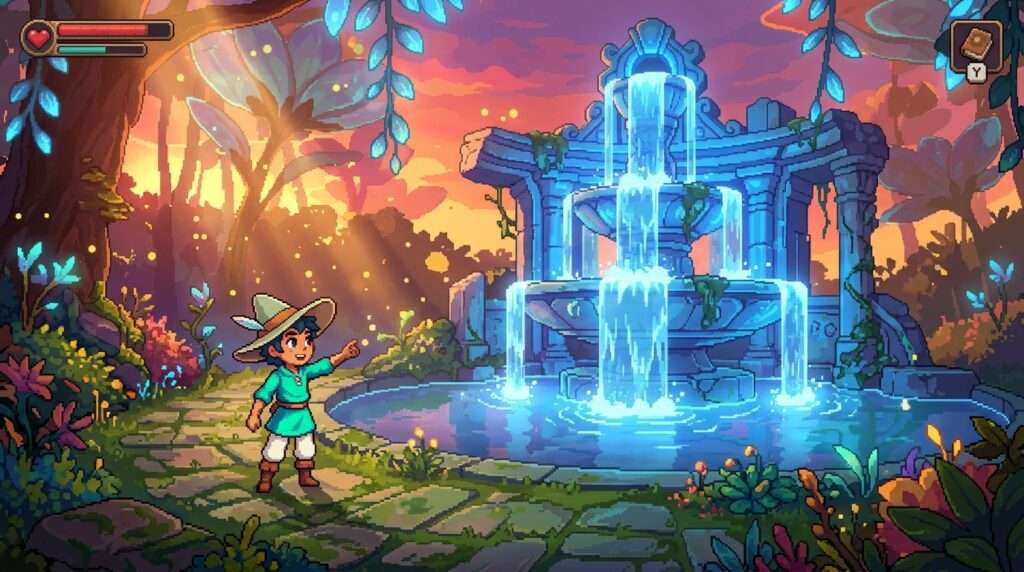
Urban regeneration usually sounds like a corporate buzzword for “we’re putting a concrete bench here,” but this indie spotlight is actually making things interesting for once. Instead of the same tired fountain designs that look like they were pulled from a 1990s mall, this initiative is handing the keys to independent designers who actually know how to use water as a medium. We’re talking about sustainable tech and interactive splash pads that don’t just sit there looking pretty, they actually function without draining the planet dry.
It’s about time someone shone a light on the grassroots creators who are treating public art like a high-stakes engineering challenge rather than a hobby. These bespoke architectural features are proving that you don’t need a massive corporate budget to fix a boring city square; you just need a designer who isn’t afraid to get their hands wet. If you’re tired of seeing the same stale environments, these indie projects are the refreshing slap in the face the industry desperately needed.
Key Takeaways
- Independent designers are outperforming corporate studios by prioritizing deep, systemic fluid physics and sustainable engineering over shallow, photorealistic aesthetics.
- The project transforms urban landscaping into a high-stakes technical challenge, requiring players to master complex variables like pressure, surface tension, and viscosity.
- Hand-painted artistry and bespoke architectural features prove that a cohesive creative vision is more impactful and hardware-efficient than billion-dollar corporate budgets.
- Public art and fountain restoration serve as a brutal but rewarding puzzle genre that respects player intelligence by rejecting the hand-holding common in mainstream titles.
Master the Flow of Liquid Physics Gameplay
While AAA developers are busy obsessing over realistic horse physics or making sure every individual blade of grass reflects the sun, the team behind this project actually bothered to innovate where it counts. Their liquid physics system is a masterclass in fluid dynamics that manages to feel tactile and weighty rather than just looking like a shiny, pre-rendered mess. You aren’t just watching water flow through a pipe, you are manipulating pressure, surface tension, and viscosity to solve puzzles that would make most modern game engines crumble into a pile of stuttering frames. It is a rare case of a small studio outperforming the giants by focusing on deep, systemic mechanics instead of just slapping a high-resolution texture on a flat surface. Watching a complex fountain system spring to life under your control provides a level of satisfaction that no scripted cinematic sequence could ever hope to match.
The brilliance of the gameplay lies in how it treats water as a physical tool rather than a decorative background element. You have to account for gravity and momentum in ways that feel intuitive yet challenging, forcing you to think like an actual engineer rather than someone just clicking through a checklist. Whether you are redirecting a massive urban splash pad or fine-tuning a bespoke architectural feature, the game demands a level of precision that is honestly refreshing in an era of hand-holding tutorials. Most big-budget titles treat environmental interaction as a suggestion, but here, the fluid is the star of the show and it behaves with a terrifyingly accurate consistency. It is the kind of technical achievement that reminds you why we play games in the first place, proving that a clever idea executed with passion beats a hundred-million-dollar marketing budget every single time.
If you are tired of the same three gameplay loops being repackaged every year, this indie gem is the wake-up call the industry desperately needs. It takes the concept of urban landscaping and turns it into a high-stakes puzzle game where a single misplaced valve can ruin your entire hydraulic masterpiece. There is a raw, unpolished honesty to the way the water reacts to the environment, showing off ripples and splashes that feel earned rather than faked. It is blunt, it is difficult, and it is unapologetically focused on making you master its complex systems. While the mainstream outlets are busy chasing the next live-service trend, you should be busy figuring out how to balance the flow rate of a multi-tiered fountain without flooding the virtual plaza.
Exploring the Lush Hand-Painted Garden Aesthetic
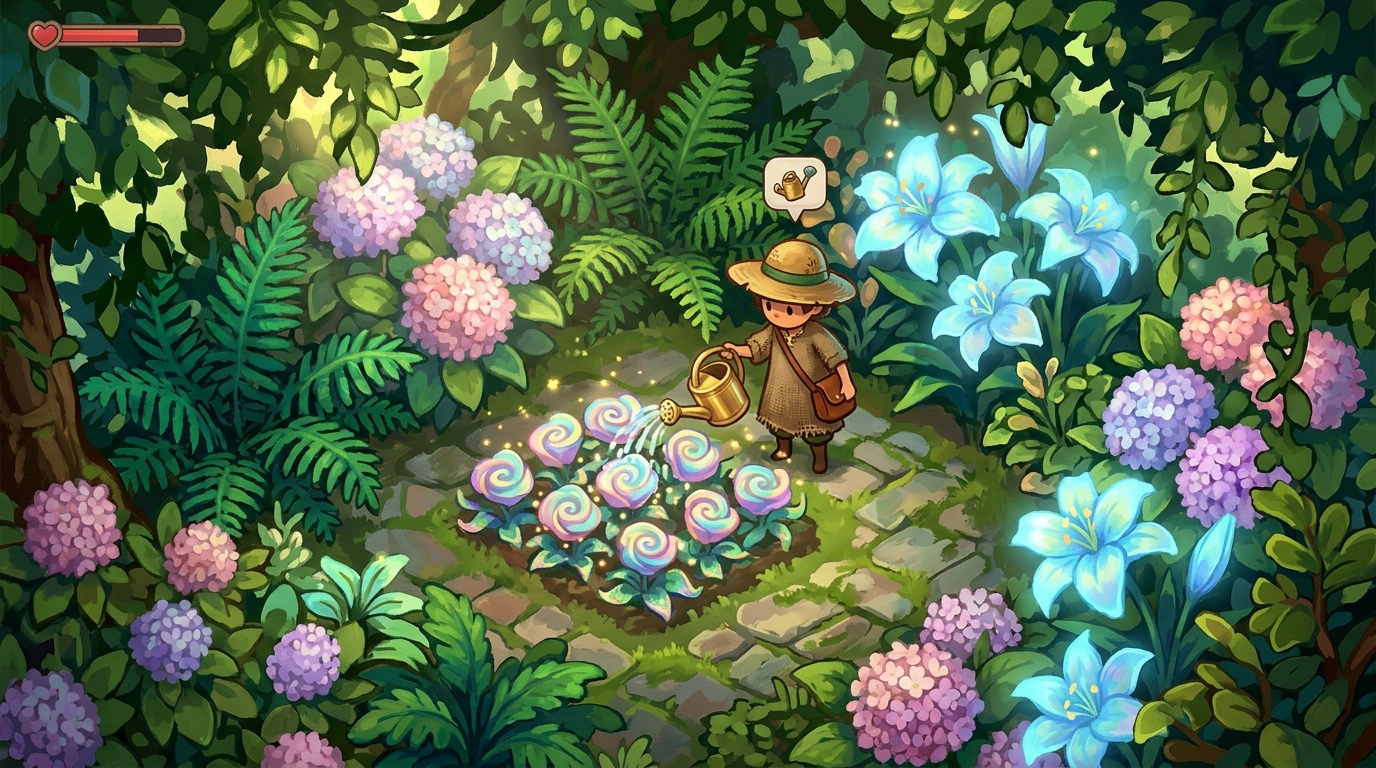
While the triple-A industry is currently obsessed with chasing photorealistic pores and hyper-detailed gravel, this project proves that actual artistry beats a billion-dollar budget every single time. This game doesn’t just feature a garden, it presents a living, breathing canvas where every leaf and petal feels like it was placed by a human hand rather than an automated algorithm. The developers have managed to capture a sense of depth and atmosphere that makes those massive corporate open worlds look like sterile, plastic playgrounds. It is honestly embarrassing for the big studios that a small team can produce a visual identity this cohesive and striking without needing a server farm to render it. I spent more time staring at the way the light filters through the digital canopy than I have spent looking at any “next-gen” facial animations this year.
The secret sauce here is clearly the water feature tech and sustainable landscaping logic that anchors the entire aesthetic. Instead of just plopping down generic blue textures, the team utilized bespoke architectural features that make the central fountains feel like the beating heart of the environment. Every splash and ripple reacts with a level of intentionality that highlights how lazy mainstream environmental design has become lately. It is refreshing to see a game where the scenery isn’t just a backdrop for a repetitive combat loop but is actually the main event. If you are tired of gritty brown shooters and want to see what happens when developers actually care about color theory and composition, this is the blueprint.
What really kills me is how this indie gem manages to be technically impressive without making my hardware scream for mercy. The hand-painted textures provide a level of charm and personality that you just cannot get from scanning real-world rocks into a computer. By focusing on a specific, lush vision of urban regeneration and public art, the creators have built a world that feels both fantastical and grounded. It is a masterclass in style over raw processing power, proving that a clear creative direction is worth more than a thousand outsourced art assets. This is the kind of innovation the industry needs more of, even if the suits at the top are too busy counting their microtransactions to notice.
Navigating the Brutal Difficulty of Fountain Restoration
Most modern games treat you like a fragile toddler, terrified that a single setback will make you uninstall and go back to scrolling social media. These indie titles throw that hand-holding out the window, especially when you are tasked with the brutal reality of large scale water feature restoration. You aren’t just clicking a “fix” button here, as the mechanics require a genuine understanding of fluid dynamics and structural integrity that will leave casual players crying in the corner. It is a punishing loop where one loose valve or a miscalculated pressure setting can turn your beautiful urban regeneration project into a catastrophic flood. This isn’t artificial difficulty designed to pad out playtime, but a deliberate challenge that respects your intelligence.
I honestly find this steep learning curve to be a massive breath of fresh air in an industry obsessed with participation trophies. There is a visceral satisfaction in finally mastering a complex splash pad design or stabilizing a historic fountain after failing five times in a row. The game doesn’t care if you’re frustrated, and that makes the eventual success feel earned rather than gifted by a generous algorithm. While mainstream outlets might ignore the best Steam gems because they require more than two brain cells to operate, real gamers know that the best experiences are found in the struggle. If you want a game that actually rewards your focus and punishes your laziness, this is exactly what you should be playing.
Making Public Water Works Cool Again
This project is the kind of hidden gem that makes digging through the indie dirt worth the effort. In an industry currently obsessed with gritty realism and recycled combat loops, seeing a project lean so heavily into sustainable tech and interactive water technology is a relief. They aren’t just slapping a fountain in a park and calling it a day, but are instead treating public spaces like high-end canvases for architectural innovation. It is the type of grassroots creativity that mainstream outlets usually ignore because it doesn’t involve a battle pass or a loot box. If you appreciate smart design that actually improves the world around it, this is exactly where you should be looking.
My final verdict on this one is a resounding buy, or at least a very enthusiastic follow if you value true innovation over corporate safety. The developers manage to turn something as basic as water management into a masterclass of bespoke craftsmanship and modern engineering. They have successfully dodged the “boring contractor” trope to become a legitimate force in creative urban landscaping that feels both futuristic and grounded. You can keep your generic city builders and anticipated indie games because this real-world application of interactive tech is far more interesting. It is rare to find a team of independent designers this dedicated to the intersection of art and utility, so do yourself a favor and keep them on your radar.
Frequently Asked Questions
1. What exactly is this Indie Spotlight?
It is a middle finger to boring corporate urban design that gives independent creators the stage to build actually interesting water features. Instead of the same dusty mall fountains, we are highlighting designers who use sustainable tech and interactive physics to make public art not suck.
2. How does the liquid physics system compare to AAA games?
Most big budget studios treat water like a pretty wallpaper, but this system actually respects fluid dynamics. You are manipulating pressure and surface tension in ways that would make a bloated AAA engine have a hardware meltdown. It is deep, systemic, and infinitely more satisfying than a scripted cutscene.
3. Are these fountain designs actually eco-friendly?
Yes, because looking cool shouldn’t mean draining the local reservoir dry. These indie projects focus on sustainable tech and smart engineering to ensure the splash pads and fountains function efficiently. You get high-end architectural features without the environmental guilt trip.
4. Do I need a massive budget to implement these designs?
The whole point of this spotlight is proving that you do not need a corporate war chest to fix a depressing city square. These grassroots creators use clever engineering and better ideas to outperform expensive, soul-less projects. It is about talent and physics, not just throwing money at a problem.
5. Is the gameplay just about watching water flow?
Not even close, because you are the one mastering the flow through complex puzzles. You have to manage viscosity and pipe pressure to bring these systems to life, which turns engineering into a tactile challenge. It is a masterclass in mechanics that makes most modern puzzle games look lazy.
6. Why should I care about indie fountain designers?
Because the industry is currently a desert of stale environments and you deserve a refreshing slap in the face. These designers are treating public spaces like high-stakes engineering challenges instead of a side hobby. Now that the immersive sim revival is finally here, players are finally ready to embrace complex systems that prioritize agency over scripted events. If you are tired of lazy design, these are the people actually doing the work.