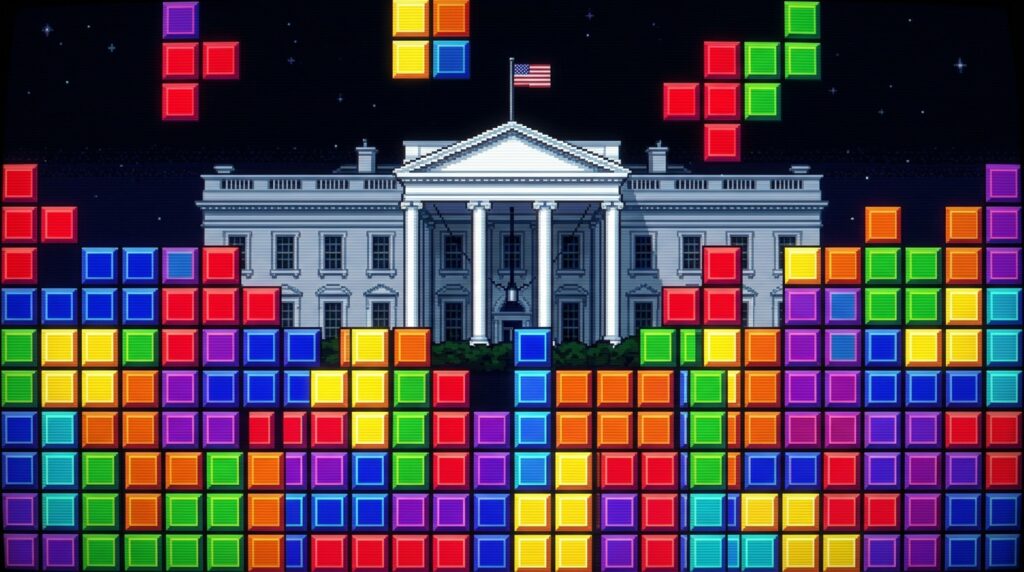
The White House launched its free online Arcade on September 3 with five games, including “Build the Wall,” a falling-block game. On September 4, The Tetris Company said it had not created, authorized, or licensed the game and was reviewing the matter, the Associated Press reported.
By September 8, “Build the Wall” had been removed, four days after the company’s statement, The Daily Beast reported. The White House did not publicly explain its disappearance. A familiar game mechanic had landed in an unfamiliar collision between politics and intellectual property.
Key Takeaways
- The White House Arcade launched on September 3 with five games, including “Build the Wall,” which disappeared by September 8, four days after The Tetris Company said the game was not made, authorized, or licensed by the company.
- The White House has not publicly explained the removal. The Tetris Company said it was reviewing the matter and has not said whether it would pursue legal action.
- U.S. copyright law does not protect a game’s general mechanics, but expressive graphics and text can be protected. In a 2012 federal district-court decision, the court found that copied piece designs and a 20-by-10 playfield crossed that line.
- Game makers should create original pieces, playfields, menus, and animations, check rights before release, and treat fair use as a fact-specific legal question, not a magic button.
What Happened to White House Tetris?
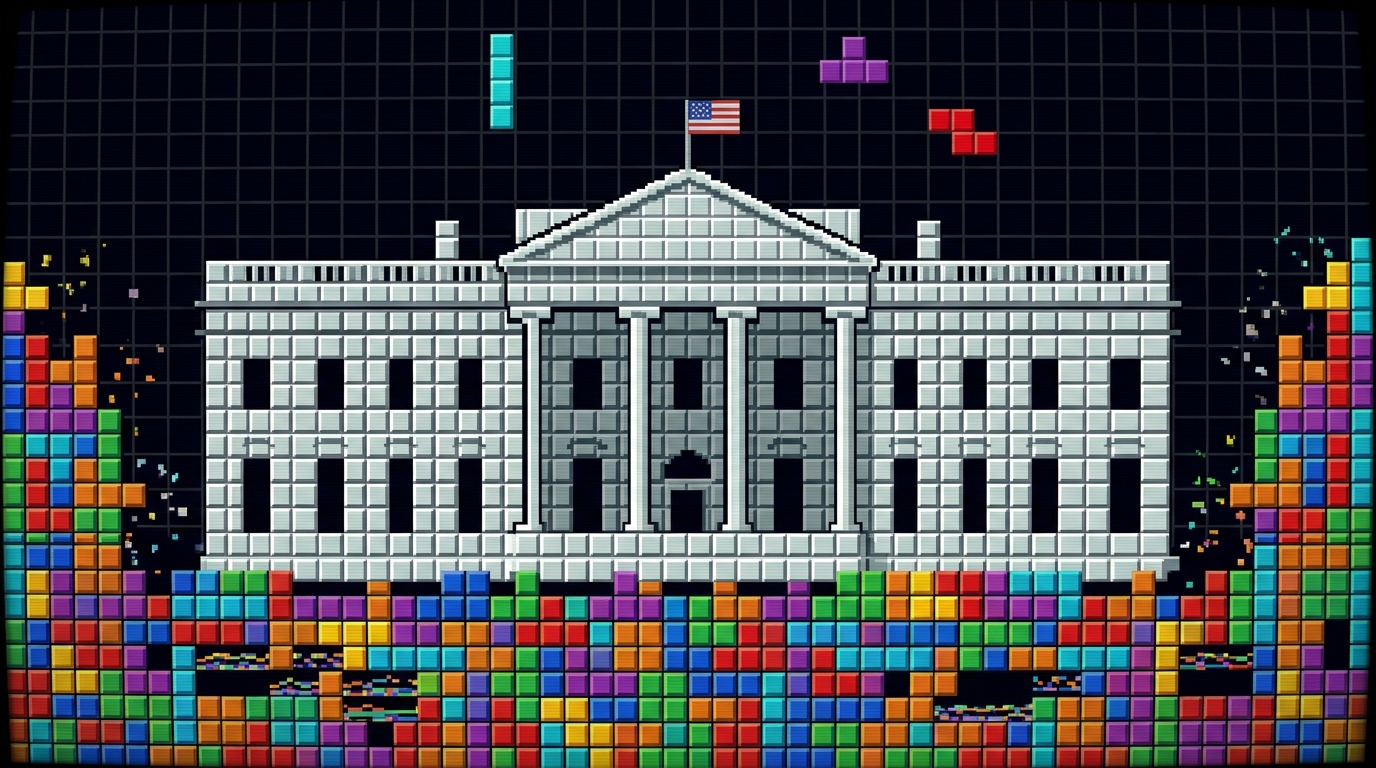
White House Tetris was removed from the Arcade by September 8, but the White House did not publicly explain why. Called “Build the Wall,” the game was one of five low-resolution titles in a free online Arcade launched on September 3 to promote President Donald Trump’s agenda. Its falling blocks framed the goal as protecting the border from a “coming horde.” A familiar puzzle format became a political prop, with all the subtlety of a campaign slogan printed on a joystick. On September 4, The Tetris Company said it had not made, authorized, or licensed the game and was reviewing the matter. Four days later, “Build the Wall” was gone.
The White House Tetris Timeline
| Date | What happened |
|---|---|
| September 3, 2026 | The White House Arcade launches with five low-resolution games, including “Build the Wall.” |
| September 4 | The Tetris Company says it had no involvement and had not licensed Tetris intellectual property for the game. |
| By September 8 | “Build the Wall” is gone from the Arcade. |
| Current listing | The White House Arcade page lists Flappy Bill, Rio Run, Supply Line, and Trump Savings Tycoon. |
The White House has not publicly explained the removal. The Tetris Company has not said whether it would pursue legal action.
Is the White House Being Sued?
The Tetris Company said it was reviewing the matter and has not said whether it would pursue legal action. The White House has not publicly explained why it removed the game.
Can You Copyright a Tetris-Style Game?
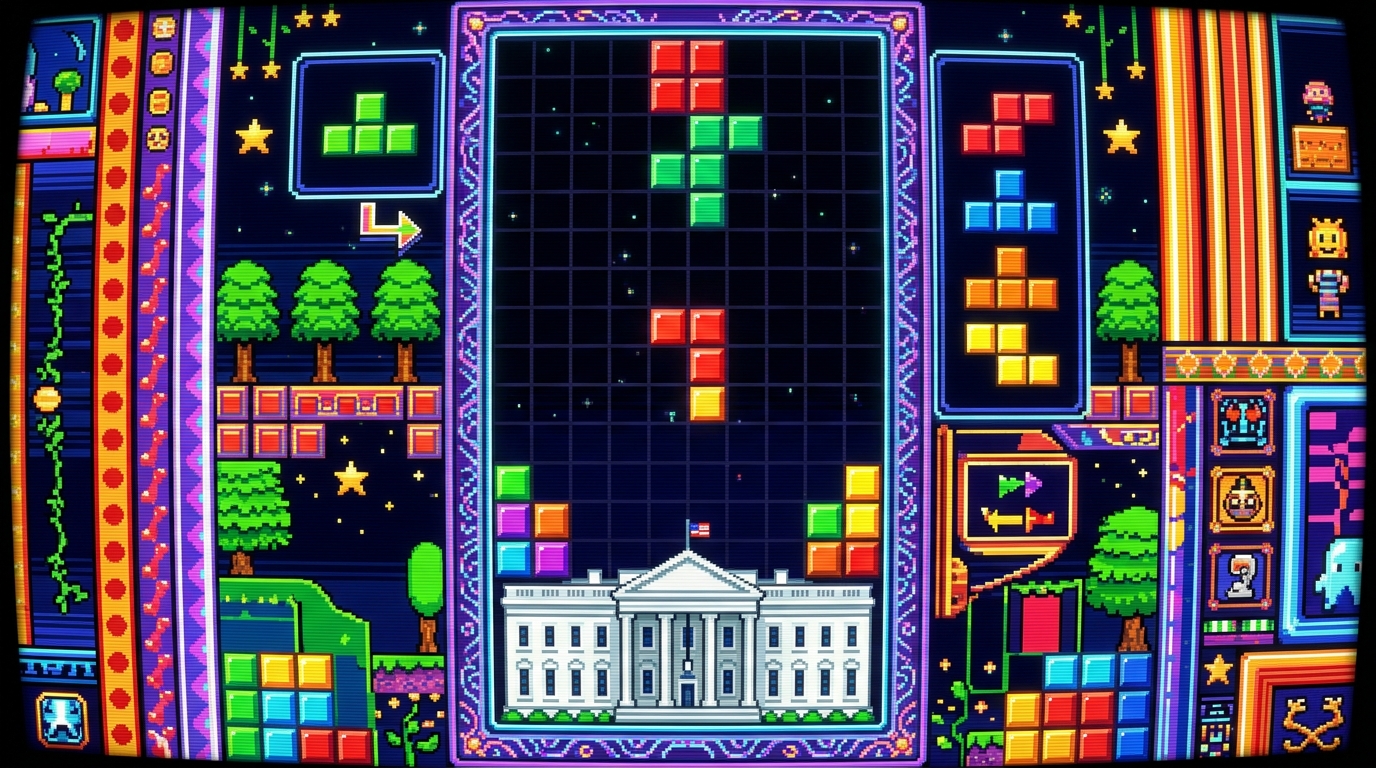
A game’s general idea or method of play cannot be copyrighted, but sufficiently expressive graphics and text may be. The U.S. Copyright Office’s guidance on games distinguishes unprotected titles, ideas, and methods of play from potentially protected visual art and writing. Falling-block rules don’t grant every design choice around them a copyright force field.
What Game Makers Should Learn
A classic mechanic can be a starting point, not a ready-made art kit. Focus on what your game adds and what it borrows.
- Build original visual expression. Design fresh pieces, playfields, colors, animations, and interface details instead of leaning on a classic’s recognizable presentation.
- Separate the familiar mechanic from its distinctive look. Falling-block play can inspire a new game, but copied piece designs or signature layouts deserve closer rights review.
- Check rights and licensing before release, especially when a well-known game is the obvious reference point. A name change won’t replace that review.
- Treat fair use as a fact-specific legal analysis, not a shortcut or blanket permission. The four-factor test considers the purpose and character of the use, the nature of the work, the amount used, and the effect on the work’s potential market or value. The label alone cannot settle whether a particular use is protected.
Make the Idea Yours
If you’re making a falling-block game, start with a visual audit, not a name change. Export screenshots of the title screen, playfield, pieces, menus, and animations, then compare them side by side with the reference games your team has discussed. Mark anything that could make a player recognize the source before reading the title. Replace those elements with original art, and save sketches and design notes showing how the new choices developed.
For a Tetris-inspired project, ask an intellectual-property lawyer to review the finished presentation before launch. If a visual match remains, redesign it before release.