The console price crisis has turned “wait for the next generation” into questionable financial advice. Instead of getting cheaper with age, new consoles are climbing toward rent-payment territory, thanks to soaring memory and storage costs, tariffs, supply problems, and the usual inflation-shaped nonsense. I’m looking at why prices keep rising, and whether these machines still justify the damage to your wallet.
The ugly part is that demand is starting to wobble, especially in the United States, while hardware makers keep acting as if everyone has a secret vault of disposable income. More expensive consoles would be easier to swallow if they delivered proportionally more, but “please pay extra for the same ecosystem” is not exactly a thrilling sales pitch. At some point, the question stops being which console to buy and becomes whether buying one is the least painful option.
Key Takeaways
- Console prices are rising instead of falling as systems age, with U.S. models reaching $649.99, $599.99, and $899.99 while a new-generation hybrid console costs $499.99. Memory and storage costs, tariffs, inflation, and supply-chain problems are driving much of the increase.
- Higher prices are weakening U.S. demand and undermining the traditional upgrade cycle. A $600 digital console or $900 premium model is increasingly difficult to justify when games, subscriptions, accessories, and storage upgrades cost extra.
- Evaluate the full first-year ownership cost—not just the console’s sticker price—and factor in storage, games, online access, controllers, and accessories. Your existing library, accessory compatibility, and access to essential exclusives should determine whether an upgrade offers real value.
- Waiting is usually the smarter choice after a price increase, especially when the launch lineup is weak or storage is limited. Buy now only when your current system is failing, a must-play exclusive is available, and the complete cost fits comfortably within your budget.
Major Console Makers Raise Prices
Console makers have somehow turned the normal hardware lifecycle upside down. Instead of aging systems getting cheaper, players are being asked to pay more for machines that have been on shelves for years. Current U.S. pricing looks like this:
| System | Previous price | New price | Increase |
|---|---|---|---|
| Disc edition | Lower previous MSRP | $649.99 | Higher pricing |
| Digital edition | Lower previous MSRP | $599.99 | Higher pricing |
| Premium model | Lower previous MSRP | $899.99 | Higher pricing |
| 512GB models | Previous price | $100 more | +$100 |
| 1TB models | Previous price | $150 more | +$150 |
| New-generation hybrid console | $449.99 | $499.99 | +$50 |
I do not need an economics degree to see why this hurts. Memory and storage costs have jumped, while tariffs, supply-chain problems, inflation, and other component expenses keep squeezing manufacturers. Those costs are landing on players at the exact moment games, accessories, and subscriptions are already draining wallets like a badly optimized live-service battle pass. A premium console reaching $899.99 is especially hard to swallow, because “premium” now seems to mean charging almost a thousand dollars for hardware that still needs games purchased separately. This is not a normal mid-generation discount cycle. It is the industry asking us to admire the price tag while the value proposition quietly hides behind the sofa.
What worries me most is that demand is beginning to soften, particularly in the United States, which suggests shoppers are finally pushing back. A console price crisis does not mean every system is suddenly worthless, but it does mean the old assumption that waiting brings a better deal has been wrecked. Manufacturers may blame rising component costs, and those pressures are real, but the result is still the same checkout screen and the same painful total. If this becomes the new normal, the next generation will not need a dramatic launch reveal, just a warning label and a payment plan.
Memory Costs Break Generational Discounts
I used to expect an aging console generation to get cheaper, not behave like a luxury appliance with a grudge. Instead, memory and storage costs are pushing manufacturers to raise prices on consoles, PCs, and accessories at the same time, just when players are already paying more for games and subscriptions. A major hardware maker says memory and storage costs have climbed by more than 2.5 times, which helps explain why extra capacity is suddenly treated like premium hardware instead of basic functionality. The old generational discount has been replaced by a generational surcharge, because apparently time is money, especially when that time is spent downloading 150GB updates.
The problem is bigger than one expensive component. Tariffs add friction, supply-chain disruptions keep parts unpredictable, and inflation makes every shipment, factory run, and retail decision hurt more than it used to. Those pressures reach everything from console memory and PC RAM to handhelds, headsets, controllers, and external drives, so there is no cheap corner left to hide in. I would call that bad news for buyers, but my wallet already filed the paperwork.
Solid-state storage is now the particularly nasty joke in this crisis. SSDs make games load faster, but rising prices are helping empty wallets faster than game downloads ever could. Manufacturers can trim features or offer smaller drives, yet modern games quickly turn those savings into a storage-management minigame nobody asked to play. If prices keep climbing while demand weakens, the industry may discover that players are willing to delay an upgrade, delete a few games, and let the hardware market sit in the queue.
US Demand Starts To Crack
The U.S. console market is finally showing what happens when “premium pricing” collides with rent, groceries, and a game library that increasingly wants a monthly subscription fee. I can understand higher memory, storage, tariff, and supply-chain costs, but consumers do not experience those pressures as an economics lesson. They see a console that costs more years after launch, then discover that new games and online access want their own slice of the paycheck. That is a tough sell when the old promise was that hardware would get cheaper over time, not behave like a limited-edition sneaker with a mortgage attached.
| Console model | Launch US price | Current US price | Increase |
|---|---|---|---|
| Disc edition | $499.99 | $649.99 | 30.0% |
| Digital edition | $399.99 | $599.99 | 50.0% |
| Premium model | $699.99 | $899.99 | 28.6% |
Those numbers explain why demand is starting to crack, particularly in the United States, where buyers are becoming more selective instead of automatically upgrading. A $600 digital console is not an impulse purchase, especially when it cannot resell physical games and still sits at the entrance to a more expensive ecosystem. I expect holiday shoppers to trade down, wait for bundles, buy fewer accessories, or simply keep playing what they already own, which is the gaming equivalent of putting the wallet in witness protection. That may protect short-term revenue per sale, but it risks slower hardware adoption, smaller player populations, and weaker market growth if the price crisis lasts. Rising component costs may be unavoidable, but pretending consumers can absorb every increase is how an industry turns a blockbuster holiday into a clearance bin.
The New Rules For Buying Consoles
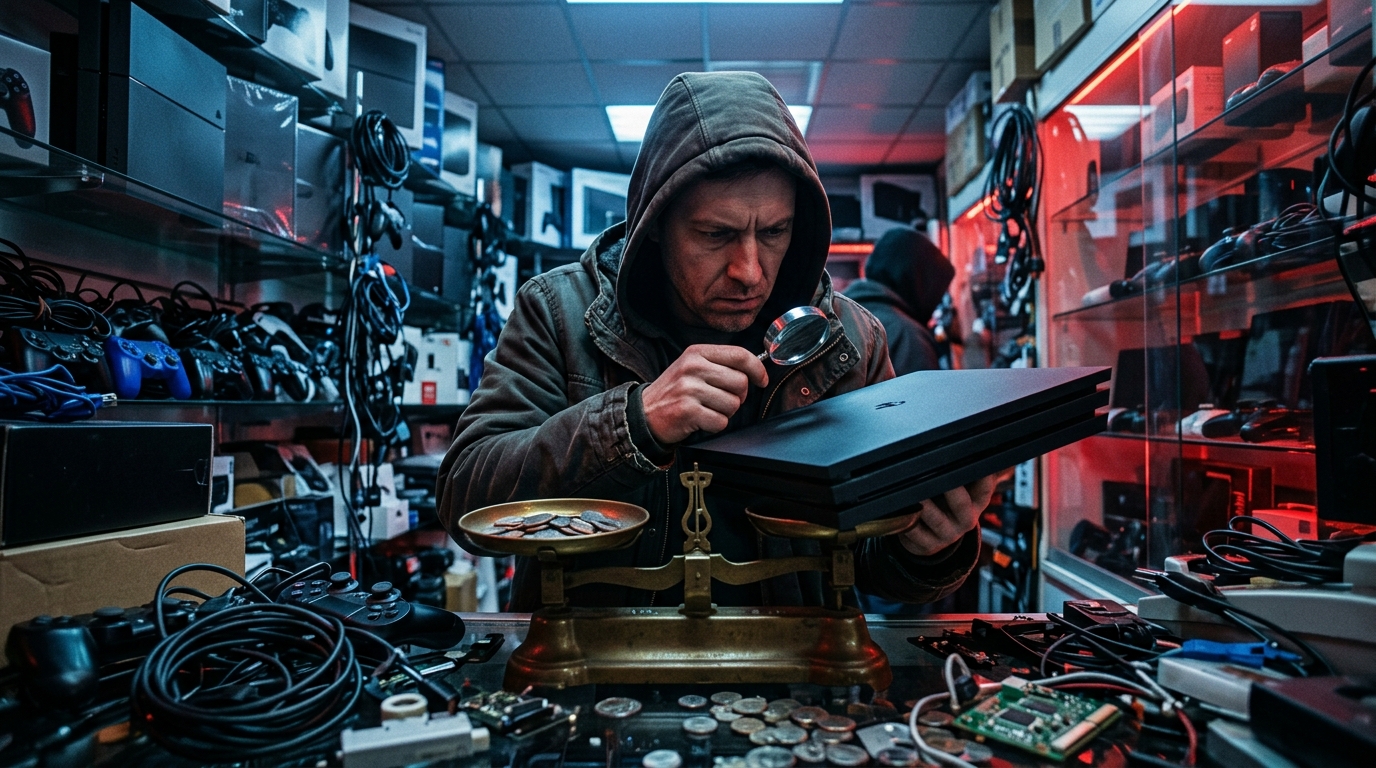
The console price crisis has changed the basic math: the box is no longer the whole bill, it is merely the admission fee. I now compare the purchase price with storage upgrades, online access, extra controllers, games, and the accessories required to make the thing usable, because a “cheap” console that needs $100 of add-ons is just wearing a fake moustache. Rising memory, storage, tariff, and supply-chain costs are pushing hardware prices upward even as demand starts to soften. Before buying, write down the first-year total and compare it with what you would spend on your current setup.
Your existing game library should also decide which hardware gets your money. If a new console plays most of the games you already own, supports your accessories, and offers a genuinely important exclusive, the higher price may be easier to swallow. If your favorite titles are already available elsewhere, paying a launch premium for slightly faster loading and a shinier menu is not a gaming strategy, it is a donation. I would only pay full price at launch when the exclusive is compelling enough to justify the premium and I know I will play it immediately, not someday after the backlog stops reproducing.
Waiting is usually the smarter move when the price has just risen, the launch lineup is thin, or the manufacturer is charging extra for storage that should have been included in the first place. Watch for bundles that add a game you actually want, retailer discounts, seasonal promotions, and revised hardware with better value, rather than mistaking a free digital trinket for a bargain. Buying now makes sense if your current system is failing, the exclusive you want is available today, and the complete ownership cost fits your budget without financial gymnastics. Otherwise, keep your wallet holstered, let early adopters fund the experiment, and wait for the crisis to produce an actual deal.
Console Prices Are Breaking the Living Room
The console price crisis is not just a temporary bump caused by one bad quarter or a supply-chain hiccup. Rising memory and storage costs are colliding with tariffs, inflation, and increasingly expensive hardware designs, pushing consoles, PCs, and accessories higher at the exact moment players are already spending more on games and subscriptions. A current-generation disc console now costs $649.99 in the United States, while a premium model reaches $899.99, which is less “living-room entertainment” and more “small appliance with an identity crisis.” When older hardware gets pricier instead of cheaper, the usual economics of gaming have clearly wandered into a boss fight.
The bigger warning is that aggressive hardware strategies may be teaching the industry that demand will survive almost any price tag. Features that once felt like upgrades are increasingly being used to justify premium tiers, while expensive components make baseline models harder to keep affordable. I still expect better performance and smarter design, but I am not going to applaud a price hike for solving a problem players did not create. The console price crisis is changing the question from “When will this get cheaper?” to “How much more are we expected to tolerate?” Players are no longer waiting for consoles to get cheaper because the companies appear to be waiting for players to accept that they never will.