
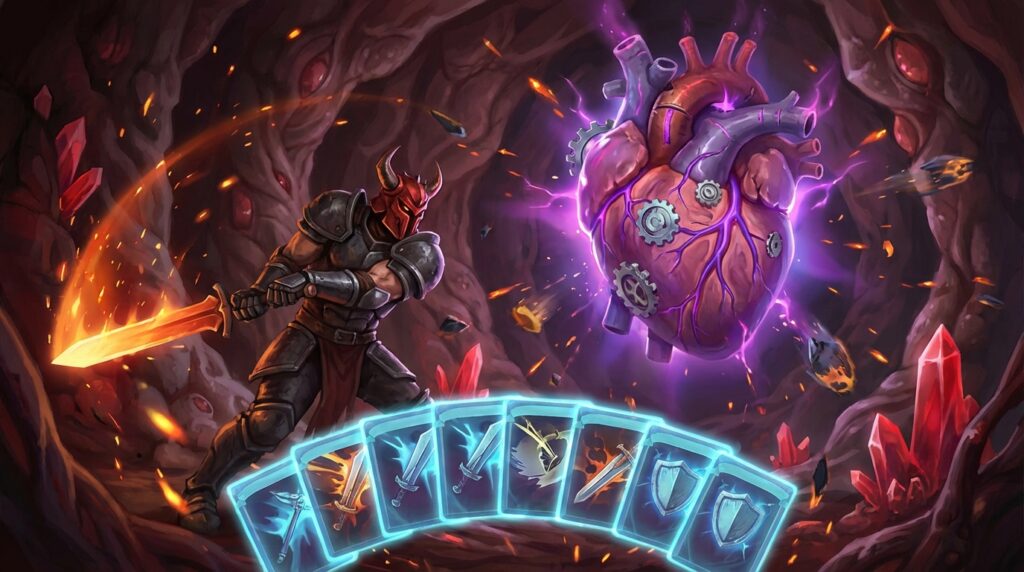
There was a time when mixing digital cardboard with permadeath sounded like a desperate cry for help from a designer who ran out of ideas. Now, it is a full-blown gaming addiction, and tracking down the best roguelike deckbuilders has become a mandatory second job for anyone who hates having free time. We have somehow evolved past basic fantasy combat into a bizarre renaissance where you are just as likely to be playing high-stakes poker against a demonic blind or aggressively merging mutant dogs.
While every indie developer and their mother is currently trying to dethrone Slay the Spire, most of these aspiring clones are about as mechanically deep as a puddle in a parking lot. You do not need to sift through an ocean of mediocre asset flips to find the games that actually respect your intelligence. I have already sacrificed my own sleep schedule to separate the genre-defining masterpieces from the uninspired garbage. I am leaving you with only the titles that absolutely demand your attention.
Key Takeaways
- Slay the Spire remains the undisputed gold standard of the roguelike deckbuilder genre due to its brutal mechanical clarity and perfectly telegraphed combat.
- The genre has evolved far beyond generic fantasy, delivering incredibly addictive experiences through innovative concepts like the poker-driven Balatro and the aggressively overpowered synergies of Monster Train.
- Top-tier deckbuilders offer a pure, filler-free gameplay loop that completely outclasses the cinematic bloat and tedious map markers of modern AAA titles.
- Surviving these mechanically demanding games requires ditching bloated decks and mastering fundamental strategies like deck thinning and precise damage scaling.
Slay The Spire Remains The Undisputed King
When you talk about the best roguelike deckbuilders on the market, all roads inevitably lead straight back to the undisputed king of the genre. Slay the Spire is not just a game I enjoy playing. It is a ruthless clinic in pure mechanical perfection that makes everything else look like amateur hour. The beauty of this original masterpiece lies entirely in its brutal clarity. Every single card interaction, enemy intent, and lethal incoming attack is telegraphed with absolute precision. When you die, you know exactly why. It was your own stupid fault. It strips away all the bloated nonsense and forces you to learn fundamental mechanics like deck thinning and damage scaling if you want to survive.
Now the developers have decided to ruin my productivity all over again with Slay the Spire 2 currently dominating Early Access. I honestly thought I was safe from the addiction loop. I was wrong. This sequel takes that perfectly balanced foundation and injects it with pure adrenaline. The new characters and updated mechanics are already polished enough to make me completely ignore my actual daily responsibilities. It gives you that exact same no-nonsense gameplay loop that made the original so spectacular, while somehow finding completely fresh ways to humiliate you on floor three. If you value your free time or your sleeping schedule, stay far away from this absolute triumph of a sequel.
Balatro Turns Poker Into Pure Digital Crack
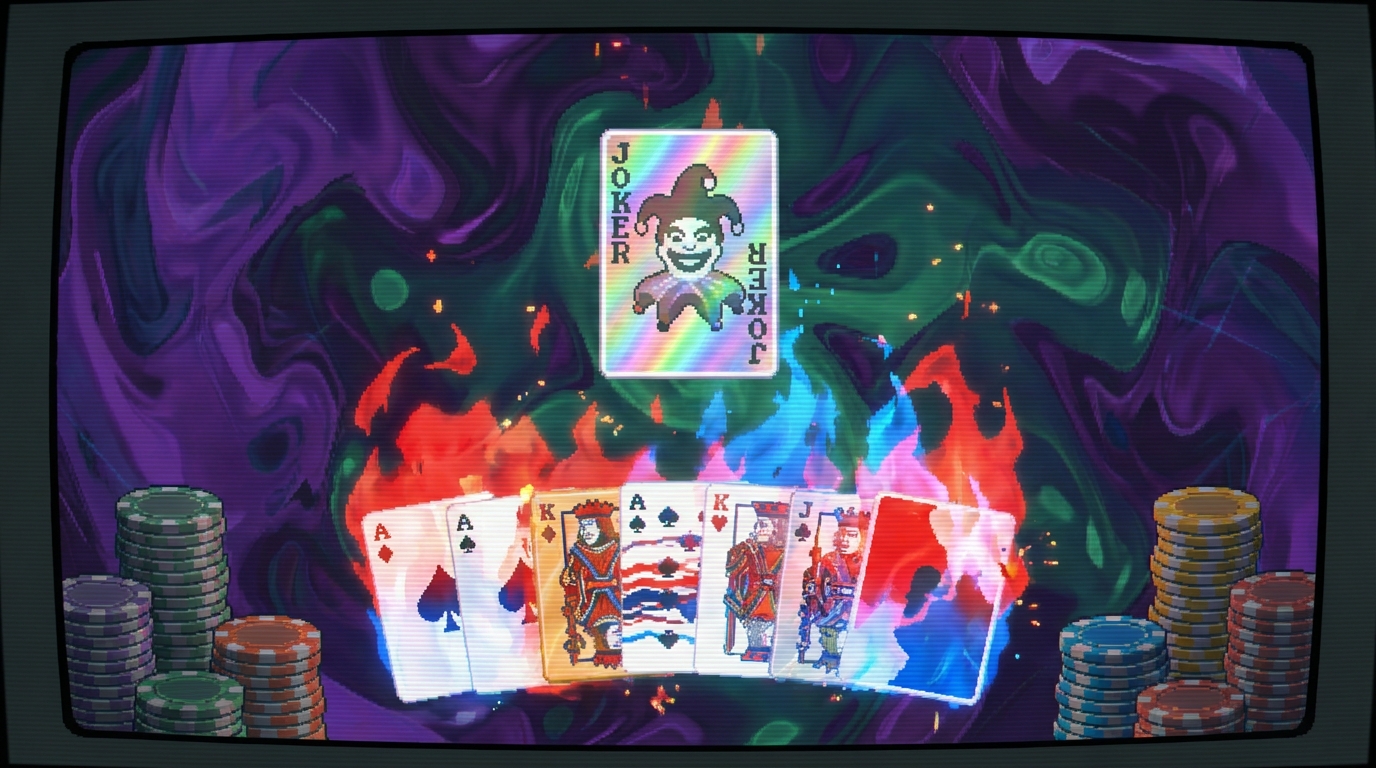
I am officially exhausted from fighting the same generic fantasy goblins with a deck of magic spells. That is exactly why Balatro is such a breath of fresh air. The solo developer behind this madness looked at the crowded roguelike deckbuilder genre, stripped away every single boring goblin and wizard, and replaced them with standard poker hands. You are not saving a kingdom or ascending a magical tower. Instead, you are just trying to make a flush hit hard enough to break the fabric of mathematics. It sounds almost too simple on paper, but that accessibility is exactly what pulls you into the madness.
Once you get past the basic poker mechanics, the game injects you with a fast-paced scaling loop that makes actual casino gambling look painfully boring. The real magic happens when you start collecting bizarre Joker cards that multiply your score into the stratosphere. Suddenly, a terrible pair of twos can trigger a chain reaction of multipliers that generates millions of points in a single flashing instant. I have watched my screen light up with absurd numbers and felt a rush of dopamine that no slot machine could ever hope to replicate. Every single run feels like you are finding a new way to completely break the rules of the game.
The sheer speed of this gameplay loop is what cements Balatro as a masterclass in no-nonsense game design. There is absolutely no filler, no bloated story cutscenes, and no waiting around for slow enemy animations to finish. You play your hand, watch the numbers explode, and immediately move on to the next blind. It respects your time by giving you pure mechanical substance, yet it will mysteriously steal six hours of your life before you even realize it. If you are looking for an experience that delivers pure addictive joy, this is the only hand you need to play.
Monster Train Perfects Overpowered Deck Synergies
If you are tired of playing fair in card games, I can confidently say Monster Train is the exact flavor of nonsense you need in your life. The premise involves defending a literal multi-floor train to hell from an army of self-righteous angels. Instead of asking you to carefully balance resources like a responsible adult, this game actively encourages you to become a degenerate architect of chaos. You stack demonic units, spells, and artifacts until the math gets so ridiculously high that the software practically begs for mercy. It serves as the ultimate palate cleanser for sickos who just want to build aggressively broken combos without jumping through tedious hoops.
The true genius here lies in the dual-clan system that lets you mash two completely different factions together for maximum destruction. I have spent embarrassing amounts of time combining melting wax mobsters with sentient sea creatures just to see how fast I can obliterate a boss. The game does not care about balance in the traditional sense, and that is exactly why it remains so incredibly addictive. You will regularly stumble into synergies so overpowered that you actually feel like you are getting away with a digital crime. When your frontline tank has five thousand health and counterattacks with the force of a dying star, you know you have finally achieved deckbuilder nirvana.
Most titles in this subgenre make you earn your power fantasies through hours of grueling punishment and terrible random number generation. Monster Train skips the boring parts and hands you the keys to the kingdom almost immediately. I absolutely love that it respects your time by keeping runs relatively short while delivering massive dopamine hits on every single floor. If you are looking for a ruthlessly fun experience that lets you crash the game with astronomical damage numbers, this needs to be your next download. Just do not blame me when you look at the clock and realize you have been defending the pyre for six straight hours.
Weird Indie Deckbuilders Pushing Genre Boundaries
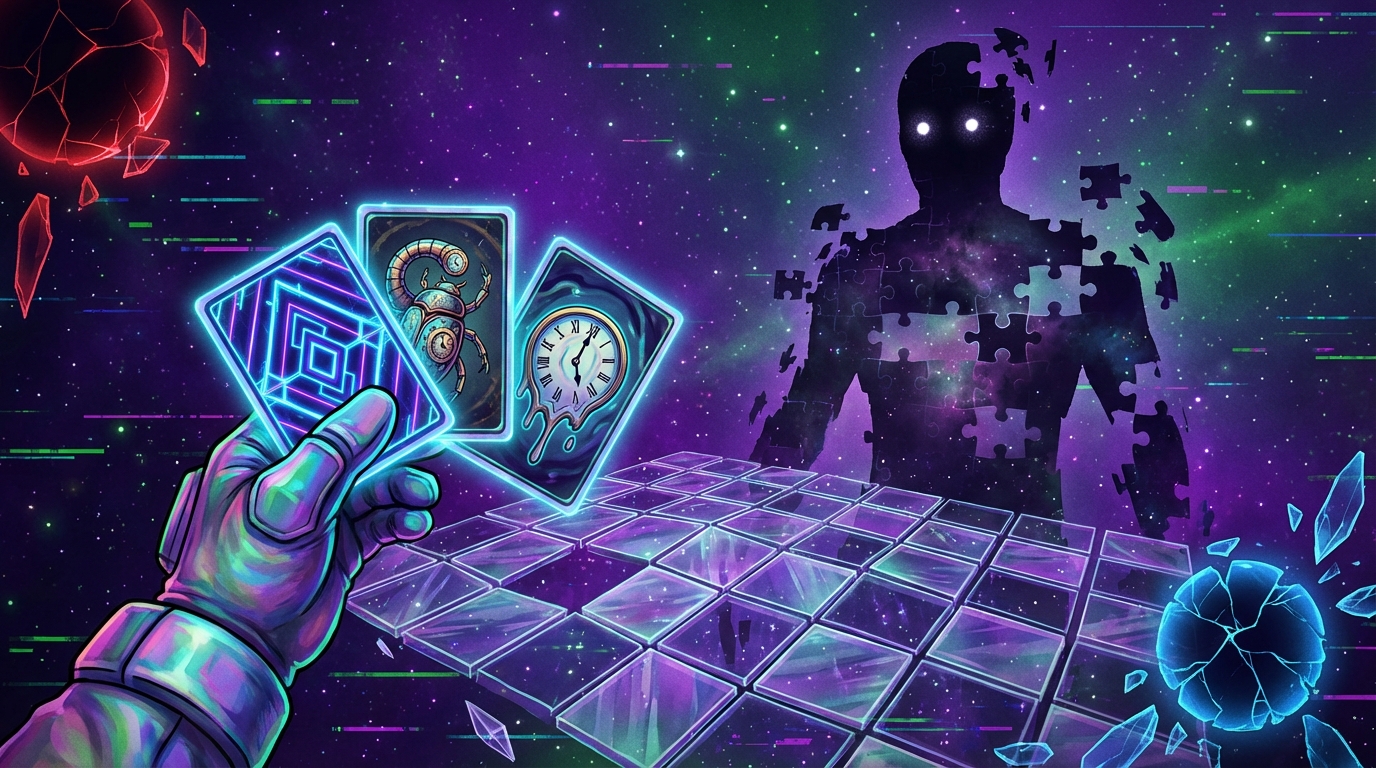
The massive success of titans like Slay the Spire and Balatro completely shattered the unspoken rules of what a card game is supposed to be. Now, indie developers are treating the deckbuilding mechanic like culinary hot sauce, aggressively slapping it onto genres where it absolutely has no business belonging. You would think that combining tactical card drafting with completely unrelated gameplay loops would result in a messy, unplayable disaster. Instead, we are living through a bizarre renaissance of highly addictive, no-nonsense titles that refuse to take themselves seriously. These weird indie experiments have completely hijacked my free time, proving that a solid mechanical foundation can make almost any absurd concept work flawlessly.
Look past the traditional fantasy combat and you will find absolute madness. We are talking about games where you are literally merging mutant dogs just to build a game-breaking synergy. Other developers are taking the chaotic energy of auto-battlers and injecting them with the ruthless clarity of a perfectly thinned deck. These games strip away the bloated, cinematic nonsense that plagues modern releases and replace it with pure, unfiltered dopamine. You do not need a sixty-hour sweeping narrative when the core loop of stacking ridiculous modifiers is this relentlessly engaging. Every run feels like a fever dream assembled by a mad scientist, yet the underlying math is so tight that you cannot stop hitting the restart button.
This strange new wave of genre-bending titles is exactly what the gaming industry desperately needs right now. While massive studios are busy chasing tired trends and pumping out generic sequels, these weird indie deckbuilders are taking massive creative risks that actually pay off. They respect your time, deliver immediate satisfaction, and completely rewire your brain to see combos in your sleep. I never thought I would lose sleep over optimizing a hand of poker or managing a squad of genetically modified pets, but here we are. If you are tired of playing the exact same game wrapped in a different graphical skin, it is time to embrace the absolute weirdness of this subgenre.
Ditch the AAA Bloat for Deckbuilding Perfection
I am officially giving you permission to free up your hard drive and delete that two-hundred-gigabyte AAA monstrosity you have been forcing yourself to play. You know exactly the one I am talking about. It is the cinematic snooze-fest padded with endless map markers and unskippable cutscenes trying way too hard to win an Oscar. Instead, you need to surrender your free time to the absolute mechanical perfection of a top-tier roguelike deckbuilder. These games strip away all the bloated nonsense and deliver a pure, highly addictive gameplay loop that respects your time while simultaneously ruining your sleep schedule. Once you experience the sheer dopamine rush of breaking a game with a perfectly crafted synergy, you will never want to go back to fetching ten random items for a generic NPC.
Titles like Slay the Spire and Balatro have completely rewired my brain to see the world in numbers, probabilities, and card combos. They offer a ruthless clarity that modern gaming desperately lacks. They punish your stupid mistakes while making you feel like an absolute genius when a risky strategy actually pays off. You do not need a massive open world when a single screen of cards can offer thousands of hours of infinitely replayable, no-nonsense strategy. Go ahead and let these games consume your soul, because the sheer satisfaction of mathematically obliterating a final boss is worth the heavy bags under your eyes. Do yourself a massive favor, shuffle up your digital deck, and embrace the only gaming addiction that actually makes you use your brain.
Frequently Asked Questions
1. What exactly is a roguelike deckbuilder?
It is a genre where you build a custom deck of cards as you play, but dying means losing everything and starting from scratch. I know it sounds like pure torture on paper, but it is actually a highly addictive gameplay loop. You will happily spend hours trying to craft the perfect combo before a random boss stomps you into dust.
2. Why is Slay the Spire still considered the best?
The original developers basically perfected the formula on their first try, making every other aspiring clone look like absolute garbage. The game tells you exactly what the enemy is going to do. When you die, you know it was your own stupid fault. It strips away all the bloated nonsense and forces you to actually learn the mechanics.
3. Are there any good alternatives to Slay the Spire?
Yes, but you have to wade through a massive swamp of lazy asset flips to find them. The genre has evolved into a bizarre renaissance where you can play high-stakes poker against a demonic blind or aggressively merge mutant dogs. I have already done the dirty work of finding the few games that actually respect your intelligence.
4. Do I need to be good at card games to play these?
Not really, but you do need a functioning brain and the patience to read what your cards actually do. Most of your deaths will come from ignoring basic math or playing your hand in the wrong order. If I can figure out how to scale damage and thin out a deck, you probably can too.
5. What is deck thinning and why does it matter?
Deck thinning is the process of removing useless starter cards from your deck so you can draw your devastating combo pieces faster. New players love hoarding every shiny card they find, resulting in a bloated mess that gets them killed. I highly recommend deleting those basic strikes and defends the second you get a chance.
6. Is Slay the Spire 2 worth playing in Early Access?
It is already dominating my free time and ruining my productivity all over again. The studio somehow managed to take a perfectly balanced masterpiece and make it even more addictive. If you value your sleep schedule, you might want to stay away until the full release drops.
7. Why do so many indie developers try to clone these games?
Because jumping on a popular bandwagon is much easier than coming up with an original idea. Most of these aspiring clones are about as mechanically deep as a puddle in a parking lot. They slap some cheap fantasy art on a generic card system and hope you are desperate enough to buy it.