
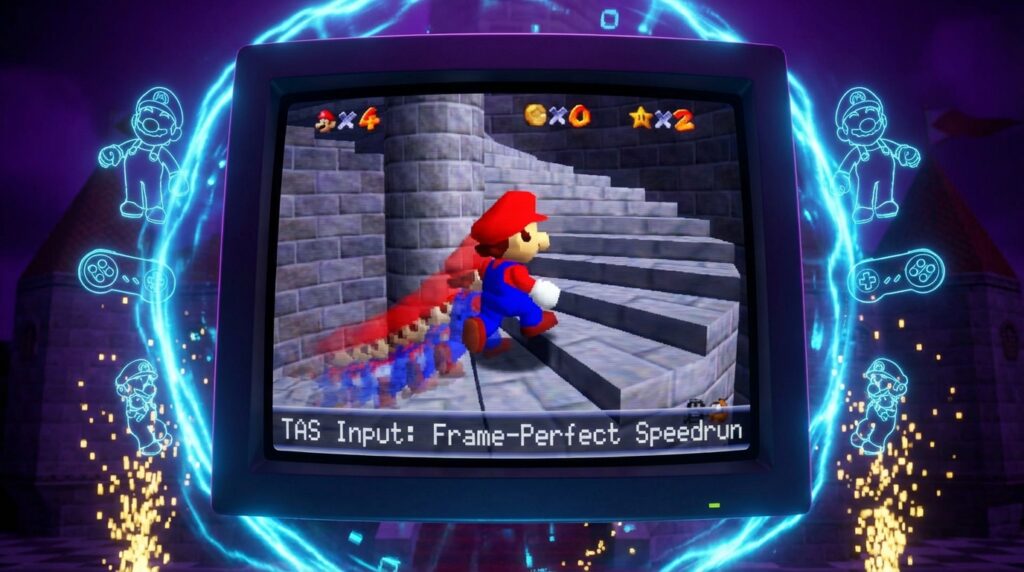
Most of us can barely find our car keys, but a dedicated group of masochists is fighting for speedrunning world records measured in literal milliseconds. We have reached a point of extreme optimization where playing the game has been replaced by frame-perfect sub-pixel movements and hardware like the MiSTer FPGA that treats lag like a mortal sin. It is no longer about finishing a level; it is about breaking the game’s spirit so thoroughly that the code gives up and hands you a trophy.
Take the current state of Super Mario Bros., for example, where the difference between legendary status and total obscurity is thinner than a NES sprite. When a top-tier runner clocked a 4:54.515, he did not just play a platformer, he performed a digital exorcism on a forty-year-old cartridge. If you think your high score matters, watching these runners frame-rule their way into the history books will either inspire you or make you want to uninstall your entire library out of pure inadequacy.
Key Takeaways
- Speedrunning has reached a theoretical ceiling where records are now decided by milliseconds and frame-perfect sub-pixel movements rather than general gameplay skill.
- The MiSTer FPGA has become the industry standard for elite runners because it eliminates input lag by recreating original hardware circuits with absolute precision.
- Modern record-breaking requires a transition from traditional controllers to specialized hardware like keyboards to achieve the technical accuracy necessary for frame-perfect inputs.
- Techniques like Stale Reference Manipulation (SRM) allow runners to bypass intended game design by tricking software into rewriting its own code in real-time.
The Quest For The Perfect Mario Run
The speedrunning world is witnessing a level of optimization that borders on the supernatural, and the recent 4:54.515 clock-in is the crown jewel of this madness. We have officially reached the point where records are no longer measured in seconds, but in the tiny, microscopic frames that separate a legend from a guy just playing a platformer on his lunch break. By utilizing a MiSTer FPGA to eliminate input lag and a keyboard for frame-perfect inputs, the runner managed to shave off a sliver of time that most of us would not even notice if it hit us in the face. It is a masterclass in technical precision that makes the original developers look like they were coding in their sleep. This run is not just about moving right quickly, it is about manipulating a forty-year-old piece of software until it screams for mercy.
What makes this record truly insane is that we are staring directly at the theoretical ceiling of human reflexes. In the Any% category, every single pixel-perfect jump and frame-rule glitch has been mapped out to the point where there is almost no game left, only a high-speed dance with digital perfection. When you are fighting over fifty milliseconds, you are not just playing Mario anymore, you are essentially trying to outrun a computer program in real-time. The community has optimized the movement so thoroughly that any further improvement might require someone to actually develop psychic powers or grow an extra thumb. It is genuinely impressive to see someone push a classic title this far, even if it makes the rest of us feel like we have the reaction time of a sunbathing turtle.
The sheer dedication required to hunt down a 4:54.515 is the kind of beautiful obsession that keeps the retro scene alive and kicking. While most people are content to just finish World 1-1 without falling into a pit, these runners are exploiting sub-pixel positioning to save time that should not even exist. Every frame saved is a victory against the limitations of 1980s hardware and the frailty of human nerves. It is a high-energy, high-stakes grind that proves some games never actually end, they just get faster. If this is the limit of what a human being can do with a plumber and a dream, then we have reached a pretty spectacular finish line.
Breaking Zelda In Under Four Minutes
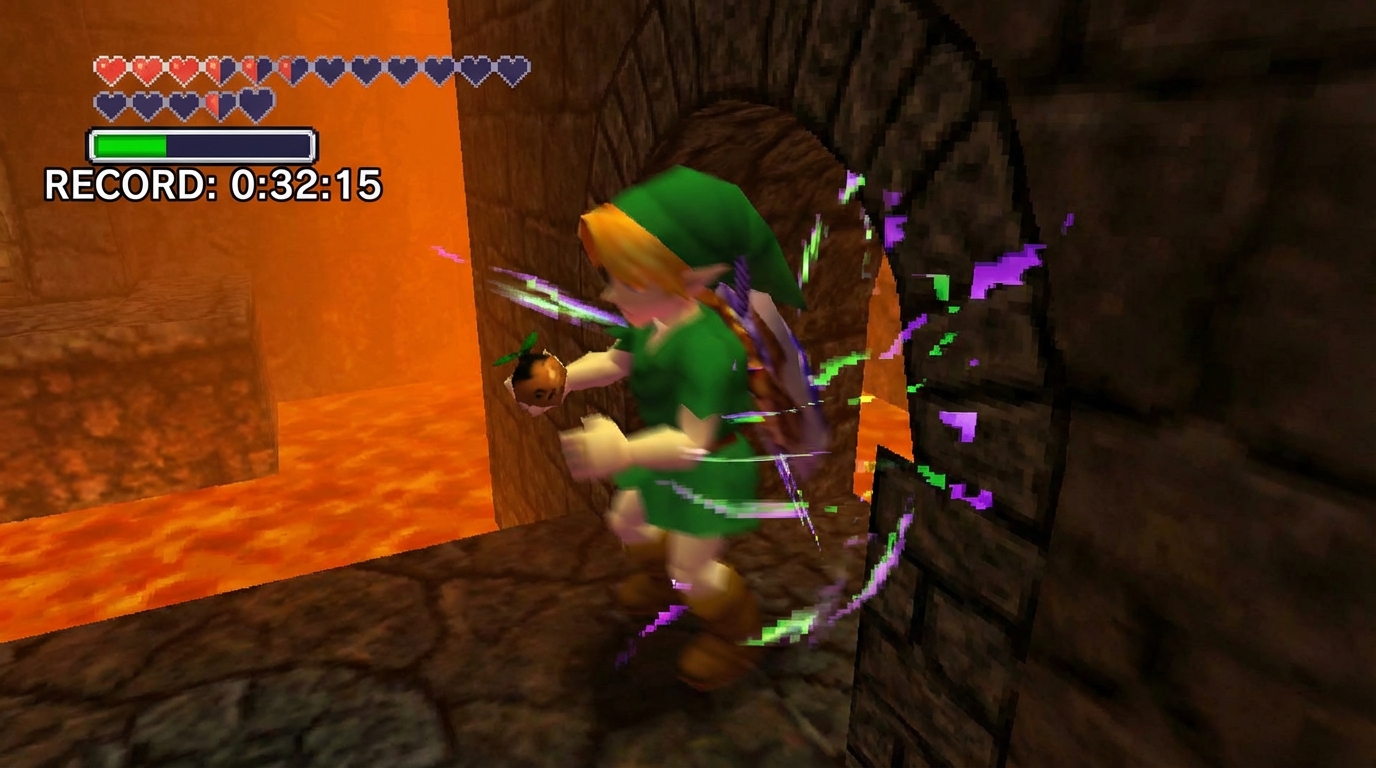
Watching a pro dismantle Ocarina of Time is like witnessing a digital exorcism where the laws of physics are merely suggestions. We are long past the days of just jumping over fences or skipping a few cutscenes to save time. The current world record run is a chaotic masterclass in SRM (Stale Reference Manipulation), a technique that essentially tricks the game into rewriting its own code while you play. By moving specific items and manipulating memory addresses, speedrunners can warp directly from the opening crawl to the end credits in under four minutes. It is less about playing a video game and more about performing open-heart surgery on a cartridge while it is still running.
The level of technical mastery required to pull this off on a MiSTer FPGA or original hardware is frankly terrifying. You are not just pushing buttons, you are threading a needle in a hurricane where a single frame of error results in a total crash. The community has optimized this masterpiece into a three-minute sprint that makes the original developers look like they were coding in crayon. It is a beautiful, glitchy mess that proves if you give a gamer enough time, they will eventually find a way to break reality itself. This is not just a speedrun, it is a glorious middle finger to the intended user experience, and I love every second of it.
Hardware Wars And The MiSTer FPGA Revolution
In the high stakes world of frame perfect speedrunning, the difference between a world record and a total disaster is often measured in milliseconds. While your old CRT and a dusty NES might feel nostalgic, they are increasingly becoming liabilities for top tier runners who demand absolute precision. The community has largely pivoted toward the MiSTer FPGA, a piece of hardware that recreates original gaming circuits with terrifying accuracy to eliminate the lag found in modern emulators. It is a massive shift for anyone serious about the grind, offering the consistency of original hardware without the headache of hardware failure or signal degradation. If you are still trying to beat a world record on a standard PC emulator, you are basically bringing a butter knife to a nuclear standoff.
The recent Super Mario Bros. world records prove that we have officially entered the era of the hardware purist. When a runner clocked in a mind boggling 4:54.515, it was not just a victory of skill, but a victory of technical optimization. Using a MiSTer FPGA allows these runners to exploit glitches that require inputs so fast they would be swallowed by the input latency of a traditional setup. We are talking about a level of play where the game is being pushed to its literal theoretical limits, leaving no room for a single dropped frame. It is honestly a little bit insane to watch, but you have to respect the dedication it takes to obsess over hardware architecture just to shave a tenth of a second off a forty year old game.
This hardware shift is not just about being a tech snob, it is about creating a level playing field where only the player’s skill matters. By using FPGA technology, runners can ensure that every single button press translates to the screen with the exact same timing as a console from 1985. This eliminates the hardware lottery where one runner might have a slight advantage over another simply because their console has a faster capacitor or a cleaner signal. It is a blunt, effective solution to the problem of aging technology, and it is the only reason we are still seeing world records fall today. If you want to enjoy the best retro games and join the ranks of the elite, you better be prepared to ditch the nostalgia and embrace the cold, hard efficiency of modern engineering.
The Beautiful Madness of Frame Perfection
Ultimately, speedrunning is the purest distillation of gaming mastery because it strips away all the fluff to reveal the skeleton of a game’s design. While the rest of us are content to just finish a level without falling into a pit, these players are treating frame data like a high stakes science experiment. It is a beautiful, obsessive pursuit where a decade of practice is routinely sacrificed just to shave a few milliseconds off a timer. Seeing a legend manipulate a forty year old game with such surgical precision proves that there is no such thing as a solved masterpiece. These players do not just play games, they dismantle them with a level of dedication that borders on the supernatural.
The current era of optimization is particularly wild because we have reached the point where human reflexes are fighting a war against the hardware itself. Using MiSTer FPGA setups and specialized keyboards to hunt for a 4:54 in Mario shows that the community is no longer just playing against a record, but against the theoretical limits of code. It takes a special kind of madness to spend thousands of hours fishing for a single pixel perfect glitch that might save less time than a literal blink of an eye. I salute these absolute lunatics who refuse to let a world record stand for more than a week without trying to break it. They are the ones keeping the competitive spirit of the arcade era alive in a world of bloated, hand holding modern releases.
Frequently Asked Questions
1. What exactly is a frame-rule and why does it matter?
In games like Super Mario Bros., the game only checks if you finished a level at specific intervals called frame-rules. If you miss one by a single millisecond, you might as well have stopped for a sandwich because the game makes you wait for the next bus. It is the difference between a world record and a participation trophy.
2. Why are these runners using a MiSTer FPGA instead of an old console?
Standard hardware and emulators have tiny amounts of input lag that act like a digital anchor on your soul. The MiSTer FPGA treats lag like a mortal sin, providing hardware-level accuracy so your inputs happen exactly when you press the button. If you are chasing sub-pixel perfection, you cannot afford to wait on your monitor to catch up.
3. Is using a keyboard considered cheating in these speedruns?
It is not cheating, it is just superior ergonomics for the truly obsessed. Keyboards allow for precise, frame-perfect inputs that a clunky d-pad from 1985 simply cannot match. If you want to break a forty-year-old game, you use the best tools available or you stay in the amateur leagues.
4. How much faster can these records actually get?
We are currently fighting over slivers of time so small they are basically invisible to the human eye. The optimization is so extreme that we are reaching the theoretical limits of what the code allows. Eventually, the only way to go faster will be to actually rewrite the laws of physics or sell your soul to a glitch.
5. What is the difference between a regular run and a frame-perfect one?
A regular run is what you do on your couch while eating chips, but a frame-perfect run is a digital exorcism. It requires hitting specific buttons during a 1/60th of a second window over and over again. One tiny slip and your run is dead, your pride is gone, and you are back to the title screen.
6. Should I try to beat the current Super Mario Bros. record?
Only if you enjoy the feeling of pure, unadulterated inadequacy. Unless you are prepared to spend thousands of hours mastering sub-pixel movements and frame-rules, you are better off just playing the game for fun. Some records are meant to be admired from a safe distance while you keep your sanity intact.