Next Fest demos are the gaming equivalent of opening a mystery box, except the prize might be a brilliant indie hit or three hours of tutorial before the game remembers it needs gameplay. These free previews let me test upcoming games before launch, build a wishlist, and abandon the bad ones without donating money to the cause. The trick is separating genuinely promising experiments from polished-looking nonsense with a crafting system stapled on.
The next festival runs from October 19 at 10:00 a.m. PDT through October 26, 2026, bringing a week of demos, trailers, discovery tools, and optional developer livestreams. I’ll be looking for games with sharp ideas, satisfying mechanics, and enough personality to survive beyond the demo. I’ll also call out the ones that deserve an immediate uninstall.
Key Takeaways
- Next Fest runs three times a year, with the next edition scheduled for October 19–26, 2026. It offers free demos, trailers, developer livestreams, genre sections, and discovery tools for upcoming games.
- Evaluate each demo within the first 15–30 minutes by testing controls, performance, onboarding, and whether it reveals a compelling core loop or distinctive idea.
- Prioritize demos that respect your time and show clear direction, meaningful gameplay, responsive controls, and enough polish to suggest a worthwhile full release. Uninstall demos dominated by crashes, tedious tutorials, placeholder content, confusing objectives, or promises that the game improves later.
- Build a focused shortlist by choosing a few priority genres, taking brief notes, and wishlisting only games that genuinely earn continued interest. Provide useful feedback when a promising project needs polish, but do not feel obligated to finish demos that waste your time.
Introduction To Next Fest Demos
Next Fest is a weeklong event held three times a year, in February, June, and October, built around upcoming games and playable demos. The next edition runs from October 19 to 26, 2026, giving me seven days to discover promising releases before my backlog starts filing complaints. Most demos are free, and the event also includes trailers, developer livestreams, genre sections, and personalized recommendations. It is one of the best ways to find something genuinely new without gambling the price of a full game on a trailer and a prayer.
The catch is that “free” does not mean “worth your time.” Some demos offer a sharp preview of a clever idea, while others feel like unpaid quality assurance wrapped in crafting menus. I look for demos that establish their core gameplay quickly, communicate what makes the full game different, and leave me wanting more rather than grateful that the download ended. A strong demo should answer the important question, which is not “Can I build a wooden workbench?” but “Is this game actually fun?”
That is where curated impressions matter, because nobody needs to spend an entire week playing twelve unfinished games that all mysteriously feature crafting. I would rather highlight a few demos with distinctive mechanics, confident design, and enough polish to suggest a worthwhile final release. Expect clear recommendations, blunt warnings, and attention to the details trailers conveniently forget, such as sluggish controls, empty worlds, and menus designed by someone with a personal grudge against human beings. Next Fest is a treasure hunt, but a little filtering keeps the treasure from being buried under digital busywork.
October 2026 Next Fest Schedule
The October 2026 festival is scheduled to run from October 19 through October 26, giving me one week to download enough demos to make my SSD file a formal complaint. The event will focus on upcoming PC games, with playable previews, developer livestreams, and temporary demos gathered in one enormous digital shop window. I’ll be looking first at games that offer more than a five-minute tutorial and a title screen pretending to be content. A good demo should show the core loop, communicate what makes the game different, and end with me wanting more, not relief.
The smartest way to survive the event is to wishlist anything promising, sort by genre or popularity, and ignore the usual parade of gorgeous trailers attached to games that play like damp cardboard. Strategy games should provide enough systems to test decision-making, horror games should establish tension without relying entirely on a loud noise, and multiplayer titles should make it clear whether anyone will still be playing after launch week. The schedule or participating lineup may change before October, so I’ll check the official event page rather than trusting a screenshot reposted by a suspiciously confident username. The best demos will earn a wishlist. The rest will be uninstalled with the quiet dignity they failed to provide.
Finding Next Fest Demos Worth Playing
Next Fest demos are best approached like a buffet where someone forgot to label the food. I start with genre, then check the screenshots and trailer to see whether the game has a clear identity or is just wearing a dozen familiar mechanics in a trench coat. A sharp presentation cannot rescue bad design, but a sloppy store page often signals a project that has not figured out what it wants to be. I also look for demos that explain their hook quickly, because nobody has time to spend an hour excavating the fun with a teaspoon.
The first few minutes should tell me whether the controls feel deliberate, responsive, and suited to the game’s genre. I test movement, aiming, menus, key rebinding, controller support, and performance before forgiving anything else, because “the real version will be smoother” is not a feature. Stuttering, awkward input, long load times, and settings menus assembled from spare parts are warning signs, especially when the demo is built to make a first impression. I give extra credit to games that introduce an original idea early instead of hiding it behind tutorial chores and several locked doors.
My real filter is simple: does the demo prove it has an actual point? Within 15 to 30 minutes, I want a compelling loop, a distinctive mood, or a mechanic strong enough to justify putting the full game on my wishlist. If it only offers fetch quests, placeholder dialogue, and a promise that everything gets better later, I uninstall it and move on without a ceremonial funeral. With the next festival scheduled for October 19 to 26, 2026, this approach matters because the event will once again deliver more free demos than any reasonable person can finish. That is excellent news for discovery and terrible news for my free time.
Separating Promising Demos From Unpaid QA
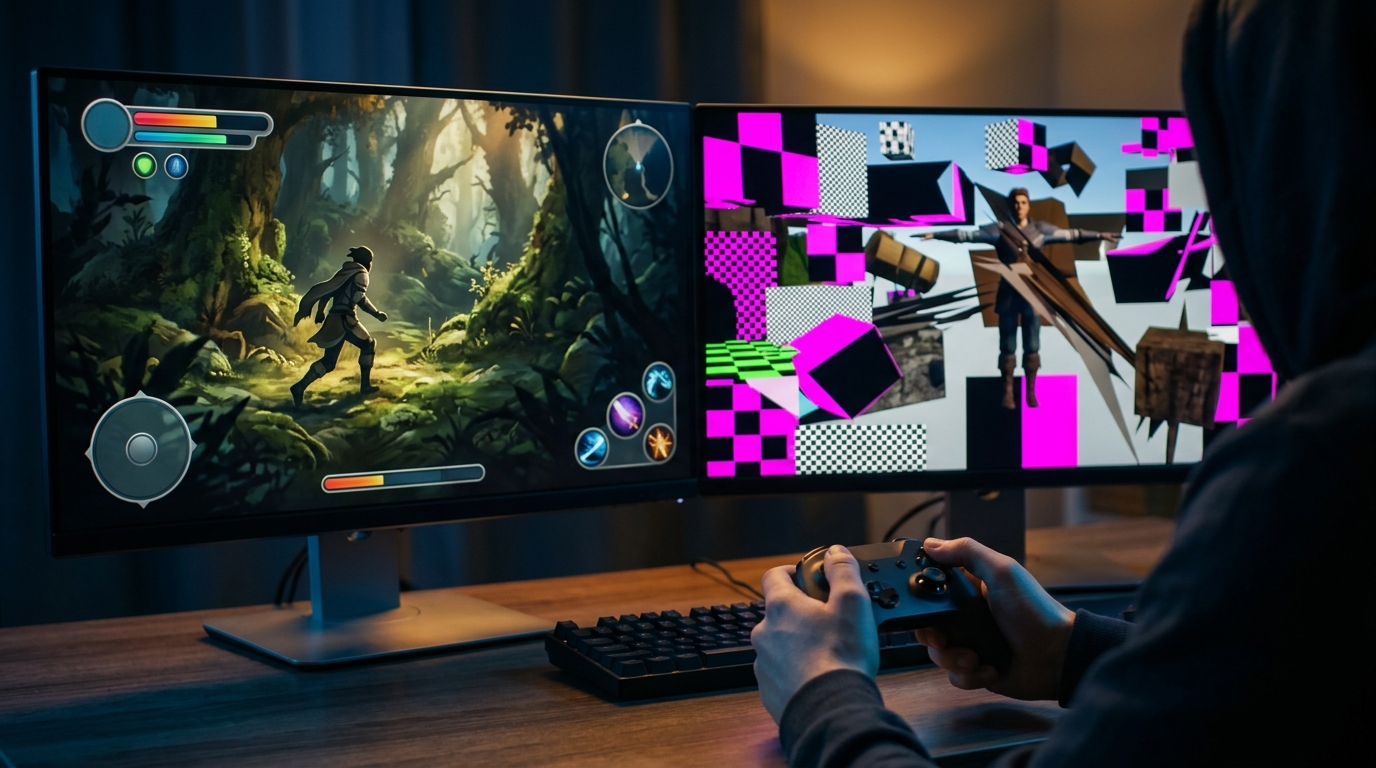
I treat Next Fest demos like a buffet where some dishes are exciting and others are still legally considered ingredients. A crash during the opening menu, placeholder art everywhere, or missing audio is not automatically fatal, because demos can be rough. Repeated technical problems, however, suggest the developer wants me to finish the testing phase for free. I also watch the tutorial closely. If it takes twenty minutes to explain walking, the game may not have much else to offer. A promising demo gives me a clear taste of its core loop, not a guided tour of unfinished scaffolding.
Progression problems are another major warning sign, especially when objectives fail to trigger, menus refuse to explain themselves, or the demo quietly strands me in a dead end. Difficulty should challenge my decisions, not punish me for missing an invisible switch or deciphering instructions written by a haunted printer. I look for whether failure teaches me something and whether the next attempt feels fair, rather than simply asking me to repeat tedious chores. If the most memorable mechanic is restarting after a broken checkpoint, I am not discovering a hidden gem. I am performing unpaid QA with worse coffee.
The store page should also make a convincing case before I download anything, with specific details about the genre, features, expected release window, and what the demo actually contains. Vague promises about an “immersive experience” and “next-generation gameplay” tell me roughly as much as a fortune cookie written by a marketing department. I compare the page’s claims with the first hour, then ask whether the demo leaves me curious about the finished game or merely relieved that it ended. When a project has a strong idea, a readable direction, and enough polish to respect my time, I wishlist it. When it mistakes inconvenience for depth, I uninstall it before the tutorial finds another hostage.
Building A Next Fest Demo Shortlist
I start my Next Fest demo shortlist by sorting games into the genres I actually want to play, not every shiny trailer waving for attention. Pick two or three priority genres, then add a wildcard category for something genuinely weird, because the best discovery is often hiding behind a terrible capsule image. I also check the store page for a clear premise, recent developer updates, and a demo that looks like a focused slice rather than the opening move in an unpaid QA internship. The next festival runs from October 19 to 26, 2026, so a little planning beats downloading 47 demos and finishing none of them. My hard rule is simple: if the game cannot explain why I should care within a few minutes, it does not get precious space on my drive.
I test demos in short sessions, usually 20 to 30 minutes each, and judge the fundamentals before getting distracted by glowing particle effects. Does movement feel good? Does the core loop make sense? Does the game respect my time, or is it handing me a tutorial longer than some full campaigns? I keep quick notes on controls, performance, originality, and whether I would willingly play another hour. That helps separate promising rough edges from systems held together with digital duct tape. Developer livestreams are worth watching when I need context about an unusual mechanic, roadmap, or accessibility feature, but I skip them when they are just a cheerful tour of menus I already suffered through. A livestream can explain a rough demo, but it cannot excuse one that feels fundamentally lifeless.
By the end, my wishlist is deliberately small, because treating it like a digital landfill helps nobody. I wishlist projects that deliver a strong hook, show meaningful potential, or leave me curious about the finished game, even if the demo still needs polish. I do not wishlist something merely because it is free, attractive, or accompanied by a developer promising that the real fun starts later. That promise has been gaming’s oldest loading screen. When the festival ends, the shortlist should tell me exactly which games deserve a future download and which ones can remain fond memories of 18 minutes I will never get back.
Conclusion On Next Fest Demos
Next Fest demos are a buffet, but nobody gets extra credit for eating the napkins. I use the event to find games with a clear hook, responsive controls, and enough polish to suggest the developers know what they are building. A short demo does not need to be perfect, but it should respect my time with useful onboarding, meaningful gameplay, and performance that does not turn my graphics card into a distress signal. If the first impression is mostly crashes, placeholder assets, and instructions to “please send feedback” on basic functionality, I am not a player anymore. I am unpaid quality assurance with snacks.
The October 2026 edition runs from October 19 through October 26, giving players a week to sift through upcoming releases and playable previews. I recommend judging each demo by what it promises and how quickly it delivers, because a clever trailer cannot rescue ten minutes of wandering through empty corridors. Support the projects that show real ideas, memorable mechanics, and developers who clearly understand their audience. Wishlist the games that earn it, share the good finds, and give useful feedback when the foundation is strong enough to deserve another coat of paint. A promising rough edge is forgivable. A complete lack of direction is just confusion wearing a collectible hat.
My final rule is simple: play the demos that respect your time, support the games that show genuine promise, and uninstall anything that feels like a bug report wearing a costume. Next Fest is at its best when it helps players discover something special before everyone else starts shouting about it. I would rather finish three focused demos than drag myself through twenty bloated previews out of some imaginary gamer duty. The event is not a scavenger hunt for suffering, and “it might get good later” is not a review score. Keep the gems, ditch the chores, and let the developers know exactly which side of that line they landed on.
Find Your Next Obsession Before Launch
Next Fest demos are still one of the best ways to find your next obsession before the marketing machine inflates it into a full-price mystery box. The event runs three times a year, in February, June, and October, with free playable demos, trailers, developer streams, and discovery tools built around upcoming unreleased games. I recommend treating the festival like a buffet, but with less mystery meat: sample widely, then focus on demos that show a clear hook, responsive controls, and enough polish to prove the developers understand their own game. A clever idea cannot rescue sluggish combat, empty environments, or a tutorial that feels like unpaid quality assurance.
The next festival runs from October 19 to 26, 2026, giving players one week to separate promising projects from glorified tech previews. Wishlisting games that impress you helps developers, while honest feedback can expose problems before launch, assuming the demo does not collapse under the weight of its own ambition. My advice is simple: play the games that make a strong first impression, skip anything that mistakes confusion for depth, and do not feel guilty uninstalling a demo that wastes your time. The best festival demos leave me excited for the finished game, not grateful that the trial period was free.