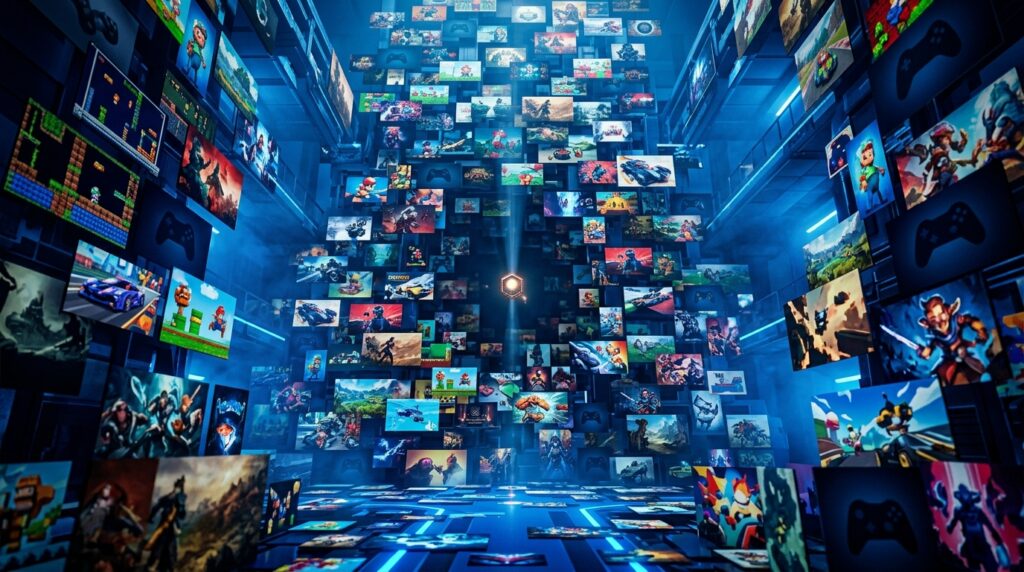
Release oversupply is real. It has turned the store into a digital junk drawer where a brilliant indie game can sit three inches away from 400 survival-crafting clones. More games are launching than ever, but player attention has not magically multiplied, unless someone found a way to install extra eyeballs. The result is not a dead market. It is a brutal discoverability problem that hits low-budget, experimental, and first-time releases hardest.
I’m looking at why release volume has exploded, where player spending is actually going, and why “just make a better game” is increasingly useless advice when nobody sees the game in the first place. The storefront remains commercially healthy, but success is clustering around established hits and a small number of breakout newcomers. For everyone else, launch day can feel less like opening night and more like whispering into a warehouse full of air horns.
Key Takeaways
- Game release volume has more than doubled since 2020, reaching roughly 66 new releases per day in 2026. The storefront is commercially active, but the sheer supply makes discovery increasingly difficult.
- Player attention and spending remain concentrated on established hits, major updates, viral moments, and a small number of breakout newcomers. Quality alone no longer guarantees visibility when most games are competing against finite time, money, and existing backlogs.
- Low-budget, experimental, and first-time developers bear the greatest risk because they lack built-in audiences and marketing resources. Wishlists, demos, festivals, creator coverage, community building, strong positioning, and launch timing are now essential parts of development.
- Platforms must improve meaningful filters, recommendations, curation, and transparency so players can navigate the catalog without rewarding only games that already attract attention. Developers still need a clear hook and external reach because no discovery system can give every release equal visibility.
The Release Volume Explosion
Release volume has gone from crowded to downright absurd. The store logged 9,636 games in 2020, and the pace has climbed every year since, reaching 16,242 releases by August 25, 2026. That already represents more games than arrived during all of 2020, with four months still left on the calendar. Here is the ugly little scoreboard:
| Year | Games released | Approx. average per day |
|---|---|---|
| 2020 | 9,636 | 26 |
| 2021 | 11,217 | 31 |
| 2022 | 12,562 | 34 |
| 2023 | 14,532 | 40 |
| 2024 | 18,562 | 51 |
| 2025 | 21,519 | 59 |
| 2026, through August 25 | 16,242 | 66 |
At the current rate, a cautious annualized projection puts 2026 at approximately 25,400 games, or roughly 66 new releases every day. That would make annual release volume more than double 2020’s total, an increase of about 164 percent in six years. For players, this creates a discovery problem because even a promising game can vanish beneath dozens of fresh store pages before anyone has time to notice it. For developers, the launch window increasingly resembles throwing a business card into a tornado and hoping someone reads it.
This is oversupply, but it is not proof that demand has collapsed or that the market is commercially dead. Players still spend heavily, yet attention remains concentrated on established favorites and a relatively small group of breakout releases. The games absorbing most of the risk are low-visibility indies, experimental projects, and smaller productions that lack a large audience waiting at launch. More releases create more choice, but without better filtering and discovery, choice starts behaving like homework with screenshots.
Discoverability Versus Player Attention

Release oversupply has turned discovery into a knife fight, with 66 new games reportedly arriving each day in 2026. That is more than double the roughly 26 daily releases recorded in 2020, so the storefront is no longer a shop window. It is a warehouse where someone keeps throwing boxes through the door. More games give players more choice, but they do not create extra hours, spare cash, or the patience to investigate every mysterious capsule-art goblin.
Player attention still clusters around established hits, major updates, viral moments, and a small number of breakout indies. A familiar game can dominate the front page because it adds a character, launches an event, or briefly catches fire on social media, while dozens of worthwhile newcomers vanish beneath the algorithmic avalanche. I can practically hear the store saying, “Here are 1,000 games, good luck,” before hiding the search bar. In this environment, quality matters, but visibility often decides whether anyone stays long enough to notice that the quality exists.
The result is not a dead market, but a brutally uneven one where low-budget, experimental, and poorly marketed releases absorb most of the risk. A game can launch into positive reviews and still struggle if it lacks a strong hook, a recognizable audience, or enough wishlists to trigger early momentum. Developers are competing not only with other new releases, but also with the player’s existing backlog, free time, and latest internet obsession. Release oversupply therefore makes discoverability part of development itself, because a great game that nobody sees is functionally a very expensive secret.
Who Pays for Oversupply?
Release oversupply makes visibility the first bill low-budget developers pay. With roughly 66 new games reportedly arriving each day in 2026, a solid indie release can disappear beneath a pile of roguelikes, simulators, visual novels, and asset flips wearing different hats. The market is not suffering because nobody wants games, but player attention is concentrated around established favorites and a small number of breakout launches. That leaves experimental projects, niche genres, and teams without a serious marketing budget fighting for the same few seconds of curiosity. Making a good game still matters, but discoverability now treats that achievement like an adorable opening bid.
The burden starts months before launch, because wishlists have become a rough forecast of whether anyone will notice the release at all. Developers increasingly need a playable demo, festival appearances, creator coverage, reviews, and active communities outside the store to create momentum before launch day. Timing matters too, since releasing beside a major title can turn a carefully planned debut into digital camouflage. None of these tools guarantees success, but skipping them can make a game functionally invisible, which is a grim reward for surviving development. The store may provide the shelf, but indies are often expected to build the shop window, print the flyers, and personally wave at passing customers.
Oversupply also shifts risk toward developers least able to absorb it. A disappointing launch can mean months of unpaid work, weak early reviews, and too little revenue to fund updates or the next project, while larger teams can often buy attention or wait for a second chance. I think that is the real sting of release oversupply: it does not punish every game equally. It punishes games without reach. Smart positioning, a focused trailer, a strong demo, and genuine community work can improve the odds, but they cannot manufacture attention from nothing. In this market, “just make something great” is still good advice, provided someone also remembers to tell the internet that the game exists.
Fixing the Discovery Problem
Release oversupply has turned discovery into a second job, and nobody bought a storefront expecting homework. With roughly 66 new games arriving each day in 2026, even promising indies can vanish beneath a mountain of visual novels, unfinished survival sandboxes, and asset flips wearing different hats. I would start with better filters that let players sort by meaningful details such as controller support, solo play, accessibility, average session length, update history, and whether a game is actually finished. Those tools should be visible and simple, not hidden behind a settings menu designed by someone who thinks finding a co-op roguelike requires a minor in library science.
Recommendation systems also need to reward genuine player satisfaction instead of blindly pushing whatever already attracts clicks. Stronger human and community curation could help surface experimental games, while store pages should provide clearer signals about review velocity, development activity, major updates, pricing history, and how much of the trailer is just cinematic smoke. The platform should also distinguish a substantial new release from a barely altered asset flip, because treating both as equal entries makes the catalog look larger while making it less useful. None of this requires killing choice. It requires giving players better ways to handle the choice they already have.
The uncomfortable truth is that no algorithm can give all 66 daily launches a front-row seat, because player attention is finite and most people are not looking for a second full-time career in game discovery. The platform can improve filtering, recommendations, tagging, and editorial visibility, but it cannot manufacture an audience for every release. Developers still need sharp positioning, credible demos, and a reason to stand out before launch day turns their game into digital confetti. Fixing the oversupply problem means reducing pointless noise, not pretending every new title deserves equal billing.
Too Many Games, Not Enough Attention
Release oversupply is not proof that players have stopped caring about games. It is proof that the store is becoming a fire hose aimed directly at everyone’s face, with roughly 66 new releases reportedly arriving each day in 2026. That is more than double the average daily output seen in 2020, when about 26 games launched per day. Demand still exists, but player attention remains concentrated on established favorites and a small number of breakout releases, leaving countless worthy games buried before anyone even sees them.
The result is a market that looks creatively healthy and commercially brutal at the same time. Developers can build stranger, smarter, more personal games than ever, but visibility has become nearly as important as polish, originality, or having a title people can actually remember. For indie teams especially, a strong launch can disappear beneath the daily avalanche unless the game has a clear hook, convincing presentation, and a way to reach players outside the store’s crowded shelves. I see that as the central problem: not a shortage of demand, but too much supply competing for the same finite human attention, which is the one resource nobody can patch, optimize, or buy in bulk.