Resident Evil Requiem is a strong survival-horror game built around Grace Ashcroft’s stealth-heavy scares and Leon Kennedy’s hard-hitting combat. Our verdict is yes, if you want genuine horror alongside big action beats. The catch: the sharp switch between them can feel less like variety and more like two games taking turns with the controller. It has an 89/100 Metascore on PlayStation 5, with a favorable critic consensus. A score can’t tell you whether its pacing will click. GameSpot’s review sums up the central gamble: Grace brings slow, frightening horror, while Leon leans into faster, Resident Evil 4-style action.
That divide is the hook, not a minor wrinkle. Grace’s vulnerability and stealth build dread; Leon’s chapters trade creeping tension for combat confidence, though a crowd can still cause trouble. The result has real range, but the mood shift may frustrate anyone hoping for one consistent flavor of survival horror. The story has uneven patches, and PC players face a more concrete caveat: in one RTX 5090 test, frame rate fell from 157 fps with High ray tracing to 77 fps with path tracing. That’s one test configuration, not a universal performance verdict, but the graphics upgrade clearly isn’t free. The standard U.S. edition costs $69.99. Requiem has plenty going for it. Whether its two sides add up to a satisfying whole is the real question.
Key Takeaways
- We recommend Resident Evil Requiem at the $69.99 standard-edition price if you want real scares and big action, not one mood held hostage for the whole game.
- Grace Ashcroft’s stealth-heavy chapters build dread through vulnerability, while Leon Kennedy’s combat-heavy sections bring faster, Resident Evil 4-style action; the sharp switch is the game’s hook and its biggest pacing risk.
- Resident Evil Requiem’s story has uneven patches, so players who want a tightly cohesive narrative or uninterrupted horror should think twice before buying.
- PC players should treat path tracing as an optional luxury: one RTX 5090 test dropped from 157 fps with High ray tracing to 77 fps with path tracing.
Is Resident Evil Requiem Worth Playing?
Yes. Resident Evil Requiem is worth playing if you want survival horror that makes you dread a dark hallway, then hands you enough firepower to turn the next fight into a loud mess. The catch is the jump between those moods. Grace Ashcroft and Leon S. Kennedy are not interchangeable leads with different haircuts. Their contrasting approaches give Requiem its identity: Grace’s vulnerability makes danger feel close, while Leon’s action-focused sections offer a forceful release. That contrast is also the game’s biggest risk. If the switches feel like a welcome change of pressure, the structure works. If they feel like two separate games arguing over the same save file, the pacing can wear thin. The critical reception is strong, but it’s context, not a verdict handed down from on high. The PlayStation 5 version has an 89/100 Metascore from 133 critic reviews, labeled “Generally Favorable.” GameSpot rated Requiem 8/10, or “Great,” and describes the divide between Grace’s horror-first play and Leon’s faster action. We agree that the divide is central. We also weigh whether the scares land, combat stays engaging, the narrative feels cohesive, and performance gets in the way. This is a spoiler-light assessment, not a guided tour of every nasty surprise. We focus on what Requiem does well and where it stumbles, without treating the Resident Evil name as a magic stamp that makes every design choice untouchable. The series has earned attention, not immunity from criticism. Requiem’s story has uneven patches, and its sharp changes in pace are a real part of the experience, not a footnote to wave away after the credits. Players who want sustained tension from beginning to end may find the action shifts disruptive. Players happy to trade creeping dread for bursts of combat should find the contrast more rewarding than jarring. The question isn’t whether Requiem can do both. It can. The question is whether moving between them keeps you engaged or leaves you wishing the game would pick a lane.
How Do Grace And Leon Change The Gameplay?
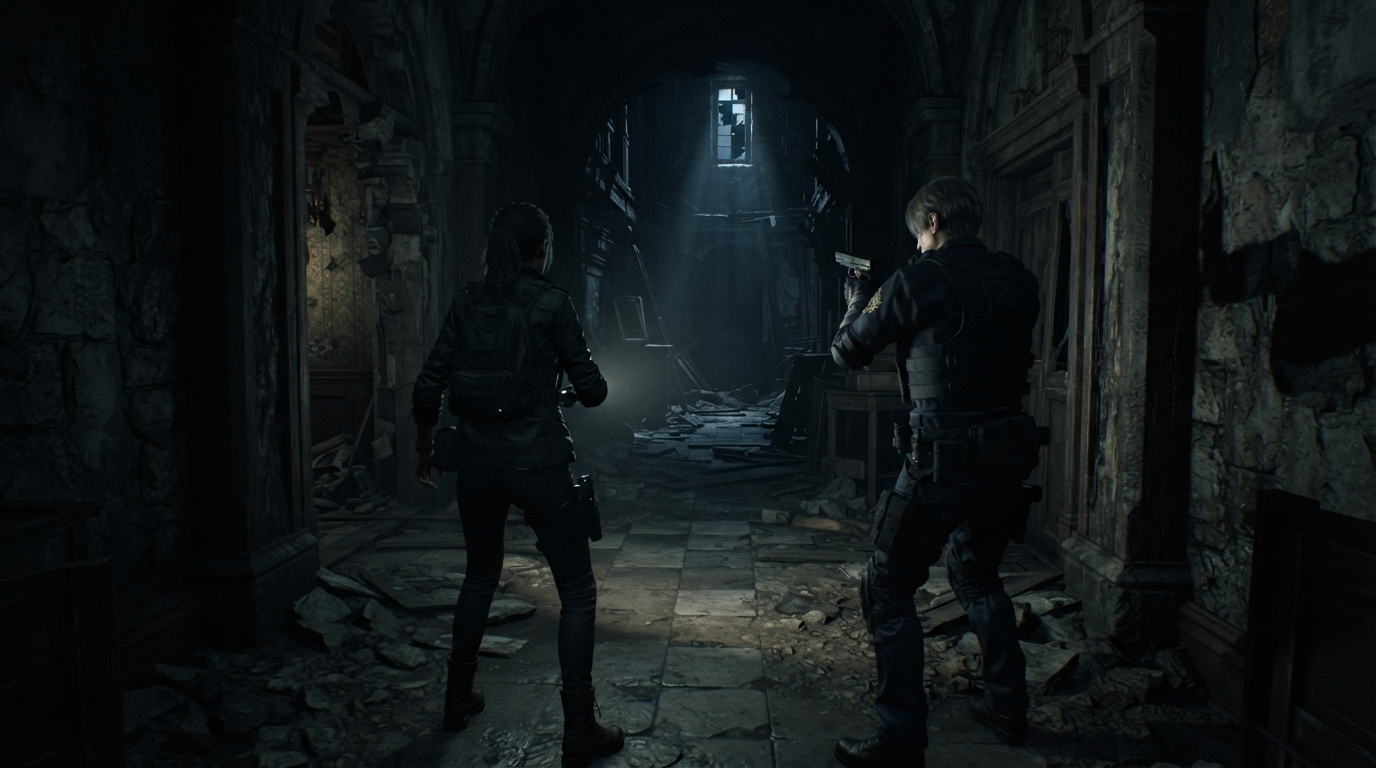
Grace Ashcroft and Leon S. Kennedy pull Resident Evil Requiem between stealth-focused survival horror and fast, combat-heavy action. Grace makes danger feel close and patience essential; Leon gives players a more direct way to deal with trouble. That contrast brings welcome variety, but the transitions can also make it feel like two different Resident Evil games taking turns with the controller.
Grace’s sections are the slower, more frightening half. Her stealth-heavy approach puts the emphasis on vulnerability and tension, not marching into every encounter like the building owes you money. Players who enjoy creeping through danger, staying alert, and making cautious choices will likely get the most from her chapters. Anyone who prefers a steady supply of enemies to shoot may find her pace deliberately uncomfortable. That’s the point, even if it tests the patience of players itching to get moving.
Grace’s stealth sequences and early puzzles are important sources of tension between action sections. The puzzles keep her stretches from becoming one long exercise in hiding, while the stealth preserves a sense of risk that Leon’s combat is designed to relieve. That rhythm matters: Grace builds pressure through restraint, then Leon arrives with the kind of momentum that makes restraint feel like an endangered species.
Leon’s sections are faster and more action-oriented, drawing on the approach of Resident Evil 4. He feels far more capable in a fight than Grace, shifting the focus from avoiding danger to handling it head-on. GameSpot describes Leon as an effective soldier in combat, while noting that multiple attackers can still pose serious problems. He’s confident, not invincible. A crowd can turn a power fantasy into a practical reminder that enemies do not politely queue up.
The switching mostly works because each style makes the other feel sharper. Grace’s tension gives Leon’s combat a release; Leon’s momentum makes Grace’s vulnerability stand out instead of blending into a constant, flat level of dread. But the contrast isn’t seamless. Players who want uninterrupted horror may resent being pulled into action, while players who want Resident Evil 4-style combat throughout may find Grace’s stealth and puzzles slow the game down.
We think the split is a useful source of variety, not a perfect marriage. Requiem is at its best when tension and resourcefulness have room to build before direct combat takes over. The shifts can feel abrupt, but they give the two leads distinct purposes instead of dressing one gameplay style in different character models. Grace suits players who enjoy anxiety with their problem-solving; Leon suits players who want momentum and a confident fight. If both sound good, the change in pace is part of the appeal. If only one does, the other half may feel like an unwanted transfer of controller custody.
How Scary Is Resident Evil Requiem?
Resident Evil Requiem is genuinely scary in Grace Ashcroft’s stealth-focused sections, but it doesn’t sustain that pressure throughout the game. Grace’s slower gameplay supplies much of the horror, building tension around her vulnerability and the need to move cautiously. The fear comes less from constant shocks than from feeling exposed, with danger taking up space in your thoughts even when you’re trying to decide what to do next. That slower pace gives Grace’s chapters a different kind of pressure from a straightforward action game. Stealth asks you to stay alert and think before acting, rather than treating every threat as an invitation to start firing. It’s an effective fit for survival horror: the game has room to let tension build instead of immediately blowing it off like a pressure valve with a trigger. Leon Kennedy’s chapters change the emotional register. His more forceful combat puts action in the foreground, replacing sustained vulnerability with a greater sense of control. Combat can still get dangerous when multiple attackers pose a problem, but Leon’s sections aren’t trying to maintain Grace’s creeping dread. They’re more interested in momentum than making every step feel like a bad idea. The contrast can make the horror hit harder when Requiem slows down again. After a stretch of action, Grace’s vulnerability feels more pronounced, and the quieter pace has room to work. But that same switch can interrupt the mood for players looking for uninterrupted survival horror. Requiem doesn’t stay in one emotional lane. Sometimes it wants you tense; sometimes it wants you busy. Our verdict: Requiem has real horror, but it isn’t wall-to-wall dread. Players who enjoy a shift from stealth-driven tension to combat-heavy action should find the balance compelling. Anyone hoping for a consistently oppressive survival-horror mood may find Leon’s chapters loosen the grip just when they want the game to keep twisting. The ESRB rates Resident Evil Requiem M for Mature 17+ for blood and gore, intense violence, and strong language. The ESRB rating details give a clear sense of the game’s content, though the rating alone can’t tell you how its horror and action are balanced.
Does The Story Hold Together?
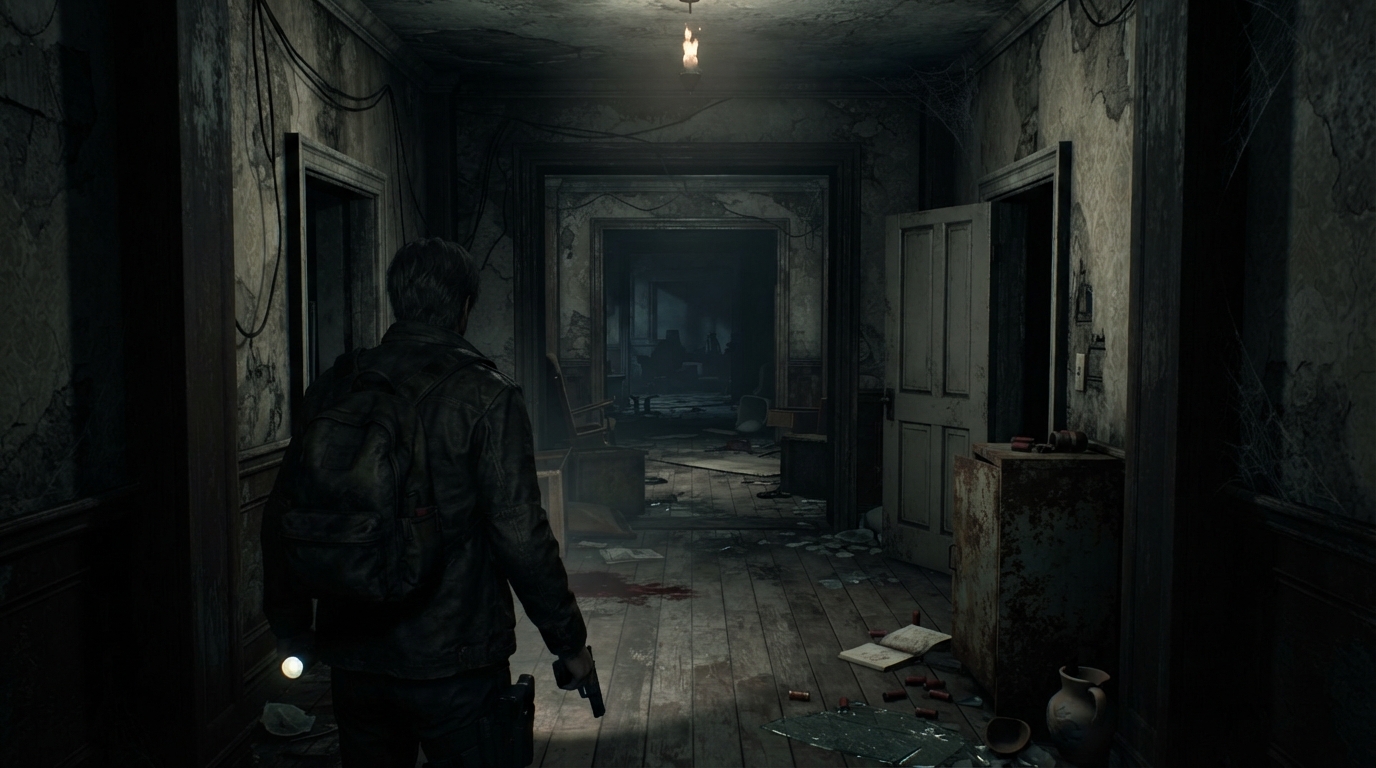
Mostly, but Resident Evil Requiem’s narrative is less consistent than its two-protagonist structure aims to be. Grace Ashcroft’s slower, horror-focused sections and Leon Kennedy’s faster, action-heavy stretches give the story noticeably different rhythms. That contrast adds variety, but it can also leave the overall narrative feeling like it changes gears more cleanly than it brings its pieces together. Switching between Grace and Leon has a clear structural benefit: each lead offers a different pace and mood, so the story doesn’t stay in one register for its entire run. Grace’s sections leave room for tension to build; Leon’s bring more forceful momentum. The risk is that those shifts can make the narrative feel less cohesive, especially when one stretch has a very different emotional texture from the next. The change isn’t automatically a flaw, but Requiem doesn’t make every transition seamless. Review coverage identifies story unevenness as a potential drawback, and that criticism matters. A game can have strong scenes and still struggle to make its broader narrative satisfying from start to finish. GameSpot’s review emphasizes how distinct the two gameplay approaches feel. That division is part of Requiem’s appeal, but it also helps explain why the narrative may not land as consistently as its individual moods. And no, a connection to the wider Resident Evil universe isn’t a free pass. Familiarity can add extra flavor for longtime fans, but recognition alone can’t make a story satisfying. Requiem still has to hold together on its own terms, and its unevenness means it doesn’t always match the strength of its central two-lead idea. The result is an engaging structure with some rough narrative joins, rather than a story that perfectly smooths every change in pace.
How Does Requiem Perform On PC?
Resident Evil Requiem’s PC performance trade-off is clearest with path tracing: it can sharply reduce frame rate, even on high-end hardware. In one RTX 5090 test, the game recorded 157 fps with High ray tracing and 77 fps with path tracing. That’s one test configuration, not a forecast for every PC, but it shows that the more demanding lighting option can take a substantial bite out of performance. Path tracing brings extra lighting detail, but that upgrade isn’t free. The comparison gives PC players a useful way to think about the choice: favor High ray tracing if keeping frame rate higher matters more, or try path tracing if its lighting improvements are worth the cost. The test doesn’t establish what either setting will deliver on another graphics card or with a different setup. Treat the figures as an example of the trade-off, not a promise about your own machine. That distinction matters because “PC performance” isn’t one universal result. An RTX 5090 test says something specific about that configuration; it doesn’t prove Requiem will match those frame rates on every system. Nor does the comparison support claims of crashes, stuttering, or poor optimization. The useful takeaway is narrower: path tracing asks for considerably more performance than High ray tracing in the reported test. Review coverage praises Requiem overall, including its scares and combat, while identifying path tracing as a potential PC drawback. That’s a graphics-setting caveat, not a reason to write off the entire PC version. Players who care most about the added lighting detail may decide the cost is worthwhile; players who would rather preserve frame rate have a clear reason to be cautious about enabling it. Requiem’s PC graphics options call for a preference, not a blanket verdict. Path tracing may make the game’s lighting more detailed, but the RTX 5090 comparison shows the bill can be steep even on powerful hardware. The right setting depends on how much that visual improvement matters to you compared with the performance you want.
How Do The Platform Scores Compare?
The platform scores are close, and they show favorable critic reception across the listed versions, not a technical winner. Resident Evil Requiem has critic aggregate scores of 93 for Xbox Series X, 92 for PC, 90 for Nintendo Switch 2, and 89 for PlayStation 5. That four-point spread puts all four versions in a similar range of positive critic response. Those numbers are critic aggregate scores, not frame-rate tests or proof that one platform performs better. A Metascore tallies reviews; it doesn’t measure image quality, loading times, performance stability, or how smoothly a game runs. Treating a higher critic score as a hardware benchmark is like judging a car’s handling by its restaurant reviews: entertaining, perhaps, but not useful. Requiem launched on PlayStation 5, Xbox Series X|S, PC, and Nintendo Switch 2, according to Capcom’s release announcement. The available figures support one clear conclusion: critics responded favorably to the game across the listed platforms. They don’t establish a direct performance winner or explain why one platform’s aggregate score sits a few points above another’s. That distinction matters most for a Switch 2-versus-PS5 decision. The 90 for Switch 2 and 89 for PS5 are critic aggregates, not evidence that either version looks or runs better. The scores alone can’t settle which version is the better fit because they don’t compare technical performance or platform-specific features. We can say Requiem earned favorable critic reception on both; claiming one is the better-performing version would go beyond what these figures show.
Who Should Pay Full Price?
Players who want both stealth-driven horror and action combat have the strongest reason to pay full price for Resident Evil Requiem. Grace Ashcroft’s cautious, frightening sections and Leon Kennedy’s more forceful fights offer two distinct pleasures, not one mood stretched thin. If switching from creeping past danger to taking on attackers sounds exciting, Requiem’s central contrast is doing useful work.
Players looking for one consistent horror pace should be more cautious. Grace’s tension gives way to Leon’s action, and that tonal shift is the clearest reason to hesitate if it sounds annoying rather than refreshing. You may enjoy one half and still resent the other showing up to change the channel.
The standard edition costs $69.99, and the Deluxe Edition costs $79.99. We can make the case for the standard edition based on the game’s two contrasting styles; the available details here don’t establish whether the Deluxe Edition’s extras justify its higher price. Paying more should require a reason, not just a shinier label.
The ESRB rating is Mature 17+ for blood and gore, intense violence, and strong language, and notes that the game includes in-game purchases. That’s useful to know when considering the game for a younger player or keeping an eye on spending, though the rating doesn’t say what those purchases cost. On the fence? The decisive question is whether Requiem’s jump from stealth horror to action sounds like a welcome change of pace or an interruption you’ll spend the game wishing would stop.
Should You Step Into Requiem?
Yes, step into Resident Evil Requiem if you’re willing to trade uninterrupted horror for a mix of nerve-racking stealth and forceful combat. If that change sounds like a nuisance rather than a release, skip it for now instead of hoping the game will settle into one style. First, decide which side matters more to you. If you want the full contrast, choose the standard edition on the platform you already play on; the available critic scores don’t establish that one version performs better than another. If you mainly want sustained dread, hold off until you’re comfortable with Leon’s action-heavy stretches sharing the spotlight. Buying for someone else? Read the ESRB rating details before deciding. Resident Evil Requiem is rated Mature 17+ for blood and gore, intense violence, and strong language, and the listing notes in-game purchases. That’s a useful check, not fine print to ignore because a familiar franchise logo is on the box. PC players should decide whether path tracing is a must-have before choosing settings; the reported performance cost makes it a poor setting to enable automatically. If your platform, content preferences, and appetite for tonal whiplash all line up, Requiem is worth your time.