We’ve all been there: you spend a small fortune on a top-tier rig, only to have it smell like a backyard barbecue three minutes into a loading screen. While the industry average for a total system meltdown sits at a cozy 2%, that’s cold comfort when your high-end rig decides to self-immolate. The history of failed gaming hardware is littered with ambitious disasters, but we’re currently seeing a new, literal spark in the trend of expensive paperweights.
The latest culprit is the 16-pin connector saga, which has officially transitioned from an “oopsie” to a full-blown catastrophe with the launch of the RTX 5090. Despite new standards meant to keep your house from burning down, these 575W monsters are melting through plastic like a hot knife through butter. It turns out that pushing record-breaking power through tiny, finicky pins is a recipe for disaster if you don’t seat them with the precision of a heart surgeon. If you’re going to drop two grand on a GPU, the least it could do is not turn your PC into a localized fire hazard.
Key Takeaways
- Modern flagship GPUs like the RTX 5090 represent a dangerous trend of prioritizing raw performance over structural integrity, with 575W power draws pushing 16-pin connectors to a literal melting point.
- Historical failures like the Nintendo Virtual Boy and the Nokia N-Gage prove that hardware innovation is worthless if the ergonomic and logical design is objectively hostile to the user.
- The Sega 32X serves as a permanent warning against releasing stopgap hardware peripherals that fragment the market and demand excessive, complex power configurations.
- High-end hardware enthusiasts must transition from a ‘plug and play’ mindset to one of ‘surgical precision’ to ensure that poorly seated components do not result in catastrophic thermal damage.
Nintendo Virtual Boy And The Crimson Migraine
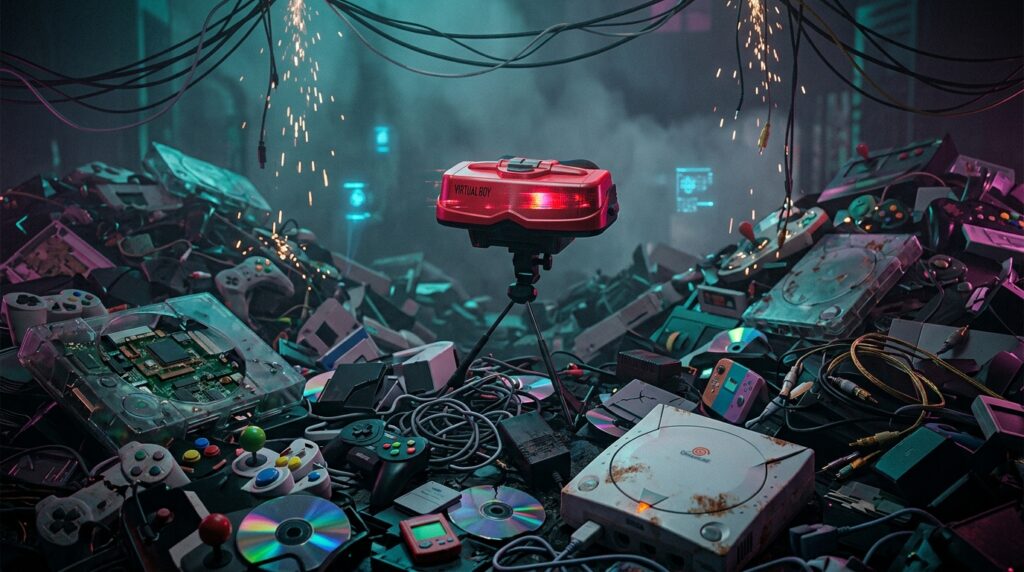
Nintendo has spent decades building a reputation for polished innovation, but the Virtual Boy remains a permanent stain on that legacy that no amount of nostalgia can scrub clean. Released in 1995 as a supposed leap into virtual reality, this monochrome monstrosity was less of a headset and more of a heavy, plastic anchor that required a tripod just to stay upright. Instead of immersive 3D worlds, players were treated to a nauseating display of flickering red LEDs against a void of pure black. It was an ergonomic disaster that forced you to hunch over a table like a gargoyle just to witness Mario Tennis in two shades of crimson. The design was so fundamentally flawed that Nintendo literally included a built-in timer to remind you to stop playing before your retinas staged a formal protest.
The hardware failure of the Virtual Boy was so spectacular that it makes modern technical hiccups, like the melting power connectors on high-end graphics cards, look like minor inconveniences. While today’s enthusiasts deal with the occasional catastrophic failure of a 575W flagship component, the Virtual Boy was a guaranteed failure of the human ocular system from the moment you hit the power switch. It did not matter how good the software was when the delivery mechanism felt like a medieval torture device designed to induce a migraine in under ten minutes. Nintendo eventually realized that bleeding-edge tech is worthless if it requires a chiropractor and a bottle of aspirin to enjoy, leading them to bury the project in a shallow grave. This red-tinted nightmare serves as a timeless reminder that even the biggest names in gaming can occasionally launch a product that is objectively hostile to its own audience.
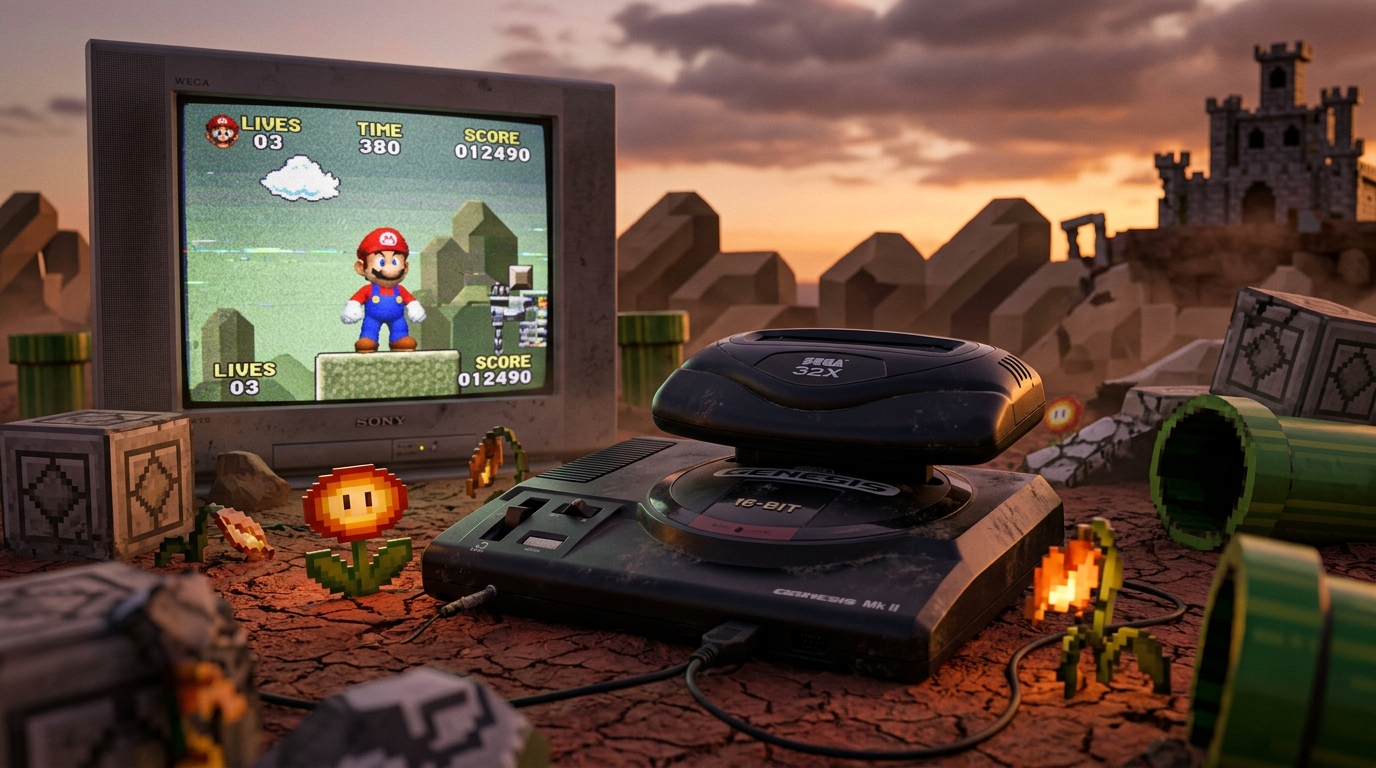
Sega 32X And The Mushroom Kingdom Of Fail
In the mid 1990s, Sega decided the world needed a phone that doubled as a handheld console, and the result was an absolute architectural nightmare. The N-Gage was a device that seemingly hated its users, requiring you to physically remove the back cover and the battery just to swap out a game cartridge. Imagine wanting to switch from Sonic to Super Monkey Ball while on the bus and having to essentially perform surgery on your phone, effectively killing your cellular connection in the process. It was a design choice so bafflingly counter-intuitive that it makes modern hardware failures look like minor inconveniences by comparison.
The library for this Frankenstein monster was just as depressing as its physical design, consisting mostly of slightly prettier ports we had already played. You had to spend a small fortune just to see a few more colors in Sonic or play a version of Doom that lacked half the levels and featured a soundtrack that sounded like a robotic flatulence. Sega expected us to shell out hundreds of dollars for a system that they effectively abandoned only months later when the Saturn launched. It was a masterclass in how to incinerate brand loyalty by treating your customers like walking wallets. We were promised the future of gaming, but all we really got was an awkward paperweight that required three separate power configurations just to function.
History repeats itself in the most annoying ways, as we see today with high end components that seem determined to melt themselves into oblivion. Much like the Sega 32X pushed the Genesis past its natural breaking point, modern flagship graphics cards like the RTX 5090 are pushing power connectors to the absolute limit. We are seeing a surge in reports of melting 16 pin connectors because these cards draw more power than some small kitchen appliances. It is the same old story of hardware manufacturers prioritizing raw specs over sensible, reliable design. Whether it is a plastic mushroom from 1994 or a brilliant console in 2025, the result is usually an expensive headache for the person just trying to play a game.
Nokia N-Gage And The Taco Phone Fiasco
Long before we were melting high end power connectors on modern GPUs, Nokia decided the world needed a phone that doubled as a handheld console, and the result was an absolute architectural nightmare. The N-Gage was a device that seemingly hated its users, requiring you to physically remove the back cover and the battery just to swap out a game cartridge. Imagine wanting to switch from Sonic to Super Monkey Ball while on the bus and having to essentially perform surgery on your phone, effectively killing your cellular connection in the process. It was a design choice so bafflingly counter-intuitive that it makes modern hardware failures look like minor inconveniences by comparison.
The hardware absurdity reached its peak with the infamous “sidetalking” phenomenon that turned every phone call into a public comedy routine. Because the microphone and speaker were located on the top edge of the device rather than the face, you had to hold the thin side of the phone against your head, making it look like you were whispering secrets to a plastic taco. This design flaw was not just a minor quirk, but a fundamental misunderstanding of how human beings interact with technology. It was the ultimate example of a company being so preoccupied with whether or not they could build a gaming phone that they forgot to check if it worked as either a game system or a phone.
Even the screen was a disaster, featuring a vertical orientation that felt claustrophobic for almost every genre of gaming that existed in 2003. Most titles were ports of games designed for horizontal displays, leading to chopped off visuals and a cramped perspective that made platforming a chore. While we currently complain about high power draws and complex cooling systems in the latest flagship hardware, those issues are at least born from a push for performance. The N-Gage was a failure of pure logic, proving that no amount of marketing budget can save a product that requires you to look like a lunatic just to answer a call from your mom.
Modern Melting Points And The RTX 5090 Meltdown
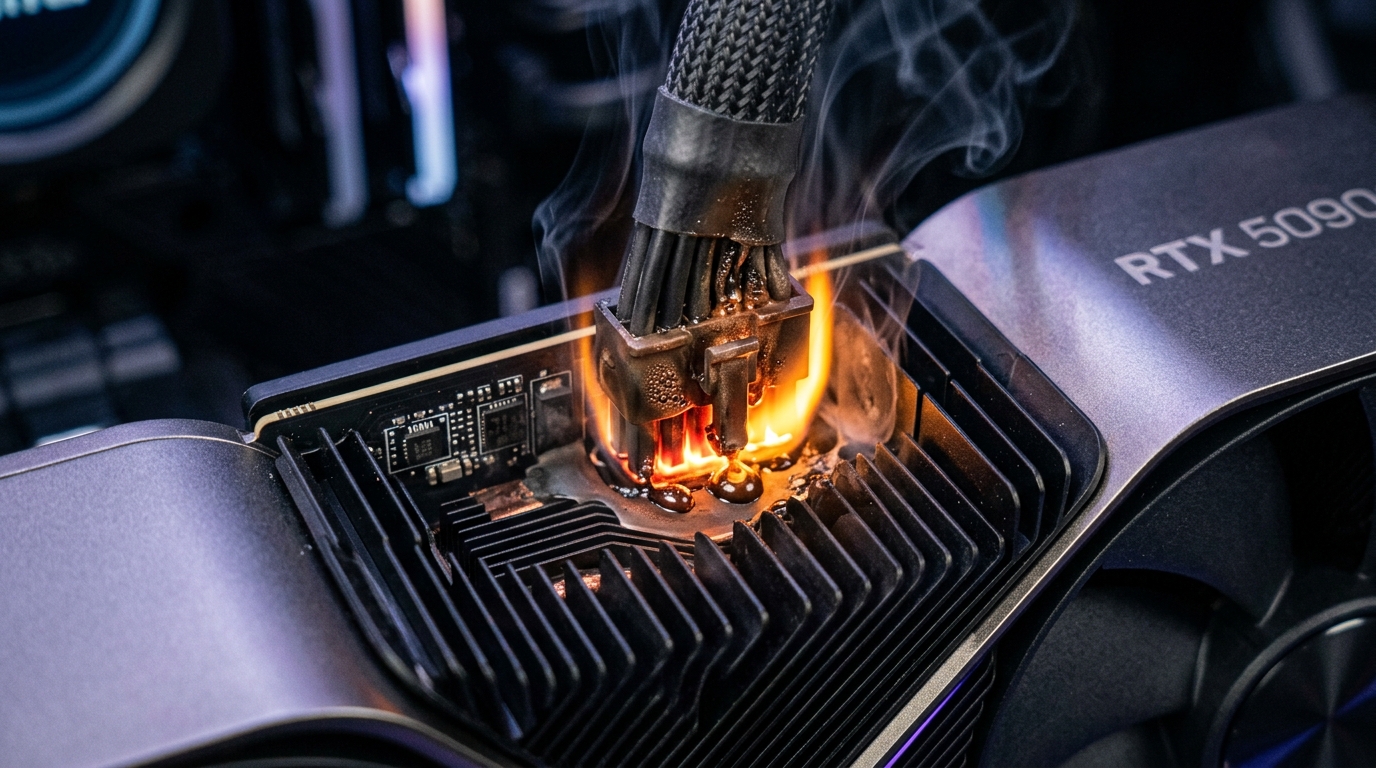
History has a funny way of repeating itself, but I didn’t expect the “red ring of death” era to evolve into actual house fires. We used to mock the Virtual Boy for giving us headaches and the Sega 32X for being a glorified paperweight, but at least those disasters didn’t require a fire extinguisher. Today, cutting edge hardware has reached a literal melting point where your thousand dollar investment can turn into a puddle of charred plastic if you don’t plug it in with the precision of a neurosurgeon. It is a special kind of industry failure when the solution to a flagship product’s power hunger is a connector that seems designed to self destruct.
The RTX 5090 was supposed to be the ultimate flex for enthusiast gamers, yet its 575W power requirement has turned the 12V-2×6 connector into a ticking time bomb. Even with the move to the ATX 3.1 standard, users are finding that “plug and play” has become “plug and pray” because any slight cable bend leads to catastrophic heat damage. We are living in an era where you need a specialized mounting bracket just to ensure your GPU doesn’t melt its own face off. It is peak corporate nonsense to ship a product that demands more electricity than a small village while using a tiny, fragile interface that clearly can’t handle the stress.
Watching these high end components fail feels like watching a luxury sports car’s engine explode because the gas cap was slightly crooked. We have reached a point where innovation just means pushing hardware until it physically breaks, leaving the consumer to deal with the fallout. If the industry keeps prioritizing raw benchmarks over basic structural integrity, the next generation of consoles might come bundled with a smoke detector. It is time to stop pretending that these melting connectors are user error and start calling them what they really are: a massive design failure. Hardware should be judged on its ability to actually stay in one piece while you are playing a game.
Lessons From the Landfill: Hardware Disasters
Ultimately, the history of gaming hardware is paved with good intentions and absolutely baffling executive decisions. We can laugh at the Virtual Boy for burning retinas or the Sega 32X for turning a console into a plastic Frankenstein, but these disasters serve as a necessary reality check for the industry. While these machines eventually found their way into bargain bins and landfills, they remind us that even the biggest titans can trip over their own power cords. There is a certain poetic justice in watching a multi-billion dollar company convince themselves that a taco-shaped phone or a motion-sensing camera was the future of entertainment.
The cycle of failure has not stopped in the modern era, as evidenced by the high-end components currently melting inside expensive PC towers. Watching a brand new graphics card turn into a very expensive space heater because of a poorly seated power connector proves that engineering hubris is an evergreen tradition. Whether it is a retro console that nobody asked for or a modern GPU that requires the power of a small sun, the industry never learns its lesson about over-complicating simple things. We should cherish these forgotten handheld consoles because they provide the best entertainment value long after the actual games have been forgotten.
A failed console is just an expensive lesson wrapped in a plastic shell that we get to roast for decades. These blunders keep the industry from getting too comfortable and provide us with endless trivia for the next generation of gamers. I will continue to track the latest catastrophic designs and power-hungry disasters with the same cynical joy I had for the failures of the nineties. As long as companies keep prioritizing flashy gimmicks over basic functionality, I will be here to point out exactly where it all went wrong. Stick to what works, or prepare to become another punchline in the long, hilarious history of hardware flops.
Frequently Asked Questions
1. Is my high-end gaming PC actually a fire hazard?
If you are running a modern monster like the RTX 5090, the answer is a terrifying maybe. These 575W cards use finicky 16-pin connectors that melt if they aren’t seated with surgical precision. Check your cables now, or prepare to learn exactly what burning plastic smells like at 2 AM.
2. Why did the Nintendo Virtual Boy fail so miserably?
It was a heavy, tripod-mounted brick that replaced immersive VR with a flickering red nightmare. The ergonomics were so bad you had to sit like a gargoyle, and the visuals were so eye-straining that Nintendo literally programmed the hardware to tell you to stop playing. It was less of a console and more of a localized migraine generator.
3. How common are total system meltdowns in the gaming world?
The industry average for a complete hardware catastrophe sits at about 2 percent. That sounds low until you realize your two thousand dollar GPU is the one currently trying to self-immolate. When hardware pushes this much power through tiny pins, that small percentage becomes a very expensive reality.
4. What should I look for when buying a new GPU to avoid hardware failure?
Look for robust cooling and power connectors that don’t require a prayer and a magnifying glass to install correctly. Avoid any card that prioritizes raw power over basic safety standards. If the manufacturer spends more time talking about benchmarks than thermal management, keep your wallet in your pocket.
5. Is the RTX 5090 safe to use with standard power supplies?
Not unless you want to witness a literal spark in your living room. These cards demand massive wattage and perfect cable management to avoid melting through their own housing. If you aren’t prepared to double-check every connection, you are just buying a very expensive, glowing paperweight.
6. Can nostalgia save failed hardware like the Virtual Boy?
No amount of rose-tinted glasses can fix a console that only displays in crimson and black. While some collectors love the novelty, the actual experience remains a nauseating disaster. Some things are better left in the 90s as a warning of what happens when innovation goes off the rails. Even when considering a shiny new GPU upgrade today, the lessons of the past regarding value and reliability still apply. It is equally frustrating to realize that even if the hardware holds together, your $3,000 PC might still struggle with unoptimized software.