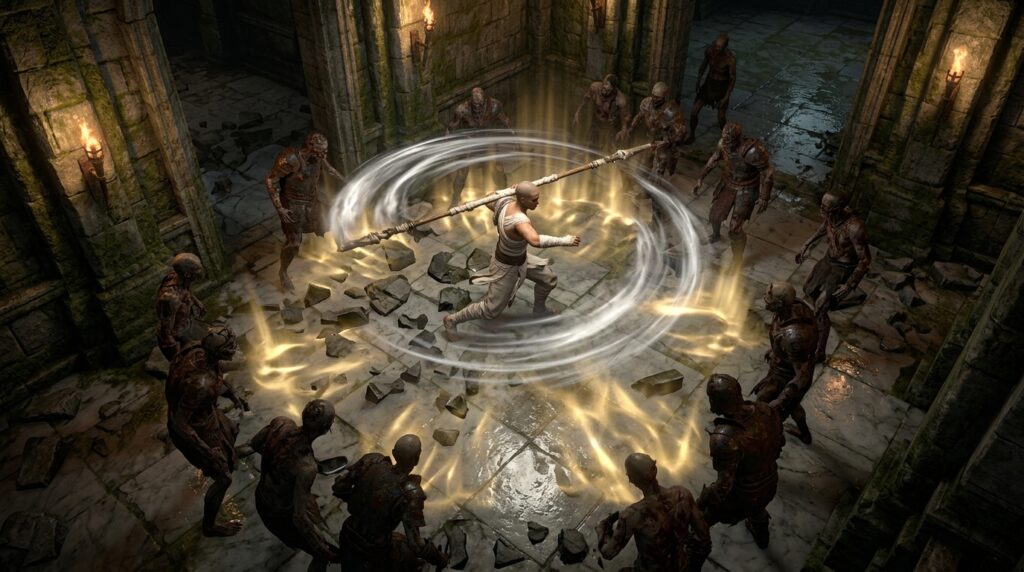
After years of Grinding Gear Games promising us the moon, path of exile 2 has finally clawed its way into Early Access, and it is a lot more than just a fresh coat of paint on a decade-old engine. They have ditched the expansion label to give us a standalone beast that actually demands you use your brain instead of just taping down your right-mouse button. It is darker, crunchier, and significantly more polished, proving that you can actually evolve a genre without stripping away the complexity that made us fall in love with it in the first place.
With the recent 0.5.0 update shaking up the timeline and the Fate of the Vaal league letting us dismantle ancient temples for loot, the game is already moving at a breakneck pace. I have spent enough time dodging the Royal Architect’s tantrums to tell you that this isn’t a lazy sequel designed to farm microtransactions. It is a mechanical overhaul that respects your time by actually being difficult, though your keyboard might not survive the learning curve.
Key Takeaways
- Path of Exile 2 is a standalone sequel that moves away from mindless gameplay by introducing a mechanical overhaul that demands tactical thinking and active skill management.
- The new Druid class and revamped skill gem system prioritize visceral, manual combat and granular customization over passive stat-checking.
- The six-act campaign and 0.5.0 update establish a brutal progression curve where boss encounters serve as genuine hurdles rather than simple loot drops.
- The Fate of the Vaal league restores depth to the in-game economy by requiring players to strategically manipulate complex temple structures to earn high-tier rewards.
Breaking The Cycle Of Modern ARPG Disappointments
Path of Exile 2 feels like a bucket of ice water to the face of an industry that has grown dangerously comfortable selling us hollowed-out shells of games. For years, we have been fed the same recycled live-service slop, where mechanical depth is sacrificed on the altar of accessibility and player engagement metrics. These modern titles treat you like a walking wallet, offering flashy combat that feels great for ten minutes until you realize the skill tree is a straight line and the endgame is essentially a glorified chore list. It is refreshing to see a developer actually respect our intelligence by building a system that requires a functioning brain to navigate.
The sheer complexity of the new skill gem system and the 0.5.0 balance updates prove that Grinding Gear Games is not interested in holding your hand through a mindless loot grind. While other developers are busy simplifying their mechanics to the point of boredom, this sequel doubles down on the mechanical overhaul and granular customization that made the original a legend. You are not just clicking on monsters until a shiny orange item drops, you are solving a complex mathematical puzzle where every support gem and passive point actually matters. It is a blunt rejection of the current trend where games are designed by committee to be as inoffensive and shallow as possible.
We have reached a point where live-service has become a dirty word, usually signaling a game that launched half-finished with a roadmap full of promises it will never keep. Path of Exile 2 breaks that cycle by launching with a staggering amount of meaningful content, from the ancient Vaal structures to a campaign that actually feels like a complete journey. It is a masterclass in how to evolve a franchise without selling its soul to the gods of corporate greed. If you are tired of being treated like a casual consumer who can only handle three buttons and a battle pass, this is the wake-up call the genre desperately needed.
Master Of Shapes With The New Druid Class
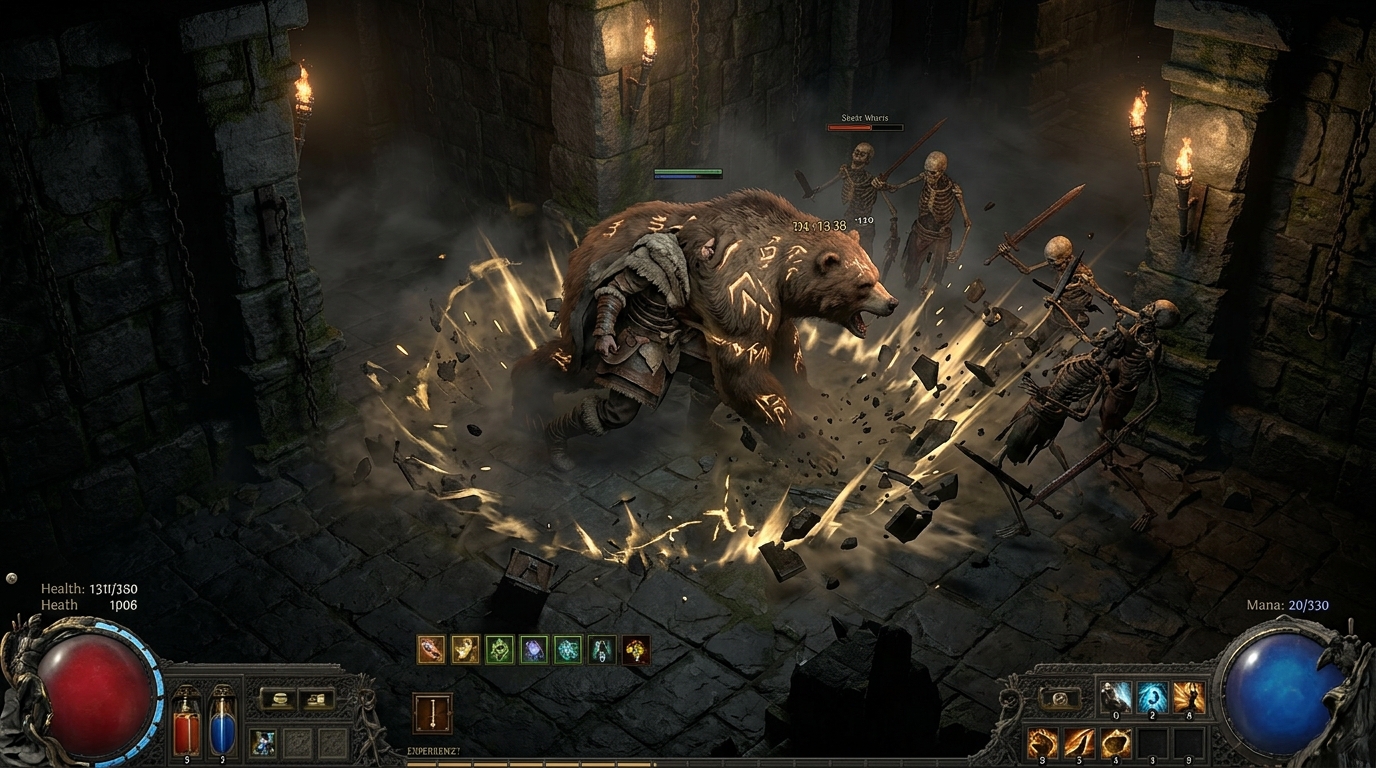
Path of Exile 2 is finally putting the action back into the ARPG genre, and the Druid class is the absolute poster child for this shift. Forget the days of standing still and clicking a single button until a spreadsheet tells you the monster is dead. When you play a Druid, you are manually slamming into packs as a Great Bear or shredding single targets as a vicious Wolf, and the transitions feel incredibly fluid rather than clunky. The Primal skills have a weight to them that makes most modern live-service games look like they are playing with pool noodles. It is a visceral, bone-crunching experience that rewards you for actually being in the thick of the fight instead of hiding behind a wall of passive stats.
The Ascendancy choices for the Druid are where the real skill expression kicks in, specifically with the Shaman and Oracle paths. The Shaman is a dream for anyone who loves setting up chaotic elemental combos, allowing you to ignite the very ground your enemies fabric trying to flee across. If you prefer a more calculated approach, the Oracle rewards your foresight by letting you manipulate the battlefield before the first swing even connects. These are not just boring percentage buffs to your damage or health bars. They are meaningful mechanical shifts that require you to actually use your brain and your hands in tandem to survive the endgame.
It is honestly refreshing to see a developer treat their players like adults who can handle complex mechanics instead of just another wallet to be drained. While other titles are busy stripping away depth to appeal to the widest possible audience, Grinding Gear Games is doubling down on the idea that mastery should be earned. The Druid does not just hand you a victory screen for showing up, as you have to time your shapeshifts and manage your resources perfectly to thrive. This is the kind of design that makes me want to actually sit down and play for hours because the rewards feel earned rather than bought. Path of Exile 2 is proving that you can have high-end production values without sacrificing the grit and complexity that makes the genre great.
Six Acts Of Brutal Campaign Progression
Path of Exile 2 isn’t just some lazy asset flip or a glorified patch notes update designed to trick you into buying more stash tabs. While most modern live-service titles are busy cutting corners and recycling content to meet quarterly earnings, this campaign feels like a massive, standalone middle finger to industry mediocrity. You aren’t just retreading old ground with a fresh coat of paint, because these six acts are built from the ground up with a level of grit and mechanical depth that puts other modern ARPGs to shame. It is a complete, fresh experience that demands your respect rather than just your time.
The progression here is unapologetically brutal and actually expects you to use your brain for something other than holding down a single button. Every boss encounter feels like a genuine hurdle instead of a glorified loot pinata, forcing you to engage with the new movement systems and tactical combat. It is refreshing to play a campaign that doesn’t treat the player like a toddler who might cry if they see a You Died screen. This isn’t a mindless sprint to the endgame, but a deliberate journey where the world actually feels dangerous and your character’s growth feels earned.
Transitioning to this standalone sequel was the smartest move the developers could have made for the health of the franchise. By breaking away from the original game’s engine and bloat, they have created a streamlined yet incredibly complex system that rewards experimentation without the baggage of a decade of legacy code. The six acts provide a cohesive narrative and mechanical arc that makes the campaign feel like a premium standalone product rather than a chore you have to finish to start playing the real game. It is a rare example of a developer actually delivering on the promise of a sequel by making something that is fundamentally better in every measurable way.
Rebuilding The Economy With The Fate Of The Vaal
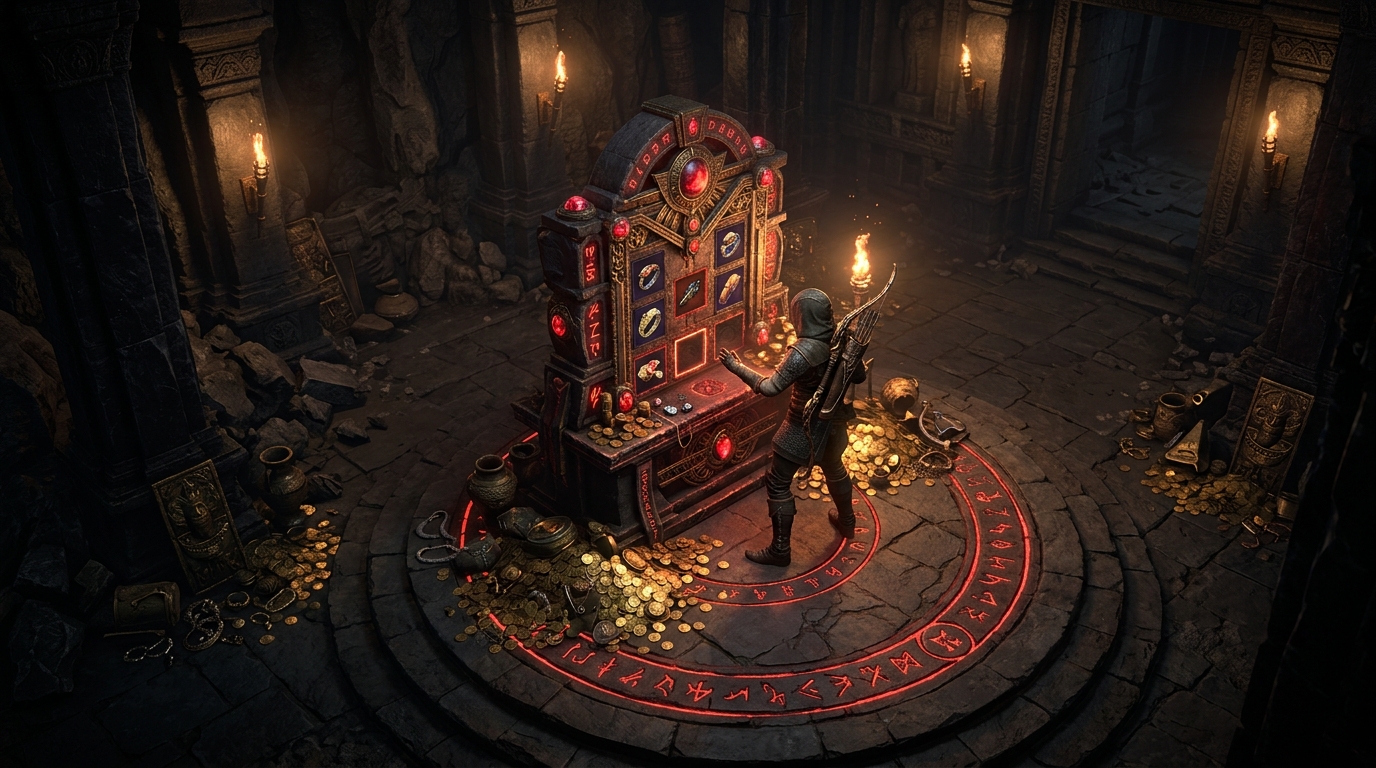
While most live-service developers are busy trying to figure out how to sell you the color blue for twenty dollars, Grinding Gear Games is actually busy building a functional video game. The 0.5.0 Early Access state of Path of Exile 2 feels like a refreshing slap in the face to every studio that thinks endgame content is just a recycled boss with more health. With the Fate of the Vaal league, we are finally seeing a return to meaningful complexity where your choices actually dictate your profit margins. You aren’t just running on a treadmill for a battle pass, but instead you are actively manipulating the Temple of Atziri to maximize your own rewards. It is the kind of deep, crunchy systems design that makes you feel like a genius for playing it correctly rather than a victim of a predatory engagement algorithm.
The beauty of the Royal Architect’s tantrums and the ancient Vaal structures lies in how they respect the player’s time without handing out participation trophies. You have to actually engage with the mechanics, modify the rooms, and understand the risks of the temple layout if you want the high-tier rewards. This is exactly how you rebuild an in-game economy after years of other titles inflating their currency into worthlessness with pointless skill bloat and mindless loot showers. GGG understands that for a reward to feel good, it has to be earned through a system that has actual stakes and logic. It is honestly embarrassing for the rest of the industry that a sequel in its early stages already has more endgame depth than most finished triple-A titles have after three years of patches.
If you were worried that the move to a standalone sequel would mean a watered-down experience for a broader audience, the Fate of the Vaal should put those fears to rest. The game is still unapologetically complex, forcing you to use your brain to navigate the trade-offs between immediate power and long-term temple investment. There is no corporate hand-holding here, just a brutal and rewarding loop that proves these developers still know how to make a proper ARPG. While the rest of the genre seems content to chase trends and simplify everything into a mindless mush, PoE 2 is doubling down on the intricate systems that made the original a titan. It is a bold move that reminds us why we fell in love with clicking on monsters and hoarding digital gold in the first place.
The Hardcore ARPG Awakening We Deserve
Path of Exile 2 is the wake-up call the action RPG genre desperately needed after years of developers treating players like ATM machines with simplified mechanics. If you are tired of being handled with kid gloves and want a game that actually respects your intelligence, this is where you belong. Grinding Gear Games hasn’t just slapped a new coat of paint on an old engine, they have built a complex, rewarding monster that demands you actually learn how to play. You won’t find any mindless button-mashing here that carries you to the endgame without a single thought. It is a refreshing departure from the modern trend of stripping away depth in favor of mass-market appeal and predatory live-service nonsense.
Whether you should jump into the current Early Access or stick to something simpler comes down to how much you value your own agency. If the idea of theory-crafting a build and navigating the intricate Vaal structures of the latest league sounds like a chore, then you might want to stay in the shallow end of the pool. However, for those of us who are sick of being bored by games that play themselves, the steep learning curve is exactly the point. The 0.5.0 updates prove that the developers are committed to a vision that prioritizes mechanical depth over corporate checklists. It is unapologetically dense, frequently punishing, and easily the most interesting thing to happen to the genre in a decade.
Ultimately, Path of Exile 2 is worth every second of your time if you actually enjoy the process of mastering a game. We have spent too long settling for polished but hollow experiences that prioritize flashy microtransactions over meaningful gameplay loops. This sequel takes the opposite approach by giving you a massive toolbox and challenging you to build something incredible with it. It is not always easy, and it certainly won’t hold your hand through the darker corners of its campaign, but that is precisely why it succeeds. Stop wasting your hours on titles that treat you like a consumer first and a player second, and go get lost in the complexity of a game that actually cares about its craft.
Frequently Asked Questions
1. Is Path of Exile 2 just an expansion for the first game?
Absolutely not. This is a standalone beast that ditches the old engine for a mechanical overhaul that actually demands you use your brain. It is a full sequel that respects your time by being difficult instead of just giving the original a fresh coat of paint.
2. How does the new skill gem system differ from the original?
The new system is a complex masterpiece that proves the developers are not interested in holding your hand. It is part of a massive mechanical shift that requires a functioning brain to navigate, moving far away from the mindless loot grinds seen in other modern titles.
3. What is included in the 0.5.0 update?
The 0.5.0 update shakes up the timeline and introduces the Fate of the Vaal league, where you get to dismantle ancient temples for loot. It also brings crucial balance updates that ensure the game remains a challenge rather than a walking simulator.
4. Is the game too difficult for casual players?
If you are looking for a game where you can just tape down your right mouse button and win, look elsewhere. This game has a steep learning curve that might break your keyboard, but it is incredibly rewarding for anyone tired of hollowed out shells of games.
5. How does PoE 2 compare to other modern ARPGs?
It acts as a bucket of ice water to an industry that usually sells recycled live service slop. While other developers sacrifice depth for accessibility, this game doubles down on complexity and refuses to treat you like a walking wallet. It stands apart from the best expansion packs and sequels that often feel like lazy cash grabs.
6. What should I expect from the combat and boss fights?
Expect to sweat. Between dodging the Royal Architect’s tantrums and navigating the darker, crunchier world, the combat is designed to be a polished evolution of the genre that actually punishes lazy play.