After a development cycle that lasted longer than most Hollywood marriages, the wait for actual metroid prime 4 news is finally over. Samus Aran has officially touched down in Metroid Prime 4: Beyond, landing as a dual-threat launch title for both the aging Switch and its shiny new successor. Retro Studios dusted off their proprietary RUDE engine to prove that good things come to those who wait, provided they have the patience of a saint and a functioning controller.
This isn’t just another retread of old ground; it’s a high-stakes gamble on whether the Prime formula still works in 2025. Between the Teen rated alien carnage and the grueling hunt for every last Suit Upgrade, the game demands more than just casual interest. Whether you’re playing on the OG hardware or the new console, it’s time to see if this sequel is a masterpiece or just a very expensive piece of nostalgia.
Key Takeaways
- Retro Studios successfully salvaged the project by restarting development from scratch using their proprietary RUDE engine, ensuring technical precision and a faithful atmosphere that third-party tools couldn’t replicate.
- The game serves as a cross-generational title for both the Nintendo Switch and its successor, balancing impressive performance on aging hardware with enhanced visuals on the new console.
- Producer Kensuke Tanabe’s departure following the game’s release marks a significant turning point for the franchise, leaving a creative leadership vacuum that could impact the future direction of the series.
- Metroid Prime 4: Beyond maintains the series’ signature challenging gameplay and methodical exploration, prioritizing atmospheric isolation and player intelligence over modern hand-holding or live-service trends.
Retro Studios And The RUDE Engine Reality
Let’s be real, the original version of Metroid Prime 4 was headed for a dumpster fire before the plug was finally pulled and the keys were handed back to Retro Studios. We all heard the rumors of development hell and outsourced assets that just didn’t feel right, but the decision to restart from scratch was the only way to save Samus from a mediocre fate. Retro Studios didn’t just take over the project, they reclaimed their legacy by bringing the development back home where it belongs. You can’t expect a random third party to capture that specific isolation and atmosphere that makes a Prime game work. By the time the reboot was announced, it was clear that only the original architects could fix the mess created behind the scenes.
The secret sauce in this comeback is the RUDE engine, a proprietary beast that proves you don’t need a bloated, universal engine to make a game look stunning. While the rest of the industry is busy trying to force every title into the same buggy frameworks, Retro used their own custom tech to ensure the performance actually holds up on both the Switch and its successor. This isn’t just about pretty lighting or high resolution textures, it is about the mechanical precision that defines the series. The RUDE engine allows for that seamless transition between exploration and combat that third-party tools usually struggle to replicate. It turns out that when you stop trying to cut corners with corporate shortcuts, you actually get a game that feels like it was made by people who care.
Seeing the final product on the new hardware proves that the long wait wasn’t just a matter of being stubborn or slow. The technical foundation required to make it shine was a necessary investment. The RUDE engine handles the dense environments of Beyond with a level of stability that makes other modern releases look like unfinished tech demos. It is refreshing to see a developer prioritize optimization and proprietary tools over the easy path of licensing whatever is popular at the moment. This technical shift was the backbone of the entire recovery, turning a potential disaster into one of the most polished experiences of the year.
Cross Gen Chaos On Switch And Its Successor
The decision was made to pull the ultimate “have your cake and eat it too” move by dropping Metroid Prime 4: Beyond on both the ancient Switch and its shiny new successor. While the PR teams want us to believe this is about inclusivity, let’s be real about the technical baggage that comes with supporting a tablet from 2017. We have seen this movie before, and it usually ends with the older hardware gasping for air while the newer version feels like a glorified remaster rather than a true generational leap. If Retro Studios spent years perfecting the proprietary RUDE engine just to make sure it doesn’t melt a standard Switch, I have to wonder how much of that next gen potential was left on the cutting room floor.
The hardware gap between these two consoles isn’t just a minor hurdle, it is a massive canyon that Samus has to grapple across. Developing for the lowest common denominator means we might be trading massive, seamless alien worlds for more of those conveniently long elevator rides and corridor transitions that hide loading screens. I want to see what a modern Metroid can do when it isn’t tethered to a processor that struggles with a stiff breeze, but cross gen releases rarely allow for that kind of unbridled ambition. It is a classic case of corporate cautiousness potentially stifling the very innovation that fans have been waiting over a decade to experience.
Despite the skepticism, there is a slim chance that Retro Studios pulled off a technical miracle by scaling the experience perfectly across both platforms. The game looks stunning in the initial footage, but we all know that a controlled trailer is a far cry from a chaotic firefight in handheld mode on an original Switch. If the newer version is just the same game with a slightly better frame rate and some extra particles, it will be a massive missed opportunity for a franchise that has always pushed boundaries. We deserve a Samus that isn’t held back by aging silicon, but for now, we are stuck watching her try to bridge the gap between two very different eras of gaming hardware.
Kensuke Tanabe Final Bow And Franchise Future
Kensuke Tanabe has finally decided to hang up his arm cannon after years of guiding Samus through the most turbulent development cycles in history. While the PR machine will tell you this is a natural transition, let’s be real about what Kensuke Tanabe’s departure actually means for the future of the series. Tanabe was the glue holding the Prime series together, often acting as the bridge between Western developers and Japanese sensibilities. His exit right as Metroid Prime 4: Beyond hits shelves leaves a massive power vacuum in the creative direction of the lore. We are looking at a future where the franchise could either evolve into something daring or get lost in a sea of committee designed mediocrity.
The RUDE engine might be a technical marvel on the new hardware, but no amount of shiny textures can replace a veteran producer with a specific vision for Samus Aran. Losing the man who oversaw the entire Prime trilogy feels like a gamble that the studio is barely prepared for given the track record of silence and delays. We have seen plenty of franchises lose their soul once the original architects leave the building, often replaced by suits who think more microtransactions are the same thing as innovation. If the next creative lead decides to mess with the isolated atmosphere or the intricate world building that Tanabe championed, this series will go from a masterpiece to a generic space shooter faster than you can say Ridley.
Let’s hope the new guard at Retro Studios actually understands why we have been waiting since the original announcement to get our hands on this game. It is easy to slap a Metroid coat of paint on a project, but maintaining that specific sense of lonely dread requires a producer who is not afraid to say no to bad ideas. Tanabe was the filter that kept the series from becoming a bloated mess of modern gaming tropes. Without him, the risk of the franchise becoming another safe, predictable yearly release is higher than it has ever been. We need a successor who values the lore enough to protect it from the inevitable corporate urge to make everything more accessible and less interesting.
Beyond The Hype And Avoiding Development Fatigue
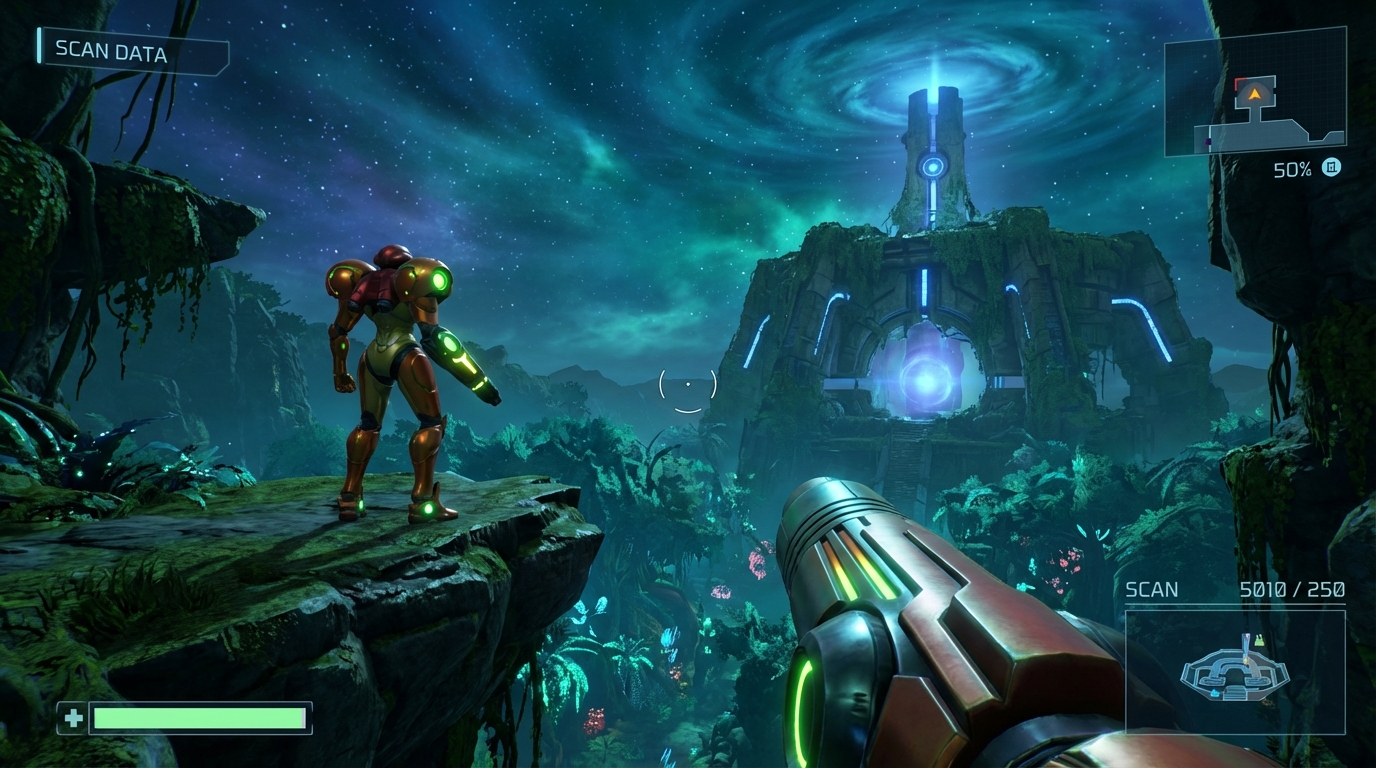
After nearly a decade of waiting and a development cycle that felt longer than a galactic ice age, Metroid Prime 4: Beyond finally landed on the Switch and its successor. Retro Studios clearly poured every ounce of their soul into the RUDE engine, but we need to talk about whether that effort translates into a game or just a very pretty museum piece. It delivers the atmosphere you expect, yet there is a lingering sense that the Beyond in the title refers to how far they pushed the hardware rather than innovating the actual loop. We have been conditioned to accept any scrap of news as a blessing, but looking at the final product, it is clear that some of that polish came at the cost of genuine surprises.
The 100% completion grind is where the cracks in the visor really start to show. Collecting every Suit Upgrade and missile expansion used to feel like a victory lap, but here it occasionally veers into the territory of a second job. If you are the type of player who needs that gold star on your save file, prepare for some backtracking that feels less like exploration and more like a test of your patience. The mechanics are tight and the combat is punchy, but the sheer density of the hidden items can make the endgame feel like a chore rather than a triumph.
Let’s be blunt about the reality of a game with this much baggage and development fatigue. It is a fantastic experience that honors the legacy of Samus, but it is not the second coming of Christ that some fans convinced themselves it would be. The industry has a habit of hyping these lost titles until they cannot possibly meet expectations, and while this is a rock-solid entry, it still suffers from some dated design tropes. It is worth your time and definitely worth playing on the new hardware, just do not expect it to rewrite the laws of physics or cure your cynicism.
Retro Studios Actually Stuck the Landing
After years of radio silence and a development cycle that felt longer than a trip across the Zebes underworld, Metroid Prime 4 Beyond finally landed on our consoles. Retro Studios clearly spent that time polishing the RUDE engine to a mirror finish, delivering a visual experience that makes the aging Switch hardware punch way above its weight class. It would have been easy for this to be a bloated, cinematic mess, but the focus remains squarely on the lonely atmosphere and intricate level design that defined the original trilogy. While the industry loves to hype up every sequel as a revolution, this feels more like a refined homecoming for Samus. It avoids the trap of modern hand-holding, trusting players to actually use their brains to navigate its hostile alien environments.
Deciding whether this is a mandatory install comes down to your tolerance for backtracking and the classic Metroidvania loop. If you were hoping for a generic first-person shooter with a sci-fi skin, you are going to be disappointed by the methodical pace and the constant need to search for Suit Upgrades. However, for those of us who have been starving for a proper 3D adventure that respects our intelligence, this is an absolute win. Samus did not need to stay in cryosleep after all, as the game manages to justify its existence without relying on cheap nostalgia or microtransaction-laden live service nonsense. It is a confident, single-player epic that proves the studio still knows how to handle its prestige franchises when they give the developers enough breathing room.
Ultimately, Metroid Prime 4 Beyond is the kind of game that reminds you why you started playing in the first place. It is not perfect, and the late-game hunt for 100 percent completion can still feel like a bit of a chore, but the core gameplay is undeniably tight. We spent nearly a decade wondering if this project was even real, and seeing it launch as a dual-threat launch title is a relief for the entire community. You should definitely clear some space on your SD card because this is a rare example of a long-delayed title actually living up to the monumental expectations. It is a loud, proud statement that Samus Aran is still the undisputed queen of the genre, and leaving her on the shelf would be a massive mistake.
Frequently Asked Questions
1. What is the official title and when can I play it?
The game is officially titled Metroid Prime 4: Beyond and it is slated for a 2025 release. After years of radio silence, Samus is finally back to prove that Retro Studios actually knows how to finish a project.
2. Which consoles will be able to run Metroid Prime 4: Beyond?
The release is a dual-threat launch title for both the original Switch and its upcoming successor. Whether you are clinging to your launch day hardware or upgrading to the new console, the backward compatibility ensures you will be able to blast space pirates just fine.
3. Why did the development of this game take so long?
The original version was headed for a dumpster fire until development was handed back to Retro Studios. They restarted the entire project from scratch because they realized a mediocre Samus is worse than no Samus at all.
4. What is the RUDE engine and why should I care?
The RUDE engine is the proprietary tech Retro Studios used to make the game look stunning without relying on bloated, universal software. It is the secret sauce that ensures the game has that specific, isolated atmosphere that defines the Prime series.
5. Is the gameplay going to be difficult for casual players?
With a Teen rating and a grueling hunt for suit upgrades, this is not exactly a walk in the park for the faint of heart. It demands actual effort and patience, so do not expect the game to hold your hand through the alien carnage.
6. Was it worth waiting all these years for Retro Studios to take over?
Absolutely, because letting a random third party handle the atmosphere of Metroid Prime was a recipe for disaster. Only the original architects could fix the mess of the previous development hell and turn it into something worth your time.