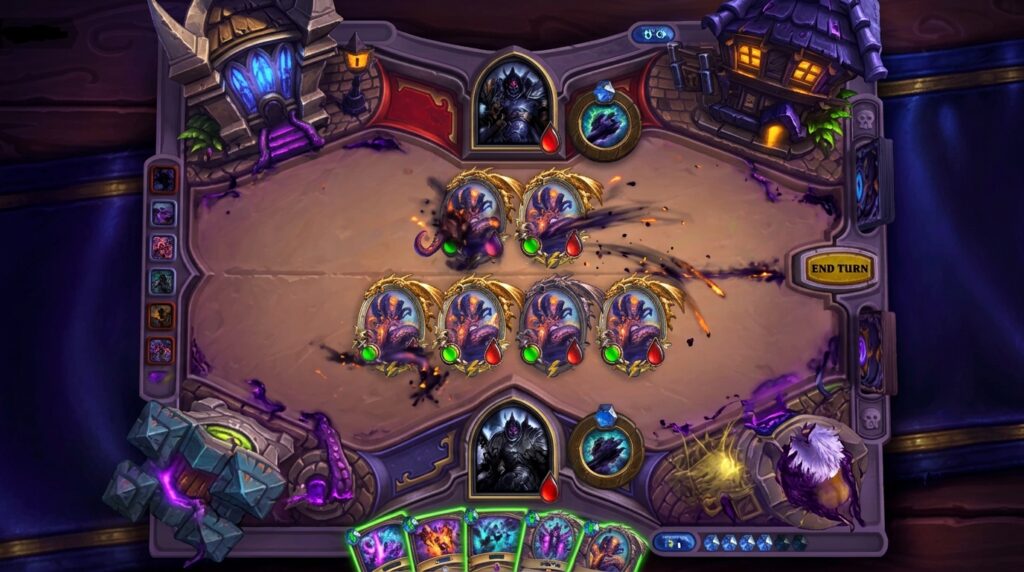
Hearthstone Black Empire is Blizzard’s 135-card expansion, announced at BlizzCon on September 12, 2026, with a launch set for October 20. It brings four redesigned Legendary Old Gods back to the table. Whether that’s a reunion or a rerun depends on how much you enjoyed the last one.
According to Blizzard’s September 2026 patch notes, the returning monsters are C’Thun, N’Zoth, Yogg-Saron, and Y’Shaarj, and a deck can run only one of them. The headline pitch is Assemble, a keyword that rewrites part of a minion’s text using another minion from a curated pool. The Old Gods have been dragged out of the abyss so many times they should get a loyalty card. The real question is whether this set brings new ideas or just gives old tentacles a fresh coat of paint.
TL;DR: Hearthstone Black Empire brings back four redesigned Old Gods, C’Thun, N’Zoth, Yogg-Saron, and Y’Shaarj, with only one allowed per deck, when it launches October 20. It’s a reunion only if the reworked Gods and the new Assemble keyword play differently from the originals, and the ladder will be the true test. Nostalgia sells packs, but this set earns its place only if its new ideas change how the cards interact.
Reign of the Black Empire Lands October 20
Reign of the Black Empire lands on October 20, 2026, so clear some evenings and start thinking about which tentacles you’ll be dealing with. The set is built around Azeroth’s Old Gods and the ancient corruption that keeps dragging them back into the light. Nothing says “fresh start” quite like cosmic horrors that refuse to stay in the abyss.
The Old Gods are Hearthstone’s most recognizable villains, and Blizzard is leaning on that history hard. That’s the risk. Nostalgia sells packs, but it doesn’t make a card good. A returning legend is only exciting if it plays differently from the version you remember. A rebuilt monster that just hits harder is a sequel nobody asked for.
So the expansion to watch is the one that justifies its own existence. Blizzard is pitching redesigned legendaries and a new mechanic, which gives the set a chance to be more than a greatest-hits album with new art. Whether it delivers depends on how the cards interact once they hit the ladder, and that’s where hype usually goes to die.
The Road to Ny’alotha, the new Journey chapter, has seven parts that unlock weekly and can award seven expansion packs in total. That’s a slow drip rather than a flood. Blizzard wants you coming back every week, and for a set built on a corruption theme, the drip feels appropriately sinister.
Four Old Gods and the One-Per-Deck Rule
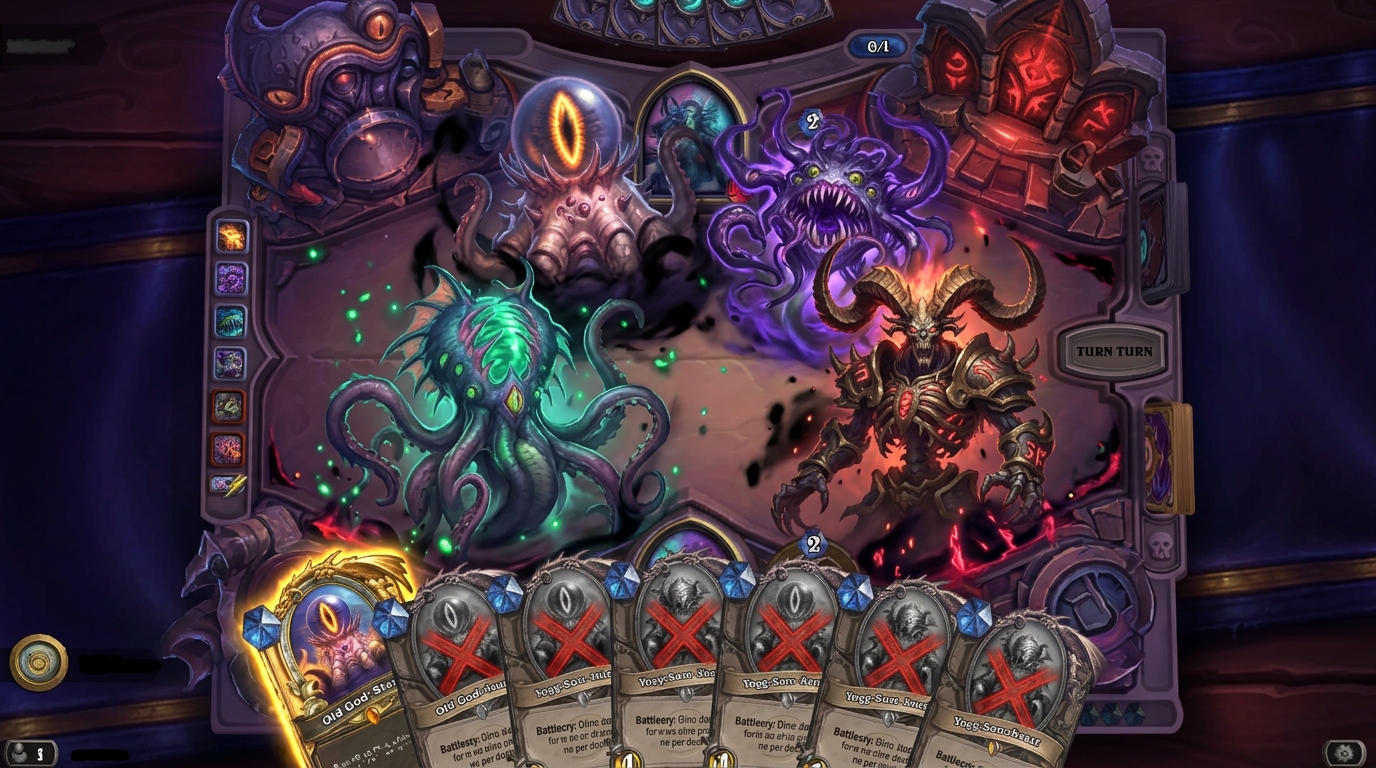
Each of the four Old Gods carries four abilities, and that’s where the fun starts. Instead of swinging with its body every turn, a God can invoke two of those abilities. It can only attack once all four abilities are exhausted, so you’re not just playing a big monster. You’re managing a checklist of cosmic punishments.
A deck can include only one of the four. Pick C’Thun, and Yogg-Saron stays in the box, no matter how badly you want to bring him along for the chaos.
Is the limit earned or artificial? I’m going with earned, mostly. Each God plays at its own rhythm, and if you could stack all four, every card in your deck would start wanting to be the same card. Blizzard has a long history of letting redundancy turn into a power problem, so a hard cap that forces a choice is a rare bit of restraint. Choices are also what make a deck feel like yours instead of a copy of a streamer’s list.
Still, the other side deserves a shout. The rule is a fence Blizzard built around its own cards, and a fence only impresses if the land inside is worth staying on. If one God is clearly stronger than the other three, the rest become expensive decorations with extra tentacles. That’s the balance question to watch once the set reaches the ladder. It will tell us whether the limit is a clever constraint or just a way to keep the power level in check.
Assemble Is the Real Test of Originality
Assemble is the pitch Blizzard is leaning on hardest. You add a minion to your hand, then swap part of its card text for text from another minion in a curated pool. You don’t just get a monster. You get a monster with someone else’s homework stapled to it.
The curated pool is the sensible part. Blizzard decides which text can be grafted onto which card, so the combinations are limited by design. Nobody is going to accidentally build a broken Frankenstein from the whole card library, and that’s a relief for anyone who has watched a past expansion’s gimmick spiral out of control. The catch is that a curated pool also means you’re playing inside a box someone else drew.
Is it new? Not really, at least not in spirit. Hearthstone has long been good at taking a card and changing what it does, whether through Discover handing you a choice or through effects that rewrite what’s already on the board. Assemble feels like that idea with a tailoring kit. It’s fresh paint on a familiar wall, and that’s fine as long as the paint is interesting.
Does it add depth or just more reading? It depends on how fast you can parse the result. If the borrowed text is short and the swap is obvious, Assemble rewards you for paying attention. If you have to read two cards, mentally merge them, and then decide whether the mashup is worth a slot, it’s homework. Good keyword design makes the decision feel clever. Bad keyword design makes you squint at the tooltip while your opponent drums their fingers.
Titan-Forged, Isiset, and a Two-Sided War
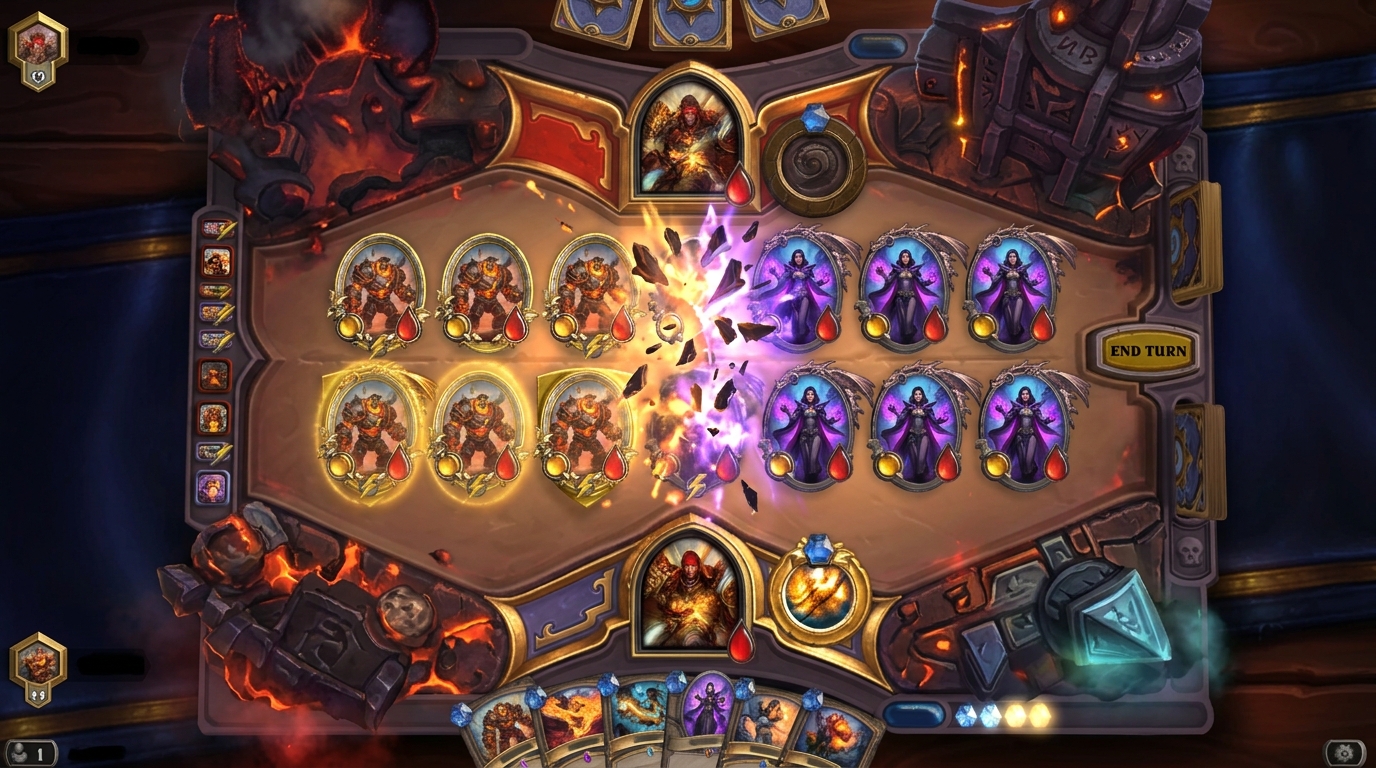
The Titan-forged are the other side of this fight. The expansion’s premise isn’t just the Old Gods crawling back out of the abyss. It’s a conflict between two sides, with the Titan-forged positioned as opponents rather than bystanders.
Legendary Titan Watcher Isiset is where that conflict becomes a card. Isiset summons two 10/10 Constructs, which is a lot of body for one play. The catch is that both Constructs stay Frozen until you’ve spent 15 Mana on spells. So Isiset is a promise with a timer on it. You need a spell-heavy game plan before those giants can do anything, and if your deck is mostly minions, you’re left with two very expensive ice sculptures.
That’s smart, card-specific design. It asks you to plan your curve instead of slamming the biggest body onto the board and hoping for the best.
Does a two-sided war add real story weight, or does Blizzard just get a fresh villain to sell packs? It depends on whether the Titan-forged get personality or just a logo. A war gives the Old Gods someone to fight, and that gives the setting stakes. Nostalgia has had its turn. Now Blizzard has to prove the other side is more than a mirror match with better lighting.
Old Gods Déjà Vu: 135 Cards Versus 134
Whispers of the Old Gods arrived in 2016 with 134 new cards. Reign of the Black Empire has 135, which is one more, a difference so small that Blizzard will surely call it a milestone anyway.
The comparison is hard to avoid. The quartet is the same, and so is the ancient-corruption theme, so anyone who remembers the first trip to the abyss will recognize the furniture. The real question is whether the new cards rearrange the room or just move the couch.
Mechanically, the couch has moved a long way. Four abilities per God, the option to invoke two instead of attacking, and Assemble’s text swapping are not things you could find in the original set. Those ideas give players decisions they didn’t have in 2016.
The marketing is another story. Blizzard is selling the names first and the mechanics second, and the old faces do most of the convincing. That’s nostalgia doing the heavy lifting. It’s fine for a box of packs, but it’s not proof that the design has been reinvented.
Our verdict: this is a remix with some genuinely new ingredients. The mechanics are fresh enough to earn a look, but the reinvention claim will have to wait for the ladder to test it.
Pre-Release Tavern Brawl and the Bundle Math
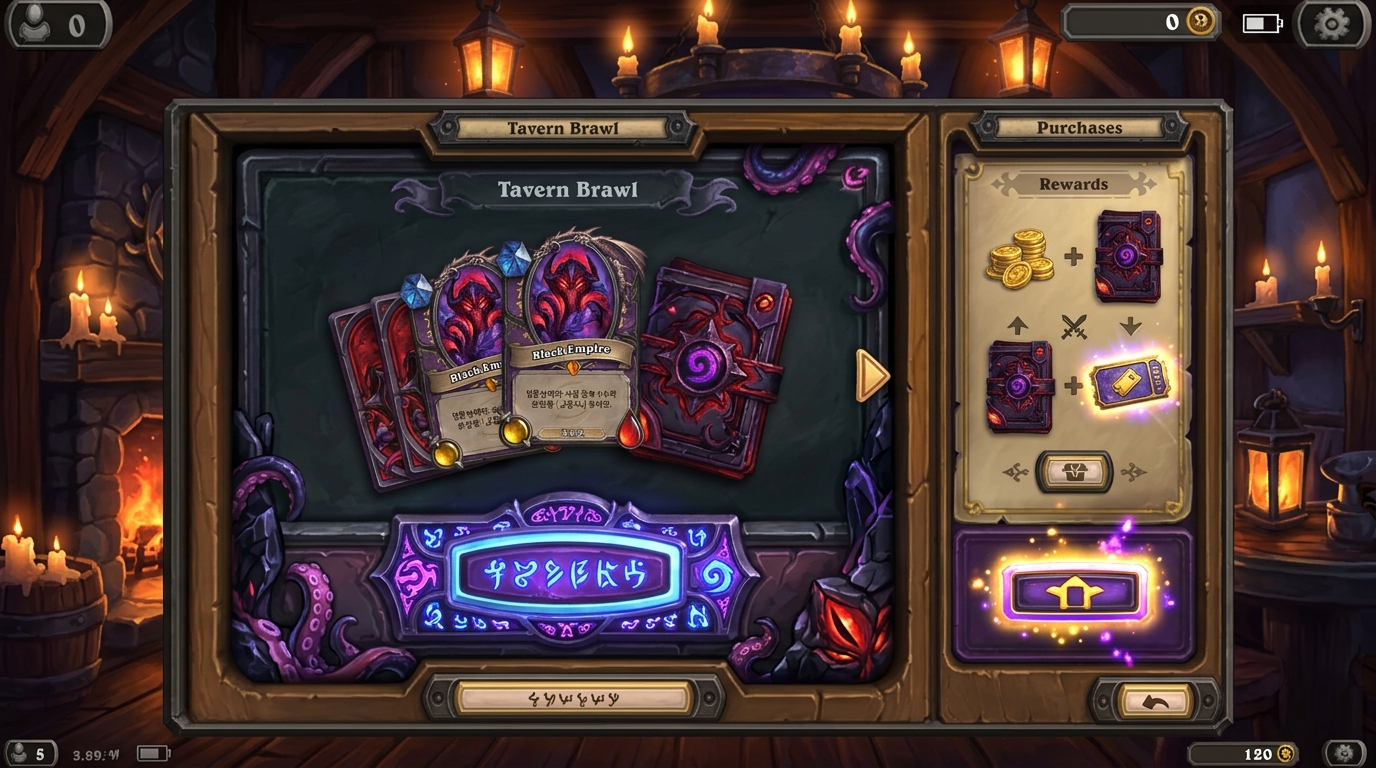
Before the expansion lands, Blizzard ran a Pre-Release Tavern Brawl from October 13 to October 20, 2026. For that event only, every expansion Common and Rare card was temporarily available, so you could test the Old Gods without buying a single pack.
The first entry was free. Every entry after that cost 2 Tavern Tickets, 300 Gold, or 400 Runestones, and a run ended at 6 wins or 3 losses, according to Blizzard’s October 2026 patch notes. Pay in Gold and you’re grinding. Pay in Runestones and you’re paying real money in a costume.
The two bundles are the real decision:
- Mega Bundle: 80 expansion packs, 10 Golden expansion packs, Signature Legendary Drest’agath, Golden Legendary C’Thun, 4 Tavern Tickets, and the Eonar Druid Hero Skin and Card Back
- Pre-Purchase Bundle: 60 expansion packs, 2 random expansion Legendary cards, and the Eonar Card Back
The Mega Bundle’s four Tavern Tickets cover two extra Brawl entries at the 2-ticket rate, which is a tidy bit of value. Dollar prices are the missing piece, so check the in-game store before you decide whether the Golden cards justify the gap.
Whether Black Empire Earns Your Packs
If your decks lean on spells, Reign of the Black Empire is worth your time, and Isiset’s 15-Mana timer will matter to you. If you mostly flood the board with minions, the Old Gods may look better on a stream than they feel on your own ladder run.
Before you spend anything, check the dollar price of each bundle in the in-game store.
Then choose by the Golden cards. The Mega Bundle’s 10 Golden expansion packs and Golden C’Thun are the only real reason to pay the gap. If you just want the 60 packs and two random Legendaries, the Pre-Purchase Bundle covers the basics and keeps your wallet happier.
Hold a little back, too. Blizzard said in September 2026 that the Monk class arrives in March 2027, so there’s no need to empty your savings on launch day. Play a few weeks of ladder games, see which God keeps showing up in winning lists, and then decide where your packs go.
Your packs, your call. Just don’t let nostalgia do the shopping.