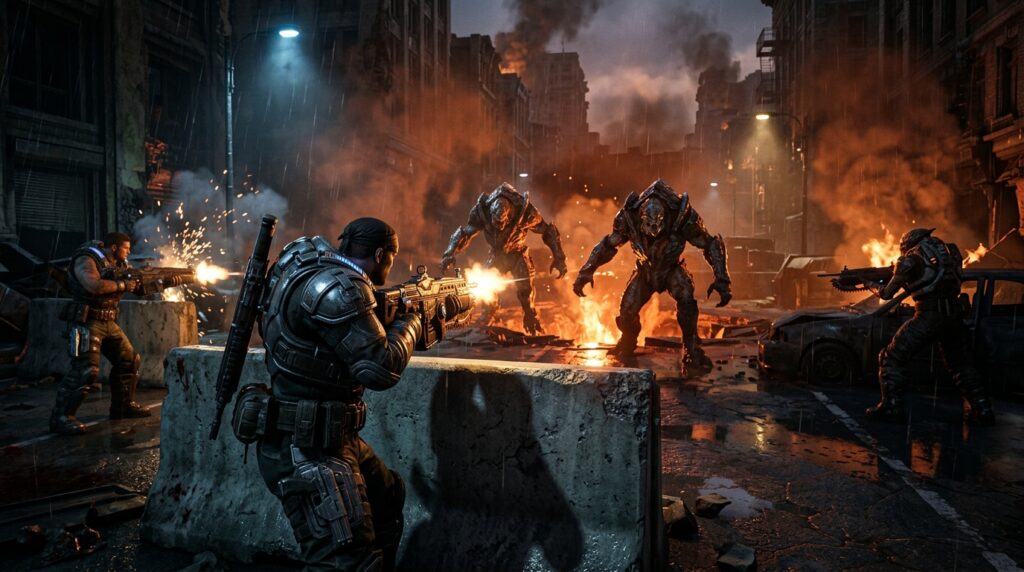
Gears of War: E-Day RTX could be the difference between a brutal trip down memory lane and a gorgeous trip down memory lane where every shadow looks capable of killing me. The game is bringing hardware-accelerated ray tracing, Lumen lighting, and the latest version of its engine to the fight, promising nastier reflections, richer shadows, and more cinematic chaos. That sounds impressive, but shiny puddles will not save a game with lazy performance or muddy image quality.
The real question is whether these RTX features make the battlefield feel more alive or simply turn my graphics card into an expensive space heater. I’m breaking down what the technology actually adds, what PC players should expect, and whether the visual upgrade is worth the hardware demands. Because if the Locust aren’t the biggest threat to my frame rate, something has gone terribly wrong.
Key Takeaways
- Gears of War: E-Day will use hardware-accelerated ray tracing, Lumen lighting, Nanite geometry, and DirectX 12 to enhance lighting, reflections, shadows, and environmental detail.
- AI upscaling, dynamic multi-frame generation, and latency-reduction technology are intended to offset the heavy performance demands of ray tracing and advanced engine features.
- The visual upgrade will only be worthwhile if it improves real combat scenes without causing excessive latency, image artifacts, unstable frame times, or poor native performance.
- PC players should wait for official system requirements and independent benchmarks comparing native rendering, upscaling, frame generation, ray tracing, and hardware scalability before upgrading.
RTX Support Confirmed for E-Day
The game’s RTX feature set was confirmed in September 2026 and is being developed through a technical collaboration with the studio behind Gears of War: E-Day. The game uses hardware-accelerated ray tracing through its latest engine technology and DirectX 12, targeting more convincing lighting, reflections, shadows, and geometry. That is a serious technical foundation for the Gears E-Day RTX conversation, not just another “ultra” preset wearing a tiny ray-tracing hat. If the grimy, industrial world of E-Day can make those systems matter during actual combat, this could be one of the better showcases for modern PC rendering.
The confirmed features include hardware ray tracing, advanced AI upscaling, dynamic multi-frame generation, and latency reduction technology. AI-generated frames can boost performance, while latency reduction is designed to make the game feel more responsive when the Locust inevitably ruin everyone’s afternoon. The studio’s involvement matters because these tools are being integrated alongside the game’s lighting and geometry systems rather than dumped into a settings menu five minutes before launch. That gives E-Day a better chance of making RTX hardware look useful instead of merely expensive.
I am still keeping one eyebrow raised, because prettier lighting does not magically repeal the laws of computer performance. Ray tracing and frame generation can make a demanding game feel smoother, but players will want to know how much image quality, latency, and native rendering performance they are trading away. The announcement positions E-Day as a major showcase for current high-end graphics hardware, and that is a much bigger claim than “our game has shiny reflections.” If the visual upgrade is obvious during play, the hardware demand may be justified. If it only improves puddles while turning frame rates into a distress signal, the settings menu can go straight in the bin.
Advanced Engine Technology Powers E-Day
The latest version of the game engine gives Gears of War: E-Day a serious rendering toolkit, while DirectX 12 provides the low-level access needed to make its RTX features worthwhile. Lumen’s ray-traced global illumination could make fire, muzzle flashes, and emergency lighting bounce naturally through ruined streets instead of looking pasted onto them. MegaLights should help fill those huge Locust-infested spaces with many dynamic light sources, which sounds excellent until my graphics card starts making noises usually associated with a dying appliance. Nanite can stream vast amounts of detailed geometry, letting cracked concrete, ruined machinery, and underground architecture remain dense without turning every scene into a pop-in festival.
The more specialized trick is RTX Mega Geometry, which is designed to make hardware-accelerated ray tracing behave better with complex, constantly changing environments. In practice, that could mean more convincing reflections, sharper contact shadows, and lighting that reacts properly as E-Day’s battlefields collapse around me. It is the sort of technology that can make a corridor feel genuinely claustrophobic and a ruined city feel enormous, rather than merely decorating a few walls with expensive textures. The catch is obvious: all that visual ambition has to be paid for in frame rate, power draw, or image reconstruction. The Gears E-Day RTX upgrade will only be impressive if PC players can enable it without sacrificing smooth performance.
AI Upscaling Versus Native Performance
Gears of War: E-Day RTX looks designed to make native rendering sweat through its armor. Hardware ray tracing, Lumen lighting, and Nanite geometry can deliver richer shadows, reflections, and battlefield detail, but they also ask my GPU to perform unpaid overtime. AI upscaling should help by rendering at a lower internal resolution and reconstructing a sharper image, which may keep 4K targets from collapsing into a slideshow. That is the sensible trade, provided the reconstruction does not turn smoke, foliage, or Locust gore into impressionist art.
Dynamic multi-frame generation is the more aggressive solution, creating additional frames between traditionally rendered ones to make motion appear much smoother. I expect it to be most useful when the underlying frame rate is already healthy, because multiplying a weak foundation still leaves the controls feeling sluggish, even if the counter looks heroic. Latency remains the catch, and fast firefights are a poor place to discover that my beautifully generated frame arrived after the enemy did. Visual artifacts around moving characters, muzzle flashes, and particles are also possible, so screenshots may look incredible while gameplay runs like a wounded Brumak with a bad knee.
For me, AI upscaling earns its place if it preserves responsive controls and avoids obvious shimmer or ghosting, but native performance remains the honest benchmark. The best result would be ray-traced lighting and Nanite detail at a stable frame rate, with upscaling used as a boost rather than life support. Players will also need compatible hardware for these features, which makes the upgrade path less “flip a setting” and more “consult the family budget.” If E-Day’s lighting genuinely improves atmosphere and spatial readability, I can accept a small compromise, but no amount of glossy puddles justifies latency that makes every chainsaw duel feel remotely operated.
E-Day Launch Platforms and Next Steps
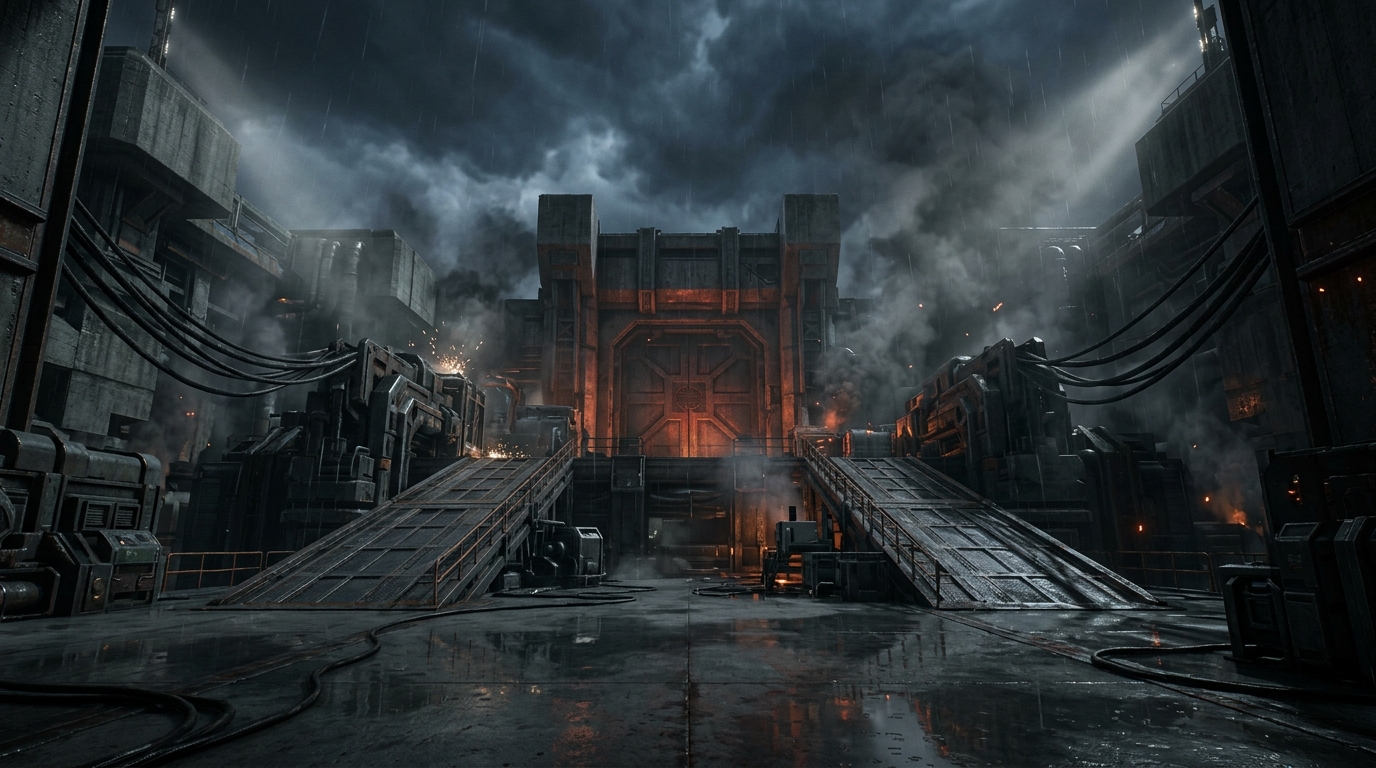
Gears of War: E-Day is scheduled to launch on October 6, 2026, for current-generation consoles and PC, with a major digital PC storefront included in the rollout. A subscription gaming service will also offer day-one access, so subscribers can test the chainsaw before deciding whether their wallet deserves the full execution. The game is being built with the latest engine technology and DirectX 12, which points to a technically ambitious PC version. That ambition is exciting, but “technically ambitious” is often industry code for “please upgrade your graphics card.”
The RTX angle is where E-Day could become a proper showcase rather than another dark corridor full of muscular shouting. Hardware-accelerated ray tracing is being integrated into lighting, reflections, shadows, and geometry systems, while Lumen is expected to help sell the grimy, cinematic look. Those effects could make ruined environments and close-quarters combat look superb, assuming they do more than add expensive reflections nobody notices during a firefight. The real question is whether the visual gains justify the performance hit, especially once the explosions start breeding like angry rabbits.
Before launch, I still need three answers: the official PC system requirements, independent performance testing, and proof that the RTX features scale beyond top-end graphics cards. Minimum specifications are useful, but recommended settings that quietly mean “buy a small satellite” are less helpful. Reviews should also measure native rendering, upscaling, frame generation, ray tracing, and frame-time consistency instead of waving a single average frame-rate number around like a victory flag. If E-Day delivers sharp visuals across sensible hardware, the RTX push will look worthwhile. If only elite cards can run it properly, the feature list may be more impressive than the game.
Ray Tracing Could Make E-Day Shine
The confirmed Gears of War: E-Day RTX feature set is already looking properly ambitious. Hardware-accelerated ray tracing is being integrated with the latest engine technology and DirectX 12 for lighting, reflections, and shadows, while Lumen handles the game’s dynamic global illumination. Advanced AI upscaling is also part of the package, giving compatible PC players a way to claw back performance without turning every surface into a blurry soup. That combination could make E-Day one of the strongest PC graphics showcases of 2026, assuming the technology behaves outside a carefully staged trailer.
I am keeping the verdict provisional until real-world benchmarks show what all this spectacle costs during actual combat. A quiet corridor with cinematic lighting is one thing, but a firefight filled with debris, enemies, explosions, and frantic camera movement is where the Gears of War: E-Day RTX test really begins. If ray tracing and Lumen deliver richer environments while upscaling keeps frame rates stable, the upgrade could be worth the hardware demands. If not, we may be left admiring gorgeous shadows while the action runs like a slideshow with anger issues.