gamescom 2026 concluded on August 30 after drawing 368,000 visitors from 131 countries, more than 36,000 trade attendees, and 1,743 exhibitors, according to figures released on September 1. This gamescom 2026 recap separates the genuinely exciting announcements from the usual parade of cinematic trailers pretending to be gameplay. The Cologne show grew in physical attendance and international reach, while its digital audience mostly stayed flat, because apparently the internet has finally learned restraint.
I found a packed exhibition floor, major franchise updates, business and developer programming, and the first European charity speedrunning event held as part of gamescom. Some reveals deserved the hype. Others looked like they were assembled by committee during a lunch break. Here is what mattered, what fizzled, and which games are worth keeping installed after the convention dust settles.
TL;DR: gamescom 2026 expanded to 368,000 visitors from 131 countries, with 1,743 exhibitors and more than 36,000 trade attendees, confirming its growing global reach despite a mostly flat digital audience. Gears of War: E-Day was the standout reveal, while Metro 2039 and Rainbow Six Tactics showed promise; many other announcements leaned on cinematic polish without enough gameplay to justify the hype.
Gamescom 2026 Attendance Surge
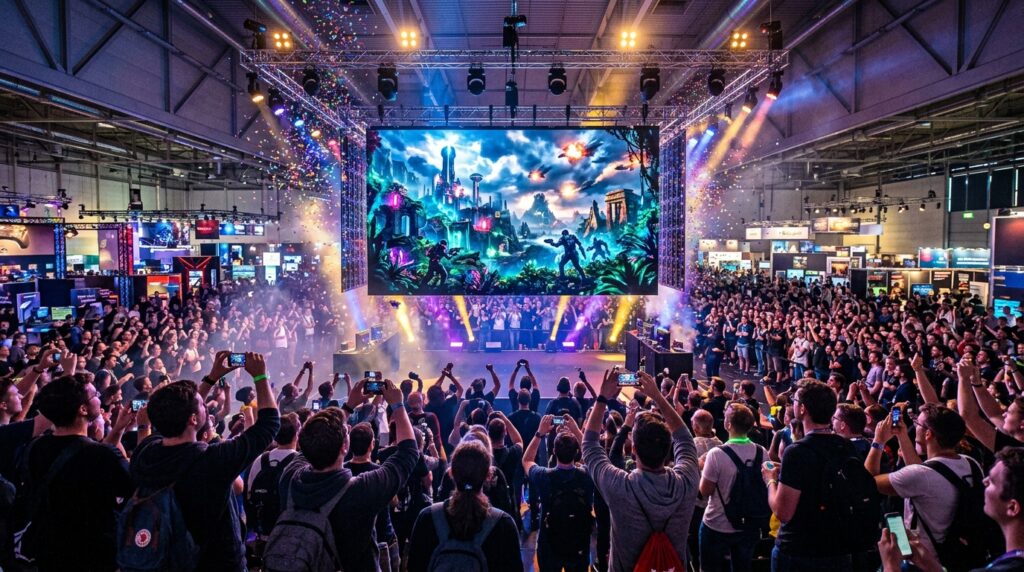
According to figures released on September 1, 2026, gamescom drew 368,000 visitors from 131 countries between August 26 and 30, following Opening Night Live on August 25. More than 36,000 trade visitors made the trip, while 1,743 exhibitors from 66 countries filled a sold-out exhibition floor spanning roughly 233,000 square meters. That is not a convention so much as a temporary city where everyone carries a tote bag and pretends to know where Hall 8 is. The numbers confirm that gamescom’s international reach is still expanding, even as its digital audience remained broadly flat compared with 2025.
The packed halls mattered because they put August’s trailers and announcements in front of a global audience that could immediately decide what deserved attention and what belonged in the industry’s large recycling bin. I found the strongest moments came from games showing real mechanics, clear identities, and enough playable evidence to survive outside a dramatic voice-over. Big franchise updates can create noise, but noise is not the same thing as a good game. A cinematic trailer remains proof of almost nothing beyond competent video editing. The event’s growing business and consumer footprint gives promising projects more oxygen, but it also gives polished nonsense a larger stage.
That distinction matters when reading the attendance surge as a victory lap. A sold-out 233,000-square-meter floor signals demand, international confidence, and serious industry momentum, but it does not magically improve weak design or turn a pretty demo into a must-play release. I would rather see one inventive game with something meaningful to say than ten expensive trailers performing synchronized smoke bombs. gamescom 2026 clearly became bigger, busier, and more global, which is excellent for discovery, provided we keep judging the games instead of applauding the queue.
Opening Night Live’s Biggest Reveals
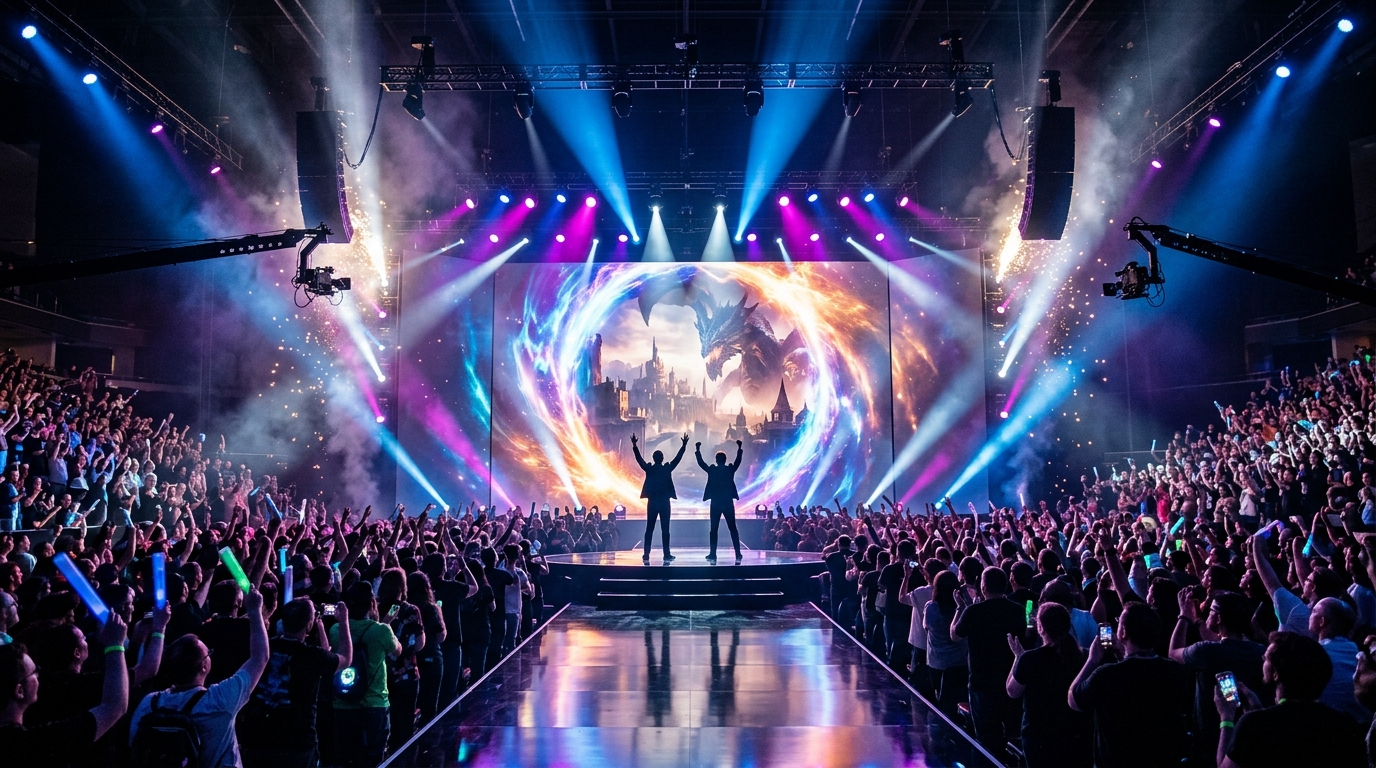
Opening Night Live on August 25 delivered more franchise muscle than genuine surprise. I went through the trailers and reported details looking for games that earned a wishlist click, not just a dramatic logo reveal and twelve seconds of fog. The Witcher 3: Wild Hunt Remastered and Final Fantasy VII Revelation had the biggest names, but star power is not a substitute for a reason to buy the same meal twice. Here is my ranking, from “shut up and take my money” to “the screensaver is doing most of the work.”
- 1. Gears of War: E-Day: The strongest reveal of the night, with a focused premise and enough grit to suggest more than another nostalgia lap. Wishlist material.
- 2. The Witcher 3: Wild Hunt Remastered: Still a superb game, but a remaster needs more than prettier mud and upgraded facial pores. Cautious optimism.
- 3. Final Fantasy VII Revelation: The trailer had scale and spectacle, though the story remains wrapped in enough mystery to make the title feel like a riddle wearing expensive armor. Cautious optimism.
- 4. Metro 2039: The atmosphere remains excellent, and the setting does heavy lifting, but the footage offered mood before mechanics. Worth watching.
- 5. Rainbow Six Tactics: A potentially smart twist on the formula, provided the tactical layer is deeper than a menu stapled to gunfire. Cautious optimism.
- 6. Heroes of Might and Magic III remake: The source material is nearly sacred, which means the remake has nowhere to hide if its systems or interface get “modernized” into mush. Wishlist with a fire extinguisher nearby.
- 7. Songs of the Past: The presentation was attractive, but the trailer gave me more aesthetic confidence than gameplay evidence. Pretty, pending proof.
- 8. Nodusfall: It looked polished enough, yet its pitch dissolved into familiar cinematic wallpaper before I found a hook worth remembering.
My blunt takeaway is that Gears of War: E-Day was the only reveal that felt immediately essential, while Metro 2039 and Rainbow Six Tactics at least showed enough identity to earn a second look. The Witcher 3: Wild Hunt Remastered and the Heroes of Might and Magic III remake are risky propositions because beloved classics do not need rescuing from the passage of time. Songs of the Past and Nodusfall will need stronger gameplay footage before I reserve hard-drive space for them. Opening Night Live had plenty of fireworks, but the real test now is whether these games can survive contact with an actual controller.
Gamescom 2026’s Real Standouts
My gamescom 2026 recap starts with the event’s biggest lesson: a glossy trailer is still not gameplay. Opening Night Live on August 25 leaned heavily on established franchises and familiar blockbuster theatrics, while the Cologne show ran from August 26 to 30 with 368,000 visitors from 131 countries. The reveals worth watching were the ones that showed actual systems, including combat with readable decision-making, traversal that looked useful rather than decorative, and progression that went beyond “number gets bigger.” Slow-motion faces and orchestral explosions remain free, apparently, because the industry keeps ordering them in bulk.
The established names still have something to prove, especially when trailers emphasize mood over moment-to-moment play. I want to see whether those promising worlds support interesting encounters, meaningful exploration, and campaigns that do not collapse into map-marker admin after six hours. The real standouts from gamescom 2026 are therefore the projects that can survive scrutiny after their flashy Cologne debut, not simply the ones that earn the loudest trailer reaction. My shortlist is blunt: prioritize games showing repeatable mechanics, clear player choice, and a convincing reason to keep playing. Treat everything else as a very expensive screensaver until proven otherwise.
Beyond Trailers At Gamescom 2026
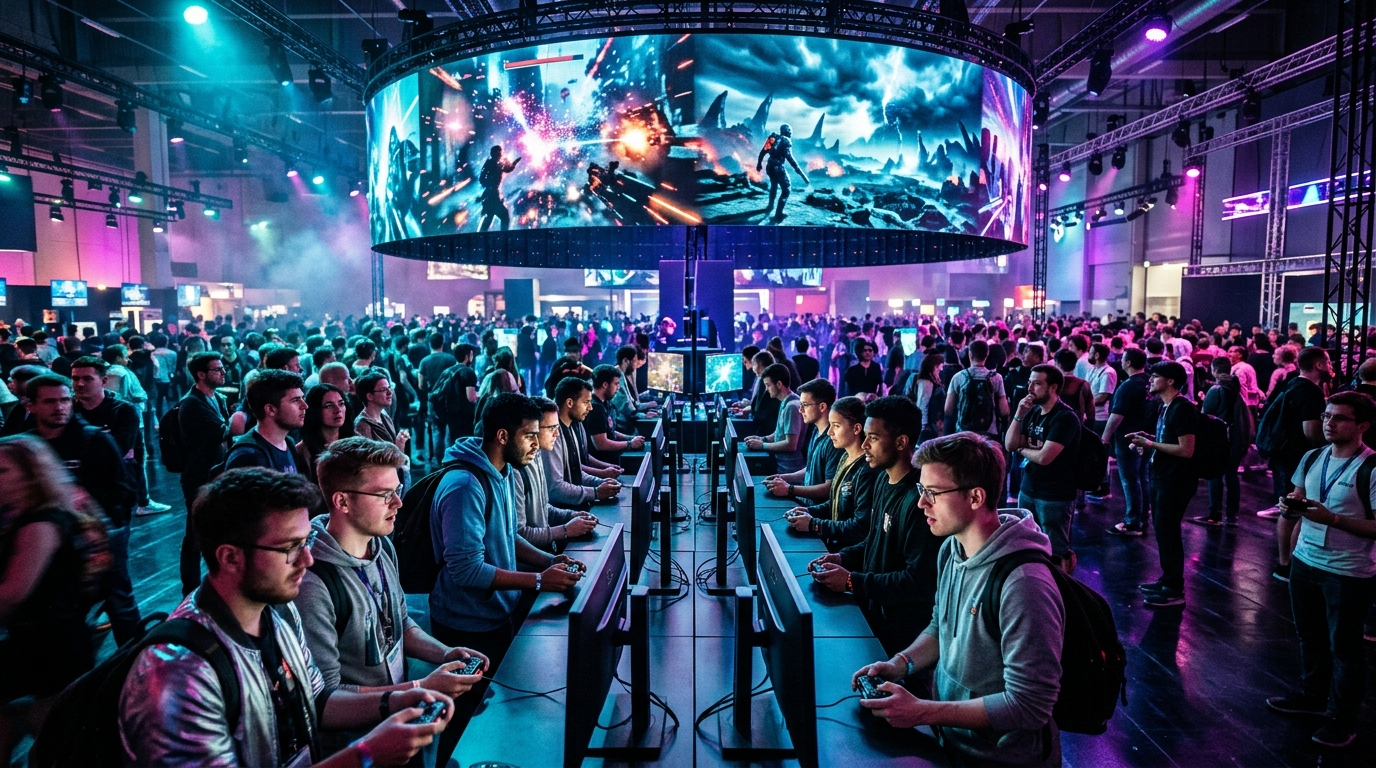
According to the event’s September 1, 2026 summary, the Cologne show drew 368,000 visitors from 131 countries between August 26 and 30, following Opening Night Live on August 25. More than 36,000 trade visitors joined 1,743 exhibitors across roughly 233,000 square meters of sold-out floor space. That is a serious physical rebound, even if digital reach stayed broadly flat compared with 2025. In other words, people still made the pilgrimage, while the internet mostly watched trailers and pretended a cinematic montage was a playable demo.
The bigger story was how much gamescom 2026 stretched beyond consumer reveals. Developer and industry programs gave professionals room for practical discussion, while live broadcasts and the awards program kept the show moving after the convention halls closed. The first European charity speedrunning event added something the usual announcement treadmill rarely manages, namely an actual sense of community. I found that expansion more interesting than another carefully edited promise of greatness, because a show built around creators, conversation, and skilled players has more staying power than a two-minute trailer with dramatic fog.
That does not make every reveal worth wishlist space. The August broadcasts delivered major franchise updates, but the familiar cinematic smoke bomb remained a reliable part of the menu, so I am separating games with clear ideas from projects selling atmosphere by the gallon. The strongest announcements were the ones that showed how they play, not merely how expensive their lighting looks. Taken as a whole, gamescom 2026 felt less like a trailer warehouse and more like a broader industry and community gathering, which is exactly the upgrade the event needed.
Gamescom 2026 Proved Physical Shows Matter
Gamescom 2026 was a growth year where it mattered most, on the ground. According to the event’s September 1, 2026 summary, 368,000 visitors from 131 countries attended between August 26 and 30, with more than 36,000 trade visitors and 1,743 exhibitors from 66 countries. The exhibition floor covered roughly 233,000 square meters and sold out, which is a fairly convincing rebuttal to anyone claiming physical game shows are obsolete. Digital reach was broadly flat compared with 2025, but the Cologne crowds clearly did not get the memo.
The announcements were strongest when they pointed toward actual games rather than another beautifully rendered promise with no release date and a suspicious amount of fog. The Witcher, Gears, Metro, Final Fantasy VII Revelation, and the other headline projects gave the show plenty of ammunition, but a trailer is still only a trailer until somebody can play the result. I found the most convincing reveals were the ones with clear direction, meaningful gameplay, or enough detail to explain why they belong on a calendar. Everything else can remain in the industry’s favorite genre, cinematic smoke bomb.
My practical takeaway from this gamescom 2026 recap is simple: the event delivered real momentum, but hype now has to survive contact with development. The next test is whether these major projects become polished, distinctive games worth installing instead of expensive wallpaper for a livestream. gamescom proved that the audience is still there, the appetite is still enormous, and the show can grow without losing its noise. Now the developers have to turn that noise into something better than a pre-rendered shrug.