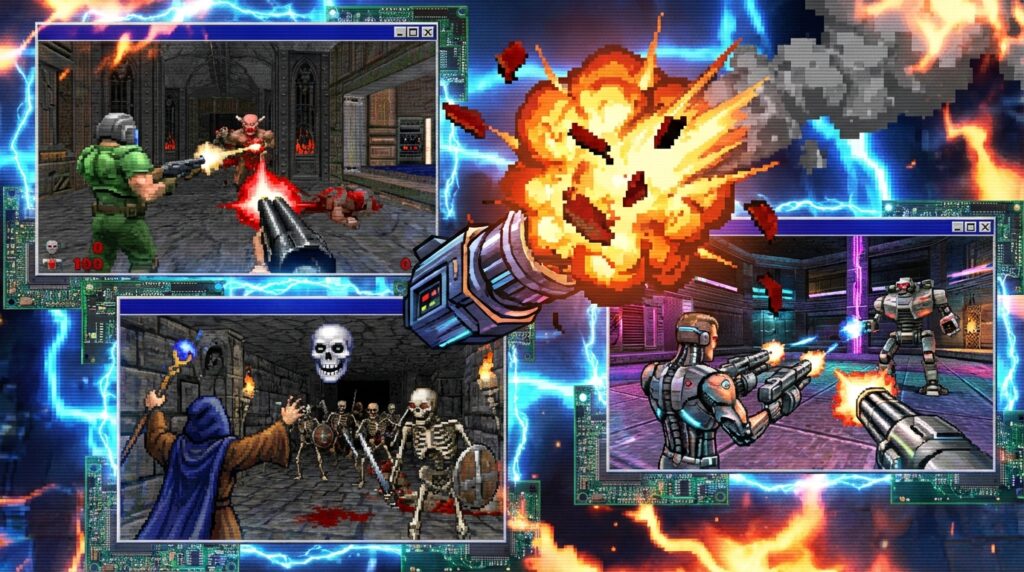
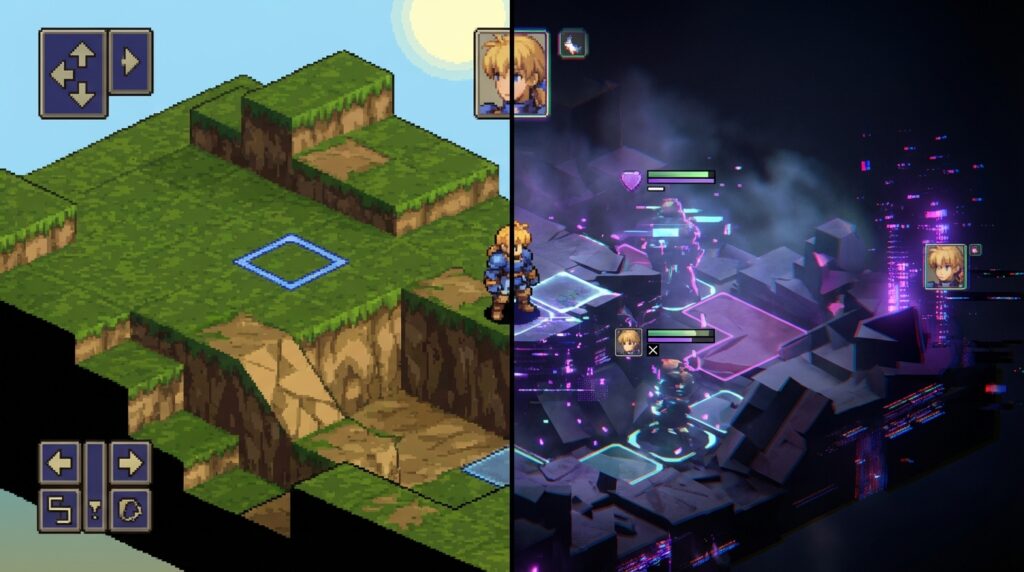
Back in the day, if you wanted a strategy game, you usually had to choose between moving wooden pieces on a board or squinting at a spreadsheet. The tactical rpg evolution changed all that by realizing we’d much rather watch a tiny pixelated knight get a critical hit than calculate math in our heads. We went from basic top-down grids to complex 3D battlefields where height actually matters, proving that the genre has come a long way from its niche tabletop roots.
It’s been a wild ride from the 8-bit days of early strategy titles to the isometric glory of the mid-90s, where games finally figured out that depth isn’t just for philosophical debates. We’ve traded flat maps for multi-layered war zones that actually punish you for being a tactical idiot. The industry might love its flashy shooters, but there’s still nothing quite as satisfying as outsmarting an AI while sitting in your pajamas.
Key Takeaways
- The evolution of tactical RPGs has traded the ruthless mechanical depth and ‘isometric suffering’ of the 90s for modern accessibility and user-friendliness.
- Modern features like rewind buttons and highlighted movement grids have reduced the stakes of permadeath, often turning tragic character losses into minor inconveniences.
- Western tactical games, led by the XCOM revolution, shifted the genre’s focus from complex stat growth to high-stakes, squad-based anxiety and immediate consequences.
- True tactical mastery requires a balance of friction and challenge, as over-streamlining systems can strip away the hard-earned sense of triumph found in classic titles.
The Golden Age Of Isometric Suffering
The heavy hitters of the 90s represent a period where developers apparently decided that the best way to show love to a player was to kick them repeatedly in the teeth. These games didn’t care about your feelings or your schedule, instead forcing you to navigate brutal permadeath and height advantages that turned every map into a vertical nightmare. You weren’t just playing a game, you were managing a group of doomed mercenaries while the AI exploited every single mistake you made with surgical precision. It was a glorious, isometric era of suffering where the narrative stakes felt real because the mechanical consequences were genuinely devastating. If you lost your favorite dragoon because you forgot to check the turn order, that was on you and the game made sure you felt the shame.
Modern tactical games have largely moved away from this masochistic design in favor of accessibility and “user friendliness,” which is often just code for holding your hand through the mud. While I appreciate not having to restart a forty hour campaign because of one bad RNG roll, something vital has been lost in the transition to modern convenience. The undisputed kings of the genre earned their crowns by demanding total mastery of complex systems like alignment and branching class trees that actually mattered. Today, we get highlighted movement grids and rewind buttons that turn tactical blunders into minor inconveniences rather than tragic character deaths. We traded the raw, unadulterated stress of a perfect strategy for a streamlined experience that treats the player like they might break if things get too difficult.
The brilliance of these retro masterpieces lies in their refusal to compromise on mechanical depth for the sake of a broader audience. Every choice felt like a weight around your neck, forcing you to balance political morality against the cold reality of a battlefield where you were usually outnumbered. The best titles perfected this by wrapping a Shakespearean tragedy inside a job system so flexible it still puts modern skill trees to shame. These titles remain the gold standard because they respected the player enough to let them fail miserably and learn from the wreckage. While newer entries in the genre are certainly flashier and easier on the blood pressure, they rarely capture that same sense of hard earned triumph that comes from surviving the isometric meat grinder.
Western Tactical Shifts And The XCOM Revolution
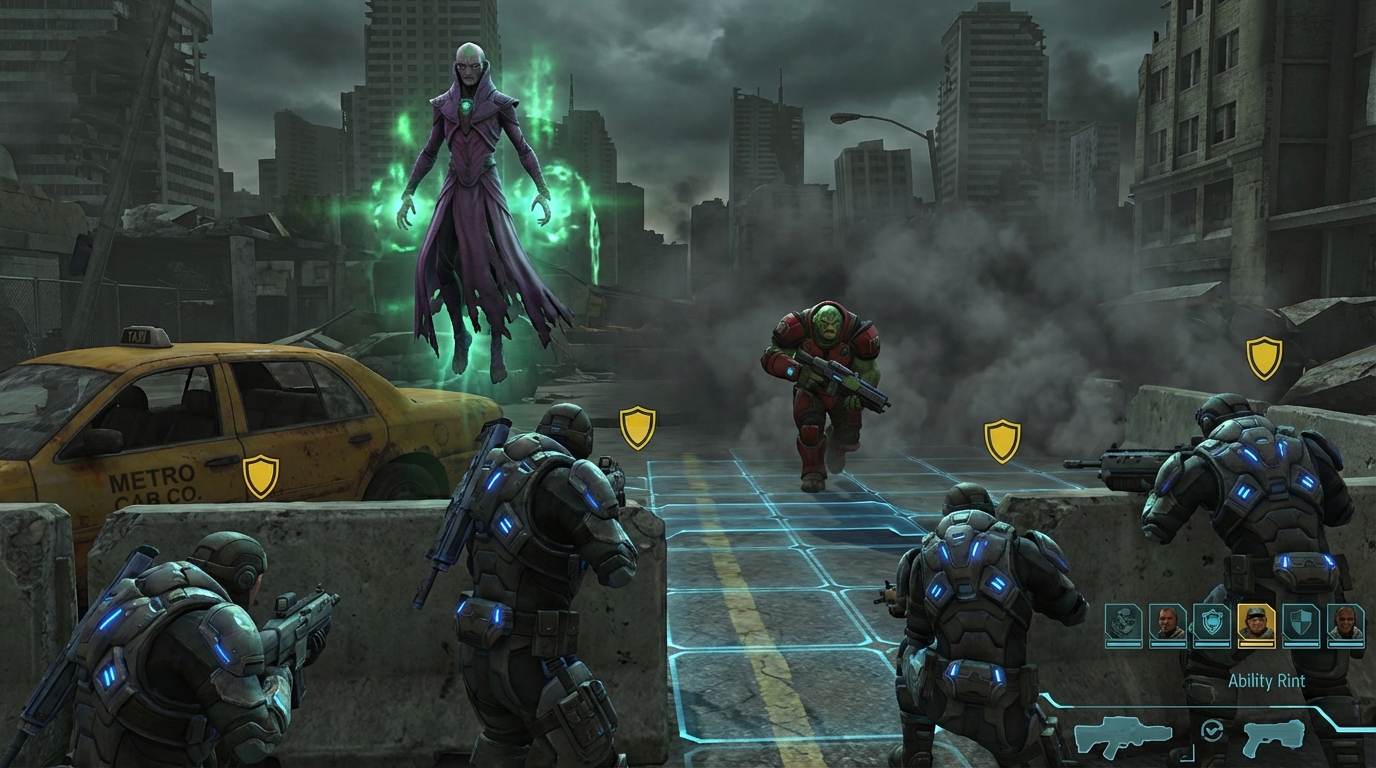
While the East was perfecting the art of the hundred hour melodrama, the West decided to strip away the anime hair and replace it with cold, hard anxiety. The 2012 revival of squad-based tactics didn’t just modernize the genre, it effectively gutted the fluff to focus on the brutal reality of the battlefield. We moved away from the comfort of predictable stat growth and stepped into a world where a single bad turn could mean burying a soldier you spent five hours customizing. It was a pivot from the power fantasy of being a chosen hero to the desperate realization that you are just a middle manager of a meat grinder. This shift brought a level of tension that isometric RPGs had been missing for a decade, proving that players actually enjoy being stressed out if the stakes feel earned.
The true genius, and the ultimate source of my rising blood pressure, lies in the ruthless math of the modern tactical interface. We have all lived through the universal rite of passage where a soldier stands two inches away from an alien and somehow misses a shot with a ninety nine percent hit chance. It is a moment of pure, unadulterated nonsense that makes you want to throw your mouse through the monitor, yet it is exactly why these games work. By trading the complex, often bloated mechanical depth of old school grid games for streamlined action points and cover systems, the focus shifted to immediate consequences. You aren’t just clicking buttons to see numbers go up, you are gambling with the lives of your digital squad in a way that feels personal and punishing.
Modern tactical games have successfully ditched the handholding of the early two thousands in favor of a “fail and learn” philosophy that respects the player’s intelligence. We no longer need a thirty minute cutscene to explain why a character is sad when a simple permadeath notification does the job in three seconds. This evolution has forced us to stop playing like tourists and start playing like actual strategists who understand that a plan is only as good as the RNG allows. It is a blunt, often cruel way to design a game, but it beats the alternative of a mindless grind where victory is guaranteed. Whether you are a veteran of the original DOS era or a newcomer who just lost their favorite sniper, the message is clear: the West has turned the tactical rpg evolution into a high stakes game of chicken with fate itself.
Modern Accessibility Versus Classic Mechanical Depth
Back in the day, classic titles didn’t just ask you to play, they demanded you earn your victory through blood, sweat, and a spreadsheet worth of job grinding. You had to account for verticality, compatibility systems, and the very real threat of your favorite knight turning into a crystal because you miscalculated a move three turns ago. There was a brutal, beautiful logic to it that made every win feel like a tactical masterclass. Modern developers seem to think we have the attention span of a goldfish, replacing these intricate systems with glowing “win buttons” and maps so flat they make a pancake look like the Himalayas. It is a transition from high stakes chess to a glorified game of checkers where the board is pre-shuffled for your convenience.
The industry calls this streamlining for accessibility, but let’s be real, it often feels more like a lobotomy of the genre’s core identity. We went from managing complex unit weight and turn order manipulation to “press A to move toward the shiny objective.” While I appreciate not needing a physical manual the size of a phone book just to understand a counterattack, I miss the days when games respect your intelligence and trust the player to be smart. Now, we get UI overlays that practically play the game for us, highlighting exactly where to stand and who to hit while stripping away the environmental hazards that used to make positioning matter. It is a classic case of removing the friction until there is no traction left, leaving us with a smooth but ultimately hollow experience.
I am not saying every game needs to be a grueling exercise in masochism, but there has to be a middle ground between “impenetrable” and “insulting.” We have traded the thrill of discovering a broken character build through hours of experimentation for skill trees that are basically straight lines. Accessibility should mean better tutorials and cleaner menus, not removing the very mechanics that made the genre legendary in the first place. If I wanted a game to hold my hand this tightly, I would just go for a walk in the park. We need to stop treating tactical depth like a barrier to entry and start remembering that the challenge is actually the point of the exercise.
Slicker Interfaces, Softer Brains
The verdict on the evolution of tactical RPGs is a bit of a mixed bag that depends entirely on how much you value your own brain cells. We have definitely moved past the days of wrestling with clunky menus and obtuse UI, which is a massive win for everyone who enjoys actually playing the game instead of fighting the controller. However, the shift from the ruthless complexity of the classics to the modern era has brought a noticeable layer of padding and handholding. It often feels like developers are terrified we might fail a mission, so they provide rewind buttons and glowing indicators that do everything except play the stage for us.
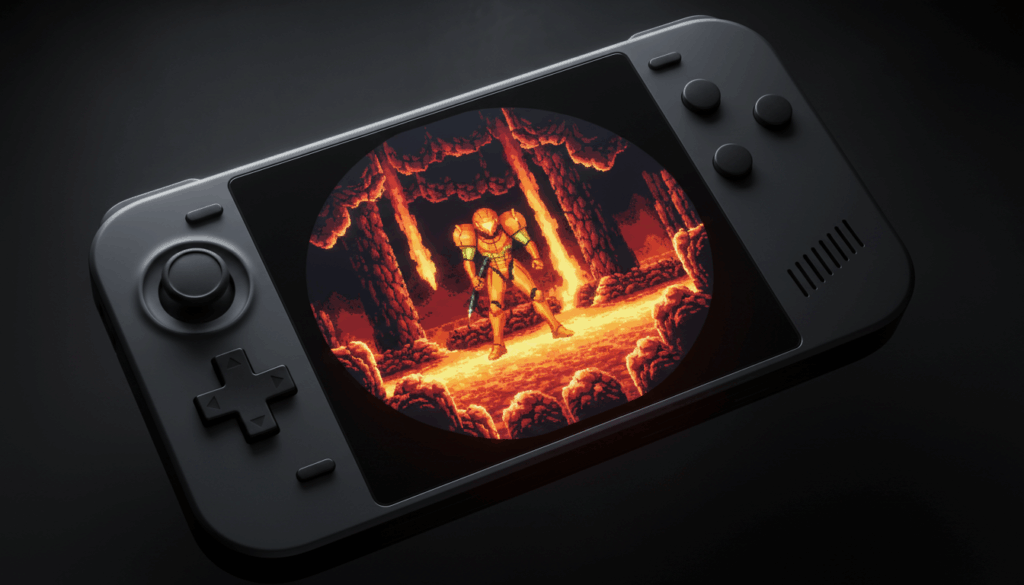
Whether the genre is getting better or just lazier comes down to the balance between accessibility and genuine depth. While the 3D environments and streamlined progression systems are impressive, they frequently come at the cost of the granular customization that made the classics legendary. Modern titles are polished to a mirror finish, but that shine sometimes masks a beautiful identity crisis that lacks the bite of its ancestors. We are seeing a lot of “safe” design choices that prioritize player comfort over the stressful, high stakes decision making that defined the genre. For those looking to revisit these classics on the go, checking out a retro handheld guide can help you find the perfect device to experience that old-school challenge anywhere.
Ultimately, the evolution of the TRPG is a trade off that trades grit for glamour. We are getting games that look better and play faster, but they rarely demand the same level of strategic mastery that once kept us up until 3:00 AM obsessing over a single character build. If the industry keeps leaning into predictable tropes and excessive handholding, we might lose the very soul of what makes a tactical game rewarding. It is not quite a total downfall yet, but developers need to remember that a little bit of friction is what makes a victory feel like it was actually earned.
Frequently Asked Questions
1. What exactly is tactical RPG evolution?
It is the glorious transition from staring at boring spreadsheets and wooden board pieces to watching pixelated knights murder each other on 3D battlefields. We traded flat grids for complex vertical maps where the high ground actually matters and the AI is actively trying to ruin your life.
2. Why was the isometric era considered a time of suffering?
Developers back then decided that fun should be measured in how many times you got kicked in the teeth by permadeath and brutal height advantages. Classic games didn’t care about your feelings, they just wanted to punish you for being a tactical idiot who forgot to check the turn order.
3. Is height really that important in modern tactical games?
Height is the difference between being a strategic genius and a target for every archer on the map. It turned simple maps into multi-layered war zones where positioning is actually more important than how much math you can do in your head.
4. Have modern tactical RPGs become too easy?
Industry cowards call it user friendliness, but it is mostly just hand holding to make sure you do not cry when a character dies. While accessibility is nice for the casual crowd, we lost some of that beautiful, masochistic tension that made the old school games feel like actual life or death struggles.
5. What makes the narrative in older tactical games feel so much heavier?
The stakes felt real because the mechanical consequences were devastating and permanent. When your favorite unit dies because of a single misclick, the story carries a lot more weight than it does in a modern game that lets you rewind time every time you make a mistake.
6. Is it still worth playing tactical RPGs if I hate math?
Absolutely, because the evolution of the genre was specifically designed to hide the math behind flashy critical hits and cool animations. You get to feel like a brilliant mastermind for outsmarting an AI while sitting in your pajamas without ever needing to touch a calculator.