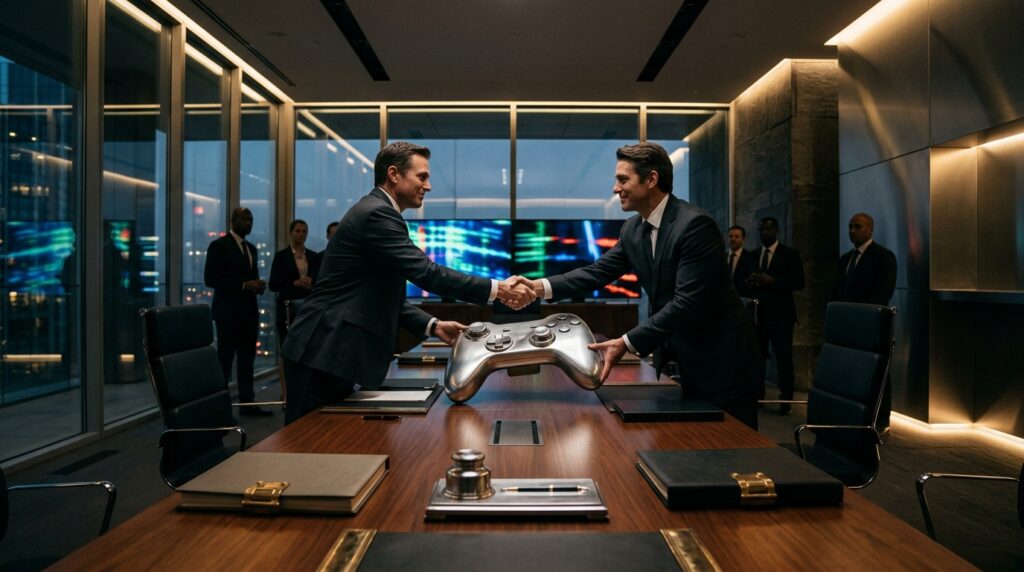
EA’s acquisition news has reached its final boss: the company expects to leave the public market around the end of trading on Tuesday, August 4, 2026. According to EA’s July 30 update, all required regulatory approvals had been secured, while shareholders had already approved the roughly $55 billion all-cash buyout, including debt. That makes this the biggest leveraged buyout in video game history, because apparently corporate finance now needs a final boss.
I’m tracking what the deal means for EA’s games, employees, players, and future strategy, not just the eye-watering number attached to it. The transaction is being led by Saudi Arabia’s sovereign wealth fund alongside two investment firms, and customary closing conditions still remain before the sale is officially complete. In other words, the paperwork is nearly finished, but the credits have not rolled yet.
TL;DR: EA expects to complete its roughly $55 billion all-cash sale to a Saudi-led consortium around the end of trading on August 4, 2026, after securing regulatory clearance and shareholder approval. The deal would make EA private in the largest leveraged buyout in video game history, with its impact on studios, creative control, monetization, and major franchises still uncertain until the final closing conditions are met.
EA Sale Nears August 4 Closing
Electronic Arts now expects its approximately $55 billion take-private deal to close around the end of trading on Tuesday, August 4, 2026, according to the company’s July 30 update. Shareholders have approved the transaction, and EA says all required regulatory approvals have been obtained, clearing the biggest obstacles in this record-setting video game buyout. That would make it the largest leveraged acquisition in the industry’s history, which is a polite way of saying somebody brought a very large wallet to the checkout counter. Once completed, EA will leave the public market and operate under private ownership, putting creative control, competition, and the future of its major franchises under a much brighter microscope.
The remaining work is mostly customary closing business, including final confirmations, execution of the merger paperwork, and the technical steps needed to transfer ownership and delist EA’s shares. “Expected” is doing important work here, because it means the finish line is in sight, not that the paperwork has stopped trying to trip over its own shoelaces. EA’s update supports the August 4 timeline, but a closing date is not legally complete until every condition is satisfied and the transaction is formally executed. I’ll believe the deal is finished when the market says so, because corporate paperwork has never met a deadline it could not make needlessly dramatic.
Consortium Buys EA For $55 Billion
As of August 2, 2026, Electronic Arts is expected to complete its sale to a consortium led by Saudi Arabia’s sovereign wealth fund around the end of trading on Tuesday, August 4. EA said on July 30 that all required regulatory approvals had been obtained, although the usual final closing conditions still remain. In other words, the deal is nearly across the finish line, unless corporate paperwork discovers a final boss. The transaction would take EA private in the largest leveraged buyout in video game industry history.
The buyer group combines Saudi Arabia’s sovereign wealth fund with two investment firms. According to EA’s September 29, 2025 acquisition announcement, the agreement is an all-cash transaction valuing EA at approximately $55 billion, including debt. That figure is not pocket change, even by the standards of an industry that routinely sells the same digital costume three times. Shareholders have already approved the deal, clearing another major obstacle to the takeover.
What happens next matters beyond the ownership paperwork, because private control can reshape how EA funds games, manages studios, and weighs creative risks. I’ll be watching whether the new owners prioritize long-term development or demand faster returns, a recipe that can turn ambitious projects into assembly-line content with a battle pass stapled on. The deal also sharpens questions about competition and consolidation, especially if one of gaming’s biggest publishers becomes answerable primarily to investors rather than public shareholders. EA may have sold for the highest bid, but players will judge the purchase by what appears on the other side of it.
Creative Control And Saudi Ownership
EA’s $55 billion take-private deal, led by Saudi Arabia’s sovereign wealth fund, is expected to close around the end of trading on August 4, 2026, assuming the remaining customary conditions are met. The transaction has cleared the shareholder vote and major publicly reported regulatory hurdles, making this less of a rumor and more of a countdown. What remains unclear is how much day-to-day authority the new owners will exercise over EA’s creative decisions, since ownership does not automatically mean choosing every character class or redesigning every menu. EA’s existing leadership and studio structure may continue, but private ownership can change which targets matter most and how patiently a project is allowed to develop. In other words, the question is not just who owns the building, but who gets to decide when a game is ready and when the quarterly spreadsheet starts banging on the door.
Players are right to scrutinize the deal because Saudi-backed ownership brings legitimate questions about influence, reputation, and whether gaming companies can become trophies before they become better places to make games. The fund has described major investments as part of a broader strategy to expand Saudi Arabia’s presence in entertainment and technology, while critics argue that such deals can also function as reputation management. For EA’s franchises, the best outcome would be stable funding, talented teams, and enough time to make fewer games that are actually worth playing. The worst would be pressure for faster releases, heavier monetization, and familiar brands treated like vending machines with deluxe editions. Until the new owners reveal their priorities, creative independence remains the feature players want most and the setting no executive has officially announced.
Competition After Electronic Arts Goes Private
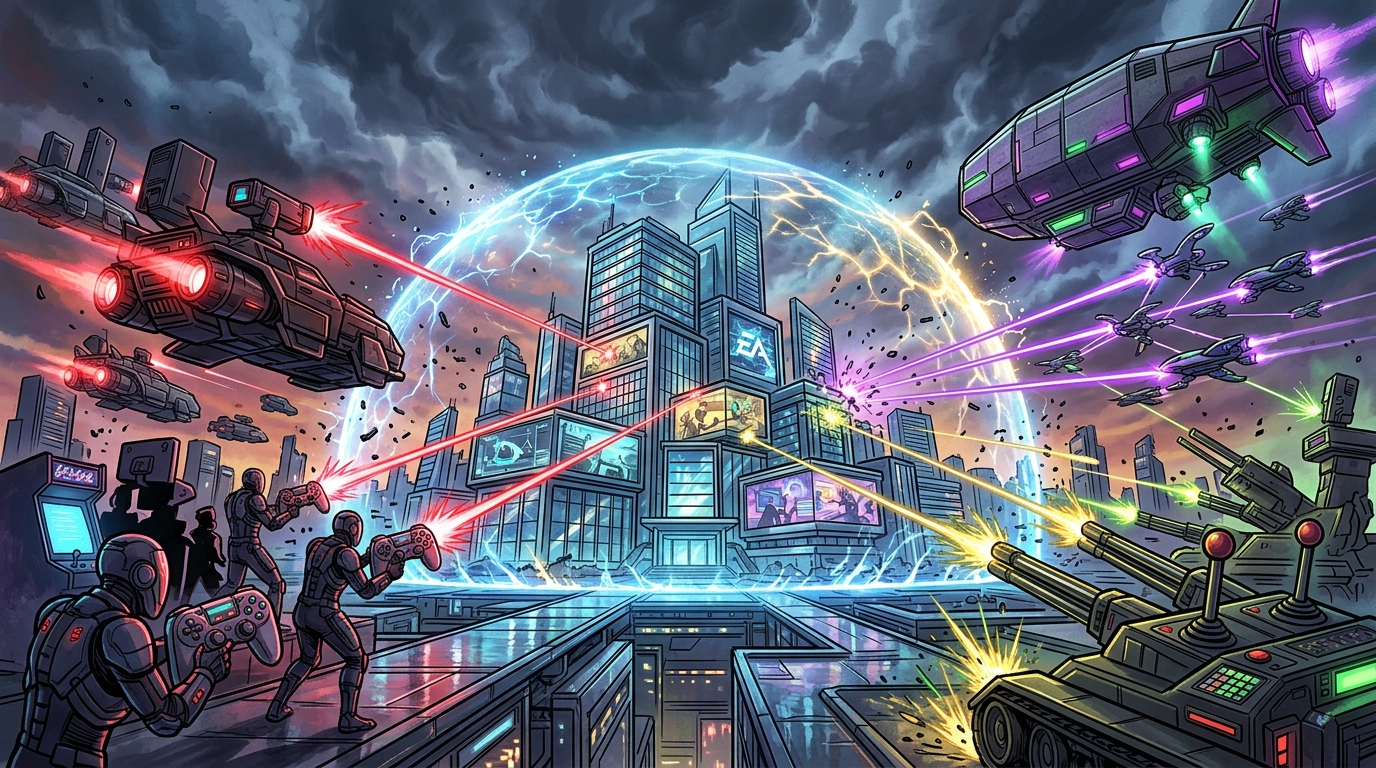
Electronic Arts is expected to complete its $55 billion take-private deal around the end of trading on August 4, 2026, according to the company’s July 30 update. The transaction, including debt, would be the largest leveraged buyout in video game history, turning EA from a public publisher into a privately controlled one almost overnight. I see the potential upside: executives could make longer-term bets on studios and games without treating every quarterly report like a boss fight. The catch is that private ownership also removes a layer of public scrutiny, which is convenient when “long-term strategy” starts looking suspiciously like another battle pass.
Competition could benefit if EA uses that freedom to rebuild teams, fund original projects, and stop treating every release as a delivery system for recurring revenue. It could also mean layoffs, studio closures, higher prices, and more live-service experiments if the new owners prioritize rapid returns on a massive purchase price. According to EA’s public plans and recent industry trends, established franchises and ongoing services remain central to its business, so players should not expect the loot chest to be ceremonially buried. I will be watching whether investment reaches developers and new ideas, rather than merely producing more expensive editions of games we already own. A private EA might finally have room to take creative risks, but it might also have fewer reasons to explain why the risks keep ending in monetization menus.
The deal could reshape the wider acquisition market by showing that a major game publisher can still command enormous value even as development costs, regulatory attention, and player skepticism rise. Other buyers may interpret EA’s sale as proof that scale and recognizable franchises are safer bets than nurturing smaller studios, which would be terrible news for anything that does not already have a sequel number attached. At the same time, the debt involved may make aggressive cost-cutting more likely, especially if expected growth fails to arrive on schedule. I would call the takeover a chance for EA to rebuild only if it protects creative teams, competes on quality, and gives players something better than the same old loot chest wearing a private-equity hat.
EA’s $55 Billion Buyout Hits Final Boss
EA is targeting a closing around the end of trading on Tuesday, August 4, 2026, when the $55 billion all-cash deal would take the publisher private, provided the remaining customary conditions are satisfied. According to EA’s July 30 update, all required regulatory approvals had been obtained, and shareholders have already approved the transaction. That makes this less a rumor and more a countdown with an absurdly expensive stopwatch. If everything clears the final hurdle, EA will leave the public market in what would be the largest leveraged buyout in gaming history.
What happens after that is the part nobody can summarize with a neat press-release sentence. I’ll be watching whether private ownership gives EA room to make better games, or simply removes the public scrutiny that occasionally forced it to explain why a $70 product behaves like a vending machine with server issues. The unanswered questions are substantial, from creative control and studio independence to competition and the risk of concentrating even more valuable franchises under one private owner. The confirmed news is that EA is being bought. The less comfortable question is whether it was bought to improve those games or merely to own a very expensive pile of them.