Forget everything you thought you knew about the typical open-world slog. My latest crimson desert gameplay preview confirms that the developers didn’t just build a world; they built a medieval wrestling ring where physics actually matter. Since the Version 1.08.00 update dropped this May, the combat has evolved from a standard hack-and-slash into a glorious, combo-heavy fever dream that rewards skill over button mashing.
If you’re tired of the “dodge-roll-poke” rhythm that has haunted the genre for a decade, you’re in for a treat. This game lets you suplex a bandit through a wooden table before blasting his friends with a shotgun, and frankly, that’s the kind of innovation the industry usually ignores. Between the elemental augmentations and the sheer variety of steel you can swing, it’s clear that Crimson Desert is more interested in making you feel like a god than making you check off a laundry list of map icons.
Key Takeaways
- Crimson Desert replaces traditional ‘dodge-roll’ combat with a visceral, fighting-game-inspired system that prioritizes complex combos, physics-based wrestling grapples, and environmental destruction.
- The game breaks genre conventions by blending medieval weaponry with muskets, shotguns, and elemental magic to create a high-speed, aggressive combat flow.
- Pywel’s open world eliminates map bloat and repetitive fetch quests, instead rewarding organic exploration and active traversal mechanics like parkour and sky-diving.
- The Version 1.08.00 update transformed the gameplay into a high-skill experience where intentional mechanical depth and weapon variety take precedence over mindless button mashing.
Combat Mechanics That Put Soulslikes To Shame
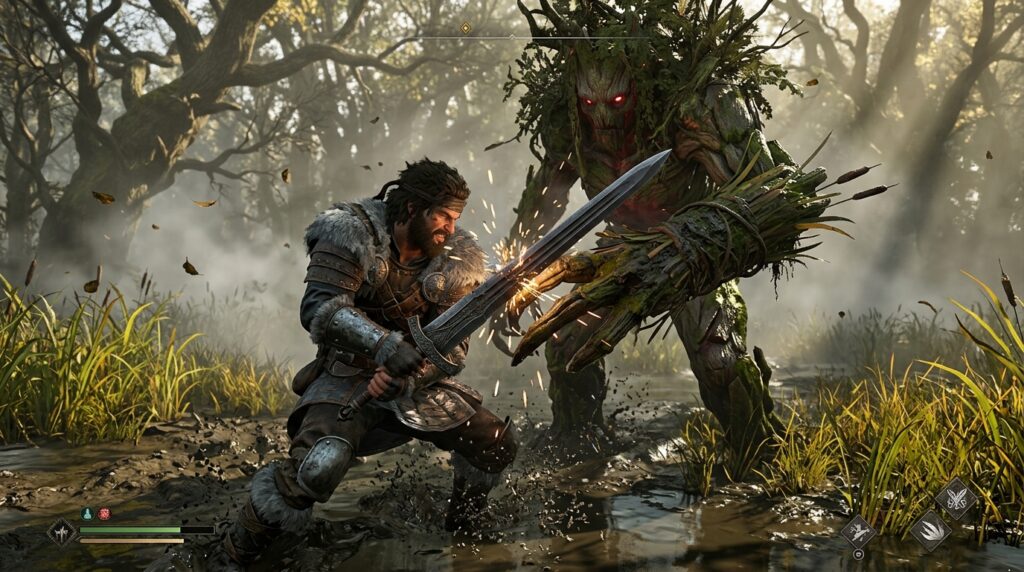
Forget the repetitive dance of rolling through the dirt like a tumbleweed just to land a single, pathetic poke on a boss’s ankle. Crimson Desert finally tosses that tired formula into the bin, replacing it with a combat system that feels more like a high-stakes fighting game than a typical open-world slog. I am talking about a visceral, combo-heavy experience where you can actually suplex an enemy through a wooden table or chain a flurry of sword strikes into a devastating aerial finisher. It feels heavy, intentional, and remarkably satisfying to see your character move with the grace of a pro wrestler instead of a clunky knight with a bad back.
The sheer variety of ways to dismantle your foes is honestly refreshing after years of staring at the same light and heavy attack animations in other titles. You can fluidly swap between a classic sword and shield setup to a spear for reach, or just go full barbarian with a massive greatsword that actually feels like it has weight. The recent addition of muskets and shotguns in the latest updates adds a layer of ranged chaos that keeps the flow from ever feeling stagnant. Watching an elemental augmentation set your blade on fire mid-combo is the kind of visual flair that makes every skirmish feel like a choreographed action movie rather than a chore.
What really sets this apart is how the game rewards you for being aggressive and creative rather than just waiting for a glowing parry window. You are encouraged to experiment with grapples and kicks to break enemy guards, making the battlefield feel like a playground of destruction. It is a bold move to pivot away from the safety of established genres, but the team has managed to create something that feels genuinely dangerous and exciting. If you are tired of the same old dodge-roll-poke rhythm, this fighting-game-inspired system is a wake-up call that proves action games can still be complex without being pretentious.
Exploring Pywel Without The Map Bloat
Pywel is a massive breath of fresh air because it actually respects your intelligence instead of treating you like a toddler who needs a trail of breadcrumbs to find the fridge. While most open-world developers seem terrified that you might miss a single generic fetch quest, the team has ditched the cluttered map icons and “follow the dotted line” gameplay that makes other titles feel like a second job. You are actually encouraged to look at the horizon and head toward something interesting because it looks cool, not because a colorful marker told you to go there. It transforms the world from a checklist of chores into an actual territory that feels dangerous, mysterious, and worth the effort to cross.
The traversal mechanics in Crimson Desert are what truly prevent the map from feeling like an empty walking simulator designed to pad out your playtime. Between the fluid parkour and the ability to literally sky-dive through the clouds, moving across Pywel is an active gameplay loop rather than a boring transition between combat encounters. You are not just holding forward on a joystick for ten minutes while checking your phone, you are actively engaging with the terrain to maintain your momentum. It makes every other high-fantasy world feel stagnant and stiff by comparison, proving that a large map is only as good as the tools you are given to conquer it.
What really sells this seamless experience is how the environment reacts to your presence without a loading screen constantly breaking the immersion. You can transition from a high-speed gallop into a brutal wrestling match with a bandit camp, and the world does not skip a beat or feel like it is struggling to keep up. The density of the world matters because it is filled with physics-based interactions and verticality that actually reward your curiosity instead of just wasting your time. It is a rare case where the scale of the world serves the gameplay rather than just being a bullet point on a marketing slide to justify a sixty-dollar price tag.
From Muskets To Magic In Violent Harmony
Crimson Desert is doing something absolutely unhinged with its combat, and I am honestly here for the chaos. While most developers are terrified of breaking the immersion of a medieval setting, the creators decided to hand us a musket and a shotgun alongside our trusty steel. Watching my character suplex a bandit into a wooden crate before blasting his friend in the face with black powder feels like a fever dream in the best way possible. It is a violent, beautiful harmony that refuses to play by the rules of traditional action-RPGs. The game does not care if you think a firearm is out of place when you are busy chaining together wrestling grapples and sword strikes.
The real magic happens when you start layering elemental augmentations on top of this already bloated arsenal. You are not just swinging a heavy greatsword, you are swinging a pillar of fire that can be followed up by a lightning-infused arrow or a blast of frost. This system moves away from the slow, methodical poking found in typical fantasy titles and leans heavily into high-speed, combo-centric carnage. It feels less like a stiff simulation and more like a high-budget fighting game where the floor is made of enemies and the ceiling does not exist. The sheer variety of tools at your disposal means you can go from a spear-wielding hoplite to a gun-toting wizard in the span of a single encounter.
What makes this work is how unapologetically aggressive the entire experience feels. The developers clearly realized that clicking a single button for thirty hours is a one-way ticket to Boredom Town, so they gave us every toy in the sandbox at once. Whether you are using a shield to bash a skull or calling down elemental fury to clear a room, the feedback is visceral and satisfyingly crunchy. It is a bold move to mix gunpowder with sorcery and professional wrestling, but it creates a combat flow that feels genuinely fresh. If you are tired of the same old “dodge, hit, repeat” loop, this visual masterpiece cocktail of steel and lead is exactly the wake-up call the genre needed.
More Than Just a Tech Demo
The verdict is finally in, and I can happily report that Crimson Desert is far more than just a collection of pretty lighting effects and expensive textures. While the initial trailers looked like a pre-rendered fever dream designed to trick investors, the actual gameplay experience delivers a mechanical depth that puts most modern action titles to shame. The developers clearly decided that a standard sword-and-board system was too boring, opting instead to let you suplex enemies through wooden tables like a medieval professional wrestler. It is refreshing to see a developer actually follow through on the “play your way” marketing fluff by giving us muskets, magic, and the ability to drop-kick a bandit off a cliff.
We have spent years watching tech demos that promise the world only to deliver a hollow shell, but this game actually feels like a cohesive, living project. The combat system is the real star here, demanding more than just mindless button mashing or perfectly timed dodges to survive the more chaotic encounters. Between the elemental augmentations and the sheer variety of weapons like the greatsword and shotgun, the gameplay loop stays surprisingly fresh even after dozens of hours. It is unapologetically ambitious and occasionally chaotic, but it avoids the “expensive tech demo” trap by grounding its flashy visuals in solid, rewarding mechanics.
If you were worried that this would be another case of style over substance, you can officially put those fears to rest and start clearing your hard drive. Crimson Desert is a rare beast that actually justifies its massive hype by offering a visceral, combo-heavy experience that feels distinct from everything else on the market. It is not perfect, and the learning curve for those wrestling grapples can be steep, but it is easily one of the satisfying movement mechanics we have seen in years. Stop scrolling through the screenshots and just go play it already because this is exactly the kind of innovation the genre desperately needed.
Frequently Asked Questions
1. Is the combat just another boring Soulslike clone?
Not even close. Instead of rolling around like a caffeinated tumbleweed, you get a combat system that feels like a high-stakes fighting game. You can actually suplex bandits through furniture and chain together aerial finishers that make standard hack-and-slash games look like a nap.
2. What makes the physics in Crimson Desert actually matter?
The world is basically a medieval wrestling ring where the environment reacts to your chaos. If there is a wooden table nearby, you can bet your last gold coin that an enemy’s spine is going through it. It is visceral, heavy, and rewards you for actually using the surroundings instead of just mashing the X button.
3. Can I switch weapons mid-fight or am I stuck with one style?
You have the freedom to fluidly swap between a sword and shield, a spear for reach, or a massive greatsword that actually feels like it weighs more than a toothpick. The variety is refreshing because it lets you dismantle foes with actual strategy rather than repeating the same two animations for forty hours.
4. Is this another open-world game filled with boring map icons?
The developers seem more interested in making you feel like a god than making you play digital chores. While other games force you to check off a laundry list of meaningless icons, this one focuses on meaningful combat and world interaction. It is about the thrill of the fight, not the boredom of the commute.
5. What did the Version 1.08.00 update change?
This Version 1.08.00 update evolved the gameplay from a standard action title into a combo-heavy fever dream. It refined the mechanics to ensure that skill is rewarded over mindless button mashing. The result is a much more polished and intentional experience that separates the pros from the casuals.
6. Are there ranged options or is it all just swords and shields?
You are not just limited to cold steel. You can blast enemies with a shotgun or use elemental augmentations to spice things up. It is the kind of innovation that most developers are too scared to try, and it works perfectly to break up the melee flow.