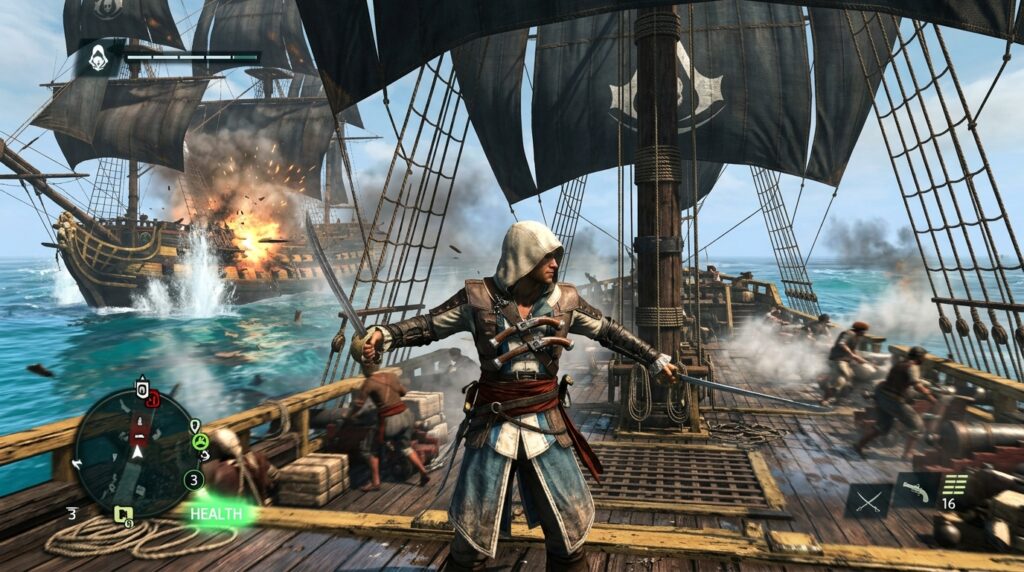
The gaming gods finally smiled upon us, giving us what we wanted without force-feeding us another 150-hour level-gated nightmare. Assassin’s Creed Black Flag Resynced has officially landed, bringing Edward Kenway back in full ray-traced glory without turning him into a stat-hoarding RPG spreadsheet. Built on an upgraded Anvil Engine, it looks slick enough to almost make me forgive the industry for a decade of bloated open-world busywork.
I was fully prepared to roast this remake into oblivion. Miraculously, keeping the original’s non-RPG progression while mercifully executing those instant-fail tailing missions was a brilliant move. Instead of level caps and bullet-sponge enemies, we get actual stealth upgrades like universal crouching, a crisp visibility meter, and ocean physics that look terrifyingly real. Fixing what was broken while leaving the actual fun untouched turns out to be a novel concept that still works.
Key Takeaways
- Assassin’s Creed Black Flag Resynced rejects modern RPG bloat and level gating, restoring fluid action-adventure combat while modernizing stealth through universal crouching and the removal of instant-fail tailing missions.
- Built on an upgraded Anvil Engine, the remake transforms the high-seas experience with ray-traced global illumination, dynamic storm weather, overhauled ocean physics, and streamlined naval combat.
- Eliminating the original multiplayer allowed developers to focus entirely on single-player depth, adding new story chapters, useful map trinket buffs, and seamless 60 FPS land-to-sea exploration.
- By fixing historical gameplay annoyances while preserving core non-RPG progression, Black Flag Resynced provides a successful blueprint for classic game overhauls.
Ditching Level Gating for Refined Stealth and Combat
The studio actually listened for once, throwing out the tedious RPG bloat and bullet-sponge enemies that have infested recent entries in favor of true action-adventure mechanics. In Assassin’s Creed Black Flag Resynced, if you sneak up behind a Spanish guard and plunge a hidden blade into his neck, he dies immediately, just as basic biology dictates. You won’t find yourself under-leveled against an arbitrary pirate captain who takes seventy sword swings to the skull simply because his floating health bar is glowing red. I cannot tell you how refreshing it is to explore an ocean without grinding ten hours of tedious fetch quests just to unlock a baseline stab attack. It keeps the momentum fast, fluid, and immensely satisfying from the moment you hit the high seas.
- Crouch Anywhere: Finally gives Edward the breathtaking ability to bend his knees on command.
- Visibility Meters: Replaces guesswork with clear, reliable feedback on enemy line-of-sight.
- Heavy Strikes: Breaks guard turtling without needing a full combo meter setup.
- No Instant Fail-States: Getting spotted triggers a fight or quick escape rather than an immediate desynchronization screen.
Beyond ditching arbitrary level gates, the stealth mechanics got a much-needed overhaul that brings the 2013 original out of the stone age. The star of the show is the complete removal of instant fail-states during stealth or tailing missions. Instead of freezing the universe and spitting you back to a loading screen because an illiterate guard glanced in your direction, you can fight your way out or scatter into the crowd like an actual assassin. Pair that with a modern visibility meter and heavy strikes to break turtling defenses, and stealth finally feels empowering rather than an exercise in frustration. It respects your time, which is something I frankly never expected to say about a modern open-world game.
Stripping away artificial stat checks lets the core pirate fantasy actually breathe. Combat feels punchy and lethal again, relying on player timing and situational awareness rather than arbitrary gear scores. The result honors the classic formula while fixing the exact friction points that made replaying the original annoying. If this refined approach to classic design is the future direction for remakes, I am completely on board.
Graphical Overhauls and Naval Upgrades for the Jackdaw
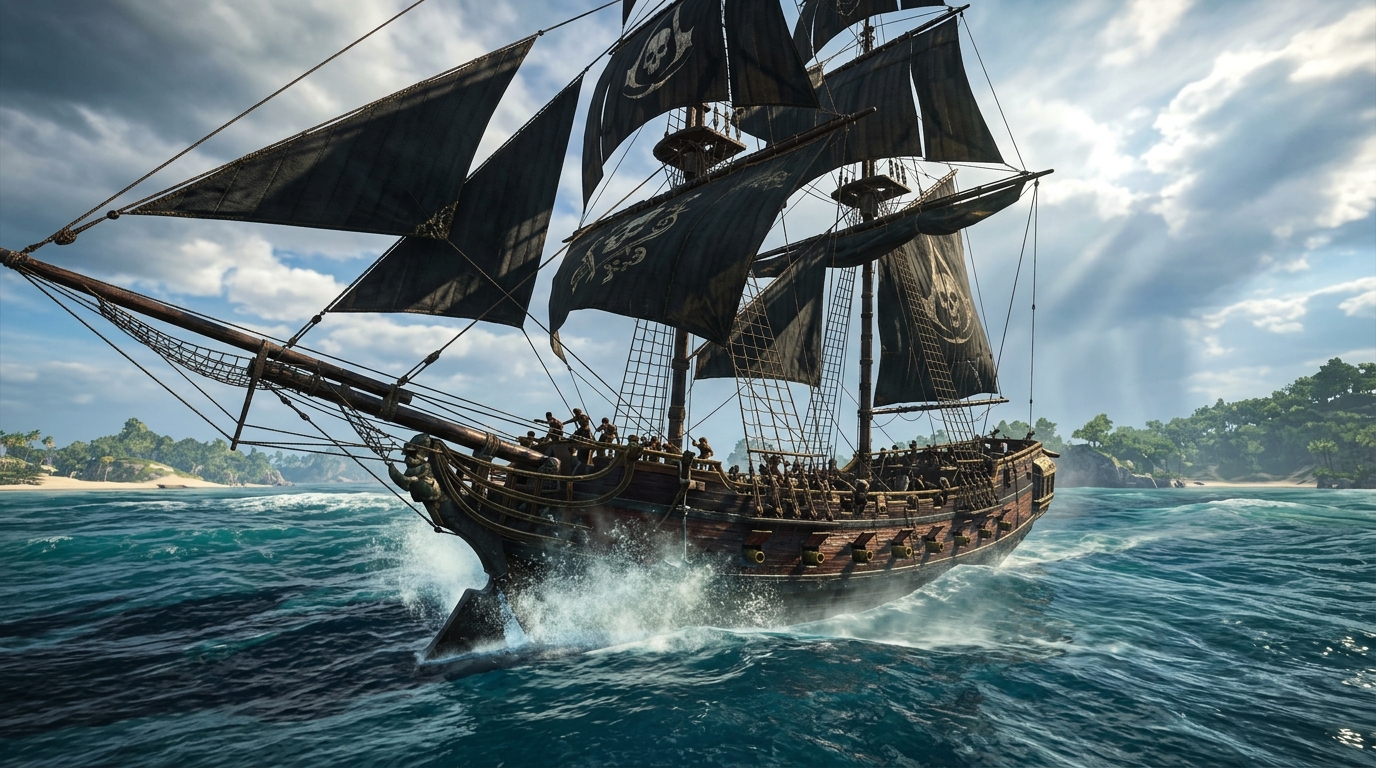
The developers finally dragged Edward Kenway into the modern era, and I have to admit the updated engine actually puts in serious work. Ray-Traced Global Illumination makes the Caribbean sun blindingly vibrant, while the new ocean physics turn waves into terrifying walls of water instead of giant blue gelatin blocks. Dynamic weather drops violent tropical storms on your head mid-plunder without asking for permission, forcing you to battle both rival captains and blinding downpours. The visual glow-up gives the tropical islands an oppressive heat that makes you feel like you need a cold shower after two hours of play. It is a massive graphical leap that proves this remake was built to showcase real tech improvements rather than a lazy texture slap.
- Ray-Traced Global Illumination and realistic dynamic lighting across islands and open water
- Reworked ocean physics featuring terrifying rogue waves and realistic sea foam dynamics
- Continuous heated shots that let you rain molten fire without clunky cooldown pauses
- New officer side-quests that actually give your crew members a genuine reason to exist
Beyond looking gorgeous, the naval overhaul transforms the Jackdaw from a wooden cannon platform into a terrifying engine of oceanic destruction. Continuous heated shots let you rain indiscriminate fire upon target frigates without waiting on arbitrary reload animations. Naval combat feels punchier and more responsive, keeping you focused on maneuvering rather than wrestling with legacy control quirks. Broadside battles require actual tactical positioning now, especially when enemy captains use dynamic weather to flank you under thick fog. Blowing up Spanish galleons never gets old, particularly when the fire effects look this absurdly good.
The team also realized that a ship needs a functioning crew, introducing brand-new officer side-quests that add genuine weight to your shipmates. Instead of treating your deckhands like disposable stat boosts, these short missions give your officers distinct personalities and actual reasons to sail with a greedy pirate. Finding extra treasure map leads or tracking down lost officer gear beats grinding repetitive tailing missions any day of the week. The dev team kept the core non-RPG structure intact, so you can enjoy these upgrades without stressing over gear levels or arbitrary skill gates. If you ever wanted a reason to put on the tricorn hat again, watching the Jackdaw shred enemy hulls under a storm-racked sky is worth every second.
Axing Dead Multiplayer to Focus Entirely on Single-Player
I certainly wasn’t holding a candlelight vigil when the original 2013 multiplayer was quietly sent to the digital gallows. Cutting that bloated dead weight allowed the developers to dump all their resources into expanding Edward Kenway’s single-player campaign with actual substance. The remake introduces genuine story chapters that flesh out his pirate career without feeling like slapped-on filler. Even the map trinkets got a desperate sanity pass, turning tedious collect-a-thons into items that grant legitimate gameplay buffs for naval combat and stealth. When you stop forcing shoehorned competitive modes into a single-player pirate fantasy, the core experience finally gets room to breathe.
- New narrative chapters expanding Edward Kenway’s pirate career
- Overhauled map trinkets that award passive ship and combat buffs
- Seamless land-to-sea exploration powered by the updated Anvil Engine
From what I tested on current-gen hardware, taking a ship out into a high-seas hurricane is an absolute spectacle that actually holds its target frame rate. Ray-Traced Global Illumination and overhauled water physics make the Caribbean look terrifyingly gorgeous without tanking performance down to a slideshow. Across platforms, the engine upgrade eliminates those archaic loading screens that used to grind sea exploration to a halt. Performance stays locked at a smooth sixty frames per second, even when broadside cannons are throwing smoke and fiery splinters across five enemy frigates simultaneously. It is genuinely refreshing to play a visual showcase that delivers top-tier eye candy without requiring day-one performance CPR.
Initial player reactions following the July 2026 launch have been overwhelmingly positive, mostly because fans are relieved to get a polished product that respects their time. By trimming the multiplayer fat and refining stealth mechanics, the developers accidentally stumbled upon a golden blueprint for how to handle classic game overhauls. I love that they resisted the urge to clutter the Caribbean with level-gated RPG nonsense, choosing instead to double down on action-adventure fundamentals. Gamers would much rather have a laser-focused single-player experience than a bloated multiplayer ghost town. If future remakes across the industry follow this exact template, classic game revivals might actually have a bright future.
The Developers Stopped Overcomplicating Things and It Worked
The buzz surrounding Assassin’s Creed Black Flag Resynced proves that studios can still deliver a total crowd-pleaser when they stop overcomplicating things. Launching on July 9, 2026, this ground-up remake trades the exhausting level-gating of recent entries for gorgeous Anvil Engine visuals and silky-smooth naval physics. I was skeptical at first, but seeing the upgraded dynamic weather and ray-traced water reflections convinced me that this upgrade is legit. It gives one of gaming’s absolute best pirate adventures the modern coat of paint it deserved without ruining the core magic. Honestly, sailing around without worrying about massive skill trees feels like a breath of fresh Caribbean air.
Beyond the pretty graphics, the gameplay tweaks fix some of the most obnoxious design habits from the 2013 original. The team finally added basic modern stealth mechanics like crouching anywhere and mercifully eliminated those infuriating instant-fail conditions on tailing missions. Combat feels punchier with heavy strikes and clear visibility meters, all while keeping the original non-RPG progression intact. You get a streamlined stealth loop paired with upgraded naval systems that make commandeering enemy ships feel wildly satisfying. I never thought I’d see the day where a studio actively fixed tedious retro design choices instead of charging us time-savers to skip them.
Ultimately, Black Flag Resynced delivers exactly what fans wanted without trying to turn a classic single-player title into an endless grind. It respects your time, fixes historical gameplay annoyances, and makes raiding massive galleons look stunning on modern hardware. Whether you are returning for the nostalgic sea shanties or taking Edward Kenway’s journey for the first time, this remake is genuinely worth your attention. It proves that sometimes the best path forward for a franchise is simply polishing up the glory days and letting players be cool pirates again. Grab your cutlass and fire up the Jackdaw, because this release actually earns a spot on your hard drive.