When Dragon’s Dogma 2 launched, the frame rate was more unstable than a cyclops on a bender. We all remember the slideshow-tier performance that turned the city of Vernworth into a very expensive stress test for our hardware. If your PC didn’t sound like a jet engine taking off, you probably weren’t actually playing the game. Thankfully, the developers finally stopped making excuses and started shipping optimizations that actually move the needle.
The good news is that mid-2024 updates have dragged this beast into a much more playable state. Between the addition of DLSS Frame Generation for PC and actual performance toggles for consoles, you can finally walk through a town without feeling like you’re watching a flipbook. It’s still a massive resource hog that demands a beefy CPU to stay smooth, but at least now it’s a demanding masterpiece instead of a broken mess. I am looking at a game that’s finally worth the install, provided you aren’t trying to run it on a toaster.
Key Takeaways
- Recent performance patches and the addition of DLSS Frame Generation have transitioned the game from a broken launch state into a functional, playable masterpiece.
- The primary performance bottleneck remains the CPU, which struggles to simulate complex NPC logic in dense urban areas like Vernworth regardless of GPU power.
- Console performance toggles and PS5 Pro upscaling offer visual improvements but often introduce input lag or visual artifacts rather than providing a perfectly locked 60 FPS.
- Dragon’s Dogma 2 is now worth the install for players with modern hardware, as the core emergent gameplay finally outweighs the remaining technical hurdles.
The CPU Bottleneck Nightmare In Vernworth
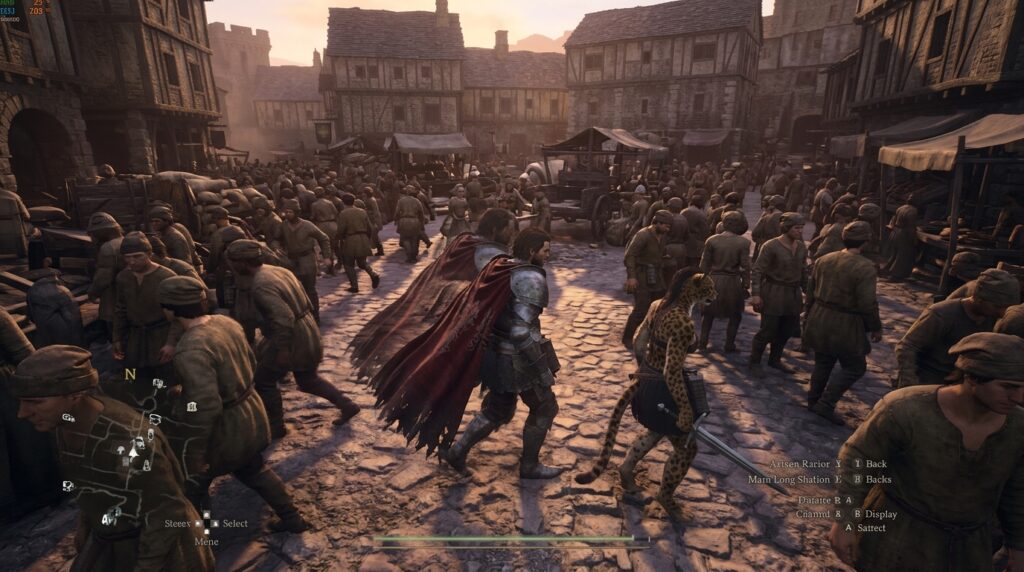
Walking into Vernworth for the first time should be a moment of awe, but for your CPU, it is a literal death sentence. While your high-end graphics card is essentially back there taking a nap, your processor is screaming in agony as it tries to calculate the complex NPC logic of every single merchant and loitering guard. The game treats every NPC like a fully realized digital soul with a grocery list, and that ambition comes at a heavy cost to your frame rate. You can throw all the money in the world at a flagship i9, but it will still buckle under the weight of a thousand digital citizens deciding whether to turn left or right. It is a classic case of a developer’s artistic vision colliding head-first with the limitations of modern silicon.
The sheer irony of the situation is that your GPU is probably barely breaking a sweat while the game chokes on its own logic. You could have the most powerful card on the market, but it cannot render frames that the CPU is too busy to hand off. Even with the fancy frame generation updates and performance patches that arrived later in the year, the underlying issue remains a stubborn bottleneck that feels like trying to run a marathon through a vat of molasses. It is frustrating to see a beautiful world stutter and hitch just because the simulation is too hungry for its own good. I am talking about a technical hurdle that feels remarkably unoptimized for a title of this pedigree, proving that no amount of fancy lighting can hide an engine that is gasping for air.
Watching your frame counter dip into the thirties in a crowded square is a sobering reminder that more power does not always solve poor optimization. The developers have definitely made strides with recent updates to improve those abysmal 1% lows, but the city remains the ultimate stress test for any rig. It is a bit like owning a supercar that can only go twenty miles per hour whenever it enters a residential neighborhood. You want to love the density and the life of the city, but it is hard to stay immersed when the screen feels like a flickering slideshow. Until the day processors evolve to handle this specific brand of madness, Vernworth will continue to be the place where high-end gaming dreams go to die.
Console Performance Modes And The PS5 Pro Promise
The performance toggle in Dragon’s Dogma 2 feels less like a technical solution and more like a desperate plea for mercy from your hardware. While it finally uncaps the frame rate and tries to push toward that buttery 60 FPS we were promised, the reality is a jittery mess that fluctuates wildly the moment a pawn starts casting spells. It is honestly exhausting to hear developers lean on artistic vision as a shield for a game that chugs like a steam engine every time you enter a major city. I do not care how beautiful your vision of a medieval marketplace is if I have to view it through a slideshow that makes my eyes bleed. You can definitely feel the improvement compared to the disastrous launch state, but calling this a finished performance mode is a bit of a stretch when the consistency just is not there.
The arrival of the PS5 Pro and its upscaling technology was supposed to be the magic wand that finally fixed this blurry, choppy nightmare. In practice, the results are a mixed bag of visual upgrades and distracting visual artifacts that make me wonder if the extra horsepower is actually worth the investment. While the image is undeniably sharper than the base console, the upscaling often introduces a strange shimmering effect or visual noise during high-speed combat that can be more distracting than the original blur. It is a classic case of throwing more hardware at a software optimization problem and hoping the players do not notice the cracks in the foundation. If you were expecting a flawless, high-resolution experience at a locked 60 FPS, you might want to lower your expectations before you drop the cash on a mid-generation upgrade.
Despite these technical hurdles, the game remains a masterclass in emergent gameplay that almost makes you forgive the technical jank. It is frustrating because the core experience is so brilliant that you want the performance to match the ambition of the world design. We are currently living in an era where we have to choose between a game looking like a smeared window or feeling like a PowerPoint presentation, and frankly, I am tired of making that choice. The September updates have certainly moved the needle in the right direction, but we are still waiting for the day when a trip to Vernworth does not feel like a stress test for our consoles. Until then, we are just toggling settings and crossing our fingers while the frame rate gods decide our fate.
Frame Generation Is A Band-Aid Not A Cure
We need to stop pretending that toggling a switch for DLSS Frame Generation is the same thing as actually optimizing a video game. While the tech is undeniably cool on paper, using it to mask a CPU-heavy mess like Vernworth feels like putting a fresh coat of paint on a house with a sinking foundation. It creates a visual illusion of smoothness that completely falls apart the moment you try to actually play the game. You might see a high number in the corner of your screen, but your mouse and keyboard are still feeling the sluggish reality of the base frame rate. It is a digital sleight of hand designed to make us ignore the fact that the underlying code is gasping for air.
The biggest problem with relying on these artificial frames is the unavoidable input lag that comes along for the ride. When the engine is fundamentally struggling to track NPC logic and physics, generating fake frames between the real ones does nothing to improve the actual responsiveness of your character. It results in a floaty, disconnected feeling where your actions happen on a delay, making combat feel like you are fighting underwater. Developers are increasingly using these tools as a crutch to avoid doing the hard work of streamlining their engines for modern hardware. We should be demanding solid performance at the base level instead of accepting a stutter-free journey as the new standard.
It is frustrating to see a game with such incredible artistic vision held back by technical hurdles that feel entirely avoidable. Dragon’s Dogma 2 is a brilliant experience when it works, but the reliance on AI upscaling to reach a playable state is a worrying trend for the industry. A stable sixty frames per second should be the goal of the optimization process, not an optional bonus you get by using software to guess what the next frame might look like. If the core engine cannot keep up with the action, no amount of post-processing magic is going to save the experience from feeling clunky. We deserve games that run well because they are well-built, not because they are leaning on a tech-based band-aid.
From Slideshow Scrutiny to Semi-Functional Glory
The verdict on Dragon’s Dogma 2 is finally in, and it is a classic case of the software finally catching up to the ambition. While the launch was a stuttering mess that made Vernworth feel like a slideshow, the recent performance patches and frame generation additions have turned this into a functional experience. You can actually walk through a crowded market now without your frame rate diving into a ditch, which is a low bar to clear, but I will take it. It is still a massive resource hog that will make your fans sound like a jet engine, but at least the game is no longer actively fighting your desire to play it.
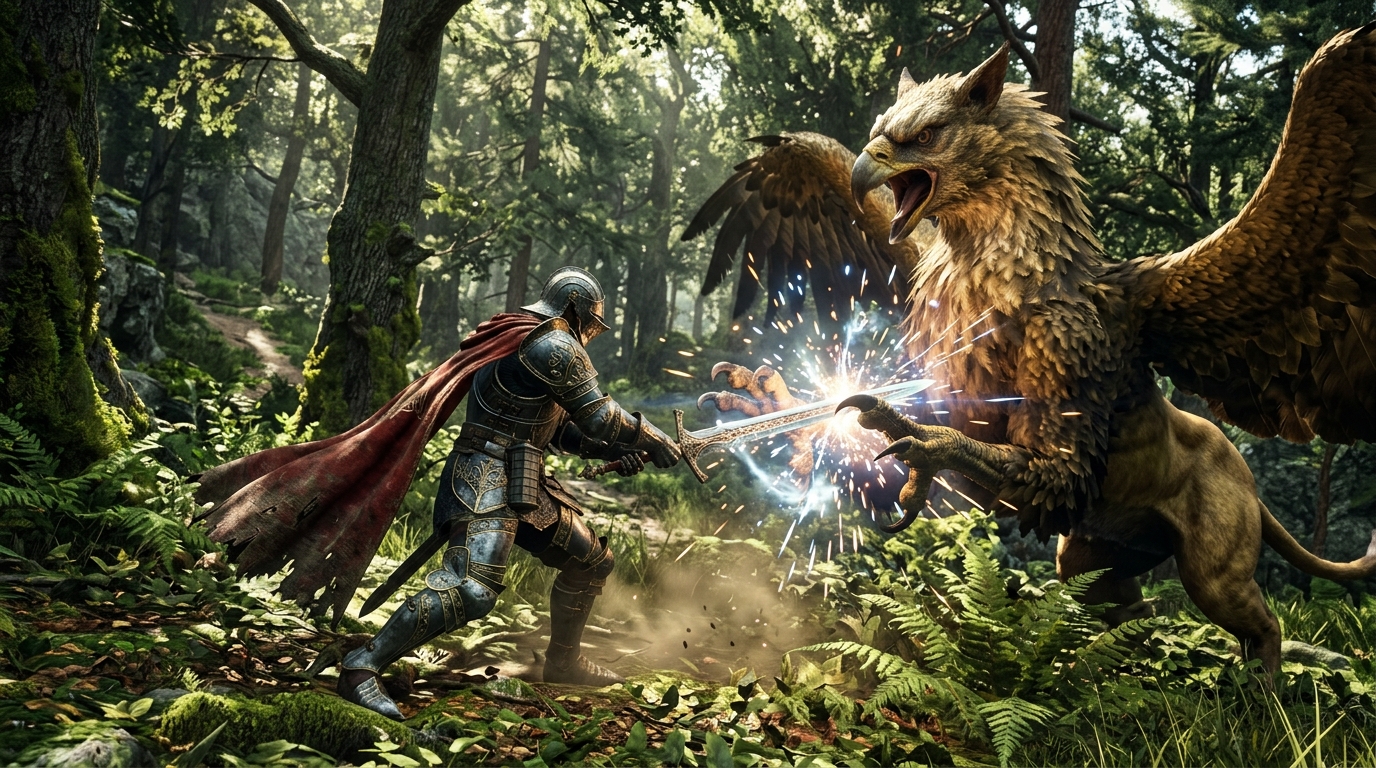
If you have been sitting on the fence waiting for the game to stop chugging, now is the time to jump in. The artistic vision of battling a griffin mid-flight or getting lost in a dark forest is finally worth the occasional frame drop because the core gameplay is just that good. I am not saying it is perfect, as the CPU demands are still high enough to make a modern processor sweat, but the days of unplayable lag are mostly behind us. Stop waiting for a magical patch that makes this run on a toaster and just enjoy one of the best game redemptions of the year while your hardware is still relevant.
Ultimately, the trade-off between a rock-solid sixty frames and the sheer chaos of this world is one I am finally willing to accept. The developers have done enough heavy lifting to move this from the uninstall pile to a permanent spot on my drive, even if the city performance still feels a bit crunchy. You might still see the occasional hiccup when the magic effects start flying, but the headache is officially gone. Grab your pawn, ignore the slight jank that remains, and go stab a dragon in the face before you find something else to complain about.
Frequently Asked Questions
1. Is Dragon’s Dogma 2 actually playable now?
Yes, it has finally graduated from a slideshow to a video game. Thanks to the mid-2024 updates and the addition of DLSS Frame Generation, you can actually walk through a city without your PC sounding like it is preparing for orbital reentry.
2. Why does the frame rate tank whenever I enter a city?
Your CPU is essentially having a nervous breakdown trying to calculate the life goals of every single NPC in Vernworth. Even a high-end i9 struggles because the developers decided every merchant needs a complex digital soul, which is a total resource hog.
3. Will a better graphics card fix my performance issues?
Probably not as much as you would hope. Your GPU is likely bored to tears while your processor does all the heavy lifting, so unless you are upgrading your CPU, that shiny new graphics card is just along for the ride.
4. Can I play this game on a budget PC or a toaster?
Only if you enjoy pain and very slow flipbooks. This game is a massive resource hog that demands modern hardware, so trying to run it on an old rig is a one-way ticket to frustration and a potential fire hazard.
5. Did consoles get any love in the performance updates?
Console players finally got actual performance toggles. You can now tweak settings to make the experience much smoother than the jittery mess we had at launch.
6. Is the game finally worth the install space?
If you have the hardware to back it up, absolutely. It is a demanding masterpiece that has finally moved past its broken launch state, making it a journey worth taking as long as you aren’t allergic to high CPU usage.